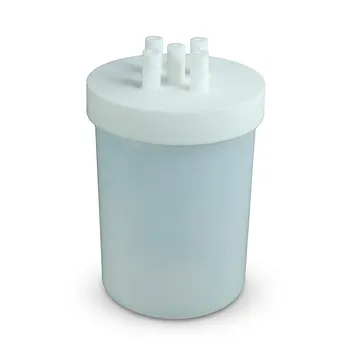
High-purity PTFE or PFA liners are the standard for nickel nanoferrite synthesis because they provide a chemically inert environment that eliminates metal ion contamination and protects the reaction vessel. These liners act as a critical barrier against corrosive precursors, ensuring that the synthesized nanoparticles maintain the high chemical purity and uniform morphology required for advanced applications.
The primary advantage of PTFE and PFA liners lies in their ability to isolate aggressive chemical reactions from the metal autoclave shell. This isolation prevents impurity leaching and vessel corrosion, which is fundamental to achieving high-performance, uncontaminated nickel nanoferrites.
Ensuring Chemical Purity and Integrity
Eliminating Metal Ion Leaching
During hydrothermal synthesis, the presence of stray metal ions can fundamentally alter the magnetic and structural properties of nickel nanoferrites. High-purity liners have extremely low impurity leaching rates, ensuring that the only metals present in the reaction are the intended precursors.
Resistance to Corrosive Precursors
The synthesis of ferrites often involves strong acids, bases, or organic solvents at elevated temperatures. PTFE and PFA offer exceptional chemical inertness, meaning they do not react with these aggressive media, maintaining a stable environment for crystal growth.
Maintaining a Clean Growth System
A clean reaction environment is essential for the growth of nanocrystals and quantum dots. By providing a sealed, non-reactive interface, these liners prevent external contaminants from entering the crystal growth system, resulting in a more predictable and high-quality final product.
Structural and Thermal Protection
Protecting the External Reaction Vessel
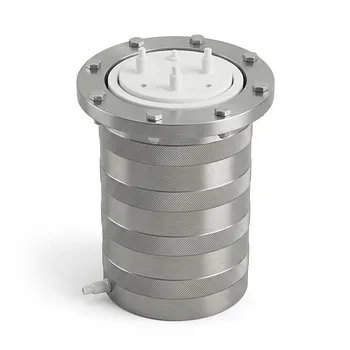
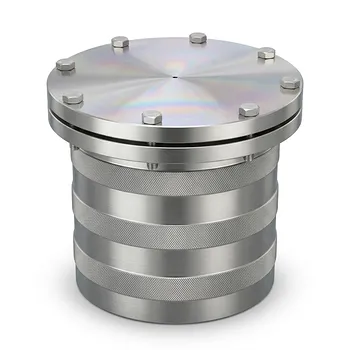
Hydrothermal autoclaves are typically constructed from high-strength stainless steel, which is susceptible to corrosion from acidic or alkaline precursors. The liner serves as a chemical protection barrier, shielding the outer metal shell from damage and significantly extending the lifespan of the equipment.
Withstanding Autogenous Pressure
In the high-temperature environment of an autoclave (often up to 180°C), internal pressure increases significantly. PTFE and PFA liners are designed to withstand this autogenous pressure while maintaining a tight seal, ensuring the safety of the laboratory environment.
Facilitating Uniform Morphology
Because the liner provides a consistent and isolated environment, the thermal distribution remains more stable. This stability is key to producing nickel nanoferrites with uniform morphology and consistent particle size distribution.
Optimizing Post-Synthesis Workflow
Superior Mold-Release Properties
PTFE and PFA possess excellent non-stick properties, which are vital when collecting synthesized nanopowders. This ensures that the nickel nanoferrites can be easily removed from the vessel without loss of material or contamination from scraping.
Ease of Post-Reaction Cleaning
PFA, in particular, is known for its smooth surface finish which facilitates easy cleaning after the synthesis is complete. This reduces the risk of cross-contamination between different batches of nanomaterials.
Understanding the Trade-offs
Temperature Thresholds
While these liners are highly resistant, they have definitive thermal limits; PTFE generally performs reliably up to 250°C, but exceeding these limits can lead to mechanical deformation or "creeping." Users must ensure the reaction temperature does not compromise the structural integrity of the polymer.
Pressure Sensitivity
Though the liners resist chemicals, they rely on the outer metal shell for mechanical strength. If a liner is improperly seated or if the pressure exceeds the vessel's rating, the liner can collapse or rupture, leading to catastrophic corrosion of the outer autoclave.
Making the Right Choice for Your Goal
Recommendations for Hydrothermal Synthesis
- If your primary focus is maximum chemical purity: Utilize high-purity PFA liners, as they offer the lowest leaching rates and the smoothest surfaces for ultra-trace analysis.
- If your primary focus is cost-effective general synthesis: Standard high-purity PTFE liners provide the best balance of chemical resistance and affordability for routine nickel nanoferrite production.
- If your primary focus is high-temperature reactions (above 200°C): Ensure you are using thick-walled PTFE liners specifically rated for high-pressure autoclaves to prevent vessel deformation.
Selecting the appropriate liner material is not merely a secondary concern but a fundamental requirement for the successful and safe synthesis of high-purity nickel nanoferrites.
Summary Table:
| Feature | Advantage for Nanoferrite Synthesis | Recommended Material |
|---|---|---|
| Chemical Inertness | Prevents metal ion leaching and precursor contamination. | High-purity PFA |
| Corrosion Resistance | Protects the stainless steel autoclave from strong acids/bases. | PTFE or PFA |
| Non-stick Surface | Ensures easy collection of nanopowders and simple cleaning. | PFA (Smoothest) |
| Thermal Stability | Maintains integrity under autogenous pressure up to 250°C. | PTFE |
Elevate Your Synthesis Precision with KINTEK
Ensure the absolute purity of your nickel nanoferrites and the longevity of your equipment with KINTEK’s specialized fluoropolymer solutions. From high-purity hydrothermal synthesis liners and microwave digestion vessels to everyday basic labware (beakers, crucibles, reagent bottles), we manufacture virtually all imaginable laboratory supplies crafted from PTFE and PFA.
Whether you require comprehensive fluid transfer components (tubing, fittings, valves), sample prep tools (filters, pipettes, tweezers), or advanced custom-machined reaction apparatus like electrochemical cells and battery testing fixtures, KINTEK is your partner for high-performance materials. Backed by end-to-end custom CNC fabrication, we deliver everything from complex non-standard parts to high-volume orders with an exclusive focus on quality.
Ready to optimize your lab's performance? Contact us today to discuss your custom requirements!
References
- Amrutesh Kannolli, Suvidha P Hegde. Unveiling Hydrothermal Synthesis and Captivating Characteristics of Nickel Nanoferrites. DOI: 10.12723/mjs.74.8
This article is also based on technical information from Kintek Knowledge Base .
Related Products
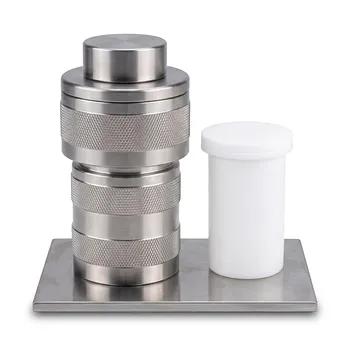
- PTFE Lined High Pressure Digestion Vessel 50ml High Temperature Hydrothermal Synthesis Tank
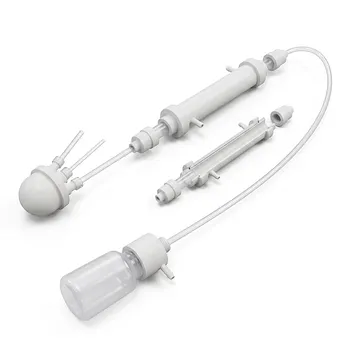
- High Temperature Corrosion Resistant PTFE Hydrogen Fluoride Condensation Reflux System with Separatory Funnel and PFA Collection Bottle
- Custom PTFE Acid Resistant Support Rack for PFA Hydrogen Absorption Systems Multi Hole Configurations
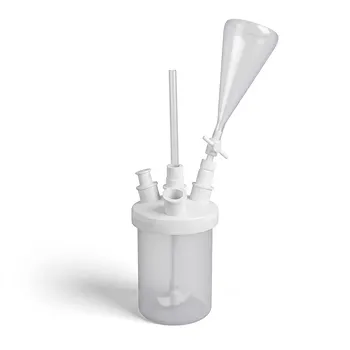
- Transparent Corrosion Resistant PFA Thermometer Sleeve and Customizable Hydrogen Fluoride Condensation Device
- Custom PTFE Acid Resistant Support Rack Multi Hole PFA Hydrogen Absorption System Bracket
People Also Ask
- What are the benefits of using a PTFE-lined vessel for carbon-sulfur cathode treatment? Maximize Purity & Performance
- Why are PTFE-lined pressure digestion vessels required for the preparation of Ag/CeO2 catalysts? Purity & Performance
- What safety features are typically incorporated into high-pressure PTFE digestion vessel designs? Ensure Lab Safety
- What is the function of PTFE lined high-pressure vessels in g-C3N4 synthesis? Achieve High-Purity Material Growth
- Role of High-Pressure Digestion Tanks in Perovskite Synthesis: Achieve Superior Stability and Latent Heat