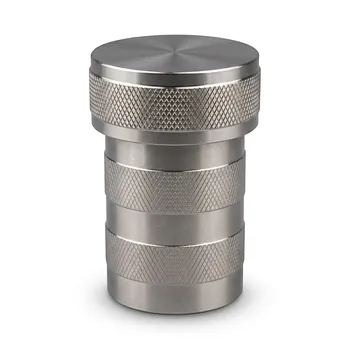
The use of a PTFE-lined hydrothermal autoclave is critical for MXene-BFO synthesis because it provides a pressurized, chemically inert environment that facilitates strong interfacial bonding. At operating temperatures like 160°C, the sealed vessel accelerates the breaking and recombination of chemical bonds between BiFeO3 (BFO) and MXene. This process ensures the formation of a high-purity nanocomposite by isolating the reaction from the corrosive effects of solvents and the metal reactor body.
Core Takeaway: A PTFE-lined autoclave enables high-pressure solvothermal reactions that promote the structural integration of BFO and MXene while preventing metallic contamination and reactor corrosion.
Accelerating Chemical Bonding and Synthesis
Facilitating Interfacial Adhesion
The sealed environment of the autoclave generates significant internal pressure, which is vital for the solvothermal synthesis of nanocomposites. This pressure accelerates the breaking and recombination of chemical bonds, forcing a stronger attachment between the BiFeO3 nanoparticles and the MXene nanosheets.
Promoting Crystalline Development
The high-temperature, high-pressure conditions within the liner promote conformal deposition and superior crystalline development. This ensures that the BFO phase is securely anchored onto the MXene surface, which is essential for the performance of the resulting heterojunction.
Ensuring Material Purity and Structural Integrity
Preventing Ion Contamination
The exceptional chemical inertness of Polytetrafluoroethylene (PTFE) ensures that the reaction remains isolated from the external stainless steel body. This prevents the introduction of impurity ions, such as metal fragments from the autoclave itself, which could otherwise impair the electrochemical or photocatalytic properties of the MXene-BFO composite.
Utilizing Non-Stick Properties
PTFE possesses a highly hydrophobic and non-stick surface that prevents reaction precursors from adhering to the vessel walls. This ensures that the maximum amount of precursor material stays in the solution, maintaining the stoichiometric precision required for high-quality nanocomposites.
Reactor Protection and Chemical Resistance
Resisting Corrosive Environments
Solvothermal synthesis often involves strong acids, organic solvents, or oxidizing agents that would rapidly degrade standard metallic reactors. The PTFE liner acts as a robust barrier, offering resistance to these harsh chemicals even at elevated temperatures.
Protecting the Pressure Vessel
By isolating the chemical reaction, the liner prevents pitting and erosion of the outer metal autoclave body. This protection is necessary for maintaining the structural safety of the high-pressure vessel over repeated synthesis cycles.
Understanding the Trade-offs
Temperature and Pressure Limitations
While PTFE is highly resistant to chemicals, it has a finite thermal ceiling, typically around 220°C to 250°C. Exceeding these temperatures can cause the liner to soften or deform, potentially leading to seal failure or safety hazards.
Thermal Conductivity Issues
PTFE is an insulator, meaning it does not conduct heat as efficiently as the outer stainless steel shell. This results in a slower heating and cooling rate for the internal reaction solution, which must be accounted for when timing the synthesis process.
How to Apply This to Your Project
Recommendations Based on Synthesis Goals
- If your primary focus is Maximum Purity: Always inspect the PTFE liner for any previous staining or pitting before synthesis to ensure no residual ions leach into your MXene-BFO mixture.
- If your primary focus is Strong Interfacial Bonding: Ensure the autoclave is properly sealed to maintain the high internal pressure required to drive the chemical recombination at 160°C.
- If your primary focus is High-Yield Synthesis: Utilize the non-stick nature of the PTFE liner by using magnetic stirring (if the autoclave allows) to keep precursors in suspension and prevent wall-clinging.
The PTFE-lined autoclave remains the industry standard for MXene-based synthesis due to its unique ability to balance extreme chemical resistance with the high-pressure requirements of nanomaterial engineering.
Summary Table:
| Feature | Benefit for MXene-BFO Synthesis | Advantage of PTFE Lining |
|---|---|---|
| High Pressure | Accelerates chemical bond recombination | Facilitates strong interfacial bonding at 160°C |
| Chemical Inertness | Prevents impurity ion leaching | Isolates reaction from metal reactor body |
| Hydrophobic Surface | Maintains stoichiometric precision | Non-stick surface prevents precursor loss on walls |
| Corrosion Resistance | Protects the pressure vessel | Resists strong acids and oxidizing agents |
| Thermal Isolation | Controlled reaction environment | High chemical stability up to 220°C-250°C |
Elevate Your Synthesis Precision with KINTEK High-Performance Fluoropolymers
Achieving high-purity MXene-BFO nanocomposites requires equipment that can withstand extreme chemical environments without compromising material integrity. KINTEK specializes in high-performance fluoropolymer laboratory supplies, offering an exclusive focus on PTFE and PFA materials designed for the most demanding research applications.
From everyday essentials like beakers, crucibles, and reagent bottles to specialized hydrothermal synthesis liners, microwave digestion vessels, and custom electrochemical cells, we provide the tools you need for success. Whether you require standard labware or bespoke non-standard machined parts via our end-to-end custom CNC fabrication, KINTEK is equipped to handle everything from individual research setups to high-volume industrial orders.
Ready to optimize your lab's performance? Contact our experts today to discuss your custom fluoropolymer needs!
References
- Sana Zainab, Sajal Fraz. Exploring electrolyte specific effects on multisheets 2-dimensional Ti3C2Tx-BiFeO3 nanocomposites electrodes for high-performance supercapacitors applications. DOI: 10.1038/s41598-025-90171-4
This article is also based on technical information from Kintek Knowledge Base .
Related Products
- PTFE Lined High Pressure Digestion Vessel 50ml High Temperature Hydrothermal Synthesis Tank
- Custom TFM Reaction Vessel with Stainless Steel Jacket and PTFE Inner Cup for High Corrosion Resistance
- High Temperature Corrosion Resistant Hydrothermal Synthesis Reactor with TFM Inner Liner and Straight Cylinder Design
- PTFE Acid Steam Cleaning System HF Resistant Trace Analysis Beaker Digestion Tank Customizable
- High Purity TFM Microwave Digestion Vessels PTFE Acid Evaporation Liners Domestic GT-400 Equivalent Laboratory Reaction Containers
People Also Ask
- What are the benefits of using a PTFE-lined vessel for carbon-sulfur cathode treatment? Maximize Purity & Performance
- Why are PTFE-lined pressure digestion vessels required for the preparation of Ag/CeO2 catalysts? Purity & Performance
- What safety features are typically incorporated into high-pressure PTFE digestion vessel designs? Ensure Lab Safety
- What is the function of high-pressure PTFE digestion vessels in mineral analysis? Optimize Sample Mineralization
- What is the function of PTFE lined high-pressure vessels in g-C3N4 synthesis? Achieve High-Purity Material Growth