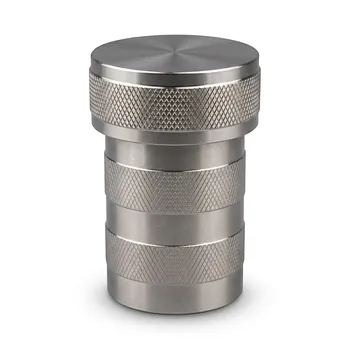
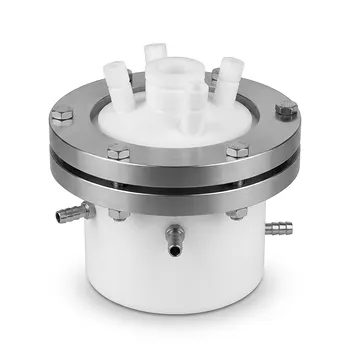
The use of a PTFE-lined hydrothermal synthesis autoclave is critical for the growth of Au@Ag core-shell nanoparticles because it provides a contamination-free, high-pressure environment that facilitates the precise epitaxial growth of silver onto gold seeds. By utilizing a chemically inert Polytetrafluoroethylene (PTFE) liner, the reaction system can reach temperatures between 100°C and 150°C, creating the necessary kinetic conditions for silver ions to reduce and deposit uniformly onto gold surfaces. This setup ensures the resulting nanoparticles maintain high structural integrity and exceptional purity by preventing interactions with the autoclave's metallic outer shell.
A PTFE-lined autoclave serves as a specialized reaction vessel that combines high-pressure thermal energy with chemical isolation. This allows for the controlled reduction and epitaxial deposition of silver onto gold seeds while shielding the synthesis from metallic impurities and vessel corrosion.
Facilitating Precise Kinetic Conditions
Overcoming Energy Barriers for Epitaxial Growth
The hydrothermal environment provides the thermal energy required for the epitaxial growth of silver onto gold seeds. This specific growth mode requires precise kinetic control to ensure silver atoms align correctly with the gold crystal lattice. Temperatures between 100°C and 150°C are ideal for driving these surface reactions without causing unwanted secondary nucleation.
Exceeding Atmospheric Boiling Points
The sealed nature of the autoclave allows the reaction solution to exceed its atmospheric boiling point. This internal pressure increases the solubility of precursors and accelerates the reduction of silver ions. Such conditions are difficult to achieve in open-bench synthesis, making the autoclave essential for high-quality core-shell structures.
Ensuring Material Purity and Chemical Isolation
Preventing Metallic Contamination
The primary function of the PTFE liner is to act as a barrier between the reaction fluid and the stainless steel walls of the autoclave. Without this liner, metallic precursors could react with the chromium or iron in the steel, introducing impurity ions into the Au@Ag structure. This isolation is vital for maintaining the localized surface plasmon resonance (LSPR) properties of the nanoparticles.
Resilience Against Corrosive Precursors
Synthesis of gold and silver nanostructures often involves acidic or corrosive reagents that can damage metal surfaces. The PTFE liner offers exceptional chemical inertness, allowing it to withstand these harsh environments without degrading. This resistance ensures that the vessel itself does not contribute any byproducts to the chemical reaction.
Enhancing Yield and Structural Integrity
Non-Stick Surface for Sample Recovery
PTFE is highly hydrophobic and possesses non-stick properties that prevent nanoparticles from adhering to the vessel walls. In many hydrothermal processes, nanomaterials can become "baked" onto the container, leading to significant loss of yield. The anti-adhesive nature of PTFE ensures that the Au@Ag nanoparticles remain in suspension or can be easily recovered after the reaction.
Maintaining Stable Reaction Geometries
The liner provides a stable, sealed physical environment that remains constant under high pressure. This stability is necessary for the directional growth of silver shells, ensuring that the shell thickness is uniform across the gold seeds. A consistent environment prevents the formation of irregular "clumpy" shells or separate silver particles.
Understanding the Trade-offs
Thermal Limitations
While PTFE is highly inert, it has strict temperature limits, typically becoming unstable or deforming above 250°C. For syntheses requiring extreme temperatures, alternative liners like PPL (Polyphenylene polymers) may be required.
Pressure Management and Cooling
The sealed nature of the autoclave means that pressure is a function of temperature and "fill degree." Users must carefully calculate the volume of liquid to avoid over-pressurization, which could lead to vessel failure. Additionally, the insulating properties of PTFE mean that the system takes longer to cool down, which can affect the final size distribution of the nanoparticles if the growth phase is not quenched rapidly.
How to Apply This to Your Project
When utilizing a PTFE-lined autoclave for nanoparticle synthesis, your approach should be dictated by your specific material requirements:
- If your primary focus is Maximum Purity: Ensure the PTFE liner is thoroughly cleaned with aqua regia or nitric acid between uses to remove any trace metal ions from previous experiments.
- If your primary focus is Uniform Shell Thickness: Closely monitor the temperature ramp-up speed and the fill volume of the autoclave, as these factors dictate the internal pressure and the rate of silver deposition.
- If your primary focus is High Yield Recovery: Take advantage of the PTFE’s non-stick properties by using mild sonication directly within the liner after synthesis to dislodge any loosely settled particles.
The PTFE-lined autoclave remains the gold standard for core-shell synthesis because it perfectly balances the need for high-energy kinetics with an uncompromisingly clean chemical environment.
Summary Table:
| Advantage | Key Benefit | Impact on Synthesis |
|---|---|---|
| Chemical Inertness | Prevents metallic ion leaching | Ensures high-purity Au@Ag nanoparticles |
| High-Pressure Capability | Exceeds atmospheric boiling points | Accelerates precursor reduction & growth |
| Non-Stick Surface | Prevents particle adhesion to walls | Maximizes sample recovery and yield |
| Thermal Stability | Stable environment (up to 250°C) | Precise epitaxial growth of silver shells |
| Corrosion Resistance | Withstands acidic/harsh reagents | Extends vessel life and maintains purity |
Elevate Your Synthesis Precision with KINTEK
Achieve uncompromising purity and structural integrity in your nanomaterial research with KINTEK’s specialized fluoropolymer solutions. From everyday basic labware (beakers, measuring cylinders, and centrifuge tubes) to advanced reaction apparatus like PTFE and PPL liners for hydrothermal synthesis, we provide the inert environment your high-performance chemistry requires.
At KINTEK, we manufacture virtually all imaginable laboratory supplies crafted from high-performance PTFE and PFA. Our capabilities extend from high-volume general consumables (O-rings, seal tapes, and stirring bars) to complex, custom-engineered components including:
- Advanced Reaction Vessels: Microwave digestion vessels, hydrothermal synthesis liners, and microchannel reactors.
- Fluid Transfer & Prep: High-purity tubing, fittings, valves, and filtration tools.
- Bespoke Fabrication: End-to-end custom CNC machining for non-standard parts and unique laboratory setups.
Whether you are scaling up production or designing a one-of-a-kind electrochemical cell, our absolute focus on high-performance fluoropolymers ensures your results are never compromised by contamination.
Ready to optimize your lab's performance? Contact our engineering team today to discuss your standard or custom requirements!
References
- A. M. Abdelghany, E.M. Abdelrazek. Green hydrothermal synthesis and optimization of gold/silver core-shell nanoparticles using thyme extract. DOI: 10.1007/s43994-025-00268-9
This article is also based on technical information from Kintek Knowledge Base .
Related Products
- PTFE Lined High Pressure Digestion Vessel 50ml High Temperature Hydrothermal Synthesis Tank
- High Temperature Corrosion Resistant Hydrothermal Synthesis Reactor with TFM Inner Liner and Straight Cylinder Design
- Custom TFM Reaction Vessel with Stainless Steel Jacket and PTFE Inner Cup for High Corrosion Resistance
- High Pressure Custom TFM Reactor Stainless Steel Outer Vessel PTFE Inner Cup for Corrosive Synthesis
- High Purity TFM Microwave Digestion Vessels PTFE Acid Evaporation Liners Domestic GT-400 Equivalent Laboratory Reaction Containers
People Also Ask
- What are the benefits of using a PTFE-lined vessel for carbon-sulfur cathode treatment? Maximize Purity & Performance
- Why are PTFE-lined pressure digestion vessels required for the preparation of Ag/CeO2 catalysts? Purity & Performance
- What safety features are typically incorporated into high-pressure PTFE digestion vessel designs? Ensure Lab Safety
- What is the function of PTFE lined high-pressure vessels in g-C3N4 synthesis? Achieve High-Purity Material Growth
- Role of High-Pressure Digestion Tanks in Perovskite Synthesis: Achieve Superior Stability and Latent Heat