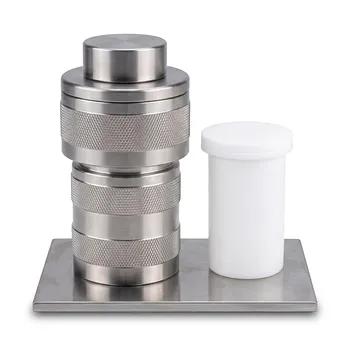
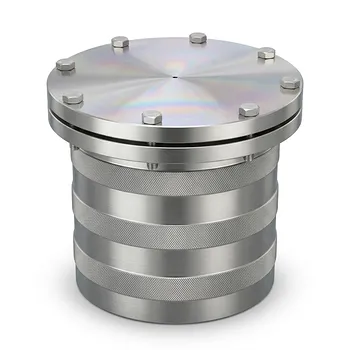
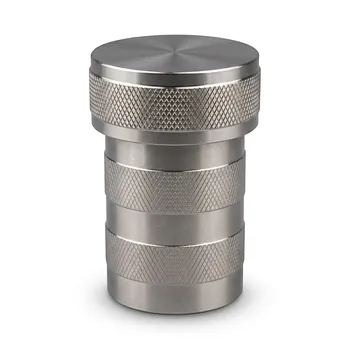
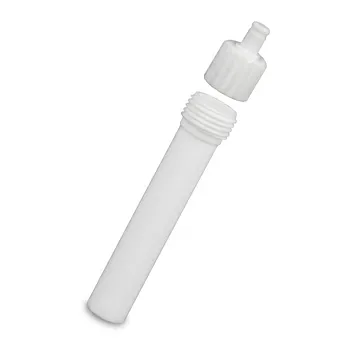
The use of a Polytetrafluoroethylene (PTFE) liner is essential for maintaining the integrity and purity of Zinc Oxide (ZnO) during hydrothermal synthesis. This liner provides a chemically inert barrier that survives the harsh, alkaline environments necessary for the reaction while preventing metallic ions from the autoclave body from leaching into and contaminating the final nanomaterial.
Core Takeaway: A PTFE liner acts as both a protective shield for the equipment and a purification barrier for the product, ensuring that synthesized ZnO achieves high phase purity and crystallinity by isolating the reaction from the corrosive stainless steel vessel.
Maintaining Chemical Integrity in Harsh Environments
Resistance to Strong Alkaline Media
Zinc Oxide synthesis frequently requires high concentrations of strong bases, such as sodium hydroxide (NaOH) in 3M or 6M concentrations. PTFE is exceptionally inert, meaning it will not react with or be degraded by these caustic precursors during the synthesis process.
Protection of the External Pressure Vessel
While the stainless steel body of an autoclave provides the necessary mechanical strength to withstand high pressures, it is susceptible to corrosion. The PTFE liner isolates the reaction solution from the steel walls, preventing the corrosive medium from eroding the outer vessel.
Thermal and Pressure Stability
During the hydrothermal process, the liner must withstand autogenous pressure and constant temperatures, typically up to 150°C. PTFE maintains its structural integrity under these conditions, providing a stable environment for the growth of ZnO nanostructures.
Ensuring High Material Purity and Crystallinity
Prevention of Metal Ion Contamination
Without a liner, metallic ions from the stainless steel autoclave can leach into the solution and incorporate into the ZnO lattice. The PTFE interface ensures zero metallic contamination, which is critical for maintaining the specific optoelectronic properties and crystalline quality of ZnO nanorods and particles.
Enhancement of Phase Purity
By eliminating foreign chemical interference, the liner helps ensure the structural integrity of the synthesized framework. This leads to high phase purity, meaning the resulting powder is composed entirely of the desired ZnO crystal structure without unwanted secondary phases.
Minimal Leachable Characteristics
High-purity PTFE has extremely low leachable characteristics, making it ideal for sensitive chemical reactions. This ensures that no trace organic or inorganic impurities from the container itself are introduced into the synthesized ZnO/NiO heterojunctions or nanocomposites.
Optimizing Product Yield and Recovery
Low Surface Energy and Non-Stick Properties
PTFE is known for its low surface energy, which creates a "non-stick" surface inside the reaction chamber. This prevents the synthesized ZnO nanoparticles or catalyst precursors from adhering strongly to the vessel walls.
Hydrophobic Interface Benefits
The highly hydrophobic surface of the liner ensures that reaction precursors do not stick to the sides during the heating phase. This characteristic facilitates the easy recovery of reaction products and leads to more consistent, stable powder yields.
Understanding the Trade-offs
Temperature Limitations
While PTFE is highly effective, it has a lower thermal threshold than the stainless steel vessel itself, generally limited to 250°C or lower (with the primary reference noting 150°C for specific ZnO applications). Exceeding these temperatures can lead to liner deformation or the release of toxic vapors.
Thermal Conductivity Lag
PTFE is a thermal insulator, which means there is a lag in heat transfer from the oven to the internal reaction solution. Researchers must account for this by allowing sufficient "soaking time" to ensure the internal temperature matches the setpoint of the heating element.
How to Apply This to Your Project
When selecting or using a PTFE-lined autoclave for ZnO synthesis, consider your specific experimental goals:
- If your primary focus is high-purity optoelectronics: Ensure your PTFE liner is "high-purity grade" to eliminate even trace metallic leaching that could quench luminescence or alter conductivity.
- If your primary focus is maximum powder yield: Leverage the non-stick properties of the liner by using mechanical agitation or ultrasonic cleaning to recover particles that may have settled at the bottom.
- If your primary focus is high-temperature synthesis (above 200°C): Consider upgrading from a PTFE liner to a PPL (polyphenylene polymers) liner, which offers higher thermal resistance while maintaining similar chemical inertness.
Selecting the right liner material is not merely a safety precaution but a fundamental step in ensuring the repeatable synthesis of high-quality Zinc Oxide nanomaterials.
Summary Table:
| Key Feature | Benefit for ZnO Synthesis | Impact on Final Product |
|---|---|---|
| Chemical Inertness | Resists strong alkaline media like 6M NaOH | Prevents vessel corrosion & liner degradation |
| Zero Metal Leaching | Isolates solution from stainless steel walls | Ensures high phase purity and crystal quality |
| Non-Stick Surface | Low surface energy and hydrophobicity | Maximizes powder yield and simplifies recovery |
| Thermal Stability | Maintains integrity up to 250°C | Provides stable environment for nanorod growth |
Elevate Your Research with Precision Fluoropolymer Engineering
Maximize the purity and yield of your nanomaterial synthesis with KINTEK. As specialists in high-performance fluoropolymers, we provide the critical tools needed for demanding hydrothermal and chemical processes. From everyday basic labware (beakers, measuring cylinders, crucibles, reagent bottles, and digestion tubes) to advanced fluid transfer components (tubing, fittings, and valves), our products are designed to withstand the harshest environments.
Whether you require high-purity trace analysis instruments, sample prep tools (separatory funnels, filters, tweezers), or complex custom setups like microwave digestion vessels and microchannel reactors, KINTEK offers unparalleled expertise. Benefit from our end-to-end custom CNC fabrication for non-standard machined parts or high-volume orders tailored to your specific lab requirements.
Ready to optimize your lab's performance? Contact us today to discuss your custom PTFE and PFA requirements and discover how our absolute focus on material excellence can support your next breakthrough.
References
- K. Manikandan, M. Khalid Hossain. Enhanced efficiency of zinc oxide hydroxyapatite nanocomposite in photodegradation of methylene blue, ciprofloxacin, and in wastewater treatment. DOI: 10.1038/s41598-025-14310-7
This article is also based on technical information from Kintek Knowledge Base .
Related Products
- PTFE Lined High Pressure Digestion Vessel 50ml High Temperature Hydrothermal Synthesis Tank
- Custom TFM Reaction Vessel with Stainless Steel Jacket and PTFE Inner Cup for High Corrosion Resistance
- High Temperature Corrosion Resistant Hydrothermal Synthesis Reactor with TFM Inner Liner and Straight Cylinder Design
- High Purity PTFE Microwave Digestion Vessel Replacement Liner for Acid Sample Preparation and Trace Analysis
- High Purity TFM Microwave Digestion Vessels PTFE Acid Evaporation Liners Domestic GT-400 Equivalent Laboratory Reaction Containers
People Also Ask
- What are the benefits of using a PTFE-lined vessel for carbon-sulfur cathode treatment? Maximize Purity & Performance
- Why are PTFE-lined pressure digestion vessels required for the preparation of Ag/CeO2 catalysts? Purity & Performance
- What safety features are typically incorporated into high-pressure PTFE digestion vessel designs? Ensure Lab Safety
- What is the function of PTFE lined high-pressure vessels in g-C3N4 synthesis? Achieve High-Purity Material Growth
- Role of High-Pressure Digestion Tanks in Perovskite Synthesis: Achieve Superior Stability and Latent Heat