Supercritical carbon dioxide polymerization can produce fluoropolymers with exceptionally low contamination risk for ultra-trace analytical labware. Compared with aqueous or conventional organic-solvent processes, scCO2 processing enables removal of residual initiators and degradation products, avoids persistent surfactants and ozone-depleting solvents, and supports clean polymer morphologies. These advantages help PFA and related fluoropolymers minimize trace leachables, analyte adsorption, and analytical background.
For ultra-trace labware, the manufacturing process matters as much as the fluoropolymer’s inherent chemical resistance. scCO2 polymerization reduces contamination pathways before the material is formed into containers, tubing, vessels, or sampling components.
Why Manufacturing Purity Matters
Trace analysis magnifies small contaminants
Ultra-trace measurements can be affected by minute quantities of organic residues, inorganic ions, metals, or processing additives. A material that appears chemically inert in routine use may still contribute background signals or alter analyte recovery if manufacturing residues remain.
Labware can change the sample
Container walls may adsorb analytes, release leachable species, or promote contamination during storage and preparation. These effects are especially consequential in LC-MS/MS, impurity profiling, digestion workflows, and other methods operating near very low detection limits.
Fluoropolymer chemistry provides a strong baseline
PFA and PTFE are already valued for chemical inertness, thermal stability, low surface energy, and non-stick behavior. scCO2 polymerization strengthens their suitability by reducing contamination associated with how the resin is produced.
How scCO2 Polymerization Improves Material Purity
Residues can be extracted more effectively
Supercritical carbon dioxide combines gas-like diffusivity with liquid-like solvating behavior. After polymerization, it can be used to help extract residual initiators and degradation products from the material.
Reducing these residues lowers the risk that labware will release organic contaminants into high-purity reagents or analytical samples.
Persistent surfactants are avoided
Traditional aqueous polymerization may require surfactants or other additives to control particle formation and polymer dispersion. Persistent residues from these materials can become a contamination source if they are not completely removed.
A scCO2 process can eliminate the need for such aqueous surfactants, reducing a significant class of potential organic leachables.
Ozone-depleting solvents are eliminated
Historically, some fluoropolymer processes relied on chlorofluorocarbon-based solvents. Replacing them with scCO2 removes ozone-depleting solvents from the process and reduces associated environmental and handling concerns.
This is both an environmental advantage and a purity advantage because the finished polymer has fewer opportunities to retain solvent-related residues.
Clean polymer morphologies can be generated
The scCO2 reaction environment supports the formation of clean polymer morphologies without relying on the same aqueous or solvent-based additive systems used in conventional processing. Morphology affects surface behavior, processing, and the potential for residual substances to remain trapped in the material.
Why This Benefits Ultra-Trace Labware
Lower risk of organic and inorganic leachables
Fluoropolymers manufactured through scCO2 processing exhibit a lower risk of releasing trace organic or inorganic species. This is important for containers, digestion vessels, tubing, and transfer systems that contact sensitive samples or high-purity chemicals.
Lower leachables help preserve reagent purity and reduce unexpected signals in blank measurements.
Reduced analyte adsorption
The low surface energy of fluoropolymers produces non-stick surfaces that discourage sample components from adhering to container walls. This helps maintain analyte recovery and reduces the risk of concentration-dependent bias.
The benefit is particularly relevant when samples are stored, frozen, transported, homogenized, or transferred through tubing.
Less background interference in mass spectrometry
In LC-MS/MS and related workflows, endogenous ions and trace contaminants can contribute to background noise or interfere with impurity profiling. High-purity PFA or PTFE labware can reduce these sources through minimal leaching and low adsorption.
The result is more reliable signal interpretation and better confidence in ultra-low-level measurements.
Better preservation of sample composition
Chemical inertness helps prevent fluoropolymer labware from reacting with aggressive acids, solvents, or precursor solutions. It also limits permeation through the container wall and reduces changes to the original chemical state of the sample.
This supports reliable digestion, storage, fluid transfer, and sample preparation.
Environmental and Operational Advantages
Reduced aqueous waste
Because scCO2 replaces water as the reaction medium, the process avoids aqueous waste discharge associated with water-based polymerization. It also reduces the need to manage water-based additives and surfactants.
This can simplify waste treatment and reduce contamination concerns linked to residual aqueous processing chemicals.
Improved solvent profile
Carbon dioxide is used in a supercritical state rather than as a persistent conventional organic solvent. Its use avoids ozone-depleting fluorinated solvents and can reduce the solvent burden of fluoropolymer production.
The environmental benefit does not remove the need for responsible carbon dioxide sourcing, recovery, and process management.
Potentially safer monomer handling
Dissolving monomer mixtures, such as tetrafluoroethylene, in scCO2 can reduce the hazards associated with handling pure monomer gases. Dilution and controlled reaction conditions can improve operational safety.
Actual risk depends on pressure, temperature, equipment design, initiator chemistry, and the specific production process.
Understanding the Trade-offs
High-pressure equipment is required
Supercritical carbon dioxide requires elevated pressure and carefully controlled temperature. Manufacturing therefore depends on specialized reactors, pressure-rated equipment, monitoring systems, and trained operators.
These requirements can increase capital cost and process complexity compared with simpler aqueous systems.
Purity still requires validation
scCO2 polymerization reduces important contamination pathways, but it does not automatically guarantee laboratory-grade cleanliness. Final resin purification, molding, machining, cleaning, packaging, and handling can all introduce contaminants.
Manufacturers should validate extractables and leachables using application-relevant blank tests and analytical methods.
Material performance remains application-specific
PFA, PTFE, and other fluoropolymers differ in mechanical properties, permeability, processing behavior, and temperature limits. A highly pure resin must still meet the dimensional, thermal, and chemical requirements of the intended labware.
Processability and morphology should therefore be evaluated alongside trace-purity results.
Carbon dioxide processing is not contamination-free by definition
Initiators, degradation products, equipment surfaces, and post-polymerization treatments can still affect the final material. The relevant comparison is the total contamination profile of the complete manufacturing route, not the reaction medium alone.
Making the Right Choice for Your Goal
The best evaluation considers both the scCO2 manufacturing route and the finished labware’s tested performance.
- If your primary focus is minimizing analytical background: Choose fluoropolymer labware supported by extractables, leachables, and blank-data testing for the specific analytical method.
- If your primary focus is preserving analyte recovery: Prioritize high-purity PFA or PTFE surfaces with low adsorption and non-stick behavior suited to the sample matrix.
- If your primary focus is high-purity chemical storage: Select scCO2-processed fluoropolymer containers that demonstrate low organic and inorganic leaching under the intended storage conditions.
- If your primary focus is environmental performance: Favor processes that eliminate persistent surfactants, ozone-depleting solvents, and unnecessary aqueous waste while verifying carbon dioxide recovery and pressure-system controls.
- If your primary focus is process safety: Assess the complete high-pressure operation, including monomer dilution, reactor design, pressure relief, monitoring, and operator controls.
scCO2 polymerization is valuable because it combines fluoropolymer inertness with a manufacturing route designed to reduce contamination at its source.
Summary Table:
| Advantage | Description | Impact on Ultra-Trace Labware |
|---|---|---|
| Effective residue extraction | scCO2 extracts residual initiators/degradation products | Lower organic contaminants in labware |
| No persistent surfactants | Avoids aqueous surfactants | Reduced potential leachables |
| Eliminates ozone-depleting solvents | Replaces CFCs with CO2 | Environmentally friendly, fewer solvent residues |
| Clean polymer morphology | Controlled particle formation | Less trapped impurities, better surface performance |
| Lower leachables | Reduced organic/inorganic release | Maintains reagent purity, less background noise |
| Reduced analyte adsorption | Non-stick surface | Improved analyte recovery, less bias |
| Less mass spec interference | Minimal leachables and adsorption | Reliable ultra-low-level detection |
| Preserves sample composition | Chemical inertness, low permeation | Consistent sample integrity |
| Reduced aqueous waste | No water-based process | Lower environmental impact |
| Improved solvent profile | Uses CO2 instead of harmful solvents | Cleaner production |
| Safer monomer handling | Dilution in scCO2 | Improved safety (with proper equipment) |
| Trade-offs | High-pressure equipment, validation needed | Require expertise and testing |
Elevate Your Ultra-Trace Analysis with High-Purity Fluoropolymer Labware
At KINTEK, we specialize in manufacturing laboratory supplies from high-performance fluoropolymers like PTFE and PFA, including beakers, vessels, tubing, valves, and custom components. Our expertise in scCO2 polymerization ensures minimal leachables, low adsorption, and reduced background interference—ideal for your most sensitive applications.
Why choose KINTEK?
- Ultra-pure materials: Processed via scCO2 to minimize contamination.
- Comprehensive product range: From standard labware to custom electrochemical cells and microwave digestion vessels.
- Custom CNC machining: Tailored solutions for your specific needs.
- Expert support: We help you select the right material for your analytical requirements.
Ready to enhance your lab's performance? Contact us today to discuss your needs and discover how our high-purity fluoropolymer labware can improve your trace analysis results.
Related Products
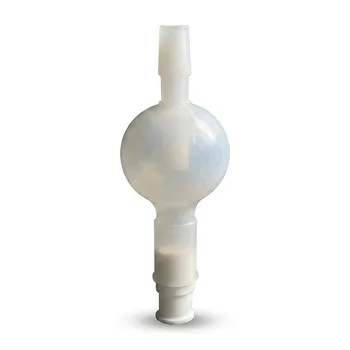
- High Purity PFA Chromatography Column with Collection Bottle Corrosion Resistant Fluoropolymer Filtration System for Trace Analysis
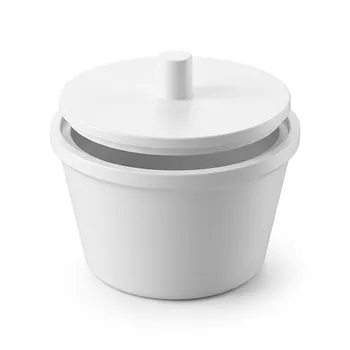
- High Purity PTFE PFA Plastic Crucible for Corrosion Resistant Acid Digestion and Trace Analysis
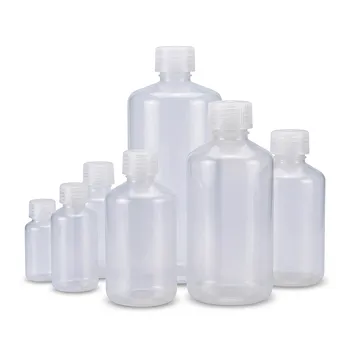
- Semiconductor Electronic Grade PFA Sampling Bottle for Ultrapure Reagent Storage and Trace Analysis
- 2L High Purity PTFE Reagent Bottle for Trace Analysis and Chemical Extraction with Customizable Specifications
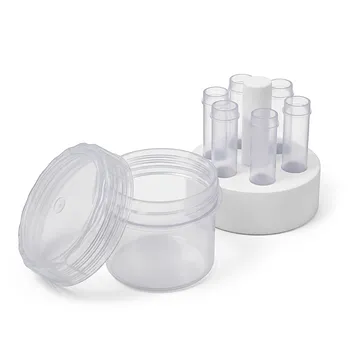
- High Purity Corrosion Resistant PFA Reaction Vessel with PTFE Holder and Integrated Sampling Tube for Trace Analysis
People Also Ask
- What are the primary functional and temperature differences between PFA and FEP when selecting melt-processible fluoropolymers for custom laboratory apparatus?
- Why is the chemical stability of polymer endgroups critical when selecting melt-processible fluoropolymers like PFA for high-purity laboratory apparatus? Choose Stable Endgroups for Reliable Performance
- What are the characteristics of PFA material? A Guide to Its High-Performance Balance
- Why is Perfluoroalkoxy alkane (PFA) preferred over glass or stainless steel in pharmaceutical process development? Pure Yield
- Why is PFA superior for cleaning and preventing cross-contamination? The Gold Standard for Ultra-Trace Lab Hygiene