The generation of pressure in a hydrothermal synthesis reactor is an internal process known as autogenous pressure development.
As the aqueous solvent is heated inside a hermetically sealed vessel, it undergoes thermal expansion and begins to vaporize. Because the reactor is closed, the resulting steam and the expansion of the remaining liquid significantly increase the internal force, following the specific vapor-pressure curve of the solvent used.
Core Takeaway: Pressure in a hydrothermal reactor is created internally (autogenously) by the vapor pressure of the solvent as temperature increases. The final pressure is dictated by the interaction between the operating temperature and the initial fill volume of the vessel.
The Mechanics of Autogenous Pressure
The Role of the Sealed Environment
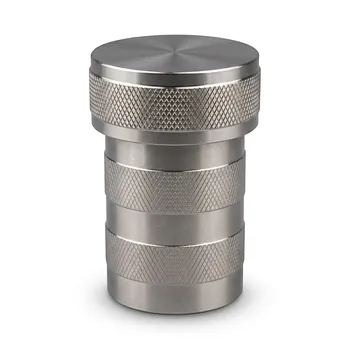
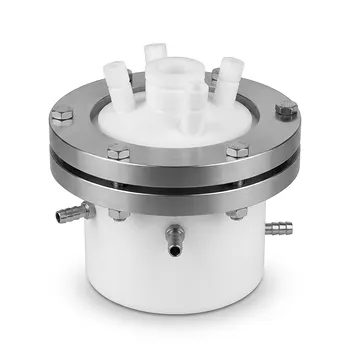
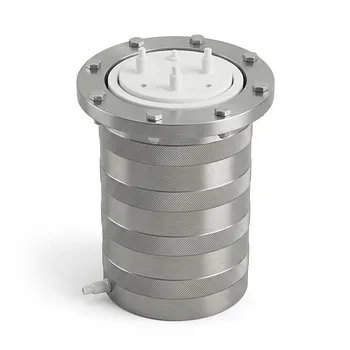
Hydrothermal synthesis relies on a hermetically sealed vessel, often called an autoclave, to prevent the escape of vapors. When heat is applied, the solvent cannot boil off into the atmosphere as it would in an open container.
Instead, the molecules are trapped, forcing the system into a high-energy state where liquid and vapor exist in equilibrium. This confinement is the fundamental requirement for generating the high pressures necessary for specific chemical transformations.
Vapor Pressure and Temperature Correlation
Pressure increases as a direct function of temperature, moving along the vapor-pressure curve of the solvent. As the temperature rises, more liquid molecules gain enough kinetic energy to enter the gas phase.
In these sealed systems, reactors typically operate within a range of 1 to 30 MPa (10 to 300 bar). The specific pressure at any given moment is predictable based on the physical properties of water (or the chosen solvent) at that specific thermal setpoint.
The Critical Influence of the Fill Volume
The Relationship Between Liquid and Headspace
The amount of solvent added to the reactor before sealing—often called the fill factor—is a primary driver of the final pressure. As the temperature increases, the liquid phase expands and occupies more of the internal volume.
If the initial fill volume is high, the expanding liquid compresses the remaining headspace rapidly. This can lead to a much steeper pressure increase than what would be predicted by vapor pressure alone.
Reaching Subcritical and Supercritical States
By controlling the temperature and fill volume, researchers can manipulate the solvent’s density and solvating power. At higher temperatures and pressures, the solvent reaches a subcritical or supercritical state.
In these states, the distinction between liquid and gas becomes blurred. This unique environment allows for the dissolution of precursors that are otherwise insoluble under standard atmospheric conditions.
Understanding the Trade-offs and Pitfalls
The Risk of Overfilling
The most significant pitfall in hydrothermal synthesis is overfilling the reactor vessel. If there is insufficient headspace for the liquid to expand, the reactor can become "hydrostatically full," leading to an exponential and dangerous spike in pressure.
This can exceed the structural limits of the stainless steel or Teflon liners. Such a failure may result in the mechanical rupture of the autoclave, posing a severe safety risk to personnel.
Material Integrity at High Pressure
Continuous operation at the upper limit of 30 MPa can degrade the seals and the structural integrity of the reactor over time. Thermal cycling combined with high internal stress can lead to "creep" in the metal or deformation of the inner liners.
Users must account for the corrosive nature of many hydrothermal fluids at these pressures. High pressure accelerates the penetration of solvents into the liner material, which can lead to contamination of the synthesis.
How to Manage Pressure for Your Research Goals
Effective hydrothermal synthesis requires balancing the desired chemical environment with the physical limitations of your hardware.
- If your primary focus is consistent reproducibility: Ensure the fill volume is measured precisely with a pipette every time to maintain a constant pressure across different batches.
- If your primary focus is safety and vessel longevity: Never exceed a 60-80% fill volume to allow for sufficient thermal expansion of the aqueous phase.
- If your primary focus is high-solubility synthesis: Operate at the higher end of the temperature range (near 250-300°C) to maximize the autogenous pressure, ensuring your reactor is rated for at least 30 MPa.
By mastering the relationship between temperature and fill volume, you can precisely control the internal environment of your reactor to achieve optimal crystalline growth.
Summary Table:
| Parameter | Role in Pressure Generation | Impact Level |
|---|---|---|
| Temperature | Drives vapor pressure following the solvent's specific curve | Primary Driver |
| Fill Volume | Determines available headspace for liquid/vapor expansion | Critical Control |
| Sealed Vessel | Prevents vapor escape to reach high-energy equilibrium | Essential Condition |
| Solvent Type | Dictates the physical vapor-pressure characteristics | Fundamental Factor |
Elevate Your Synthesis with KINTEK’s High-Performance Labware
Ensure the safety and precision of your high-pressure experiments with KINTEK. We specialize in high-performance fluoropolymer materials, offering everything from PTFE and PFA hydrothermal synthesis liners and microwave digestion vessels to high-purity trace analysis instruments.
Whether you need everyday essentials like beakers and reagent bottles or complex non-standard machined parts via our end-to-end custom CNC fabrication, KINTEK delivers unmatched reliability. From fluid transfer components to advanced electrochemical cells and battery testing fixtures, we provide absolutely everything your lab needs to succeed.
Ready to optimize your reactor setup? Contact our experts today to discuss your custom requirements and experience the KINTEK difference in quality and performance.
Related Products
- High Temperature Corrosion Resistant Hydrothermal Synthesis Reactor with TFM Inner Liner and Straight Cylinder Design
- PTFE Lined High Pressure Digestion Vessel 50ml High Temperature Hydrothermal Synthesis Tank
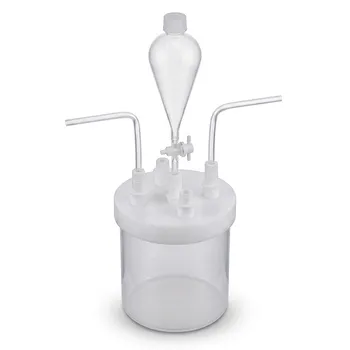
- Custom PTFE Reaction System with Hose Barb Fittings Corrosion Resistant High Sealing 2L 4L Lab Reactor with Separatory Funnel
- High Pressure Custom TFM Reactor Stainless Steel Outer Vessel PTFE Inner Cup for Corrosive Synthesis
- High Purity PFA Reaction Vessel for Biopharmaceutical Synthesis and Corrosive Chemical Fluid Handling with Customizable Tube Fittings
People Also Ask
- What is the role of a corrosion-resistant reactor in the synthesis of lignin-based carbon dots? Ensure Maximum Purity
- What are the technical advantages of using hydrothermal synthesis reactors for advanced electronic & optical nanomaterials?
- How does a hydrothermal synthesis reactor facilitate the production of crystalline materials with tailored morphologies? Precision Crystal Growth
- Why is the sealing reliability of a hydrothermal synthesis reactor critical for 24-hour cycles? Ensure Nano-Precision
- What role do hydrothermal synthesis reactors play in CQD preparation? Achieve High-Purity Nanomaterial Synthesis