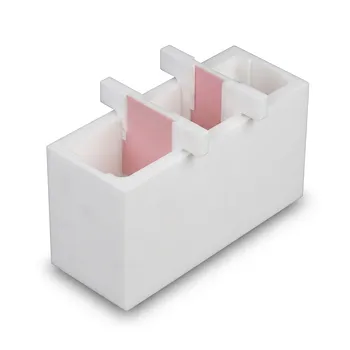
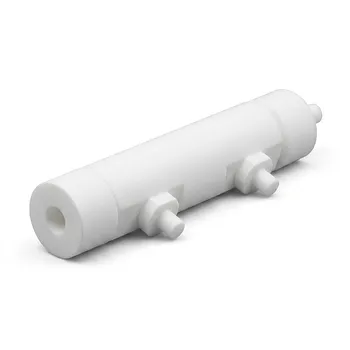
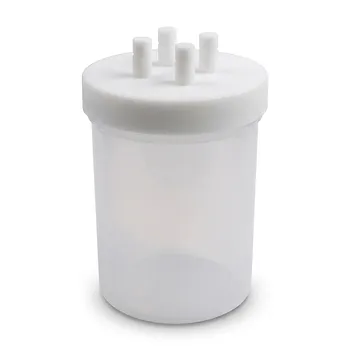
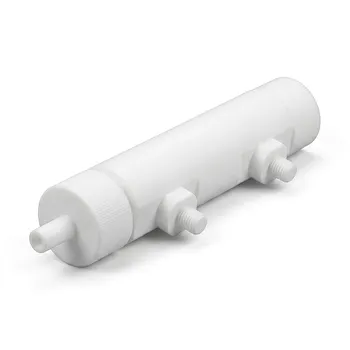
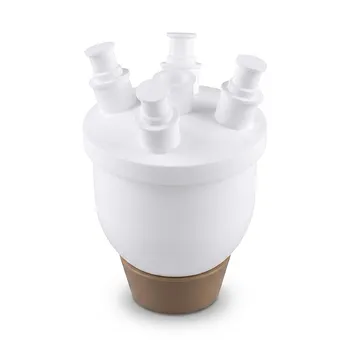
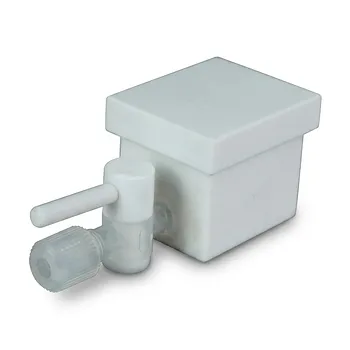
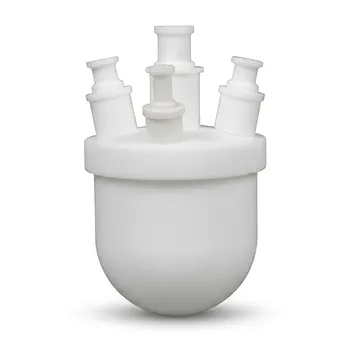
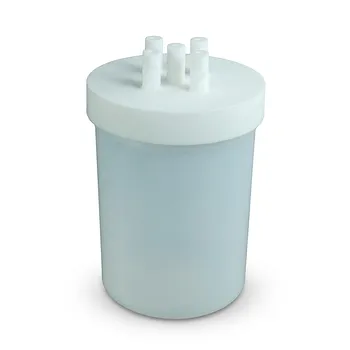
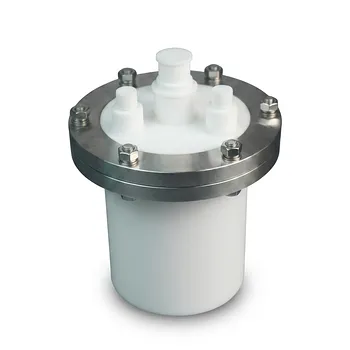
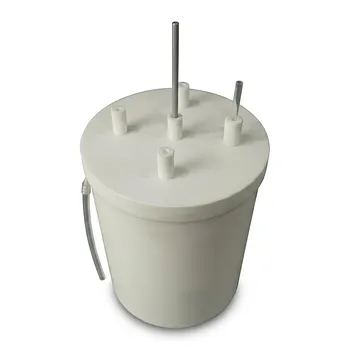
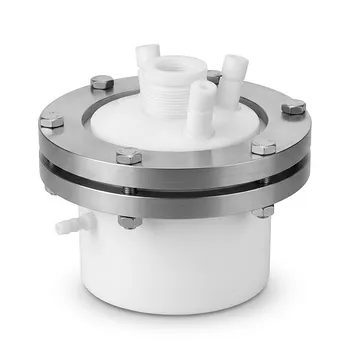
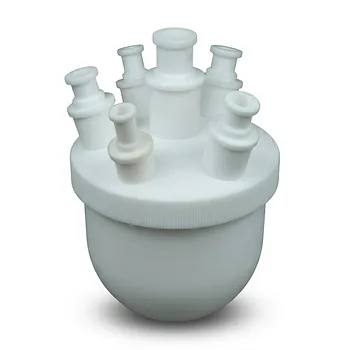
A custom reaction vessel facilitates mass transfer analysis by isolating natural diffusion from mechanical interference. By maintaining a static environment, the vessel preserves the natural concentration gradients of reactants and intermediates near the electrode surface. When paired with strategic physical features like multi-point sampling holes, the architecture allows researchers to map the precise movement of chemical species through the bulk solution.
A custom-engineered vessel acts as a controlled stage that captures the "natural" behavior of ions, enabling the precise mapping of diffusion paths and internal mass transport kinetics that would otherwise be obscured by external stirring.
Preserving the Natural Concentration Gradient
The Impact of a Static Environment
Traditional electrochemical cells often use stirring to ensure a uniform distribution of reactants. However, a custom vessel designed for static environments intentionally avoids this to reveal how molecules move on their own.
Without the turbulence of a stirrer, the concentration gradient—the change in density of a substance from the electrode to the bulk liquid—remains intact. This allows scientists to observe the "pure" physics of how intermediates migrate away from the anode.
Identifying Intermediate Diffusion Paths
The vessel's structure ensures that active intermediates are not prematurely mixed or swept away. This preservation is essential for understanding the lifespan and trajectory of short-lived chemical species during a reaction.
By keeping the fluid still, the vessel creates a stable environment where the diffusion layer can be studied in its native state. This provides a clearer picture of the reaction’s internal mechanics.
Spatial Mapping via Multi-Point Sampling
The Function of Specialized Lid Architecture
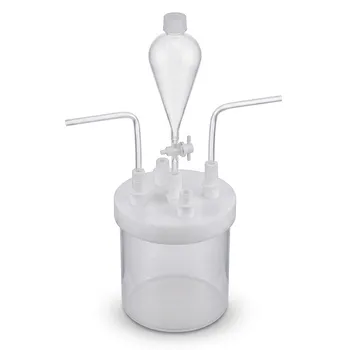
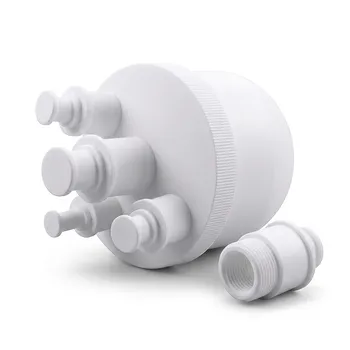
A critical component of these custom vessels is the inclusion of multi-point sampling holes located in the vessel lid. These holes are positioned at varying distances and angles from the electrode.
This design allows researchers to extract tiny samples from specific locations within the cell. By analyzing these samples, they can create a spatial map of how concentration changes across different coordinates in the liquid.
Tracking Internal Mass Transport
Each sampling point acts as a data node, contributing to a larger model of internal mass transport. This data is vital for calculating the velocity and direction at which ions move through the solution.
Mapping these paths helps in determining the diffusion kinetics of the system. It transforms a theoretical understanding of movement into a quantifiable, physical reality.
Understanding the Trade-offs
The Absence of Convective Flow
While a static vessel is superior for studying diffusion, it eliminates convection, which is the primary driver of mass transfer in many industrial applications. Results from static studies may not always scale directly to high-turbulence environments.
Increased Sensitivity to External Vibration
In a static setup, even minor external vibrations can disrupt the delicate concentration gradients. Researchers must ensure the vessel is placed on a vibration-isolated surface to maintain the integrity of the data.
Sampling Volume Limitations
Extracting fluid through the multi-point holes can inadvertently create micro-currents or change the pressure within the vessel. To minimize this, samples must be extremely small, which requires highly sensitive analytical equipment.
How to Apply This to Your Project
Integrating Vessel Design into Your Research
When choosing a vessel structure for mass transfer studies, your decision should align with whether you are prioritizing fundamental kinetics or practical application.
- If your primary focus is mapping diffusion kinetics: Use a static vessel with a multi-point sampling lid to capture undisturbed concentration gradients.
- If your primary focus is measuring intermediate stability: Utilize a custom static environment to prevent the rapid dilution of intermediates that occurs with mechanical stirring.
- If your primary focus is high-throughput production: Opt for a stirred vessel, as the static model is designed for observation rather than maximizing reaction rates.
By leveraging a custom reaction vessel to eliminate external variables, you gain the clarity needed to master the fundamental mechanics of electrochemical mass transport.
Summary Table:
| Feature | Impact on Mass Transfer | Research Benefit |
|---|---|---|
| Static Environment | Prevents convective mixing | Isolates pure diffusion physics |
| Concentration Gradients | Maintains reactant density layers | Reveals intermediate diffusion paths |
| Multi-point Sampling | Enables coordinate-based extraction | Maps spatial species distribution |
| Vessel Geometry | Limits fluid disturbance | Quantifies internal transport kinetics |
Elevate Your Electrochemical Research with KINTEK
Precision in mass transfer studies requires a perfect environment. KINTEK specializes in high-performance fluoropolymer laboratory supplies, providing researchers with the advanced tools needed to map diffusion kinetics with absolute clarity. From custom electrochemical cells and reaction vessels to high-purity PTFE and PFA labware like beakers, digestion tubes, and fluid transfer components, we ensure your experimental setup is free from interference.
Leveraging our end-to-end custom CNC fabrication, we deliver everything from complex non-standard machined parts to bespoke laboratory setups for battery testing and hydrothermal synthesis. Whether you are a scientist analyzing trace intermediates or an engineer scaling up production, KINTEK’s exclusive focus on high-performance materials guarantees the durability and purity your work demands.
Optimize your laboratory’s efficiency today—contact our experts to design your custom reaction setup!
References
- Abhijit Nandy, Shibdas Banerjee. Seeing the unseen: spatio-temporal visualization of reactive carbocation intermediates in electrolytic cells. DOI: 10.1039/d5sc06447c
This article is also based on technical information from Kintek Knowledge Base .
Related Products
- Corrosion Resistant PTFE Electrochemical Cell for New Energy Research Inert Insulating Customizable Lab Reaction Vessel
- Custom PTFE Reaction Box Opaque White Square Electrochemical Cell Tank
- Custom PTFE Electrolytic Cell Corrosion Resistant Low Background Reaction Vessel with Inlet Outlet Ports
- High Purity PFA Reaction Tank for Proton Exchange Membrane Electrolysis and Water Oxygen Separation Custom Labware
- High Purity Custom PTFE Reaction Cell Electrolytic Tank for Semiconductor and Polysilicon Industrial Applications
People Also Ask
- What parameters govern the electrochemical decomposition of perfluorooctanoic acid (PFOA) in aqueous solutions, and why are custom PTFE electrochemical cells preferred? Key factors include anode material, current density, electrolyte, and cell design.
- How do custom PTFE electrochemical cells improve the accuracy of stability testing for alkaline catalysts compared to glass cells?
- How does the hydrophobicity of PTFE benefit electrochemical measurements? Enhance Stability and Precision in Your Lab
- What makes PTFE an ideal construction material for custom electrochemical cells and electronic analytical instrumentation housings? Discover superior chemical resistance and electrical insulation
- Why must seawater electrolysis test cells have high corrosion resistance? Protect catalyst stability & data accuracy.