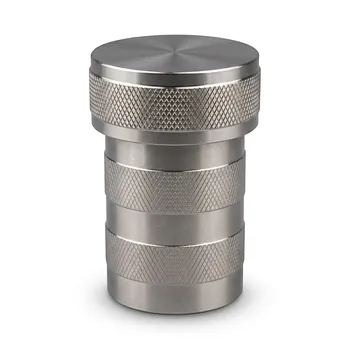
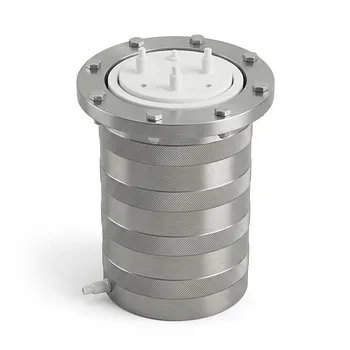
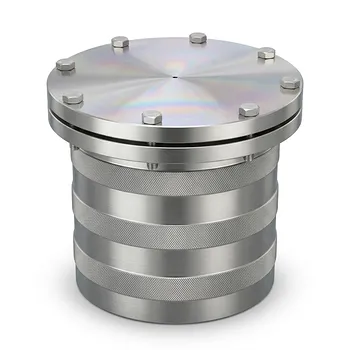
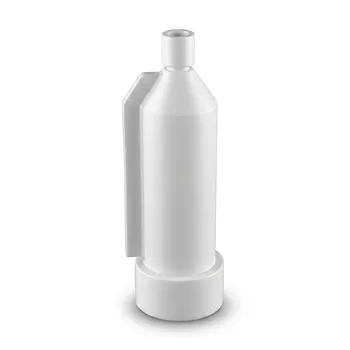
The sealing of a hydrothermal reactor is achieved through the mechanical compression and subsequent viscoelastic deformation of a polymer liner. When the stainless-steel outer cap is tightened, it exerts a downward force on the liner’s lid, forcing the polymer to flow into the contact gaps. This creates an initial physical barrier that is further reinforced by internal pressure as the reaction temperature rises.
The core of hydrothermal sealing is a "self-energizing" mechanism where internal vapor pressure acts upon a deformable polymer interface (PTFE or PPL). This ensures that as the risk of leakage increases due to rising pressure, the seal actually tightens to counteract it.
The Mechanics of Viscoelastic Deformation
The Role of Polymer Flow
Hydrothermal liners are typically made of Polytetrafluoroethylene (PTFE) or Para-polyphenylene (PPL) because these materials are viscoelastic. Unlike rigid metals, these polymers "flow" slightly when placed under mechanical stress from the reactor’s screw-top cap.
Initial Compression and Gasket Action
The outer stainless-steel shell acts as a high-strength exoskeleton that forces the liner lid against the liner body. This initial mechanical "crush" fills microscopic irregularities in the mating surfaces, establishing the primary seal before heating begins.
Design Architectures of the Seal
Tongue-and-Groove Interfaces
Many high-performance reactors utilize a tongue-and-groove design where a circular ridge on the lid fits into a corresponding channel on the liner body. This geometry increases the surface area of the seal and creates a tortuous path that prevents gas or liquid escape.
Flat-Face Sealing Dynamics
In simpler designs, a flat-face seal relies entirely on the precision of the machined surfaces and the uniform application of vertical pressure. While effective, these designs are more sensitive to surface scratches or debris which can provide a "leak path" for high-pressure vapors.
The Self-Energizing Seal Principle
Internal Pressure as a Sealing Force
As the reactor heats up, the liquid inside expands and generates high internal pressure. This pressure pushes upward against the underside of the liner lid, forcing the sealing surfaces into even tighter contact.
Maintaining Integrity Under Load
Because the polymer is trapped within a rigid steel vessel, it cannot escape the pressure. This creates a self-energizing effect where the operational pressure of the experiment serves to reinforce the integrity of the seal, provided the external cap remains secure.
Understanding the Trade-offs and Risks
Material Memory and Deformation
Every heating cycle subjects the liner to permanent deformation (creep) over time. Repeated use eventually thins the sealing edges, which is why liners must be inspected regularly and replaced when the "fit" feels loose or the polymer appears significantly discolored.
Temperature-Induced Softening
As the reactor approaches the maximum operating temperature of the liner (roughly 200°C for PTFE or 280°C for PPL), the material becomes significantly softer. If the reactor is cooled too rapidly, the steel shell may contract faster than the polymer, potentially compromising the seal and leading to "burping" or total pressure loss.
How to Apply This to Your Project
Ensuring Long-Term Seal Performance
To maximize the life of your reactor and ensure the safety of your experiments, consider the following operational guidelines:
- If your primary focus is sealing reliability at high pressure: Ensure the "tongue" and "groove" sections are meticulously cleaned of any solid precipitates before assembly.
- If your primary focus is extending liner lifespan: Avoid over-tightening the steel cap with excessive force, as this leads to premature polymer thinning and deformation.
- If your primary focus is preventing accidental venting: Always allow the reactor to cool naturally to room temperature to maintain the pressure-tight interface during the contraction phase.
Proper sealing is not just about the tightness of the cap, but about managing the delicate balance between mechanical force and the thermal properties of the polymer liner.
Summary Table:
| Feature | Sealing Mechanism | Key Benefit |
|---|---|---|
| Initial Seal | Mechanical compression by steel cap | Fills surface gaps and microscopic irregularities |
| Operational Seal | Self-energizing internal vapor pressure | Seal tightens automatically as pressure increases |
| Material Behavior | Viscoelastic deformation (PTFE/PPL) | Polymer "flows" to conform to the steel shell |
| Interface Design | Tongue-and-Groove geometry | Increases surface area and creates a tortuous leak path |
Secure Your High-Pressure Research with KINTEK Fluoropolymer Expertise
Ensure the integrity of your most sensitive experiments with KINTEK’s premium laboratory solutions. We maintain an exclusive focus on high-performance fluoropolymer materials, providing everything from everyday basic labware—including PTFE/PFA beakers, crucibles, and reagent bottles—to advanced components like hydrothermal synthesis liners, microwave digestion vessels, and custom electrochemical cells.
Backed by end-to-end custom CNC fabrication, KINTEK is equipped to deliver absolutely everything from complex non-standard machined parts and bespoke laboratory setups to high-volume orders of fluid transfer components, filtration tools, and general consumables. Don't compromise on sealing reliability.
Contact us today for custom fabrication or high-volume orders!
Related Products
- High Temperature Corrosion Resistant Hydrothermal Synthesis Reactor with TFM Inner Liner and Straight Cylinder Design
- PTFE Lined High Pressure Digestion Vessel 50ml High Temperature Hydrothermal Synthesis Tank
- High Pressure Custom TFM Reactor Stainless Steel Outer Vessel PTFE Inner Cup for Corrosive Synthesis
- Custom TFM Reaction Vessel with Stainless Steel Jacket and PTFE Inner Cup for High Corrosion Resistance
- High Purity PTFE Corrosion Resistant Reaction Vessel with Luer Fittings and Caps for Trace Analysis
People Also Ask
- What is the role of a corrosion-resistant reactor in the synthesis of lignin-based carbon dots? Ensure Maximum Purity
- What are the technical advantages of using hydrothermal synthesis reactors for advanced electronic & optical nanomaterials?
- How does a hydrothermal synthesis reactor facilitate the production of crystalline materials with tailored morphologies? Precision Crystal Growth
- Why is the sealing reliability of a hydrothermal synthesis reactor critical for 24-hour cycles? Ensure Nano-Precision
- What role do hydrothermal synthesis reactors play in CQD preparation? Achieve High-Purity Nanomaterial Synthesis