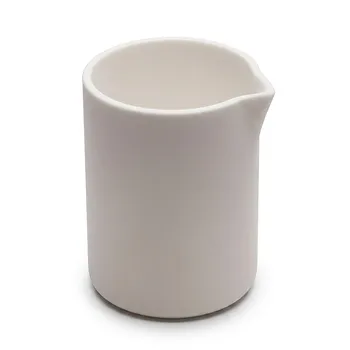
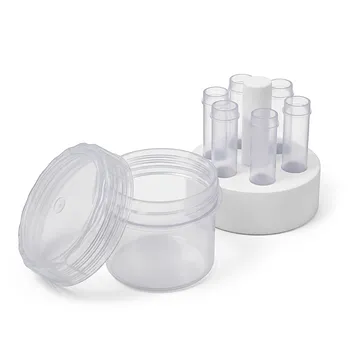
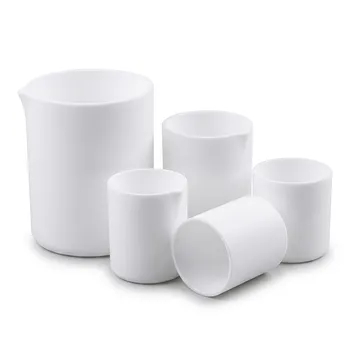
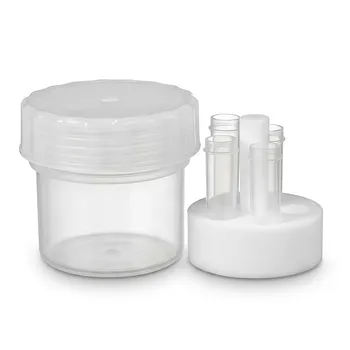
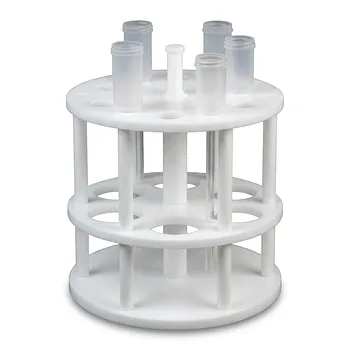
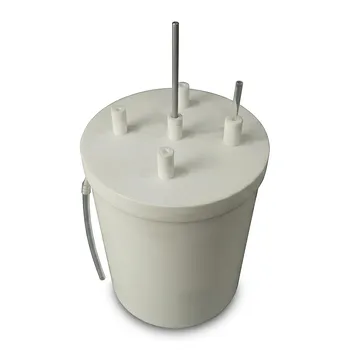
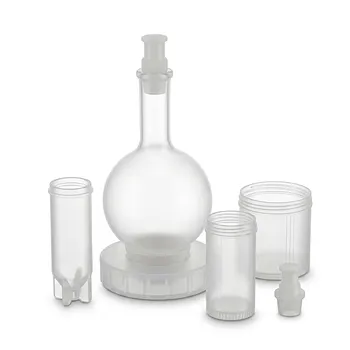
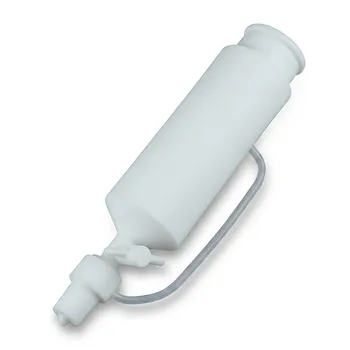
In high-pressure VDF polymerization, compressed vinylidene fluoride is converted into PVDF through peroxide-generated free radicals. An organic peroxide decomposes to form radicals that add to VDF, creating growing polymer chains through repeated radical addition; chain transfer and termination determine molecular weight and chain-end structure. High-performance fluoropolymer apparatus does not replace control of pressure, temperature, or peroxide safety, but it provides the chemically inert, low-contamination reaction and purification environment needed to obtain reproducible material.
The essential combination is controlled high-pressure radical chemistry and contamination-resistant hardware. The apparatus must tolerate compressed VDF, peroxide-derived radicals, polar solvents, and purification operations while maintaining pressure integrity and avoiding trace-metal or surface contamination.
How Radical Homopolymerization of VDF Proceeds
VDF must be handled as a compressed monomer
Vinylidene fluoride has a very low boiling point, approximately −84 °C, and a melting point near −144 °C. At ordinary laboratory temperatures it is therefore handled as a compressed gas, so polymerization requires a sealed, pressure-rated reaction system.
High pressure increases the concentration of VDF in the reaction phase. This enables sufficient monomer availability for propagation and helps maintain a practical polymerization rate in the closed reactor.
Peroxide decomposition creates the initiating radicals
Organic peroxides, including benzoyl peroxide derivatives, decompose under suitable thermal conditions to produce reactive radical species. These radicals add across the carbon–carbon double bond of VDF and generate a new carbon-centered radical at the end of the first chain unit.
The peroxide structure can influence the resulting polymer because fragments from the initiator may remain at the polymer chain ends. This is important when later chain-end chemistry or polymer functionality matters.
Propagation builds the PVDF chain
The newly formed chain radical adds to another VDF molecule, and the process repeats:
- Initiation: peroxide decomposition produces radicals.
- Monomer addition: a radical adds to the VDF double bond.
- Propagation: the chain radical repeatedly incorporates additional VDF units.
- Termination or transfer: growing chains stop by radical combination, disproportionation, or chain-transfer processes.
The product is poly(vinylidene fluoride), or PVDF, with its final molecular weight and chain-end composition determined by the balance among initiation, propagation, termination, and transfer.
Structural regularity affects crystallinity
PVDF properties depend not only on molecular weight but also on chain microstructure. The relative amount of head-to-tail versus head-to-head incorporation influences chain regularity.
More regular chains can pack more effectively, affecting crystallinity, melting behavior, and thermal performance. These properties are therefore linked to polymerization conditions rather than being determined solely by the identity of the monomer.
Why High-Pressure Apparatus Is Central to the Synthesis
Pressure integrity is a process requirement
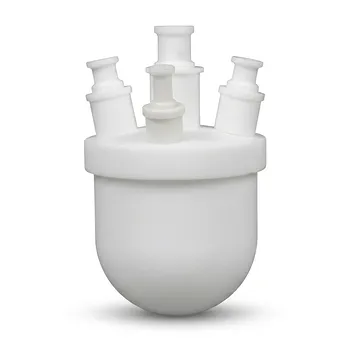
The reactor must safely contain compressed VDF and the pressure generated or maintained during polymerization. This generally means using a properly engineered pressure vessel, with fluoropolymer components used where chemical compatibility and contamination control are required.
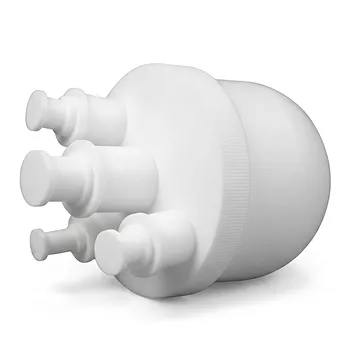
A PTFE or PFA vessel should not automatically be treated as a complete high-pressure reactor. In demanding service, fluoropolymer liners, inserts, valves, tubing, or wetted components are commonly integrated with a mechanically rated external vessel.
Fluoropolymer surfaces resist aggressive chemistry
PTFE and PFA provide broad chemical resistance against fluorinated monomers, peroxide-related species, and many organic solvents used during workup. Their inert surfaces reduce the risk that the apparatus will react with the monomer, initiator, polymer, or purification solvent.
This is especially valuable when trace contamination can affect polymer color, molecular analysis, chain-end characterization, or downstream material performance.
Low contamination improves reproducibility
Metallic equipment can introduce trace elements through corrosion, wear, or leaching. High-purity fluoropolymer wetted parts reduce this risk and help preserve the intended composition of the polymerization system.
The apparatus also prevents contamination from one synthesis being carried into another. This matters when comparing molecular weight, crystallinity, chain-end functionality, or defect levels across experiments.
Sealed transfer minimizes exposure
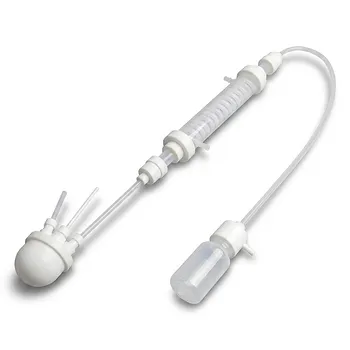
Chemical-resistant fluoropolymer tubing and transfer components support the controlled movement of VDF, initiator solutions, solvents, and polymer-containing mixtures. Sealed transfer reduces monomer loss and limits exposure to air, moisture, and external contaminants.
For gaseous monomers, reliable connections and compatible seals are as important as the reactor body itself. A chemically resistant vessel can still fail operationally if its valves, tubing, or fittings are incompatible with the process.
How Purification Uses the Same Material Strategy
Filtration requires chemically inert wetted parts
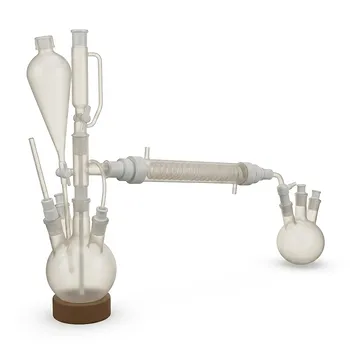
After polymerization, the mixture may contain polymer, residual initiator fragments, solvent, and low-molecular-weight materials. Filtration components made from compatible fluoropolymers help prevent adsorption, corrosion, and contamination during separation.
The non-stick character of fluoropolymer surfaces can also reduce polymer adhesion and improve recovery from the vessel and transfer path.
Solvent extraction demands compatibility
Polar and organic solvents used for washing or extraction can stress ordinary plastics, elastomers, and coated metals. PTFE and PFA components provide a more reliable wetted environment for these operations, provided the specific solvent, temperature, pressure, and exposure time have been checked.
Chemical resistance is not equivalent to unlimited service life. Permeation, mechanical deformation, seal compatibility, and solvent-specific effects must still be evaluated.
Chromatography and solvent handling benefit from clean surfaces
Column chromatography and related purification steps can be sensitive to trace contaminants and extractables. Fluoropolymer reagent bottles, tubing, connectors, and vessel liners help maintain a clean solvent path.
For polymer characterization, this reduces the possibility that apparatus-derived contaminants will be mistaken for genuine polymer residues or degradation products.
Understanding the Trade-offs
Chemical inertness does not guarantee pressure performance
PTFE and PFA are chemically resistant, but they do not provide the same mechanical strength and dimensional stability as a purpose-designed metal pressure vessel. Under pressure and temperature, fluoropolymers can deform, creep, or permeate gases.
The safe design is therefore application-specific: use a pressure-rated structure and treat fluoropolymer parts as compatible wetted components or liners unless they are explicitly engineered and certified for the required pressure service.
Peroxide handling remains a primary hazard
Organic peroxides can decompose violently if exposed to excessive heat, contamination, confinement, or incompatible materials. A fluoropolymer reactor reduces chemical interaction with the vessel, but it does not eliminate runaway-reaction risk.
Initiator quantity, temperature control, pressure relief, shielding, remote operation, and validated operating procedures remain essential. The apparatus must be selected as part of a complete hazard analysis, not as a substitute for one.
Contamination control must include the entire system
Using a PFA vessel does not ensure a clean process if the system also contains unsuitable gaskets, lubricants, metal particles, or poorly cleaned transfer lines. Every wetted component—including valves, seals, filters, and fittings—must be reviewed for compatibility and extractables.
Cleaning and conditioning procedures are equally important, particularly when measuring low-level impurities or chain-end functionality.
Advanced methods are not interchangeable with peroxide synthesis
The supplementary examples of visible-light iodine-transfer polymerization, anionic polymerization, and supercritical-carbon-dioxide processing illustrate alternative fluoropolymer routes. They should not be conflated with conventional peroxide-initiated VDF homopolymerization.
They do, however, reinforce the same equipment principle: fluorinated monomers, initiators, halogenated compounds, and organic solvents require an apparatus system designed for chemical compatibility, containment, and low contamination.
How to Apply This to Your Project
The correct apparatus specification should follow the chemistry, pressure envelope, temperature profile, and purification sequence.
- If your primary focus is safe peroxide-initiated VDF polymerization: Use a properly pressure-rated sealed reactor with validated temperature control, pressure relief, compatible seals, and fluoropolymer wetted surfaces or liners.
- If your primary focus is polymer purity and reproducibility: Use high-purity PTFE or PFA vessels, tubing, filters, and transfer components throughout the wetted path, and control cleaning and cross-contamination.
- If your primary focus is maximum polymer recovery: Favor smooth, non-stick fluoropolymer surfaces and minimize unnecessary transfers and polymer adhesion during filtration and solvent workup.
- If your primary focus is chain-end or microstructure analysis: Control initiator identity, reaction conditions, sampling, and contamination because peroxide fragments and head-to-tail structure affect the measured polymer properties.
- If your primary focus is scale-up: Reassess fluoropolymer creep, gas permeation, seal compatibility, heat removal, relief capacity, and mechanical pressure ratings rather than simply increasing vessel size.
A well-designed fluoropolymer apparatus protects both the reaction and the quality of the PVDF data produced from it.
Summary Table:
| Factor | Role in VDF Polymerization | Role of Fluoropolymer Apparatus |
|---|---|---|
| High pressure | Increases monomer concentration for practical polymerization rate | Pressure-rated vessels with fluoropolymer liners integrate safety and chemical compatibility |
| Peroxide initiator | Generates radicals; fragments may remain on chain ends | Inert surfaces avoid interaction with peroxide and reduce side reactions |
| Propagation | Chain grows by repeated addition of VDF | Clean surfaces minimize contamination for consistent molecular weight |
| Structural regularity | Affects crystallinity and thermal properties | Controlled environment preserves chain microstructure |
| Purification | Removes unreacted material and low-MW species | Non-stick, chemical-resistant surfaces enhance recovery and purity |
Achieve reproducible PVDF synthesis with KINTEK's high-purity PTFE/PFA labware and custom CNC-machined components. From pressure vessels to transfer lines, our inert fluoropolymer apparatus minimizes contamination and maximizes recovery. Contact us today to optimize your polymerization workflow — get in touch!
Related Products
- Custom PTFE Flask 250ml High Purity Fluoropolymer Laboratory Vessel for Chemical Research
- High Purity PTFE Single Neck Reaction Flask Acid Resistant Customizable Fluoropolymer Laboratory Reactor
- Corrosion Resistant Hydrogen Fluoride Reflux Apparatus PTFE Flask Condenser Separatory Funnel Collection Bottle High Temperature Laboratory System
- PTFE Distillation Condensation Apparatus High Temperature Hydrofluoric Acid Resistant Fluorination Reaction Flask
- Custom PTFE Beaker 350ml High Purity Laboratory Vessel with Optional Lid for Hot Plate Heating Applications
People Also Ask
- What are the key steps for structural integrity in molded PTFE lab reaction vessels? Master fine powder processing.
- Why Are High-Purity Fluoropolymer Vessels and Tubing Critical for Trace Analysis? Prevent Contamination Reliably
- Why do PTFE fluoropolymer laboratory vessels and containers exhibit superior chemical resistance against harsh solvents and corrosive acids compared to standard plastic labware? Discover the molecular secrets
- How do choice of solvent and chain transfer activity affect molecular weight during vinylidene fluoride (VDF) radical polymerization? Learn Key Factors for High-MW PVDF
- Why are fluoropolymer reaction vessels essential for SnO2/rGO synthesis? The Key to High-Performance Composites