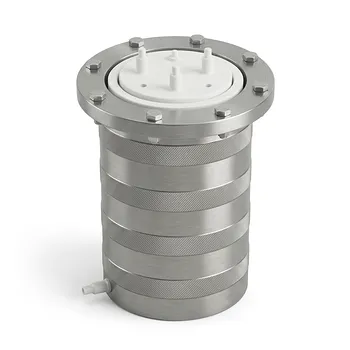
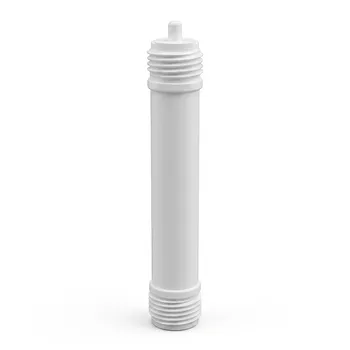
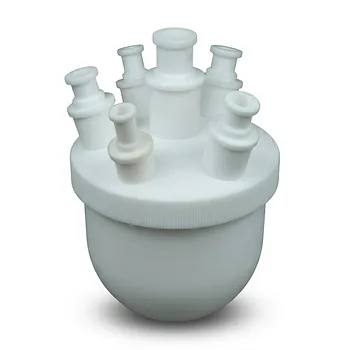
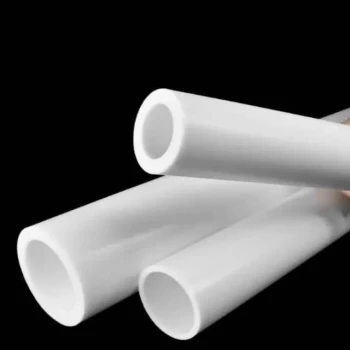
The quality of a PTFE liner is the decisive factor in hydrothermal synthesis outcomes. A high-precision liner ensures a hermetic seal and a stable physicochemical environment, which are essential for achieving consistent crystal purity and morphological uniformity. Without a high-quality liner, researchers risk reaction leakage, sample contamination, and poor experimental repeatability.
A high-quality PTFE liner acts as both a chemical barrier and a physical stabilizer, protecting the autoclave from corrosion while ensuring the reaction environment remains pure and pressurized. Its precision and material integrity are foundational to the repeatability of crystal growth and the structural control of synthesized nanomaterials.
Maintaining the Chemical and Physical Environment
Superior Sealing for Pressure Stability
High-precision machining of a PTFE liner is crucial for establishing the necessary sealing performance required for high-pressure reactions. A quality liner maintains internal pressure consistently, which provides the stable environment required for steady crystal growth.
Protection of the Pressure Vessel
The liner serves as a critical chemical barrier that isolates aggressive reaction media from the stainless steel outer shell. By preventing strong acids, bases, or organic solvents from eroding the metal, a high-quality liner extends the service life of the autoclave and ensures safety.
Prevention of Metal Ion Contamination
High-purity PTFE liners prevent metal ions from leaching into the reaction solution from the reactor body. This isolation is vital for maintaining the purity of the reaction system, ensuring that the optoelectronic or magnetic properties of the synthesized materials are not compromised.
Impact on Material Morphology and Purity
Stabilizing Physicochemical Conditions
Quality liners ensure a consistent physicochemical environment throughout the synthesis process. This stability directly influences the microscopic morphology of the product, allowing for the controllable growth of nanocrystals or porous materials.
Non-Stick Properties and Yield Optimization
The smooth, high-quality internal surface of a PTFE liner offers excellent non-stick properties. This minimizes material adhesion to the walls, which significantly improves synthesis yield and simplifies the recovery of delicate samples.
Ensuring Experimental Repeatability
The durability and precision of a premium liner are core factors in scientific reliability. Using a liner that resists deformation ensures that the internal volume and pressure conditions remain identical across multiple experimental runs.
Understanding the Trade-offs
Temperature and Pressure Limitations
While PTFE is highly resistant to chemicals, it has a lower thermal ceiling compared to the metal autoclave itself. Exceeding its recommended temperature (typically 200-240°C) can cause the liner to soften or creep, leading to a loss of sealing integrity.
Material Deformation and Fatigue
Repeated cycling between high and low temperatures causes the PTFE to expand and contract. Over time, even high-quality liners will experience permanent deformation, which eventually necessitates replacement to prevent cross-contamination or pressure failure.
Cost vs. Longevity
Lower-quality liners may be cheaper initially but often suffer from micro-porosity or poor machining tolerances. These defects can trap residues from previous experiments, leading to phantom results and a shorter overall lifespan for the liner.
How to Apply This to Your Project
Making the Right Choice for Your Goal
To achieve the best results in your hydrothermal synthesis, consider your primary objective:
- If your primary focus is high-purity functional materials: Invest in high-purity PTFE or PFA liners to prevent metal ion leaching that could degrade optoelectronic properties.
- If your primary focus is morphological control of nanocrystals: Ensure your liners are precision-machined to provide the most stable pressure environment possible for uniform growth.
- If your primary focus is high-throughput laboratory efficiency: Prioritize liners with superior non-stick surfaces to speed up product recovery and cleaning between experimental runs.
By prioritizing the quality and precision of your PTFE liner, you ensure that your hydrothermal synthesis is both safe and scientifically rigorous.
Summary Table:
| Key Factor | Impact on Synthesis | Benefit to Researcher |
|---|---|---|
| Precision Sealing | Maintains stable internal pressure | Consistent crystal morphology and safety |
| Chemical Isolation | Protects autoclave from corrosive media | Extended vessel life and reduced maintenance |
| Material Purity | Prevents metal ion leaching | High-purity products for optoelectronics |
| Surface Quality | Excellent non-stick properties | Higher synthesis yield and easier recovery |
| Machining Accuracy | Ensures repeatable internal volume | Reliable experimental repeatability |
Optimize Your Synthesis with KINTEK Precision
Ensure the integrity of your high-temperature and high-pressure experiments with KINTEK’s premium fluoropolymer labware. From everyday basic labware like beakers and reagent bottles to specialized hydrothermal synthesis liners, microwave digestion vessels, and electrochemical cells, we manufacture virtually all imaginable laboratory supplies crafted from high-performance PTFE and PFA.
Backed by end-to-end custom CNC fabrication, KINTEK is equipped to deliver everything from complex non-standard machined parts to high-volume orders, ensuring your research is never compromised by material impurities or poor tolerances.
Enhance your lab’s efficiency and scientific rigor. Contact our experts today to discuss your project requirements and experience the KINTEK advantage in high-performance fluoropolymers.
References
- Yao Zhao, Junhua You. Cu‐Content Engineering in FeCoNiCuAl High‐Entropy Alloy Precursors: A Pathway to Advanced HEA‐Derived Sulfide Electrocatalysts for Efficient Oxygen Evolution Reaction. DOI: 10.1002/cctc.202500147
This article is also based on technical information from Kintek Knowledge Base .
Related Products
- PTFE Lined High Pressure Digestion Vessel 50ml High Temperature Hydrothermal Synthesis Tank
- High Pressure Custom TFM Reactor Stainless Steel Outer Vessel PTFE Inner Cup for Corrosive Synthesis
- Custom TFM Reaction Vessel with Stainless Steel Jacket and PTFE Inner Cup for High Corrosion Resistance
- High Purity PTFE Microwave Digestion Vessel for Soil and Food Analysis Acid Resistant Fluoropolymer Sample Preparation Liners
- High Purity TFM Microwave Digestion Vessels PTFE Acid Evaporation Liners Domestic GT-400 Equivalent Laboratory Reaction Containers
People Also Ask
- What are the benefits of using a PTFE-lined vessel for carbon-sulfur cathode treatment? Maximize Purity & Performance
- Why are PTFE-lined pressure digestion vessels required for the preparation of Ag/CeO2 catalysts? Purity & Performance
- What is the function of high-pressure PTFE digestion vessels in mineral analysis? Optimize Sample Mineralization
- What safety features are typically incorporated into high-pressure PTFE digestion vessel designs? Ensure Lab Safety
- What is the function of PTFE lined high-pressure vessels in g-C3N4 synthesis? Achieve High-Purity Material Growth