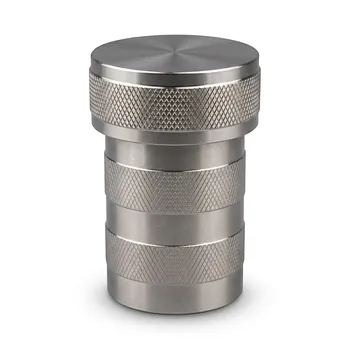
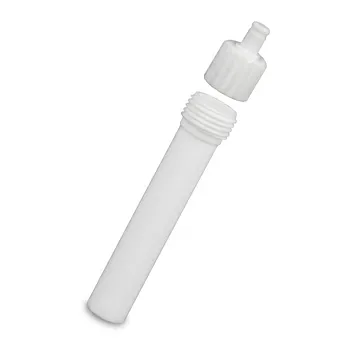
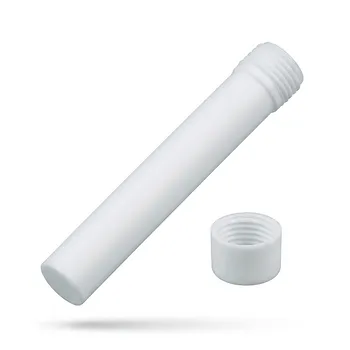
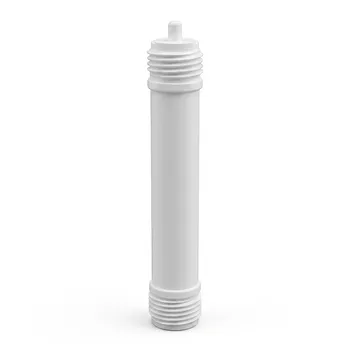
The chemical inertness of a PTFE liner is the primary safeguard against metallic contamination during hydrothermal synthesis. It acts as a robust barrier that prevents the corrosive reaction solution from leaching metal ions out of the autoclave's stainless steel body. By maintaining an uncontaminated environment, the liner ensures the high chemical purity of the copper nanowires and protects the delicate surface chemistry required for their growth.
The PTFE liner ensures high-purity copper nanowires by eliminating the introduction of foreign metal ions that would otherwise interfere with surface-passivating agents or catalyze unwanted side reactions. Its inertness is the foundation for achieving both chemical stability and morphological uniformity in nanocrystals.
Eliminating Metallic Ion Contamination
Preventing Corrosion of the Outer Shell
Hydrothermal synthesis often involves aggressive chemical precursors, such as nitrates or chlorides, which become highly reactive at elevated temperatures. The PTFE liner’s chemical inertness prevents these substances from attacking the stainless steel walls of the autoclave. Without this protection, the acidic or alkaline reaction media would erode the metal, compromising the structural integrity of the vessel.
Maintaining Aqueous Chemical Purity
By stopping the corrosion process, the liner ensures that foreign metal ions (like iron, nickel, or chromium) do not enter the reaction system. This is critical because even trace amounts of impurity ions can alter the redox potential of the solution. Maintaining a pristine environment ensures that the synthesis produces pure copper rather than a complex metallic alloy or contaminated composite.
Facilitating Precise Crystal Morphology
Protecting Surface Passivation Agents
The purity of the system directly affects the behavior of capping agents like oleylamine or hexadecylamine (HDA). These molecules must bind precisely to the copper surface to direct growth into a nanowire shape. Impurity ions from the autoclave body can interfere with this passivation effect, leading to irregular shapes or the formation of bulk copper particles instead of wires.
Enabling Anisotropic Growth
The chemical stability provided by the PTFE liner allows for the controlled, anisotropic growth of crystals. Because the liner does not react with the copper precursors (such as copper chloride), the concentration of reactants remains stable throughout the 12-hour or longer reaction period. This consistency is vital for achieving the high aspect ratios and uniform diameters characteristic of high-quality nanowires.
Understanding the Trade-offs and Limitations
Thermal and Pressure Constraints
While PTFE is exceptionally inert, it has specific physical limits, typically around 220°C to 250°C. Beyond these temperatures, the material can begin to soften or creep, which may lead to seal failure or "cold flow" deformation. For reactions requiring higher temperatures, alternative fluoropolymers like PFA or specialized metallic inserts may be necessary.
Mechanical Wear and Sealing Risks
The quality of the high-precision machining on the PTFE liner is a common point of failure. If the liner is not perfectly fitted to the autoclave, high-pressure vapors can bypass the seal and reach the metal shell, causing localized corrosion. Furthermore, repeated thermal cycling can lead to micro-cracks in the PTFE, which may trap residues and lead to cross-contamination between batches.
Optimizing Synthesis for High-Purity Results
How to Apply This to Your Project
To ensure the highest quality copper nanowire synthesis, your choice of liner and maintenance routine must align with your specific chemical precursors.
- If your primary focus is maximum chemical purity: Always use high-purity, virgin PTFE liners and implement a rigorous cleaning protocol (such as "dummy" runs with nitric acid) to remove any adsorbed ions.
- If your primary focus is morphological uniformity: Ensure the liner provides a perfect seal to maintain constant pressure, as pressure fluctuations directly impact the anisotropic growth of the nanowires.
- If your primary focus is material recovery: Leverage the non-stick properties of PTFE to fully collect the red colloidal copper product, ensuring no material is lost to the vessel walls.
Choosing a high-quality, chemically inert liner is not merely a safety precaution; it is a fundamental requirement for controlling the atomic-level growth of pure copper nanowires.
Summary Table:
| Feature | Impact on Synthesis | Benefit to Nanowires |
|---|---|---|
| Chemical Inertness | Prevents leaching of Fe, Ni, Cr ions from steel | Ensures high chemical purity & stable redox |
| Corrosion Resistance | Resists aggressive nitrates and chlorides | Protects vessel integrity & sample environment |
| Surface Protection | Safeguards capping agents (e.g., Oleylamine) | Enables precise anisotropic growth & shape |
| Non-stick Nature | Minimizes material loss on vessel walls | Enhances recovery of colloidal copper product |
| Precision Machining | Maintains airtight high-pressure seals | Constant pressure for uniform wire diameters |
Elevate Your Research with KINTEK’s Precision Fluoropolymer Solutions
Achieving atomic-level precision in hydrothermal synthesis requires labware that never compromises your results. At KINTEK, we specialize in high-performance fluoropolymer materials, offering an exhaustive range of PTFE and PFA supplies designed for the most demanding laboratory environments.
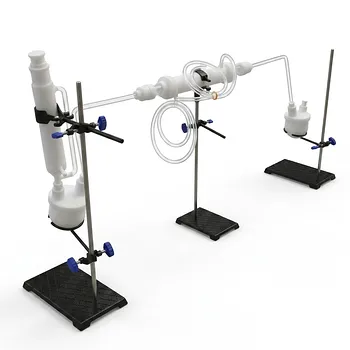
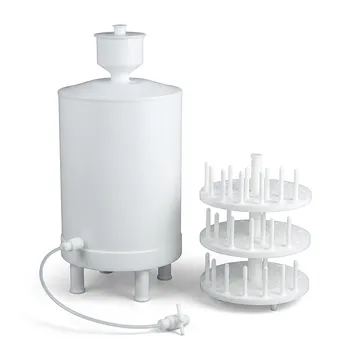
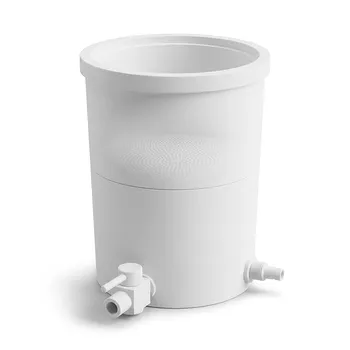
From everyday basic labware like beakers, crucibles, and reagent bottles to specialized high-purity trace analysis instruments and cleaning tanks, we provide the tools necessary for uncontaminated results. Our expertise extends to comprehensive fluid transfer components (tubing, valves), sample prep tools (separatory funnels, pipettes), and essential consumables (O-rings, seal tapes).
For advanced researchers, we offer custom-engineered derivative apparatus, including standard and bespoke electrochemical cells, battery testing fixtures, and microwave digestion vessels. Backed by our end-to-end custom CNC fabrication, KINTEK can deliver everything from high-volume orders to complex, non-standard machined parts tailored to your specific autoclave or reactor setup.
Ready to eliminate contamination and optimize your synthesis yields?
Contact KINTEK today to discuss your custom project or standard labware needs!
References
- J Gopu, Krishna C. Etika. Hydrothermal synthesis of conductive copper nanowires: effect of oleylamine and dextrose concentrations. DOI: 10.1039/d5ra07427d
This article is also based on technical information from Kintek Knowledge Base .
Related Products
- PTFE Lined High Pressure Digestion Vessel 50ml High Temperature Hydrothermal Synthesis Tank
- Custom TFM Reaction Vessel with Stainless Steel Jacket and PTFE Inner Cup for High Corrosion Resistance
- High Temperature Corrosion Resistant Hydrothermal Synthesis Reactor with TFM Inner Liner and Straight Cylinder Design
- High Purity PTFE Microwave Digestion Vessel Replacement Liner for Acid Sample Preparation and Trace Analysis
- High Purity TFM Microwave Digestion Vessels PTFE Acid Evaporation Liners Domestic GT-400 Equivalent Laboratory Reaction Containers
People Also Ask
- What are the benefits of using a PTFE-lined vessel for carbon-sulfur cathode treatment? Maximize Purity & Performance
- Why are PTFE-lined pressure digestion vessels required for the preparation of Ag/CeO2 catalysts? Purity & Performance
- What safety features are typically incorporated into high-pressure PTFE digestion vessel designs? Ensure Lab Safety
- What is the function of PTFE lined high-pressure vessels in g-C3N4 synthesis? Achieve High-Purity Material Growth
- Role of High-Pressure Digestion Tanks in Perovskite Synthesis: Achieve Superior Stability and Latent Heat