Chain transfer in TFE polymerization limits PTFE chain length by moving radical activity from a growing polymer chain to a transfer agent. In aqueous free-radical polymerization, an active PTFE chain can abstract a labile hydrogen atom from an additive such as methanol. This caps the original chain and creates a new radical that can initiate another chain, thereby controlling molecular weight rather than allowing uncontrolled high-molecular-weight buildup.
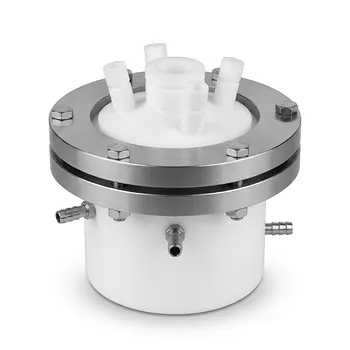
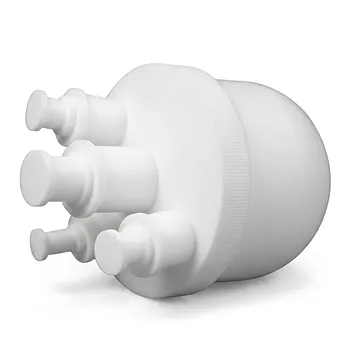
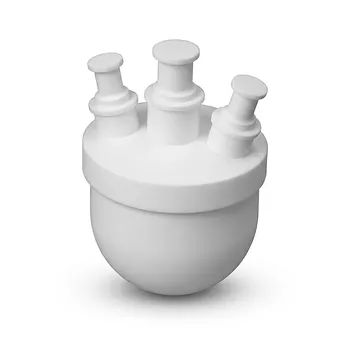
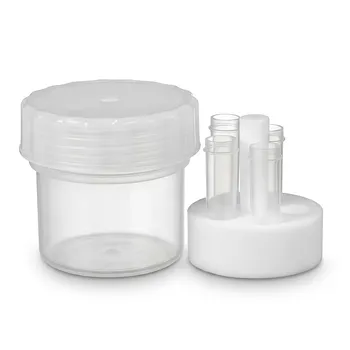
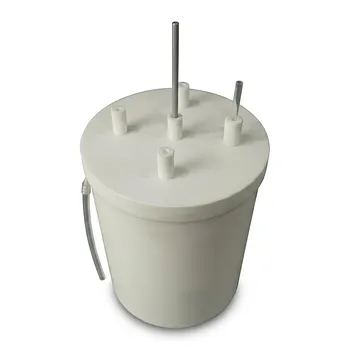
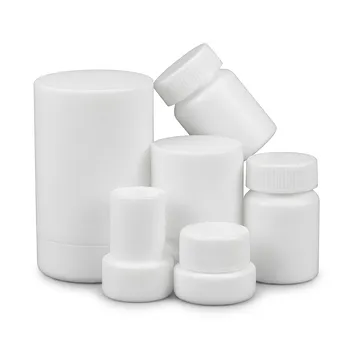
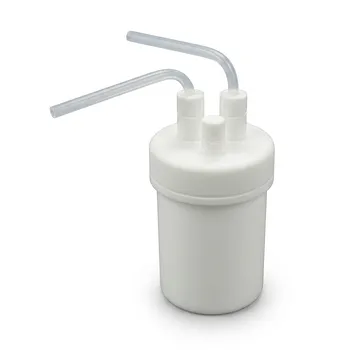
The chain transfer agent acts as a molecular-weight regulator, while PTFE or PFA labware protects the reaction from contamination, degradation, and unintended side reactions that could distort polymerization results.
How Chain Transfer Controls TFE Polymerization
The TFE polymerization process
Tetrafluoroethylene polymerizes in an aqueous medium through a free-radical mechanism. An initiator generates radicals, which add to TFE molecules and form growing polymer radicals containing repeated tetrafluoroethylene units.
As propagation continues, each active chain can add more TFE. Without sufficient control, the chains may become extremely long, producing a polymer with molecular weight beyond the intended processing or analytical target.
The hydrogen-abstraction step
A chain transfer agent, or CTA, provides a reactive atom that can be abstracted by the growing polymer radical. For methanol, the simplified reaction can be represented as:
Growing polymer radical + CH3OH
    -> capped polymer chain + CH3O radical
The original polymer chain is no longer an active radical after it receives the hydrogen atom. Its growth therefore stops, or at least its radical propagation is terminated through the transfer event.
Reinitiation by the new radical
The radical produced from the transfer agent can react with additional TFE or participate in subsequent radical chemistry. This transfers the opportunity for chain growth to a new chain rather than eliminating radical activity from the entire reaction.
The result is a larger number of polymer chains with a lower average chain length. By adjusting the type and concentration of the CTA, chemists can regulate the resulting molecular-weight distribution and polymerization behavior.
Intentional and unintended transfer
Intentional CTAs are added to obtain a targeted molecular weight and processing profile. Examples cited for fluoropolymer production include methanol and, in other systems, compounds such as ethane, propane, or trichlorofluoromethane.
Chain transfer can also occur unintentionally. An unsuitable surfactant, impurity, initiator fragment, or residual organic compound may act as a telogen and alter the polymer structure or molecular weight without being part of the experimental design.
Why Molecular-Weight Control Matters
Preventing uncontrolled chain growth
Precise transfer control prevents excessive high-molecular-weight buildup. This matters because PTFE properties depend strongly on chain length, branching, end groups, and the overall molecular-weight distribution.
An uncontrolled transfer rate can produce material that does not represent the intended formulation or reaction kinetics. In laboratory studies, that can make comparisons between experiments unreliable.
Preserving processing performance
The desired molecular weight depends on the intended application. Very high molecular weight can support mechanical strength, dimensional stability, and durability, but it can also make processing more difficult.
For melt-processed fluoropolymer products, controlled molecular weight can help reduce internal micro-cavities, gas-bubble entrapment, thermal degradation, and discoloration during high-temperature processing.
Maintaining reproducible analysis
Trace analysis and kinetic studies are sensitive to small changes in reaction conditions. Uncontrolled chain transfer can change conversion behavior, polymer end groups, molecular weight, and extractable residues.
A controlled transfer system ensures that observed differences are more likely to reflect the variables being studied rather than accidental contamination or material incompatibility.
Why Fluoropolymer Labware Is Necessary
Preventing chemical interference
PTFE and PFA are highly resistant to many solvents, fluorinated reagents, corrosive substances, and radical-containing reaction mixtures. This resistance helps prevent the reaction vessel from participating chemically in the polymerization.
The practical objective is not merely to prevent visible corrosion. It is to prevent small quantities of vessel-derived substances from entering the reaction and affecting chain transfer, initiation, termination, or trace analysis.
Avoiding leachables and extractables
Conventional materials can release organic compounds, plasticizers, metal ions, or degradation products under aggressive chemical or thermal conditions. These contaminants may act as unintended CTAs or interfere with initiators and radicals.
Fluoropolymer labware provides a low-background contact surface for vessels, tubing, fittings, sampling components, and other fluid-handling parts. This is especially important when the polymer or reaction medium must have very low extractable content.
Protecting radical chemistry
Free radicals are reactive by nature, and their behavior can be altered by contact with surfaces or impurities. Metal contamination, including trace iron, can interfere with radical reactions, poison catalysts, or introduce poorly controlled initiation and termination pathways.
Using PTFE or PFA components reduces the likelihood that the apparatus will supply reactive or catalytic contaminants. This supports more predictable molecular-weight control and more reliable kinetic measurements.
Maintaining high-purity reaction conditions
High-purity fluoropolymer synthesis requires control of inorganic contaminants, organic residues, telogenic agents, and initiator fragments. Ultra-pure water and carefully controlled reagents are commonly used when low contamination is essential.
The labware must match that standard. A clean reaction medium can still be compromised by a vessel, gasket, tube, or fitting that leaches contaminants into the system.
Selecting Between PTFE and PFA
PTFE for broad chemical resistance
PTFE is widely used for reaction vessels, seals, tubing, and machined components because of its exceptional chemical resistance. It is suitable where aggressive reagents and radical-containing mixtures must remain isolated from the structural material.
Its limitations include relatively difficult fabrication and, depending on the design, less convenient transparency for visual inspection.
PFA for fabricated and transparent components
PFA offers similarly strong chemical resistance while being more readily processed into certain laboratory components. Its transparency can also be useful for observing fluid levels, bubbles, or phase behavior.
The appropriate choice still depends on temperature, pressure, mechanical loading, permeation requirements, and the exact reagents involved.
Matching the whole fluid path
The vessel alone is not enough. Gaskets, sampling tubes, valve seats, fittings, lids, and transfer lines can all become contamination sources or failure points.
Every wetted component should be evaluated for chemical compatibility and cleanliness, especially in high-temperature, high-pressure, or trace-analysis applications.
Understanding the Trade-offs
Chemical inertness is not unlimited
PTFE and PFA are highly inert, but “chemically inert” does not mean compatible with every possible condition. Temperature, pressure, mechanical stress, permeation, radiation, and specific reactive species must still be assessed.
A chemically resistant polymer may also have lower stiffness or different sealing behavior than a metal or rigid engineering plastic. Component design remains part of the safety and reliability analysis.
Transfer agents can reduce molecular weight too far
Increasing CTA concentration generally increases the frequency of chain-transfer events, but excessive transfer can produce chains that are shorter than intended. It can also change end-group chemistry and the properties of the final polymer.
The CTA concentration must therefore be selected from the desired molecular weight and process requirements, then verified experimentally.
Surfactants and impurities require scrutiny
A surfactant or additive that appears operationally inactive may still participate in transfer or introduce reactive fragments. Residual organic compounds and metal ions can likewise affect initiation and termination.
Reagent purity, water quality, cleaning procedures, and material selection should be treated as parts of the polymerization design rather than as separate housekeeping concerns.
Specialized handling is essential
TFE and radical polymerization systems can involve hazardous gases, pressure, reactive intermediates, and demanding temperature control. Fluoropolymer labware reduces material-related interference, but it does not replace appropriate pressure-rated equipment, containment, ventilation, or process controls.
Applying This to Your Polymerization
The best setup depends on whether the priority is molecular-weight control, analytical purity, or production performance.
- If your primary focus is molecular-weight control: Select and dose the chain transfer agent deliberately, then verify its effect through molecular-weight and end-group characterization.
- If your primary focus is high-purity trace analysis: Use clean PTFE or PFA throughout the wetted reaction path and control water, reagent, metal, and organic contamination.
- If your primary focus is high mechanical strength: Avoid unintended chain-transfer sources, including unsuitable surfactants and residual organic impurities, so the polymer can retain the intended high molecular weight.
- If your primary focus is process reliability: Evaluate the complete vessel and fluid-handling assembly for temperature, pressure, sealing, permeation, and chemical compatibility.
Controlled chain transfer defines the polymer architecture, while chemically inert labware preserves the conditions needed to measure and reproduce that control.
Summary Table:
| Aspect | Chain Transfer Mechanism | Fluoropolymer Labware Requirement |
|---|---|---|
| Role | Regulates polymer molecular weight by capping growing chains | Prevents contamination and interference in reactions |
| Function | Abstracts hydrogen from CTA (e.g., methanol), stops chain growth, creates new radical | Provides chemically inert, low-extractable contact surface |
| Key Variables | CTA type, concentration, reaction conditions | Material purity, surface cleanliness, full wetted path compatibility |
| Impact on Polymer | Controls chain length, end groups, and molecular weight distribution | Ensures intended reaction kinetics and product purity |
| Risks | Excessive transfer leads to short chains; unintended transfer from impurities | Chemical incompatibility, leachables, metal contamination |
| Selection Factors | Desired MW, processing needs, reproducibility | Reagent compatibility, temperature, pressure, trace analysis needs |
Optimize your TFE polymerization with high-purity PTFE and PFA labware from KINTEK. Our chemical-resistant components—from reaction vessels to fluid transfer systems—are designed to prevent contamination, ensuring accurate molecular-weight control and reproducible results. Whether you need standard labware or custom CNC-machined parts, we deliver the inertness and reliability your high-stakes experiments demand. Contact us today to discuss your requirements and elevate your fluoropolymer research.
Related Products
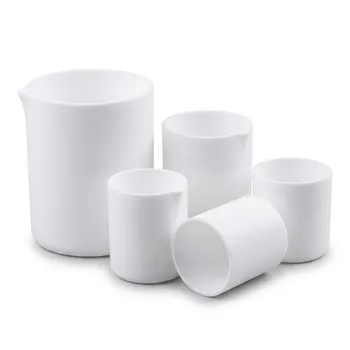
- Large Scale PTFE Beakers and Flasks for High Temperature Corrosion Resistant Laboratory Applications with Custom CNC Fabrication
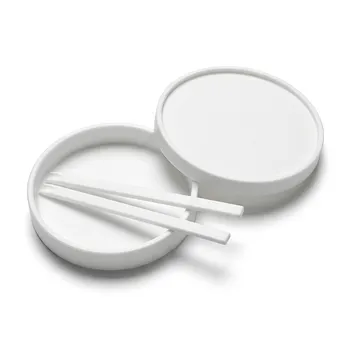
- Custom Polytetrafluoroethylene PTFE Petri Dishes 60mm Corrosion Resistant Low Background Labware
- Custom PTFE Petri Dish 30mm Corrosion Resistant Low Background Non Leaching Laboratory Ware
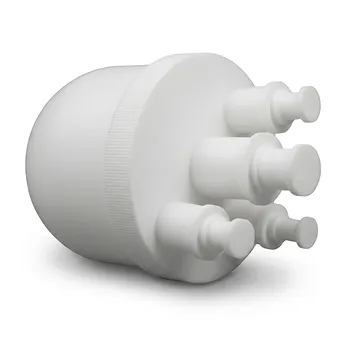
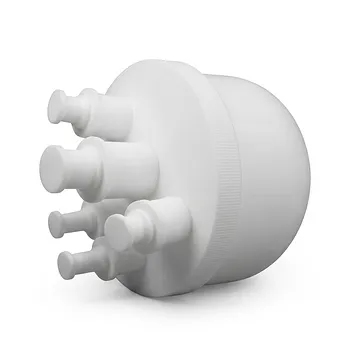
- Laboratory PTFE Three Neck Reaction Flask Corrosion Resistant 2000ml Low Background Fluoropolymer Vessel
- Large Capacity PTFE Reaction Flask 20L Custom Multi Neck Laboratory Boiling Flask Fluoropolymer Chemical Processing Vessel
People Also Ask
- Why is the material of the reaction vessel critical for tribocatalytic degradation? Boost Your Catalytic Yield!
- What is the operational temperature range for PTFE laboratoryware? Mastering Thermal Limits from -200°C to +260°C
- What are the main advantages of PTFE as a material for laboratory bottles? Superior Chemical & Thermal Resistance
- Why is PTFE used in laboratory applications? Ensure Chemical Purity and Reliability
- What are the limitations of pure PTFE in high temperature applications? Understanding the 200°C Ceiling