Knowledge Resources How does trace water function in solvothermal synthesis of xanthene? Learn its catalytic role and impact on 92% yield.
Author avatar

Tech Team · Kintek

Updated 3 months ago

How does trace water function in solvothermal synthesis of xanthene? Learn its catalytic role and impact on 92% yield.


The addition of trace water in solvothermal synthesis acts as a chemical catalyst by significantly increasing the concentration of H+ protons. In an enclosed high-pressure environment, these protons facilitate the construction of critical C-C bonds, allowing the yield of xanthene derivatives to reach approximately 92% at a temperature of 180°C.

Trace water functions as an in-situ catalytic medium that lowers the energy barrier for bond formation. By precisely controlling the proton concentration at high temperatures, researchers can achieve near-peak efficiency in xanthene synthesis.

The Mechanism of In-Situ Catalysis

Proton Generation in High-Pressure Systems

In an enclosed system heated to 180°C, even trace amounts of water undergo a transformation that increases the availability of H+ protons. These protons are not just bystanders; they become the active medium through which the chemical transformation occurs.

Overcoming the Activation Energy Barrier

While standard reactions may stall due to high energy requirements, these in-situ protons act as a catalytic medium. They provide a pathway that effectively manages the activation energy, making it easier for the reactants to transition into the final xanthene structure.

Water as a Precise Chemical Trigger

The role of water here is distinct from its role as a bulk solvent. It functions as a targeted additive that triggers the necessary acidity levels required to drive the reaction forward without requiring external, often corrosive, acid catalysts.

Impact on Chemical Bonding and Yield

Facilitating C-C Bond Construction

The primary challenge in synthesizing xanthene derivatives is the efficient construction of C-C bonds. The proton-rich environment created by the trace water accelerates this specific bonding process, ensuring the molecular framework assembles correctly.

Reaching the 92% Yield Threshold

The synergy between the high-pressure environment and the catalytic protons results in an exceptionally high conversion rate. At the optimized temperature of 180°C, this process can produce a yield of approximately 92%, a significant benchmark for solvothermal methods.

Thermal Efficiency in Enclosed Systems

The use of an enclosed system is vital because it maintains the high-pressure conditions necessary for the water to remain effective at 180°C. This containment prevents the loss of the catalytic medium and ensures consistent proton concentration throughout the synthesis.

Understanding the Trade-offs

The Risk of Excessive Water

While trace water is beneficial, adding too much can shift the equilibrium or lead to unwanted hydrolysis. Precision in measurement is critical, as excess moisture may dilute the reactants and lower the overall purity of the xanthene derivatives.

Pressure Management and Safety

Operating at 180°C in an enclosed system creates substantial internal pressure. The addition of any liquid, even in trace amounts, increases the volatility of the environment, necessitating robust equipment and careful monitoring to avoid vessel failure.

Limitations of Temperature

Lowering the temperature below 180°C generally results in a sharp decline in yield, as the thermal energy becomes insufficient to activate the catalytic properties of the water. Conversely, exceeding this temperature may lead to the degradation of the desired xanthene products.

How to Apply This to Your Project

If you are looking to optimize the solvothermal synthesis of xanthene derivatives, consider the following strategic applications based on your specific project goals:

  • If your primary focus is maximizing yield: Ensure the reaction is maintained at 180°C in a high-pressure vessel with carefully calibrated trace water to reach the 92% efficiency mark.
  • If your primary focus is catalyst reduction: Use trace water as a "green" in-situ substitute for traditional liquid acids to simplify the post-reaction purification process.
  • If your primary focus is process stability: Implement precise moisture-control protocols to prevent the "trace" amounts of water from fluctuating, which could otherwise lead to inconsistent C-C bond formation.

By leveraging the catalytic power of trace protons, you can transform a standard solvothermal process into a highly efficient and high-yielding synthesis environment.

Summary Table:

Key Factor Role in Synthesis Performance Impact
Trace Water In-situ catalytic medium Increases H+ proton concentration
Temperature 180°C (Optimized) Lowers energy barrier for C-C bonding
System Type Enclosed High-Pressure Maintains proton density & stability
Synthesis Yield Efficient conversion Reaches approximately 92%
Acid Catalyst Water as green substitute Reduces need for corrosive additives

Optimize Your Solvothermal Synthesis with KINTEK

Achieving precise catalytic control in high-pressure environments requires labware that can withstand extreme conditions without compromising purity. KINTEK specializes in high-performance fluoropolymer solutions designed for advanced chemical synthesis.

Whether you are performing trace analysis or complex reactions, we provide everything from standard PTFE/PFA beakers, crucibles, and reagent bottles to specialized hydrothermal synthesis liners, microwave digestion vessels, and microchannel reactors. Our end-to-end custom CNC fabrication allows us to deliver bespoke laboratory setups and complex non-standard machined parts tailored to your specific research needs.

Ensure the integrity of your C-C bond construction and maximize your yields with our durable, high-purity components. Contact KINTEK today to discuss your custom labware requirements!

References

  1. Zhiqiang Wu, Wanyi Liu. Mild and Efficient Preparation of Organic Molecules with Different Structural Characteristics: Catalyst-Free and Solvent-Free Methods in Hydrothermal Synthesis Reactors. DOI: 10.2139/ssrn.4283399

This article is also based on technical information from Kintek Knowledge Base .

Related Products

People Also Ask

Related Products

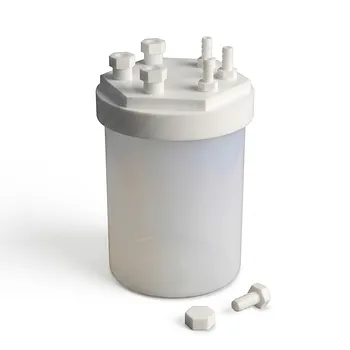
High Temperature Corrosion Resistant Hydrothermal Synthesis Reactor with TFM Inner Liner and Straight Cylinder Design

High Temperature Corrosion Resistant Hydrothermal Synthesis Reactor with TFM Inner Liner and Straight Cylinder Design

Professional grade high-pressure hydrothermal synthesis reactors featuring corrosion-resistant TFM liners and straight-wall geometry. These units are ideal for demanding chemical synthesis, trace analysis, and advanced material research where absolute purity and customizable performance are required for industrial lab excellence.

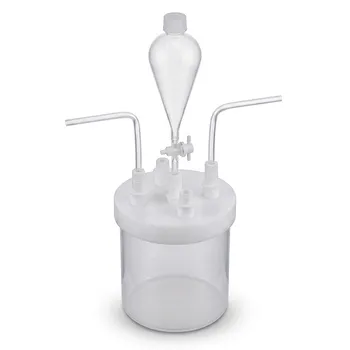
Custom PTFE Reaction System with Hose Barb Fittings Corrosion Resistant High Sealing 2L 4L Lab Reactor with Separatory Funnel

Custom PTFE Reaction System with Hose Barb Fittings Corrosion Resistant High Sealing 2L 4L Lab Reactor with Separatory Funnel

Enhance laboratory efficiency with our custom PTFE reaction system featuring superior corrosion resistance, high-integrity sealing, and integrated separatory funnels. Designed for demanding chemical synthesis, this modular fluoropolymer apparatus ensures high purity and reliable fluid transfer in extreme environments.

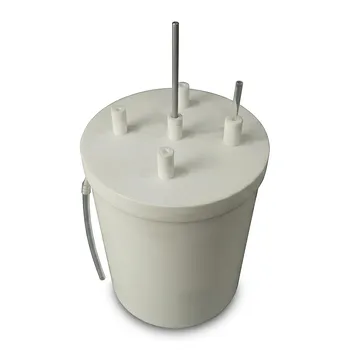
PFA Reaction Tank 6L Customizable Fittings Corrosion Resistant Solvent Resistant PFA Reaction Bottle for New Material Synthesis

PFA Reaction Tank 6L Customizable Fittings Corrosion Resistant Solvent Resistant PFA Reaction Bottle for New Material Synthesis

Engineered 6L PFA reaction tank with customizable fittings provides unmatched resistance to corrosive solvents. This high-purity vessel is optimized for new material synthesis, ensuring zero contamination and long-term durability in the most demanding industrial laboratory environments and processes.

High Pressure Custom TFM Reactor Stainless Steel Outer Vessel PTFE Inner Cup for Corrosive Synthesis

High Pressure Custom TFM Reactor Stainless Steel Outer Vessel PTFE Inner Cup for Corrosive Synthesis

Engineered for extreme chemical resistance, this custom TFM reactor combines a robust stainless steel outer vessel with a high-purity PTFE liner, ensuring safe, durable performance in demanding laboratory and industrial synthesis applications.

PFA Chemical Reaction Tank with Customizable Fittings for Corrosive Solvent Synthesis and High Purity Lab Applications

PFA Chemical Reaction Tank with Customizable Fittings for Corrosive Solvent Synthesis and High Purity Lab Applications

Premium 6L PFA reaction tank delivers exceptional chemical resistance for aggressive solvents. This customizable vessel features high-purity construction and precision fittings, ideal for advanced material synthesis, pharmaceutical research, and demanding industrial laboratory processes.

High Purity PFA Reaction Vessel for Biopharmaceutical Synthesis and Corrosive Chemical Fluid Handling with Customizable Tube Fittings

High Purity PFA Reaction Vessel for Biopharmaceutical Synthesis and Corrosive Chemical Fluid Handling with Customizable Tube Fittings

Engineered for biopharmaceutical and trace analysis applications, this high-purity PFA reaction vessel offers exceptional corrosion resistance and thermal stability. Featuring customizable fittings for seamless fluid transfer, it ensures zero contamination and reliable performance in demanding industrial laboratory process environments.

Custom PTFE Continuous Reaction Bottles Virgin Fluoropolymer High Purity Low Background Synthesis Vessels

Custom PTFE Continuous Reaction Bottles Virgin Fluoropolymer High Purity Low Background Synthesis Vessels

High-purity custom PTFE continuous reaction bottles engineered for demanding chemical synthesis. Manufactured from virgin fluoropolymer for low background leaching, these corrosion-resistant vessels offer unmatched reliability for trace analysis and aggressive reagent handling in professional laboratory environments.

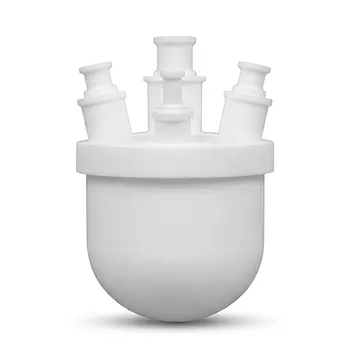
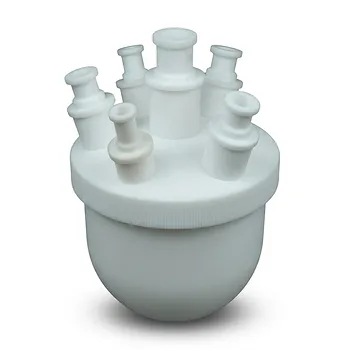
High Purity PTFE Multi Neck Reaction Flask for Corrosive Chemical Processing and Custom Industrial Laboratory Synthesis

High Purity PTFE Multi Neck Reaction Flask for Corrosive Chemical Processing and Custom Industrial Laboratory Synthesis

Optimize chemical processing with high-purity PTFE multi-neck reaction flasks. Engineered for extreme corrosion resistance and fully customizable configurations, these systems ensure zero-contamination environments for advanced research, pilot-scale synthesis, and demanding industrial laboratory applications. Contact us for custom designs.

Custom Multi Neck PTFE Flask 18L Laboratory Chemical Reactor Vessel for High Purity Synthesis and Stirring Applications

Custom Multi Neck PTFE Flask 18L Laboratory Chemical Reactor Vessel for High Purity Synthesis and Stirring Applications

Secure your laboratory operations with our customizable 18L multi neck PTFE reaction flask engineered for ultimate chemical resistance and thermal stability providing a durable alternative to glass for high purity synthesis and complex industrial chemical processing systems today

PTFE 10L Reaction Vessel with Stirring Paddle Customizable Corrosion Resistant High Temperature Reactor for Biopharmaceutical and Chemical Processing

PTFE 10L Reaction Vessel with Stirring Paddle Customizable Corrosion Resistant High Temperature Reactor for Biopharmaceutical and Chemical Processing

Premium 10L PTFE reaction vessel featuring integrated stirring paddles and exceptional corrosion resistance. Designed for biopharmaceutical and chemical applications, this fully customizable unit ensures high-purity results in demanding high-temperature environments. Contact us for custom specifications.

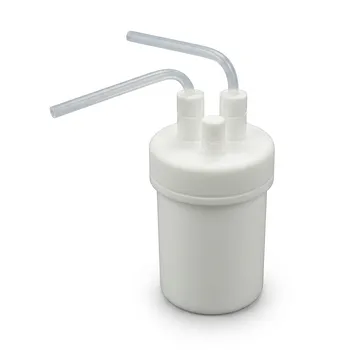
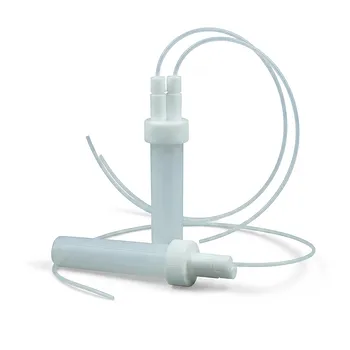
High Purity PFA Reaction Bottle with Tubing Connection for Corrosive Chemical Synthesis and Trace Analysis

High Purity PFA Reaction Bottle with Tubing Connection for Corrosive Chemical Synthesis and Trace Analysis

High-purity PFA reaction bottles engineered for low-background trace analysis and corrosive chemical processing. Features customizable configurations and seamless Teflon tubing integration to ensure zero contamination and superior chemical resistance in demanding laboratory environments and industrial synthesis applications.

High Purity PTFE Single Neck Reaction Flask Acid Resistant Customizable Fluoropolymer Laboratory Reactor

High Purity PTFE Single Neck Reaction Flask Acid Resistant Customizable Fluoropolymer Laboratory Reactor

Precision-engineered PTFE single neck reaction flasks offer ultimate chemical resistance for high-purity trace analysis. These customizable laboratory reactors withstand aggressive acids and extreme temperatures up to 260°C, ensuring reliable performance in demanding chemical synthesis and sample preparation.

High Temperature Teflon Continuous Reaction System and HF Resistant Three Neck Flask for Petrochemical Processing

High Temperature Teflon Continuous Reaction System and HF Resistant Three Neck Flask for Petrochemical Processing

Optimize your petrochemical laboratory with our high-temperature Teflon continuous reaction systems and HF-resistant flasks, featuring precision CNC fabrication for superior chemical resistance, unmatched thermal stability, and complete custom engineering to meet your most demanding industrial synthesis requirements today.

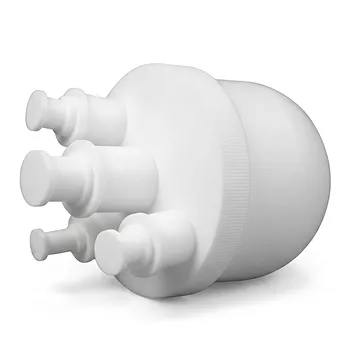
High Temperature Corrosion Resistant PTFE Reaction Flask Custom Multi Neck Laboratory Vessel with Flat or U Bottom

High Temperature Corrosion Resistant PTFE Reaction Flask Custom Multi Neck Laboratory Vessel with Flat or U Bottom

High-performance PTFE reaction flasks offer unmatched chemical resistance and thermal stability for aggressive laboratory synthesis. These customizable multi-neck vessels ensure high-purity results in pharmaceutical and semiconductor research through precision CNC fabrication and inert fluoropolymer construction.

PTFE Lined High Pressure Digestion Vessel 50ml High Temperature Hydrothermal Synthesis Tank

PTFE Lined High Pressure Digestion Vessel 50ml High Temperature Hydrothermal Synthesis Tank

This premium 50ml high pressure digestion vessel features a precision-engineered PTFE lining for superior chemical resistance. Ideal for trace metal analysis and hydrothermal synthesis, this unit ensures high-purity results through robust, fully customizable industrial-grade construction and specialized engineering.

Custom PTFE Multilayer Reaction Apparatus High Temperature Corrosion Resistant Threaded Modular Sieve System

Custom PTFE Multilayer Reaction Apparatus High Temperature Corrosion Resistant Threaded Modular Sieve System

Enhance chemical processing with this custom PTFE multilayer reaction apparatus featuring corrosion-resistant threaded connections and integrated sieve plates. Designed for high-temperature stability and precision filtration in demanding laboratory environments across pharmaceutical and semiconductor research and advanced industrial applications.

Customizable PTFE Reaction Vessel with Electric Stirring Paddle and Buchner Funnel Vacuum Filtration System

Customizable PTFE Reaction Vessel with Electric Stirring Paddle and Buchner Funnel Vacuum Filtration System

High-performance customizable PTFE reaction vessel system featuring integrated electric stirring paddles and Buchner funnel vacuum filtration components designed for demanding laboratory environments requiring absolute chemical inertness, high-purity trace analysis, and bespoke engineering solutions for complex industrial applications.


Leave Your Message