Operating pressure is a kinetic control variable and an indirect molar-mass control variable in semi-batch iodine transfer polymerization (ITP) of fluoropolymers such as PVDF. Higher pressure generally increases the dissolved VDF concentration, which accelerates propagation and overall monomer consumption. However, applying excessive pressure too early can disturb establishment of the iodine-transfer equilibrium, causing early-stage (M_n) to depart from the desired near-linear growth and potentially broadening the molar-mass distribution.
The most effective pressure strategy is usually staged rather than simply maximized: establish the ITP control equilibrium at a comparatively restrained initial pressure, then increase pressure as the controlled reaction is established to raise productivity without sacrificing molar-mass predictability.
Why Pressure Changes the Polymerization
Pressure controls dissolved monomer availability
In a pressurized emulsion system, increasing the VDF partial pressure generally increases the amount of monomer dissolved in the aqueous, micellar, and polymer-particle phases.
That higher monomer availability gives propagating radicals more opportunities to add monomer, increasing the polymerization rate. The relevant variable is therefore not pressure alone, but the monomer concentration created by that pressure under the specific temperature, phase composition, and reactor conditions.
Pressure accelerates reaction kinetics
A simplified propagation relationship is:
[ R_p \propto k_p[M][R^\bullet] ]
where (R_p) is the propagation rate, (k_p) is the propagation rate coefficient, ([M]) is the local monomer concentration, and ([R^\bullet]) is the concentration of active radicals.
Pressure primarily affects the ([M]) term. Raising pressure can therefore increase monomer conversion per unit time, provided initiation, transfer, termination, heat removal, and mass transfer remain sufficiently balanced.
Pressure is not an independent molar-mass setpoint
Pressure does not directly impose a target (M_n). In ITP, molar mass is also governed by the amounts and reactivity of the iodine-transfer species, initiator-derived radicals, monomer feed, conversion, termination, and transfer-equilibrium behavior.
Pressure changes the rate at which those control mechanisms operate. Consequently, the same nominal pressure can produce different molar-mass outcomes if the feed profile, initiator concentration, temperature, or transfer-agent concentration changes.
How Pressure Influences Molar-Mass Control
Controlled growth depends on the iodine-transfer equilibrium
ITP relies on reversible iodine-mediated transfer reactions that redistribute the active radical among polymer chains. When this equilibrium is established effectively, the number of growing chains and their growth histories are more uniform.
Under those conditions, (M_n) can increase in a relatively predictable manner with conversion or accumulated monomer consumption. This is the practical meaning of linear molar-mass growth in a controlled semi-batch process.
Excessive initial pressure can disrupt early control
If the initial pressure is too high, the polymerization may accelerate before the ITP equilibrium has fully established. Early radicals can then consume monomer rapidly under conditions that are not yet representative of the later controlled regime.
The result may be an early deviation of (M_n) from the intended linear trajectory, along with a broader or less uniform molar-mass distribution. This is not because high pressure inherently eliminates ITP control, but because it can make the initial kinetic transient too aggressive.
Moderate initial pressure can improve predictability
A restrained initial pressure gives the transfer chemistry time to establish before the system is driven toward a high propagation rate. Once the controlled state is established, pressure can be increased to improve throughput.
This staged approach balances molar-mass control during startup with higher reaction productivity during the main growth period.
Pressure Strategy in a Semi-Batch Process
Begin with equilibrium establishment
At the beginning of the reaction, the priority is to establish a stable relationship among the iodine-transfer agent, initiator, monomer, and growing chains.
Lower initial pressures can support this objective by limiting the initial dissolved-monomer concentration and preventing an unnecessarily rapid startup. The exact starting pressure must be determined experimentally for the reactor, formulation, and VDF feed system.
Increase pressure after control is demonstrated
Once the transfer equilibrium and reaction behavior are established, increasing pressure can substantially increase the polymerization rate.
In the cited operating context of approximately 75 °C and 10–30 bar, pressure control is used to balance reaction speed and molar-mass distribution. These values should be treated as process-specific reference conditions, not universal setpoints, because pressure limits and optimal profiles depend on equipment, composition, and safety validation.
Coordinate pressure with monomer feeding
In a semi-batch reactor, pressure is coupled to the monomer feed rate, vapor-space volume, dissolved-gas inventory, and consumption rate. A pressure increase can represent either deliberate monomer addition, insufficient consumption relative to feed, or changes in phase equilibrium.
Therefore, pressure should be controlled together with feed rate, conversion, temperature, and residual monomer inventory rather than used as an isolated control variable.
The Kinetic and Thermal Constraints
Faster kinetics increase heat-generation demand
A higher propagation rate increases the rate of polymer formation and associated heat release. Cooling jackets and other heat-removal systems must be able to accommodate that rate without allowing the reactor temperature to rise uncontrollably.
Because temperature also affects initiation, propagation, transfer, and termination, a pressure-induced temperature excursion can produce a secondary loss of molar-mass control. Pressure management is therefore inseparable from thermal management.
Gas-phase inventory adds dynamic complexity
Semi-batch fluoropolymer reactors may contain substantial pressurized monomer mixtures in the vapor space, accumulators, and transfer lines. This stored inventory can continue to affect pressure and monomer availability even after a feed adjustment.
A pressure-control system must account for this delay. Otherwise, corrective actions can overshoot, producing oscillations in pressure, monomer concentration, reaction rate, and ultimately molar-mass progression.
Pressure response is not instantaneous
The reactor pressure may change more quickly than the polymer composition responds, or the reverse may occur depending on mixing, mass transfer, and gas holdup. The control system should therefore be evaluated using time-resolved pressure, temperature, feed, and conversion data.
Stable pressure control is more important than simply reaching a high pressure.
Understanding the Trade-offs
Higher pressure improves productivity but narrows the operating margin
The primary benefit of higher pressure is increased monomer availability and faster polymerization. The corresponding risks are poorer startup control, greater heat-removal demand, and more severe consequences from feed or cooling disturbances.
High pressure is valuable when the reactor and control system can safely manage the resulting kinetic intensity.
Lower pressure improves startup control but can reduce throughput
A lower initial pressure can help the ITP equilibrium establish and may improve the reproducibility of (M_n) and dispersity. However, it also reduces dissolved monomer concentration and can make the reaction slower than necessary.
Holding the entire reaction at a low pressure may therefore sacrifice productivity without providing additional control after the equilibrium has stabilized.
Pressure alone cannot correct a poorly balanced formulation
If the iodine-transfer agent, initiator, monomer feed, or temperature profile is inappropriate, changing pressure will not reliably restore narrow molar-mass control. Pressure should be optimized only after the fundamental ITP formulation and feed strategy are internally consistent.
High-pressure operation requires engineered containment
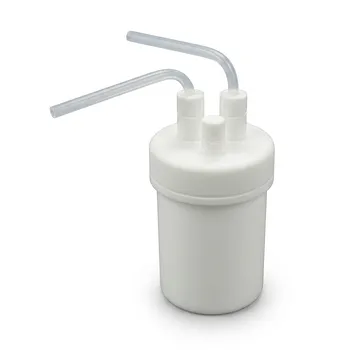
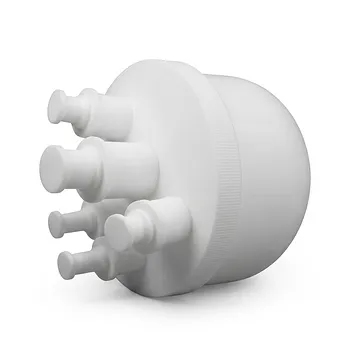
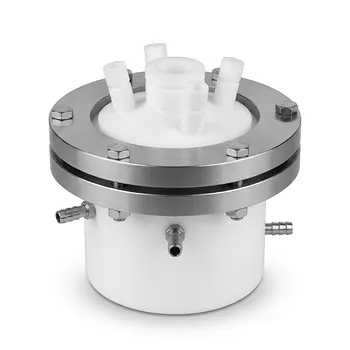
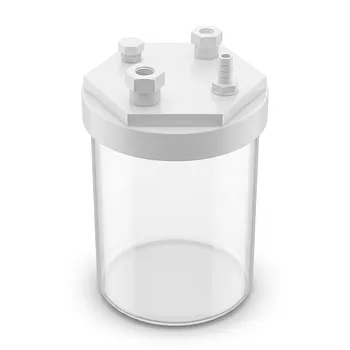
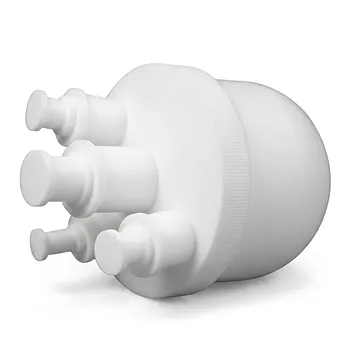
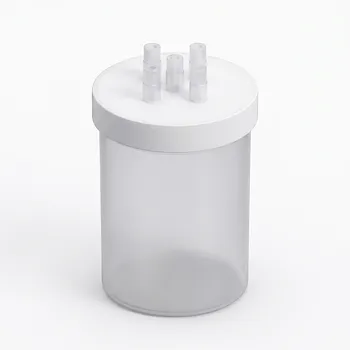
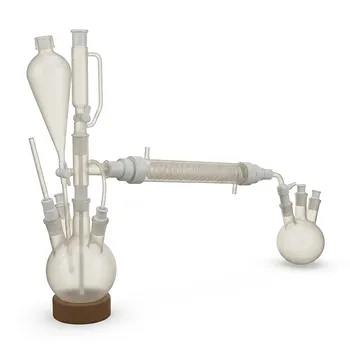
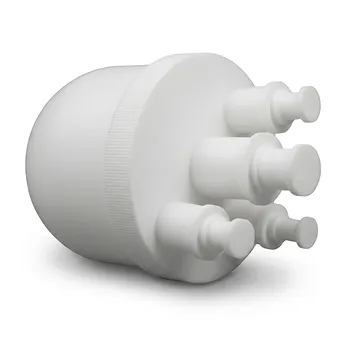
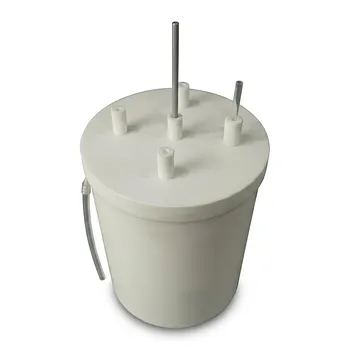
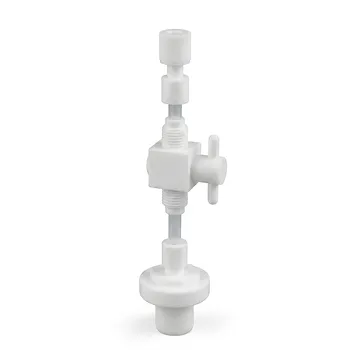
Fluorinated monomers, surfactants, and reaction mixtures require compatible, corrosion-resistant wetted materials. PFA/PTFE-lined equipment and chemically inert transfer fittings can reduce contamination and degradation risks, but material compatibility must be verified for the complete temperature, pressure, and chemical environment.
High-pressure vessels, valves, accumulators, and fittings must be selected and operated under an appropriate pressure-safety program. Vapor-space hazards, leak prevention, barricading, and containment are process requirements rather than optional equipment details.
How to Apply This to Your Process
A useful development strategy is to map pressure against both kinetic performance and molar-mass response rather than optimizing conversion alone.
- If your primary focus is molar-mass control: Use a restrained initial pressure to allow the iodine-transfer equilibrium to establish, and verify near-linear (M_n) growth and acceptable distribution before increasing pressure.
- If your primary focus is polymerization rate: Increase pressure only after the controlled regime is established, while confirming that cooling capacity and monomer-feed control can handle the higher rate.
- If your primary focus is process robustness: Monitor pressure, temperature, feed rate, conversion, and molar-mass data together, because pressure disturbances can propagate through both kinetics and thermal behavior.
- If your primary focus is scale-up: Account for vapor-space inventory, pressure-control lag, heat-transfer limitations, and the compatibility and integrity of every wetted high-pressure component.
The best pressure profile is the one that establishes ITP control first and then increases kinetic intensity only as safely and predictably as the reactor can support.
Summary Table:
| Pressure Strategy | Impact on Kinetics | Impact on Molar Mass Control | Recommended Use |
|---|---|---|---|
| High initial pressure | Rapid polymerization rate, high monomer consumption | Potential disruption of ITP equilibrium, early deviation from linear Mn, broader distribution | Not recommended at start; use only after control is established |
| Moderate initial pressure | Slower startup, allows equilibrium establishment | Better Mn predictability, narrower distribution | Recommended for startup phase |
| Gradual pressure increase after control | Increased rate, improved productivity | Maintains control if introduced gradually | Recommended for main growth phase |
| Low pressure throughout | Reduced rate, lower productivity | Good control but slow process | Only if productivity is not a priority |
Optimize your fluoropolymer synthesis with precision-engineered PTFE/PFA labware and custom reactors from KINTEK. Our high-purity, corrosion-resistant equipment supports precise pressure control and reliable performance in demanding ITP processes. Contact us today to enhance your laboratory's efficiency and achieve superior molar mass control. Contact KINTEK
Related Products
- Custom PTFE Continuous Reaction Bottles Virgin Fluoropolymer High Purity Low Background Synthesis Vessels
- Custom Multi Neck PTFE Flask for Chemical Engineering and High Purity Laboratory Synthesis Applications
- Custom PTFE Reaction System with Hose Barb Fittings Corrosion Resistant High Sealing 2L 4L Lab Reactor with Separatory Funnel
- PFA Reaction Tank 6L Customizable Fittings Corrosion Resistant Solvent Resistant PFA Reaction Bottle for New Material Synthesis
- PFA Chemical Reaction Tank with Customizable Fittings for Corrosive Solvent Synthesis and High Purity Lab Applications
People Also Ask
- What reaction vessel and fluid handling considerations are necessary for living cationic polymerization of fluorinated monomers involving Lewis acid catalysts? Key design and safety tips
- Ion Activation Reaction Vessel Requirements: Why PTFE is Critical for Membrane Performance
- How do perfluorinated solvent environments influence the selection of reaction vessels and fluid handling components in nonaqueous emulsion polymerizations? Choose fluoropolymer materials.
- Why are high-purity PTFE or PFA reaction vessels recommended for the synthesis of PANI-TiC hybrid materials? - Guide
- Why are fluoroplastic (PTFE) reaction vessels recommended for Methylene Blue (MB) adsorption kinetic experiments?