Iodine transfer copolymerization improves fluoropolymer seals and tubing by combining elastomeric flexibility with crystalline fluoropolymer strength. It first creates a soft, flexible fluorinated segment, then uses iodine-containing chain ends to add hard blocks based on TFE or VDF. The resulting hard–soft–hard architecture forms reversible physical cross-links, improving elasticity, strength, thermal stability, chemical resistance, and sealing reliability without sacrificing fluoropolymer inertness.
The central benefit is architectural control: soft blocks provide flexibility and recovery, while crystalline TFE- or VDF-derived blocks act as physical cross-linking points that reinforce the material under heat, pressure, and aggressive chemical exposure.
Why Conventional Fluoropolymers Can Be Difficult to Optimize
High crystallinity improves resistance but limits flexibility
Highly crystalline fluoropolymers such as PTFE offer outstanding chemical inertness, low friction, and temperature resistance. However, their rigidity and limited melt processability can make them difficult to form into flexible, resilient seals or complex tubing.
Elastomers provide compliance but may need reinforcement
A soft fluorinated elastomer can conform to rough or moving sealing surfaces and maintain contact during pressure changes. Without reinforcing domains, however, it may suffer from creep, deformation, wear, or inadequate dimensional stability at elevated temperatures.
The design challenge is balancing opposing properties
High-performance sealing materials must resist aggressive media while remaining elastic enough to recover after compression. They must also retain strength and geometry during repeated thermal, mechanical, and chemical cycling.
How Iodine Transfer Copolymerization Changes the Structure
Iodine creates a reactivatable chain end
Iodine transfer polymerization is a metal-free chain-transfer process that leaves active terminal C–I bonds on the polymer chains. These chain ends can be reactivated to introduce a second monomer sequence, enabling controlled block construction rather than producing only a statistically mixed copolymer.
Soft segments provide elasticity
The initial fluoroelastomeric segment is designed to remain flexible and mobile. In a seal, this segment supplies compression recovery, conformability, and resistance to leakage caused by small surface irregularities or dimensional changes.
TFE or VDF blocks provide hard domains
Subsequent incorporation of TFE or VDF creates more rigid, crystalline regions. These domains function as physical junctions between soft segments, producing a hard–soft–hard or triblock-like architecture.
Physical cross-linking avoids a fully permanent network
The crystalline hard blocks associate into reinforcing domains throughout the elastomer. This provides cross-link-like behavior without necessarily requiring conventional chemical curing at every point in the network.
The result is a material that can behave like an elastomer during use while retaining the chemical resistance and structural reinforcement associated with crystalline fluoropolymers.
How This Improves Seal and Tubing Performance
Better elasticity and compression recovery
The soft segments allow the material to deform under installation or pressure. The hard domains help it recover its shape instead of remaining permanently compressed.
This is important for O-rings, gaskets, and dynamic seals, where loss of contact pressure can lead to leakage.
Higher thermal stability
Crystalline TFE- or VDF-derived blocks restrict excessive molecular motion at elevated temperatures. They help the material retain its shape and mechanical integrity during thermal cycling.
This supports use in aerospace, chemical-processing, and other environments where seals may experience substantial temperature variation.
Improved resistance to aggressive fluids
The fluorinated backbone contributes broad resistance to solvents, oils, fuels, acids, and bases. In demanding alkaline systems, PTFE- and related fluoropolymer chemistries are also valued for their low reactivity and low tendency to introduce contaminating metal ions.
The exact resistance depends on the complete formulation, comonomer composition, temperature, pressure, and exposure time—not merely on the presence of iodine or TFE.
Greater dimensional stability
The hard domains resist creep and deformation under sustained compression or pressure. This is especially valuable in tubing and fittings that must maintain a reliable geometry over long service periods.
Improved wear and dynamic performance
For moving seals, reinforcement from hard fluoropolymer domains can improve resistance to mechanical damage. Fluoropolymer formulations may also use PTFE micropowder to reduce friction and improve wear resistance, tear strength, and demolding behavior.
This is particularly relevant to shaft seals, moving gaskets, and reciprocating components.
Tunable processing and flexibility
Copolymerization introduces structural disorder compared with a highly crystalline homopolymer. Depending on the selected monomers and block proportions, this can improve flexibility and make the material more suitable for formed tubing, molded gaskets, or specialized membranes.
The architecture can therefore be tailored rather than accepting the fixed balance of properties found in a single homopolymer.
Why the Material Remains Suitable for High-Purity Systems
Metal-free synthesis reduces contamination risk
Iodine transfer polymerization does not require transition-metal catalysts. This can reduce concerns about residual catalyst-derived metals in applications where contamination is unacceptable.
Such control is valuable in laboratory fluid systems, electrochemical testing, and other processes sensitive to trace impurities.
Low extractables support fluid purity
PTFE, PFA, and related fluoropolymers are widely used where low dissolution and adsorption are required. Properly selected fluoropolymer tubing and seals can help prevent the fluid from acquiring contaminants or losing analytes to the system walls.
This matters in electrochemical testing, trace analysis, and long-duration alkaline electrolysis.
Chemical inertness protects equipment
Fluoropolymer seals and tubing can isolate aggressive electrolytes such as concentrated alkaline solutions from metal components. This reduces corrosion risk and helps preserve both equipment reliability and measurement quality.
Understanding the Trade-offs
Physical cross-links are not equivalent to chemical curing
Hard crystalline domains provide reinforcement, but their behavior depends on temperature, morphology, and block distribution. A physically cross-linked material may soften or lose strength as those domains approach their thermal transition or melting range.
For severe service, the formulation must be evaluated at the actual operating temperature and stress level.
Block composition controls the balance of properties
More hard-block content can improve stiffness, strength, and creep resistance, but may reduce flexibility and increase brittleness. More soft-block content can improve elasticity but may reduce load-bearing capacity and dimensional stability.
There is no universally optimal block ratio for every seal or tubing application.
Iodine transfer polymerization has manufacturing limitations
Although the process can produce well-defined fluoropolymers with narrow molecular-weight distributions and reactivatable chain ends, industrial implementation can be complex. Fluoromonomer purification, specialized polymerization equipment, and production scale can increase cost.
The performance advantages must therefore justify the additional process complexity.
PTFE processability remains a separate issue
Conventional PTFE has extremely high melt viscosity and cannot generally be processed like an ordinary melt-flowing thermoplastic. Iodine-enabled block architecture can improve design flexibility, but it does not automatically make every TFE-rich material easy to melt-process.
When intricate, leak-tight components are required, PFA is often selected because its comonomer modification lowers crystallinity and melt viscosity while retaining high chemical resistance.
Chemical resistance must be validated in the final compound
Fillers, cure-site monomers, processing aids, pigments, and reinforcing additives can change permeation, extractables, friction, and chemical resistance. A polymer designation alone is not enough to establish suitability for a specific fluid.
Testing should reflect the actual medium, concentration, pressure, temperature, and exposure duration.
Making the Right Choice for Your Goal
The appropriate architecture depends on whether the priority is elastic recovery, chemical purity, dynamic wear, processability, or long-term dimensional stability.
- If your primary focus is elastic sealing: Choose a soft-block-rich architecture with sufficient hard domains to maintain compression recovery and resist creep.
- If your primary focus is high-temperature service: Favor a formulation with enough crystalline TFE- or VDF-derived reinforcement to preserve strength and geometry at operating temperature.
- If your primary focus is aggressive chemical exposure: Select a fluoropolymer compound whose complete formulation has been validated against the specific fluid, temperature, and pressure conditions.
- If your primary focus is dynamic movement: Evaluate friction, wear, tear strength, and surface finish; PTFE-based modifiers may further improve sliding performance.
- If your primary focus is high-purity tubing or laboratory hardware: Prioritize metal-free processing, low extractables, low adsorption, and a construction such as PFA when melt processability and intricate molding are required.
- If your primary focus is manufacturing simplicity: Compare the performance benefit of iodine-enabled block control against the added cost and complexity of specialized fluoromonomer processing.
Iodine transfer copolymerization enables fluoropolymers to deliver the complementary benefits of elastomeric recovery and crystalline fluoropolymer reinforcement, making them strong candidates for reliable seals and tubing in chemically, thermally, and mechanically demanding systems.
Summary Table:
| Improvement Mechanism | Performance Benefit |
|---|---|
| Soft segments | Provides flexibility and compression recovery |
| Hard TFE/VDF blocks | Adds strength, thermal stability, and dimensional stability |
| Physical cross-linking | Enhances elasticity and recovery without full curing |
| Metal-free synthesis | Reduces contamination risk for high-purity systems |
| Tailored block composition | Balances flexibility and rigidity for specific applications |
Elevate your lab's performance with our high-purity PTFE and PFA seals, tubing, and custom components. Our materials are engineered for superior chemical resistance, thermal stability, and mechanical reliability, ensuring your high-performance systems operate at their best. From standard labware to intricate custom parts, we deliver precision and purity. Contact us today to discuss your requirements and discover how we can support your critical applications.
Related Products
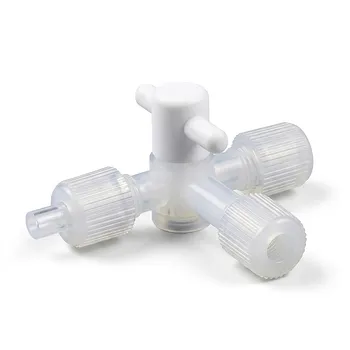
- Corrosion Resistant High Purity PFA Valve and Weldable Transparent Tubing for Semiconductor Fluid Transfer
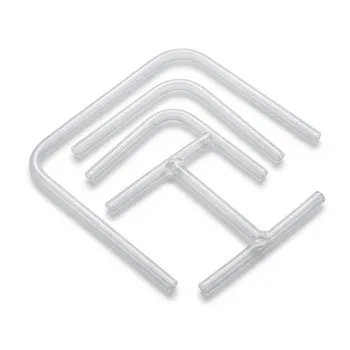
- High Purity PFA Coiled Tubing Custom PTFE Machining PFA Welding and Precision Bending Solutions
- Custom PTFE Insulating Gaskets and Corrosion Resistant Fluoropolymer Seals for Industrial Electrical Applications
- Custom PTFE Sealing Tapes for Industrial and High Tech Applications
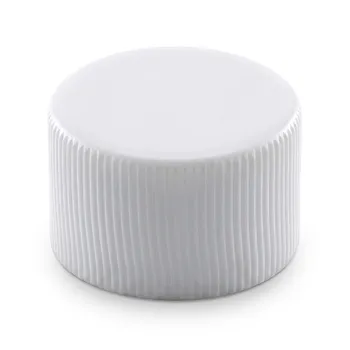
- Custom PTFE Sealing Caps and Corrosion Resistant Low Background Teflon Adapters
People Also Ask
- Why are high-purity PFA fluid transfer components required for OSDAs and silica? Ensure Precision in Zeolite Synthesis
- Why are high-purity PFA fluid transfer components preferred for battery electrolytes? Ensure Purity & Data Accuracy
- How does high-purity PFA tubing maintain reagent purity? Achieve Ultra-Smooth, Zero-Contamination Fluid Transfer
- How do high-precision PFA fluid transfer components, such as tubing and fittings, affect the results of continuous-flow synthesis?
- How do PFA fluid transfer components contribute to chemical research precision? Achieve high-purity results today.