Interfacial segment migration improves fluorinated polymer performance by concentrating low-energy, chemically inert fluorinated groups at the material boundary. This creates a fluorine-rich surface with reduced adhesion, friction, wettability, and chemical reactivity, while limiting moisture and chemical vapor transport into the polymer. The result is a surface that is easier to clean and a barrier that better protects the underlying material and the fluids it contains.
Fluorinated segments migrate toward air, liquid, or substrate interfaces because they minimize interfacial energy. Their enrichment produces a low-reactivity, non-stick outer layer, but the resulting barrier performance depends on how continuous, stable, and defect-free that layer remains under service conditions.
Why Fluorinated Segments Migrate to Interfaces
Low interfacial energy drives segregation
Fluorinated chains have exceptionally low surface energy. In a polymer containing both fluorinated and non-fluorinated structures, the system reduces its overall free energy by placing fluorinated segments at exposed boundaries such as the air-polymer or liquid-polymer interface.
Non-fluorinated segments and backbone structures consequently tend to remain in the interior or closer to the substrate. This produces selective surface enrichment without requiring a separate coating step.
Migration creates an interfacial molecular layer
The migrated segments form a fluorine-rich outer region. In multi-block systems, longer fluorinated blocks can strengthen this segregation because larger fluorinated domains have a greater tendency to occupy the vapor or liquid interface.
Temperature and solvent exposure can also influence the process. These stimuli may increase chain mobility and allow fluorinated groups to reorganize at the interface, although the final structure depends on the polymer architecture and operating environment.
How Migration Changes Surface Functionality
Adhesion and sample retention decrease
A fluorine-rich surface is chemically non-reactive and difficult for many liquids and contaminants to wet. This reduces sample adhesion and minimizes the amount of fluid retained on tubing, vessels, valves, fittings, and other components.
For trace analysis and high-purity fluid handling, this matters because retained material can create carryover and cross-contamination. Lower retention also supports faster rinsing and simpler cleaning.
Water and oil repellency increase
The low surface energy of fluorinated segments reduces the surface's affinity for both water and many organic substances. The interface therefore becomes more hydrophobic and oleophobic, limiting spreading and reducing the contact area between the fluid and polymer.
This behavior is a surface effect, so it is especially sensitive to whether the fluorinated enrichment remains exposed and chemically intact.
Friction and wear are reduced
Surface-enriched fluorinated chains create a smooth, low-energy interface with reduced resistance to sliding. In systems that also contain flexible siloxane segments, the combined surface enrichment can further lower friction and mechanical wear.
Lower abrasion is valuable in valves, fittings, and repeatedly operated tubing because it can reduce particulate generation and help preserve sample purity.
Chemical affinity is altered
Migration changes the chemical character presented to the surrounding medium. The interface becomes less reactive and less compatible with many aggressive reagents, which helps reduce adsorption, swelling, and chemical attack at the surface.
The underlying polymer still provides much of the component's structural and thermal stability. The migrated layer adds interfacial protection rather than replacing the bulk material's role.
How Migration Improves Chemical Barrier Performance
The fluorine-rich layer limits surface uptake
A dense fluorine-rich outer layer presents a chemically inert, low-energy boundary to moisture, solvents, and chemical vapors. This reduces the tendency of these species to adsorb onto the surface and enter the polymer.
In practical components, that can reduce water uptake, fluid retention, and exposure of the interior matrix to aggressive media. The supplementary reference reports that fluorinated and flexible siloxane segments can reduce water uptake by more than 50 percent in relevant polymer matrices.
Reduced transport protects the bulk polymer
Barrier performance is not limited to preventing external chemicals from entering. The surface layer also helps prevent internal additives, contaminants, or low-molecular-weight species from reaching the external environment.
This supports long-term chemical integrity and helps prevent contamination of high-purity fluids. It is particularly relevant for sample preparation vessels, storage containers, and fluid-handling lines.
Barrier behavior depends on layer continuity
Interfacial migration improves the chemical barrier only when the enriched layer is sufficiently continuous and stable. Cracks, pores, processing defects, incomplete coverage, or mechanically damaged regions can provide direct transport paths through the surface.
Therefore, surface enrichment should be understood as a molecular contribution to barrier performance, not as a guarantee of impermeability. Bulk crystallinity, polymer thickness, morphology, and component design remain important.
Exposure conditions can change the interface
Solvent contact and temperature shifts can increase segmental mobility and alter the location or organization of fluorinated domains. This dynamic response can preserve low surface energy, but it can also change the balance between surface enrichment and bulk diffusion.
At elevated temperatures or during prolonged chemical exposure, barrier performance must be evaluated under actual service conditions. A surface that performs well initially may behave differently if the polymer swells, reorganizes, or experiences mechanical damage.
Understanding the Trade-offs
Surface migration does not eliminate permeation
Fluorinated surfaces strongly resist wetting and chemical interaction, but they do not make every polymer system completely impermeable. Permeation can still occur through the bulk polymer, defects, interfaces, or regions where the fluorinated layer is thin or disrupted.
The correct performance claim is improved resistance to uptake and chemical vapor penetration, not absolute prevention.
Greater mobility can improve or reduce stability
Higher temperatures can promote fluorinated segment migration and increase surface enrichment. The same increase in mobility may also accelerate restructuring, diffusion, or dimensional changes in the polymer.
The optimal operating range therefore depends on the specific fluoropolymer architecture and the chemical environment.
Surface functionality can be difficult to modify
A fluorine-rich surface is non-stick and chemically inert, which is beneficial for clean handling and chemical resistance. Those same properties can make bonding, printing, coating, adhesive attachment, or deliberate surface functionalization more difficult.
Applications requiring strong adhesion to another material may need mechanical interlocking, specialized treatment, or a different material design.
Barrier performance is application-specific
PTFE, PFA, and related fluoropolymer systems are well suited to aggressive chemical and high-purity environments, but performance varies with formulation, processing history, crystallinity, thickness, temperature, pressure, and exposure time.
Testing should therefore use the intended reagent, concentration, temperature, and mechanical duty cycle rather than relying only on generic fluoropolymer classifications.
Making the Right Choice for Your Goal
Interfacial migration is most valuable when the application needs both a chemically resistant bulk material and a low-energy, low-retention surface.
- If your primary focus is non-stick performance: Select a fluorine-rich surface design that remains exposed and stable, because surface enrichment is the main mechanism reducing adhesion and fluid retention.
- If your primary focus is chemical barrier performance: Evaluate the complete polymer and component structure under realistic temperature, solvent, time, and pressure conditions, since surface enrichment alone does not determine total permeation.
- If your primary focus is high-purity fluid handling: Favor systems that combine low surface energy with low wear, minimizing both sample carryover and particulate contamination.
- If your primary focus is bonded or coated assemblies: Account for the difficulty of adhering to a fluorine-rich interface and plan for compatible joining or surface-treatment methods.
The practical design principle is to use interfacial fluorine enrichment as a controlled way to obtain low adhesion, low friction, and stronger chemical resistance while validating the layer's stability under real operating conditions.
Summary Table:
| Aspect | Impact | Practical Consideration |
|---|---|---|
| Surface energy | Reduced adhesion and wettability | Easier cleaning, less sample retention |
| Friction | Lower wear | Reduced particulate generation |
| Chemical resistance | Improved barrier to moisture and solvents | Protects bulk polymer and contents |
| Layer continuity | Critical for barrier integrity | Defects can compromise performance |
| Dynamic behavior | May change with temperature and solvent | Test under actual service conditions |
Enhance your high-purity fluid handling with KINTEK's advanced PTFE and PFA components. Our precision-engineered labware and custom CNC-machined parts leverage interfacial migration to provide low retention, low friction, and superior chemical resistance. Contact us today to optimize your lab's performance — get in touch!
Related Products
- PTFE PFA Vacuum Filtration System Corrosion Resistant Customizable Shatterproof Laboratory Device
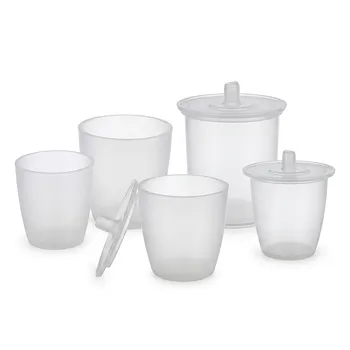
- High Purity PFA Crucible and Corrosion Resistant PTFE Beaker for Trace Analysis and Custom Laboratory Applications
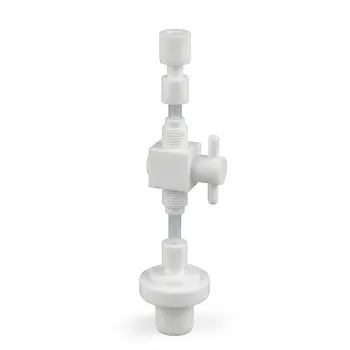
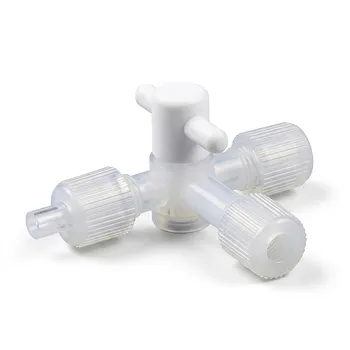
- High Purity PFA PTFE Flare Stop Valves Customizable 2-Way 3-Way Reducing Fluoropolymer Fluid Control Solutions
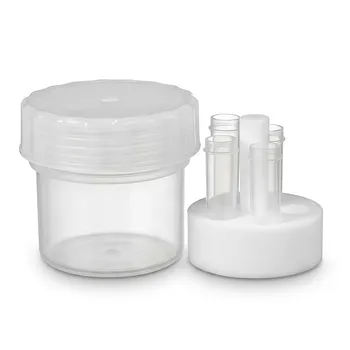
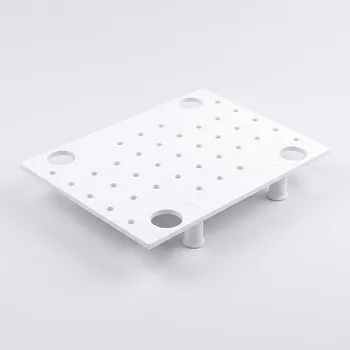
- Corrosion Resistant PTFE Support with PFA Transparent Reaction Tank and High Purity PFA Sampling Tube for Trace Analysis
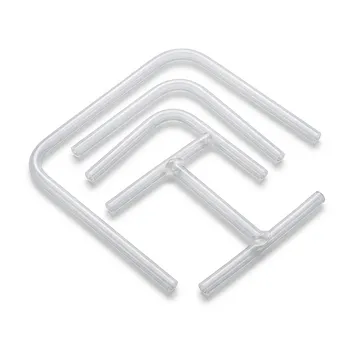
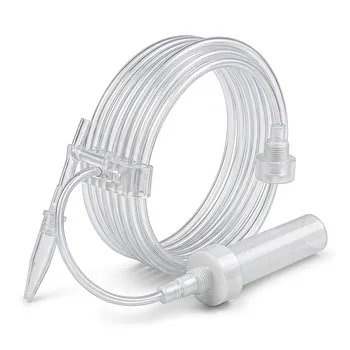
- High Purity PFA Coiled Tubing Custom PTFE Machining PFA Welding and Precision Bending Solutions
People Also Ask
- What makes PTFE filtration systems advantageous for industrial and scientific use? Unmatched Chemical & Thermal Stability
- What temperature resistance do PTFE filters offer? Unmatched Thermal Stability from -200°C to +260°C
- How does the hydrophobicity of PTFE filters benefit their use? Ensure Uninterrupted Gas Flow and Solvent Filtration
- Which chemicals are fully compatible with PTFE filters? Discover Unmatched Chemical Resistance
- What steps are involved in selecting the proper PTFE filter? A 4-Step Guide to Optimal Filtration