Adding pendant trifluoromethyl (-CF₃) groups generally makes specialty fluoropolymers more hydrophobic and moisture-resistant, with reported water contact angles of approximately 92°–97.3° in high-density, hyperbranched structures. This reduces wetting, aqueous sample retention, and water uptake while supporting reliable performance in high-purity labware, fluid-transfer components, dielectric coatings, and protective barriers.
Core takeaway: Pendant -CF₃ groups create a fluorine-rich, low-energy surface that repels water, while their bulky structure also increases free volume and disrupts polymer-chain packing. The result is a useful combination of liquid repellency, low moisture absorption, thermal stability, chemical resistance, and low dielectric constant.
How Pendant -CF₃ Groups Change Surface Behavior
Increased water repellency
The outermost -CF₃ groups lower the surface energy of the polymer, making water less likely to spread across it. Water contact angles around 92°–97.3° indicate a clearly hydrophobic surface.
This is hydrophobic rather than superhydrophobic behavior. The material repels water effectively, but it should not automatically be treated as a self-cleaning or extremely non-wetting surface.
Reduced aqueous sample retention
A more water-repellent surface leaves less residual liquid after contact, draining, or rinsing. In laboratory components, this can reduce carryover and help limit the retention of dilute aqueous samples on tubing, vessels, coatings, and transfer surfaces.
The practical benefit depends on surface finish, geometry, contamination, and the liquid being handled—not only on the polymer’s chemical structure.
Improved moisture resistance
The fluorinated surface and reduced water absorption help prevent moisture from penetrating the material. This is valuable where absorbed water could alter dimensions, contaminate samples, or affect electrical properties.
The references describe typical water absorption below approximately 2% for relevant high-performance fluorinated polymer systems, although the actual value depends on polymer architecture and processing.
Why the Same Structure Improves Bulk Performance
Greater free volume and lower dielectric constant
Bulky -CF₃ groups interfere with close packing between polymer chains. This increases fractional free volume and can lower the bulk dielectric constant to approximately 2.05–2.65, with some reported systems reaching about 1.98–2.71 at 1 MHz.
Lower dielectric constants and reduced moisture uptake are useful in high-frequency components, sensitive analytical equipment, and dielectric coatings because water can increase dielectric response and contribute to instability.
High thermal endurance
Rigid backbones, hyperbranched structures, and bulky fluorinated groups can maintain high glass-transition temperatures. Reported values range from roughly 200°C to 350°C, with some specific systems reaching around 290°C.
Thermal decomposition temperatures are also high, with reported values extending to approximately 470°C–573°C, depending on the measurement method and polymer composition.
Chemical and oxidative resistance
The strong carbon–fluorine chemistry contributes to resistance against aggressive chemical environments and oxidative degradation. This supports use in fluid-transfer systems, filtration tools, protective coatings, and laboratory components exposed to demanding solvents.
However, resistance must still be verified against the specific reagent, temperature, exposure time, stress state, and polymer formulation.
Improved processability in selected systems
Bulky -CF₃ groups disrupt crystallization and can help produce more amorphous polymers. Amorphous fluoropolymers are often more soluble in selected solvents, including NMP, DMAc, THF, and chloroform, enabling solvent casting of uniform films.
This can be important when a fluoropolymer must be formed as a thin coating or flexible film rather than machined from a solid fluoroplastic.
What This Means in Laboratory Applications
High-purity fluid handling
Hydrophobic surfaces can reduce water retention and help maintain more predictable transfer behavior. This is particularly relevant to tubing, vessels, valves, sample-contact surfaces, and other components where low carryover is important.
The polymer’s chemical resistance also helps maintain dimensional and functional stability when handling aggressive organic or aqueous reagents.
Protective and dielectric coatings
A fluorinated coating can act as a moisture-resistant barrier while providing electrical insulation and low dielectric response. These properties are useful for substrates, analytical devices, and components operating under thermal or electrical stress.
The low dielectric response is especially valuable where parasitic capacitance or moisture-related dielectric changes must be minimized.
Filtration and separation systems
In membranes and filtration tools, reduced water uptake can limit swelling and help preserve pore structure or dimensional stability. This can support consistent permeation and separation behavior.
Performance still depends on membrane morphology, pore size, thickness, and solvent compatibility; hydrophobicity alone does not determine selectivity.
Low-retention sample handling
For analytical workflows, less surface wetting can reduce the amount of aqueous material left behind after draining or rinsing. This may support cleaner handling of low-concentration samples and reduce unintended transfer between process steps.
It is not a substitute for validated cleaning procedures, surface passivation, or contamination control.
Understanding the Trade-offs
Hydrophobicity is not universal liquid repellency
A water contact angle measures interaction with water, not with every solvent. Fluoropolymers may repel water while interacting differently with alcohols, hydrocarbons, ketones, or other low-surface-tension liquids.
Application testing should therefore use the actual process fluids rather than relying only on water-contact-angle data.
More free volume can affect mechanical behavior
Increasing free volume improves solubility and can lower the dielectric constant, but it may also reduce resistance to certain forms of mechanical deformation or gas permeation. The correct balance depends on whether the component is a rigid part, a coating, a membrane, or a flexible film.
Material selection should evaluate strength, creep, permeability, and dimensional stability alongside hydrophobicity.
Structural symmetry can promote crystallization
Bulky -CF₃ groups often suppress crystallization, but highly symmetrical placement of multiple fluorinated groups can sometimes promote partial crystallinity. Mixed meta- and para-linkages or copolymer design can help preserve amorphous character and solubility.
This means monomer architecture and sequence distribution matter, not simply the total fluorine content.
Surface performance can change during use
Surface contamination, abrasion, thermal history, and processing additives can alter the exposed chemistry. A high initial contact angle does not guarantee unchanged performance after repeated cleaning, sterilization, solvent exposure, or mechanical wear.
For critical lab applications, characterize the surface before and after the intended service conditions.
Applying the Design Principle
Pendant -CF₃ groups are most valuable when surface repellency must be achieved without sacrificing thermal, chemical, or electrical performance. The design should match the polymer architecture to the actual laboratory duty.
- If your primary focus is aqueous sample handling: Prioritize a fluorine-rich, low-energy surface and verify contact angle, drainage, carryover, and cleaning performance with the actual sample matrix.
- If your primary focus is dielectric performance: Use bulky fluorinated groups to increase free volume and reduce moisture uptake, then validate dielectric constant and loss at the relevant frequency and temperature.
- If your primary focus is high-temperature service: Select a rigid fluoropolymer architecture and verify glass transition, decomposition, dimensional stability, and long-term exposure behavior.
- If your primary focus is solvent-cast films or coatings: Favor an amorphous, sufficiently soluble formulation while checking that solvent exposure does not compromise mechanical or barrier performance.
- If your primary focus is filtration or fluid transfer: Evaluate swelling, permeation, chemical compatibility, and dimensional retention with the complete solvent mixture rather than with water alone.
The most reliable approach is to treat pendant -CF₃ groups as a multifunctional design tool: they improve hydrophobicity while influencing free volume, thermal behavior, dielectric response, solubility, and chemical durability.
Summary Table:
| Property | Effect of Pendant -CF3 Groups | Typical Values |
|---|---|---|
| Surface Hydrophobicity | Higher water contact angle (hydrophobic) | 92°–97.3° |
| Water Absorption | Reduced moisture uptake | Below ~2% |
| Dielectric Constant | Lower due to increased free volume | ~2.05–2.65 (some ~1.98–2.71 at 1 MHz) |
| Thermal Stability | High glass transition and decomposition temperatures | Tg: 200°C–350°C; Td: 470°C–573°C |
| Chemical Resistance | Excellent resistance to aggressive chemicals and oxidation | Varies by reagent and conditions |
| Processability | Improved solubility in selected solvents due to amorphous nature | Soluble in NMP, DMAc, THF, chloroform |
Optimize your lab's performance with KINTEK's high-performance fluoropolymers. Our PTFE and PFA products—from labware to custom CNC-machined parts—provide superior hydrophobicity, low moisture absorption, and chemical resistance. Contact us today to find the perfect solution for your applications. Get in touch now!
Related Products
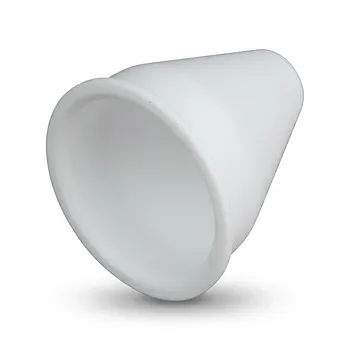
- Custom PTFE Conical Sample Cell Fluoropolymer Triangular Container Chemical Resistant Low Background Labware
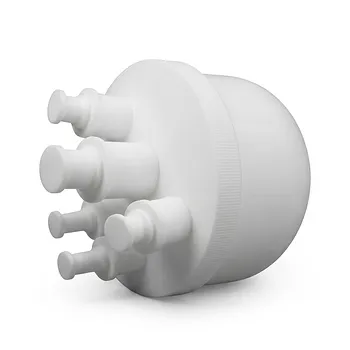
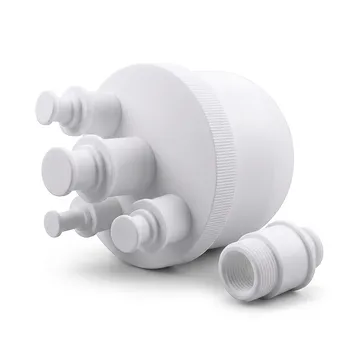
- Custom Multi Neck PTFE Flask for Chemical Engineering and High Purity Laboratory Synthesis Applications
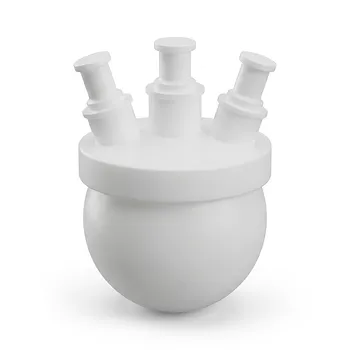
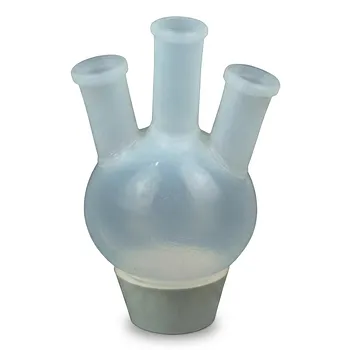
- Laboratory PTFE Three Neck Reaction Flask Corrosion Resistant 2000ml Low Background Fluoropolymer Vessel
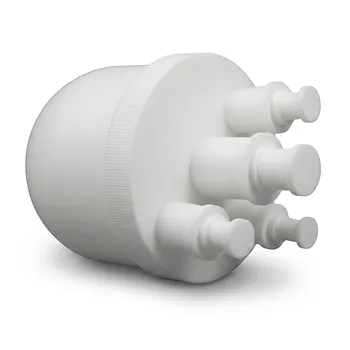
- Custom Multi Neck PTFE Round Bottom Flask for High Purity Chemical Laboratory Experiments and Industrial Synthesis
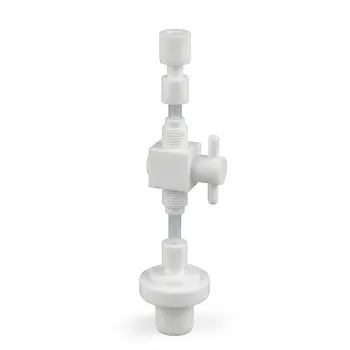
- High Purity PFA PTFE Flare Stop Valves Customizable 2-Way 3-Way Reducing Fluoropolymer Fluid Control Solutions
People Also Ask
- How do Polytetrafluoroethylene (PTFE) containers perform regarding gas permeation? Expert Insights on Solvent Absorption
- How do the distinct solubility characteristics of multi-segment fluorinated block and star polymers influence sample preparation container selection? Choose PTFE/PFA for reliable recovery
- What surface chemical species and binding energy signatures are detected on PTFE fluoropolymer sample holders during XPS analysis? Key insights for accurate calcium detection.
- How do -CF3 groups influence fluoropolymer trace analysis containers? Achieve minimal contamination and high recovery.
- What is the significance of the 3-electrode cell in Mott-Schottky measurements? Get Precise Semiconductor Data.