Pendant -CF3 groups and hyperbranched architectures improve fluoropolymer performance by combining chemical robustness with controlled molecular free volume. Bulky trifluoromethyl groups restrict chain motion, reduce polarizability, and repel water, while hyperbranching disrupts close chain packing and creates nanoscale void space. Together, these effects can produce glass-transition temperatures above 200°C, thermal decomposition thresholds approaching 550–573°C under nitrogen, water contact angles of approximately 92–97°, and dielectric constants near or below 2.67.
The central design principle is a balance between rigidity and free volume: rigid fluorinated structures resist heat, -CF3 groups lower surface energy and electrical polarizability, and hyperbranching creates spacing that reduces dielectric response without sacrificing dimensional stability.
Why the Molecular Architecture Matters
Bulky groups restrict polymer-chain motion
The trifluoromethyl group is substantially larger than hydrogen or many conventional substituents. When attached to a rigid fluoropolymer backbone, it acts as a steric barrier that limits segmental rotation and reduces the ability of chains to reorganize when heated.
Hyperbranched architectures reinforce this effect by connecting multiple chain segments around a branched molecular core. The resulting three-dimensional structure can maintain high rigidity and delay the cooperative motion associated with the glass transition.
Hyperbranching increases free volume
Branching prevents polymer chains from packing as efficiently as linear, relatively symmetrical chains. Pendant -CF3 groups amplify this effect because their size and shape interfere with close interchain contact.
The result is higher fractional free volume (FFV): the proportion of the polymer occupied by nanoscale unfilled space. This free volume is important for lowering dielectric response, although excessive free volume can affect mechanical strength and permeability.
How Thermal Stability Improves
Higher glass-transition temperatures
A high glass-transition temperature indicates that the polymer remains in a rigid, glassy state over a broad temperature range. Pendant -CF3 groups increase steric hindrance, while rigid and hyperbranched backbones reduce the segmental mobility that normally softens a polymer.
Reported fluorinated systems can reach Tg values from above 200°C to approximately 350°C, with some rigid fluorene- or triptycene-containing structures reaching roughly 365–450°C. Exact values depend on backbone chemistry, molecular weight, branching density, and measurement method.
Greater resistance to thermal decomposition
Fluorinated backbones generally benefit from strong carbon-fluorine bonds and reduced chemical reactivity. The absence of easily oxidized or highly polar sites can delay mass loss and thermo-oxidative degradation.
The primary reference reports 10% decomposition temperatures as high as approximately 550–573°C in nitrogen. Related systems show 5% decomposition temperatures above 470–500°C, and in some cases above 570°C, but these figures should be compared only when atmosphere, heating rate, sample history, and decomposition criterion are equivalent.
Improved dimensional stability
High Tg and restricted chain mobility help the material retain its shape during thermal cycling, solvent exposure, and high-temperature processing. This is valuable for thin-film dielectrics, substrate coatings, precision components, and laboratory equipment exposed to heated reagents.
Thermal stability does not mean that every formulation will retain identical strength or dimensions indefinitely. Internal stress, residual solvent, oxidation, and the thermal expansion mismatch with a substrate can still control real-world reliability.
How Surface Hydrophobicity Improves
-CF3 groups lower surface energy
Trifluoromethyl groups are highly fluorinated and have low affinity for water. When they are concentrated near the polymer surface, they reduce the surface energy and make water less likely to spread across the material.
This produces water contact angles commonly reported between 92° and 97.3°. Such values indicate a strongly water-repellent surface, although they do not by themselves define every aspect of chemical or contamination resistance.
Hyperbranching can increase fluorinated-group exposure
A hyperbranched structure provides many chain ends, side groups, and nonplanar regions. With suitable composition and processing, this architecture can promote the presentation of fluorinated groups at or near the surface.
Surface segregation is influenced by annealing, solvent choice, film thickness, roughness, and the distribution of fluorinated segments. Therefore, high fluorine content alone does not guarantee the same contact angle on every manufactured surface.
Lower moisture uptake protects performance
Hydrophobic fluorinated surfaces reduce water adsorption and bulk moisture uptake. Some high-performance fluoropolymers report moisture absorption below approximately 2%, depending on composition and test conditions.
This matters because absorbed water can plasticize a polymer, change its dimensions, increase dielectric loss, and contribute to electrical leakage or breakdown. Moisture resistance is therefore both a surface benefit and an electrical-reliability benefit.
How Dielectric Performance Improves
Low-polarizability C-F bonds reduce dielectric response
The dielectric constant reflects how readily a material polarizes in an electric field. Carbon-fluorine-rich structures have relatively low electronic polarizability compared with many more polar chemical groups.
Replacing or diluting highly polarizable and strongly interacting structural units with fluorinated groups can therefore reduce the polymer's dielectric constant. Reported values for related fluoropolymers range from approximately 1.42 to 2.71, with values around 2.05–2.67 commonly cited for low-k systems.
Free volume lowers the number of polarizable units per volume
Hyperbranching and bulky -CF3 substituents disrupt efficient chain packing. The resulting nanoscale voids reduce the density of polymer segments that can respond to an applied electric field.
This is a volumetric effect: the material contains more low-polarizability free space and fewer closely packed dipoles per unit volume. It can lower capacitance and help reduce signal delay in high-frequency applications.
Reduced moisture limits dielectric drift
Water has a much higher dielectric response than a fluoropolymer. Even modest moisture uptake can therefore increase the effective dielectric constant and dielectric loss of a porous or free-volume-rich material.
The hydrophobicity provided by -CF3 groups helps preserve dielectric properties during humid exposure. This is particularly important for high-frequency interconnects, insulating substrates, analytical instruments, and sensitive electrochemical environments.
Reduced interchain interactions can limit electrical loss
Bulky fluorinated and three-dimensional structural units reduce close chain contact and can suppress charge-transfer interactions that contribute to optical absorption and electrical loss. The result can be a combination of low dielectric constant, low dielectric loss, optical transparency, and chemical resistance.
The actual loss tangent remains dependent on frequency, temperature, impurities, residual solvent, defects, and electrode configuration. A low room-temperature dielectric constant should not be treated as proof of low loss under every operating condition.
Why the Combination Benefits High-End Applications
High-frequency electronic substrates
Low dielectric constant and controlled moisture uptake reduce capacitive loading and help preserve signal integrity. High Tg and high decomposition temperatures provide a wider processing and operating window than less rigid organic dielectrics.
Protective and dielectric coatings
The fluorinated surface resists wetting, while the rigid branched network supports thermal and chemical durability. These properties are useful where a coating must function as both an electrical insulator and a barrier against moisture or aggressive chemicals.
High-purity laboratory components
Hydrophobic, chemically resistant fluoropolymer surfaces minimize aqueous retention and contamination during fluid transfer or sample handling. Thermal endurance also supports heated digestion, solvent contact, and repeated cleaning cycles.
Porous ultra-low-k materials
In some systems, removable side chains or selectively eliminated grafts are used to create defined micro- and nanopores. This can drive the dielectric constant below that of a dense fluoropolymer, but the resulting benefits depend on controlling pore size, connectivity, mechanical integrity, and moisture exclusion.
Understanding the Trade-offs
More free volume can reduce mechanical toughness
Free volume improves dielectric performance, but excessive spacing can lower cohesive strength and increase brittleness. A useful formulation must preserve enough interchain interaction to maintain handling strength and resistance to cracking.
Hyperbranching can complicate processing
Highly branched polymers may have unusual viscosity, solubility, and film-forming behavior. Branching density, molecular-weight distribution, and residual low-molecular-weight species can affect coating uniformity and machining quality.
Hydrophobicity is surface-dependent
Contact angle is sensitive to roughness, contamination, aging, and measurement protocol. A high initial contact angle may change after abrasion, plasma treatment, thermal exposure, or adsorption of processing residues.
Thermal decomposition data require careful comparison
Tg and Td values are not universal material constants. Nitrogen, air, and vacuum can produce different degradation behavior, while 5% and 10% mass-loss temperatures are not interchangeable metrics.
Porosity can increase moisture sensitivity
Nanoporous structures lower the dielectric constant but may also provide pathways for water vapor or contaminants if the pores are connected. The hydrophobic chemistry must therefore be paired with appropriate pore control and surface protection.
Making the Right Choice for Your Goal
The most effective design is not the one with the maximum fluorine content or free volume, but the one that balances all required properties.
- If your primary focus is thermal endurance: Select a rigid, highly branched fluoropolymer with restricted segmental mobility, and verify Tg and decomposition data under the intended atmosphere and heating profile.
- If your primary focus is surface hydrophobicity: Favor formulations that place a high density of -CF3 groups at the exposed surface, then validate contact angle, moisture uptake, and durability after processing.
- If your primary focus is low dielectric constant: Increase bulky fluorinated content and controlled FFV while monitoring dielectric loss, mechanical strength, pore structure, and frequency dependence.
- If your primary focus is high-frequency reliability: Combine low-polarizability fluorinated chemistry with low moisture absorption and stable dimensional behavior across the full temperature and humidity range.
- If your primary focus is high-purity laboratory use: Prioritize fluorinated surfaces with low wetting, low extractables, chemical resistance, and sufficient thermal stability for the actual reagents and cleaning cycles.
By balancing rigid fluorinated chemistry with controlled hyperbranched free volume, designers can obtain fluoropolymers that remain stable, water-repellent, and electrically efficient under demanding thermal, chemical, and high-frequency conditions.
Summary Table:
| Property | Effect of -CF3 & Hyperbranching | Typical Values |
|---|---|---|
| Thermal Stability | Increased Tg and decomposition temp | Tg > 200°C, Td up to 550–573°C |
| Surface Hydrophobicity | Higher water contact angle | 92–97.3° |
| Dielectric Constant | Reduced via low polarizability & free volume | 1.42–2.71 (low-k) |
| Moisture Uptake | Reduced due to hydrophobic surface | < 2% |
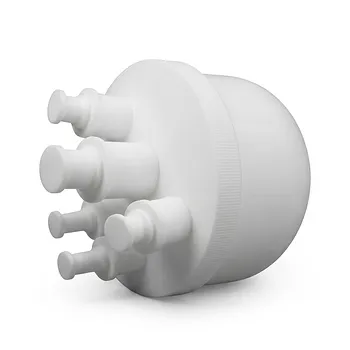
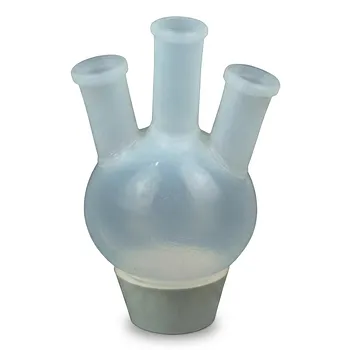
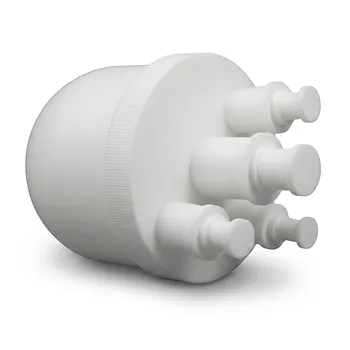
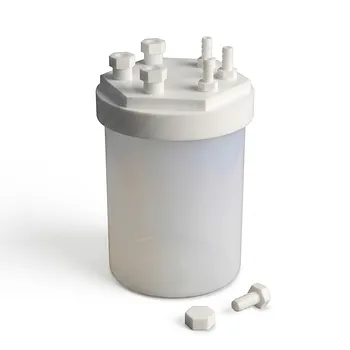
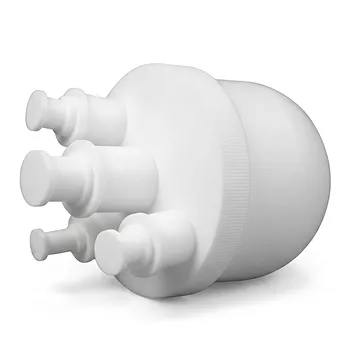
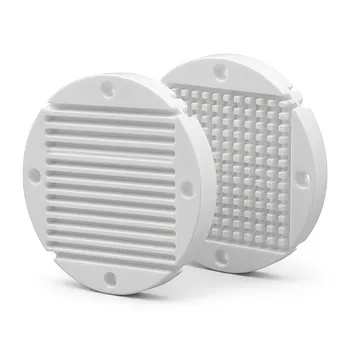
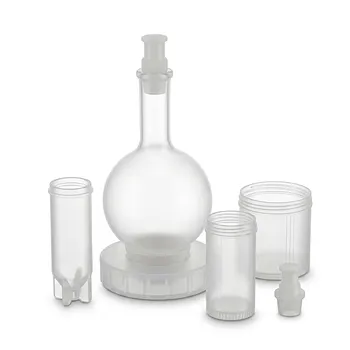
Ready to leverage these advanced fluoropolymer properties for your high-end applications? At KINTEK, we specialize in precision PTFE/PFA labware and custom components. Whether you need high-purity digestion vessels, low-k dielectric parts, or hydrophobic surfaces for critical analysis, our end-to-end CNC machining and dedicated support can deliver exactly what you need. Contact us today to discuss your requirements and get a tailored solution.
Related Products
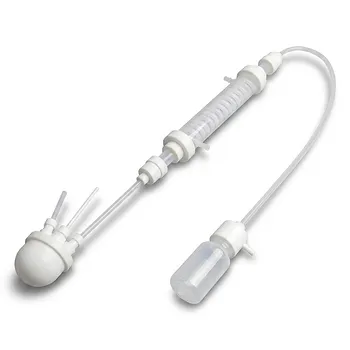
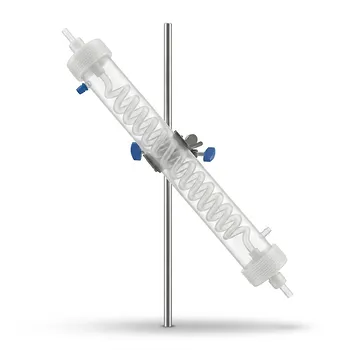
- High Purity PFA Chromatography Column with Collection Bottle Corrosion Resistant Fluoropolymer Filtration System for Trace Analysis
- High Purity PFA Chromatography Columns and Collection Bottles Corrosion Resistant Fluoropolymer Filtration Systems for Trace Analysis
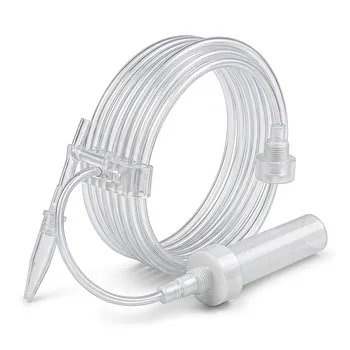
- High Purity PFA Coiled Tubing Custom PTFE Machining PFA Welding and Precision Bending Solutions
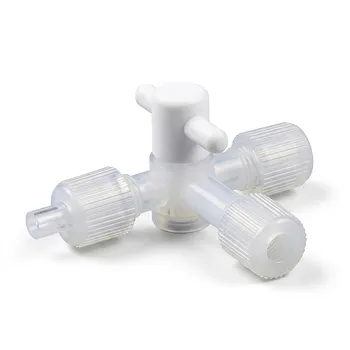
- High Purity PFA PTFE Flare Stop Valves Customizable 2-Way 3-Way Reducing Fluoropolymer Fluid Control Solutions
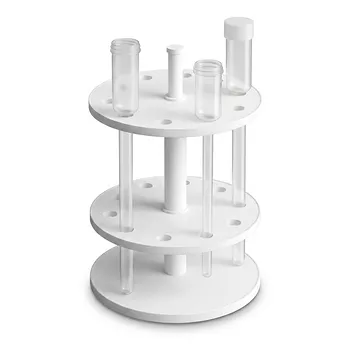
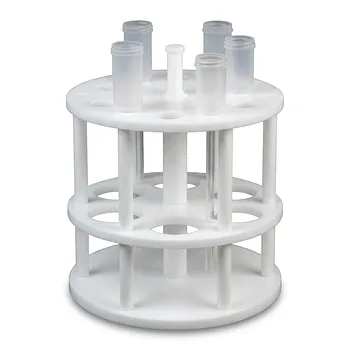
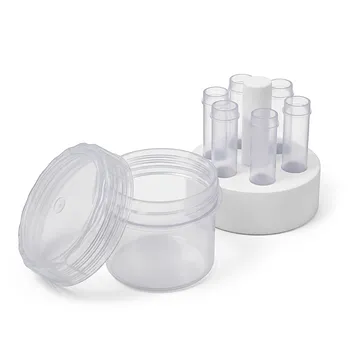
- Custom PFA Micro Column Rack and PTFE Machined Storage Solutions for Trace Analysis
People Also Ask
- What are the primary functional and temperature differences between PFA and FEP when selecting melt-processible fluoropolymers for custom laboratory apparatus?
- Why is the chemical stability of polymer endgroups critical when selecting melt-processible fluoropolymers like PFA for high-purity laboratory apparatus? Choose Stable Endgroups for Reliable Performance
- What are the characteristics of PFA material? A Guide to Its High-Performance Balance
- Why is Perfluoroalkoxy alkane (PFA) preferred over glass or stainless steel in pharmaceutical process development? Pure Yield
- Why is PFA superior for cleaning and preventing cross-contamination? The Gold Standard for Ultra-Trace Lab Hygiene