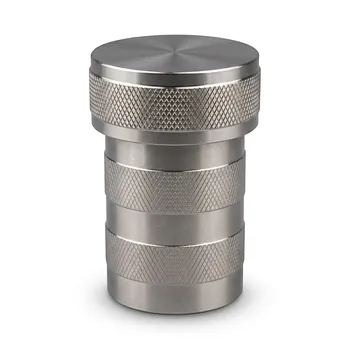
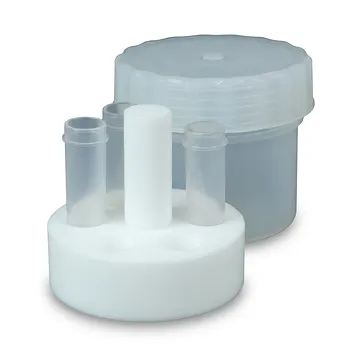
The Teflon-lined stainless steel autoclave facilitates NiO/g-C3N4 synthesis by creating a pressurized, high-temperature hydrothermal environment that promotes in-situ nucleation. Specifically, it enables the growth of nickel precursors directly onto g-C3N4 nanosheets at 120°C, utilizing autogenous pressure to drive the reaction while protecting the product from metallic contamination.
The core value of the Teflon-lined autoclave lies in its dual-material design: the stainless steel exterior provides the mechanical strength to withstand high internal pressures, while the Teflon liner ensures a chemically inert environment. This combination allows for the precise crystallization of nickel oxide onto carbon nitride surfaces without compromising material purity.
The Synergy of the Dual-Layer Design
Mechanical Strength of the Stainless Steel Shell
The external stainless steel casing acts as a pressure vessel, providing the structural integrity necessary to contain autogenous pressure. This pressure is generated internally as the liquid precursors are heated beyond their boiling points within a sealed space.
Without this rigid outer shell, the internal chamber would deform or fail, preventing the system from reaching the high-energy states required for crystalline growth.
Chemical Inertness of the PTFE (Teflon) Liner
The internal Teflon (Polytetrafluoroethylene) liner is chosen for its extreme resistance to corrosion. It prevents acidic or alkaline precursor solutions from reacting with the steel walls, which would otherwise degrade the equipment.
Furthermore, the liner acts as a barrier against metal ion leaching. By isolating the reaction, it ensures that no iron, chromium, or nickel from the shell contaminates the NiO/g-C3N4 composite, maintaining its electrochemical or catalytic integrity.
Driving the Hydrothermal Synthesis Process
Facilitating In-Situ Nucleation
The autoclave creates the specific physical conditions—120°C and elevated pressure—needed for in-situ growth. These conditions lower the activation energy required for nickel ions to nucleate on the surface of g-C3N4 nanosheets.
By forcing the precursors into close contact under pressure, the autoclave ensures a more uniform distribution of NiO particles. This results in a cohesive composite rather than a simple physical mixture of two separate phases.
Phase and Morphology Control
Precise temperature control within the sealed environment allows for the manipulation of the crystalline phase. In the synthesis of NiO/g-C3N4, the stable heat distribution ensures that the nickel precursors transform into well-defined structures with specific morphologies.
This environment is essential for achieving high crystallinity, which is often difficult to reach at ambient pressures. The high-pressure "solvent effect" enhances the solubility and reactivity of the starting materials.
Understanding the Trade-offs
Temperature Limitations
While Teflon is highly inert, it has a clear thermal ceiling, typically around 220°C to 250°C. Exceeding these temperatures can cause the liner to soften or release toxic fumes, potentially ruining the synthesis and damaging the autoclave.
Pressure Sensitivity and Cooling Rates
The internal pressure is a function of the filling ratio (the volume of liquid relative to the total volume). If the autoclave is overfilled, the pressure can exceed the safety limits of the stainless steel bolts, leading to a catastrophic release.
Additionally, the cooling process must be gradual. Rapid cooling can create thermal stress between the Teflon liner and the steel shell, leading to liner deformation or "crinkling," which compromises the seal for future runs.
Applying This Technology to Your Synthesis
Making the Right Choice for Your Goal
To achieve the best results in hydrothermal synthesis, your operational parameters must align with the material limits of the hardware.
- If your primary focus is high purity: Ensure the Teflon liner is thoroughly cleaned with dilute acid between runs to remove any residual adsorbed metal ions.
- If your primary focus is uniform particle size: Maintain a consistent filling ratio (typically 60-80%) to ensure reproducible autogenous pressure across different batches.
- If your primary focus is equipment longevity: Never exceed 200°C for extended periods and allow the autoclave to cool naturally to room temperature before opening.
By mastering the balance between the structural strength of steel and the chemical resistance of Teflon, researchers can reliably produce high-performance NiO/g-C3N4 composites with precise structural characteristics.
Summary Table:
| Component/Feature | Role in Synthesis | Key Benefit |
|---|---|---|
| Stainless Steel Shell | Mechanical pressure vessel | Withstands autogenous pressure for crystalline growth |
| PTFE (Teflon) Liner | Chemical barrier | Prevents metallic contamination and leaching |
| Hydrothermal Conditions | 120°C + High Pressure | Facilitates in-situ nucleation on g-C3N4 nanosheets |
| Phase Control | Stable heat distribution | Ensures uniform particle morphology and crystallinity |
Elevate Your Synthesis Precision with KINTEK
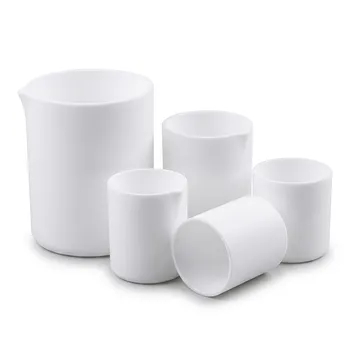
Achieve uncompromising purity in your material research with KINTEK’s specialized fluoropolymer solutions. From everyday basic labware like PTFE beakers, crucibles, and reagent bottles to advanced hydrothermal synthesis liners and microwave digestion vessels, we provide the chemically inert environment essential for high-performance composite synthesis.
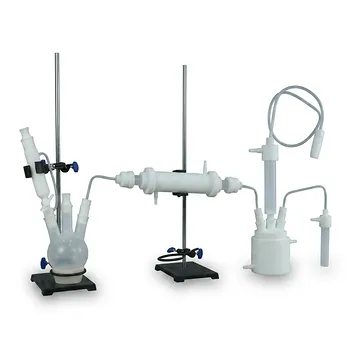
Our expertise extends across the full spectrum of laboratory needs, including high-purity trace analysis instruments, fluid transfer components (tubing, fittings, valves), and custom-engineered reaction apparatus. Whether you require standard consumables or bespoke CNC-fabricated parts for complex non-standard setups, KINTEK maintains an exclusive focus on high-performance PTFE and PFA materials to ensure your results remain uncontaminated.
Ready to optimize your laboratory workflow with custom fluoropolymer engineering?
Contact KINTEK Today to discuss your specific requirements and discover how our end-to-end fabrication capabilities can support your next breakthrough.
References
- M. Manikandan, Subrata Karmakar. Engineering NiO/g-C₃N₄ and NiO/rGO composites for dual applications in electrochemical water splitting and energy storage. DOI: 10.1038/s41598-025-20713-3
This article is also based on technical information from Kintek Knowledge Base .
Related Products
- Custom TFM Reaction Vessel with Stainless Steel Jacket and PTFE Inner Cup for High Corrosion Resistance
- High Purity Corrosion Resistant Teflon Crucible Low Background Laboratory PTFE Vessel for Trace Analysis and Acid Digestion
- High Temperature Corrosion Resistant Hydrothermal Synthesis Reactor with TFM Inner Liner and Straight Cylinder Design
- High Purity PTFE Microwave Digestion Vessel Replacement Liner for Acid Sample Preparation and Trace Analysis
- PTFE Lined High Pressure Digestion Vessel 50ml High Temperature Hydrothermal Synthesis Tank
People Also Ask
- Why are high-performance pressure-resistant reaction vessels required for oxygen-assisted hydrothermal conversion at 150 °C?
- How do magnetic stirring and reaction vessels impact MOF-derived carbon quality? Optimize Your Composite Performance
- Why are high-quality fluoropolymer-lined reaction vessels required for alk-Ti3C2Tx MXene? Ensure Purity & HF Resistance
- Why are PTFE-lined reaction vessels necessary for forced degradation studies? Ensure high-purity results and accuracy.
- Why is a high-purity PTFE lined reaction vessel required for the acidic etching of MXenes? Ensure Material Purity.