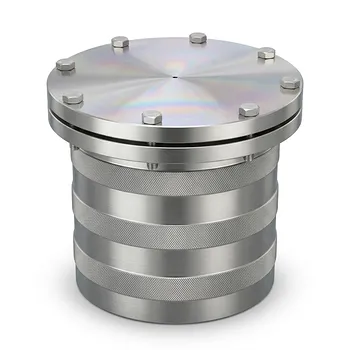
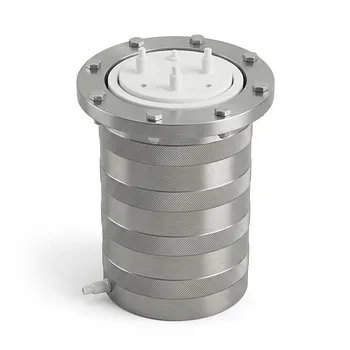
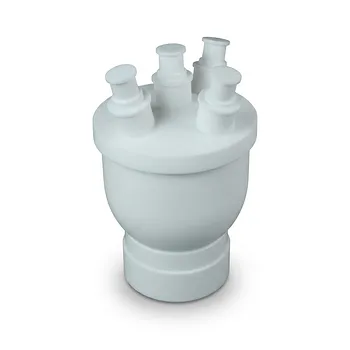
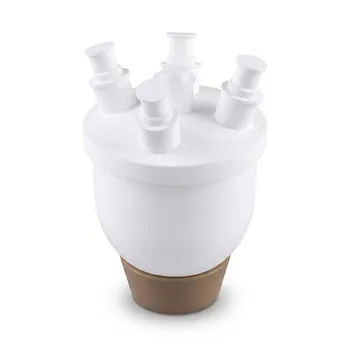
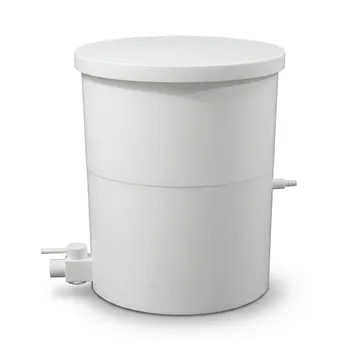
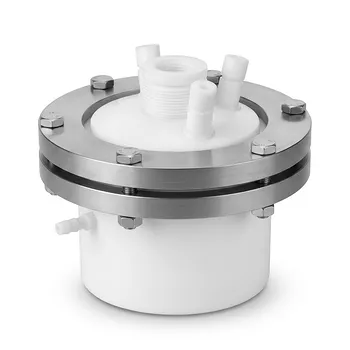
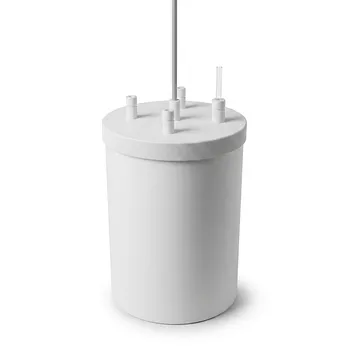
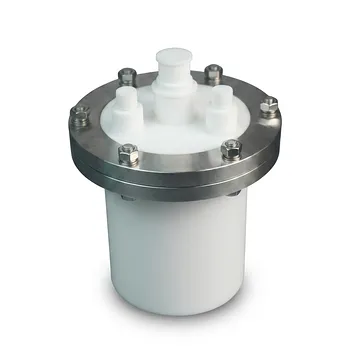
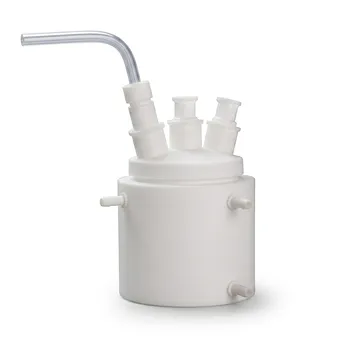
Reactor linings serve as a critical chemical barrier between the reaction medium and the metallic structure of the synthesis vessel. By preventing the leaching of metal ions like iron, chromium, and nickel from the stainless-steel outer shell, these linings ensure the high-purity environment required for synthesizing advanced materials. This isolation is vital for maintaining the precise particle size, crystallinity, and phase purity necessary in nanotechnology and materials science.
The core role of a reactor lining is to provide a chemically inert environment that isolates the reaction from the metallic autoclave body. This prevents trace metal contamination and protects the vessel from corrosion, ensuring the reproducibility and structural integrity of the synthesized nanomaterials.
The Mechanics of Contamination Prevention
Eliminating Metal Ion Leaching
The stainless-steel shells of high-pressure reactors contain various metals that can migrate into a solution under heat and pressure. Reactor linings effectively block the leaching of iron, chromium, and nickel, which would otherwise act as unintended catalysts or impurities.
Maintaining Phase Purity and Crystallinity
In the synthesis of zeolites and perovskites, even trace amounts of foreign ions can disrupt the crystal lattice. By providing a clean environment, the lining ensures that the material achieves the exact phase purity and crystallinity required for its specific application.
Protecting Particle Size Distribution
Nanomaterial performance often depends on a very narrow particle size range. Contaminants from the vessel wall can trigger uncontrolled nucleation, but a stable lining environment allows for the controlled growth of nanocrystals with predictable dimensions.
Chemical Resistance in Extreme Conditions
PTFE as a Protective Barrier
Polytetrafluoroethylene (PTFE) is a common lining material because it offers superior resistance to strong acids and alkalis. This chemical inertness allows researchers to use aggressive reagents without the risk of the lining reacting with the precursors.
Stability Under High Temperature and Pressure
Hydrothermal synthesis often requires conditions that would quickly degrade bare metal. A high-quality liner provides thermal and pressure stability, maintaining its integrity while protecting the external autoclave from corrosive damage.
Preventing Vessel Fatigue
Beyond product purity, the lining serves as a sacrificial or protective layer for the expensive hardware. By insulating the outer shell from corrosive chemical reactants, the lining significantly extends the operational lifespan of the reactor system.
Understanding Technical Trade-offs and Limitations
Temperature and Pressure Thresholds
While linings like PTFE are highly resistant, they have specific thermal limits, typically around 200°C to 250°C. Exceeding these limits can lead to liner deformation or "creeping," which may cause the seal to fail and expose the metal shell to the reaction.
Thermal Expansion Disparities
Liners and metal shells expand at different rates when heated. This disparity requires careful design to prevent mechanical stress or cracking of the liner, which could lead to "stealth contamination" where the solution reaches the metal shell through microscopic fissures.
Cleaning and Cross-Contamination
If a lining is porous or becomes scratched, it can retain trace amounts of previous experiments. Rigorous cleaning protocols or dedicated liners for specific materials are necessary to prevent cross-contamination between different synthesis batches.
Choosing the Right Lining Strategy
When selecting or maintaining a reactor lining for sensitive material synthesis, consider your specific experimental goals to ensure optimal results.
- If your primary focus is synthesizing high-purity zeolites or perovskites: Use a pristine PTFE or PFA liner to ensure that no trace iron or nickel interferes with the delicate crystal lattice formation.
- If your primary focus is working with highly corrosive acids or bases: Verify the chemical compatibility of the liner material to prevent structural degradation of the autoclave's outer shell.
- If your primary focus is high-temperature hydrothermal synthesis: Monitor the liner for signs of thermal deformation and replace it regularly to maintain a tight, contamination-free seal.
By treating the reactor lining as a fundamental component of the chemical system, researchers can ensure the precision and reproducibility required for the next generation of materials science.
Summary Table:
| Feature | Function in Reactor Lining | Impact on Nanomaterials |
|---|---|---|
| Metal Isolation | Blocks leaching of Fe, Cr, and Ni from steel | Prevents unintended catalysis and lattice impurities |
| Chemical Inertness | Resists aggressive acids and alkalis (PTFE/PFA) | Ensures reagents only react with intended precursors |
| Structural Barrier | Protects vessel from corrosion and fatigue | Extends hardware life and prevents "stealth" leaks |
| Thermal Stability | Maintains seal under hydrothermal conditions | Enables controlled nucleation and narrow size distribution |
Elevate Your Material Synthesis with KINTEK’s Fluoropolymer Excellence
Precision in nanotechnology demands an environment free from even trace metallic interference. KINTEK specializes in high-performance fluoropolymer solutions designed to eliminate contamination and withstand the most aggressive chemical environments.
From everyday basic labware (beakers, measuring cylinders, crucibles, dishes, reagent/wash bottles, centrifuge and digestion tubes) and high-purity trace analysis instruments to comprehensive fluid transfer components (tubing, fittings, valves), sample prep and filtration tools (separatory funnels, burettes, filters, pipettes, tweezers, spatulas), and general consumables (stirring bars, O-rings, gaskets, seal tapes, caps, septa), we provide the foundational tools for pure research.
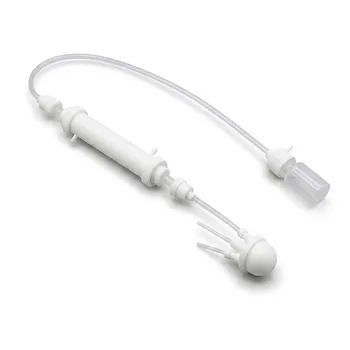
For advanced applications, we offer derivative and reaction apparatus, including standard or custom electrochemical cells, battery testing fixtures, electrode accessories, hydrothermal synthesis liners, microwave digestion vessels, microchannel reactors, and condensation/reflux devices.
Why choose KINTEK?
- Absolute Material Focus: We work exclusively with high-performance PTFE and PFA.
- Custom CNC Fabrication: End-to-end solutions for complex non-standard machined parts and bespoke laboratory setups.
- Scalability: From single custom prototypes to high-volume industrial orders.
Don’t let trace metals compromise your crystallinity or particle size. Contact our technical experts today to secure the high-purity reactor linings and labware your research deserves.
Related Products
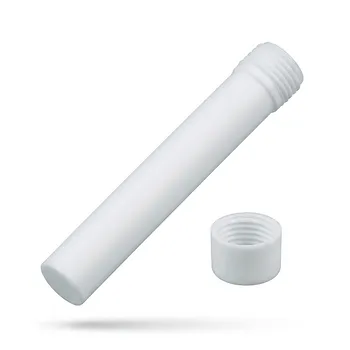
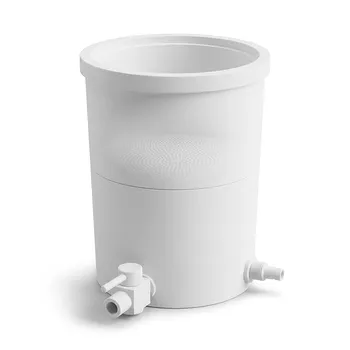
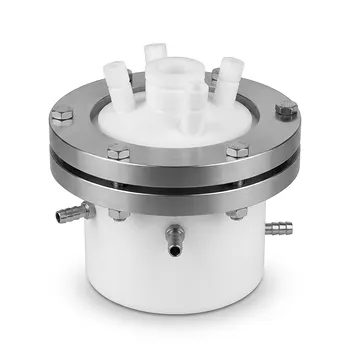
- Custom TFM Reaction Vessel with Stainless Steel Jacket and PTFE Inner Cup for High Corrosion Resistance
- High Pressure Custom TFM Reactor Stainless Steel Outer Vessel PTFE Inner Cup for Corrosive Synthesis
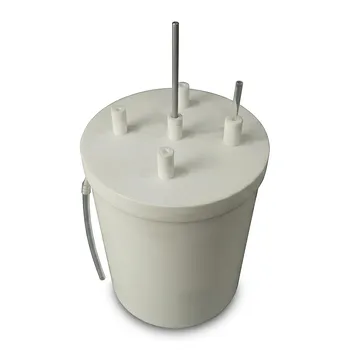
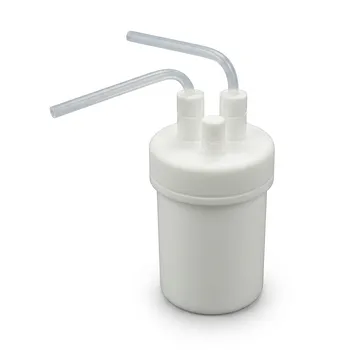
- Customizable Polytetrafluoroethylene PTFE Reactor and Corrosion Resistant Teflon Flask
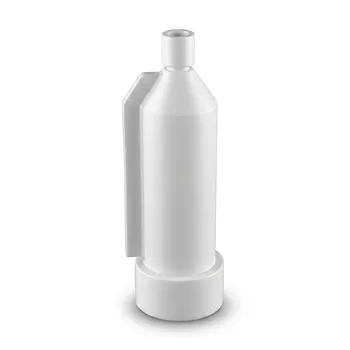
- High Performance Customizable PTFE Reaction Vessel and Corrosion Resistant Polytetrafluoroethylene Flask for Chemical Laboratory Use
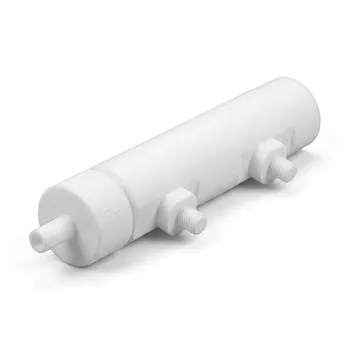
- Custom PTFE Sleeves and Hollow Rods for Advanced Applications
People Also Ask
- Why are high-performance pressure-resistant reaction vessels required for oxygen-assisted hydrothermal conversion at 150 °C?
- How do magnetic stirring and reaction vessels impact MOF-derived carbon quality? Optimize Your Composite Performance
- Why are high-quality fluoropolymer-lined reaction vessels required for alk-Ti3C2Tx MXene? Ensure Purity & HF Resistance
- Why are PTFE-lined reaction vessels necessary for forced degradation studies? Ensure high-purity results and accuracy.
- Why is a high-purity PTFE lined reaction vessel required for the acidic etching of MXenes? Ensure Material Purity.