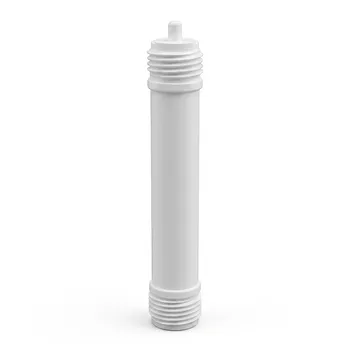
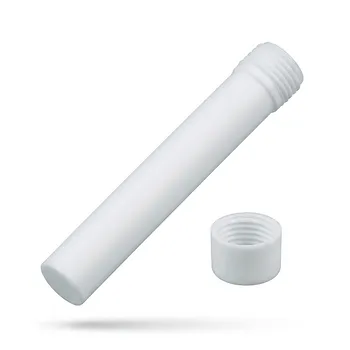
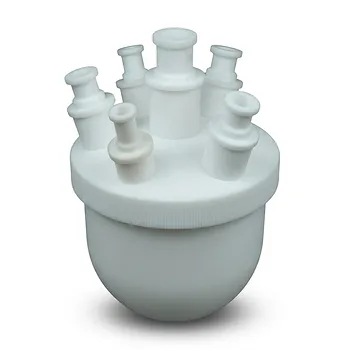
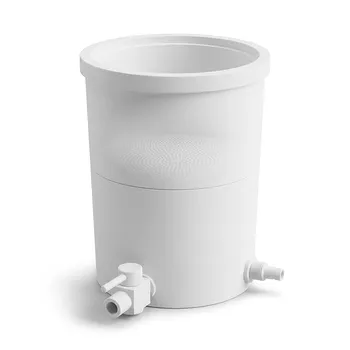
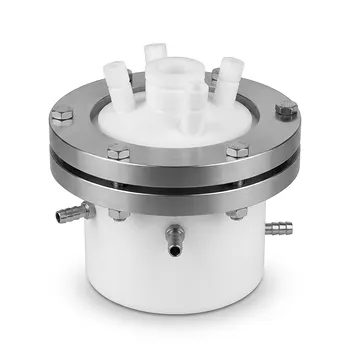
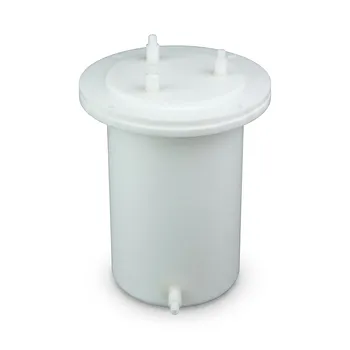
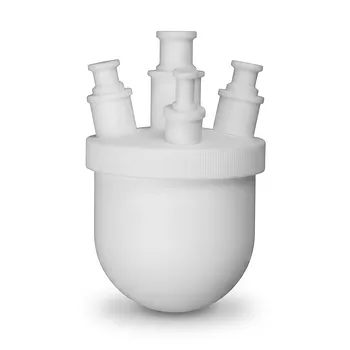
In the hydrothermal synthesis of birnessite manganese dioxide, a Polytetrafluoroethylene (PTFE) liner acts as a chemically inert reaction vessel that enables the transition from an amorphous state to a high-crystallinity structure. It provides critical resistance to the concentrated sodium hydroxide (NaOH) and high-pressure redox environments necessary for the synthesis, ensuring that the resulting birnessite is free from metallic contamination.
Core Takeaway: The PTFE liner is the essential barrier that maintains the purity and phase-stability of birnessite by isolating the chemical reaction from the metal autoclave walls while withstanding the corrosive, high-temperature conditions required for crystal growth.
Ensuring Chemical Integrity and Purity
Resistance to Harsh Alkaline Environments
The synthesis of birnessite often requires a concentrated sodium hydroxide (NaOH) solution to facilitate the necessary redox reactions. PTFE is uniquely resistant to corrosion from these strong bases, which would otherwise degrade standard laboratory glass or react with metal containers.
Prevention of Metal Ion Contamination
By acting as a barrier between the reaction medium and the stainless steel autoclave shell, the liner prevents metal impurities (such as iron, nickel, or chromium) from leaching into the solution. This is vital because even trace amounts of foreign metals can disrupt the specific crystal lattice of manganese dioxide or alter its desired optoelectronic properties.
Non-Reactive Redox Environment
Birnessite synthesis involves complex redox reactions at elevated temperatures, typically around 150°C. The chemical inertness of PTFE ensures that the liner itself does not participate in these reactions, allowing the manganese precursors to transform predictably from an amorphous state to a crystalline phase.
Facilitating Structural Transformation
Supporting High-Crystallinity Growth
To achieve the high-crystallinity characteristic of quality birnessite, the reaction environment must remain stable under high-pressure and high-temperature conditions. The PTFE liner maintains a clean environment that allows for the controlled growth of nanocrystals with uniform morphology.
Enhancing Sample Recovery
The non-stick properties of PTFE are a significant operational advantage during the collection of precipitates. After the hydrothermal process is complete, the synthesized birnessite can be easily and completely recovered from the liner without loss of material to the vessel walls.
Protecting the Structural Hardware
Beyond protecting the sample, the liner serves as a "sacrificial" shield for the external metal autoclave. It prevents the corrosive media and high-pressure steam from eroding the threads and structural integrity of the high-pressure reactor.
Understanding the Trade-offs
Temperature and Pressure Limitations
While PTFE is highly stable, it has a physical limit; most liners are rated for temperatures up to 250°C. Exceeding these limits can cause the PTFE to soften or "creep," leading to potential leaks or the deformation of the liner inside the autoclave.
Potential for Gas Permeation
At high pressures, certain gases can permeate the PTFE wall and reach the stainless steel shell. While the liner stops liquid corrosion, users must remain aware that the outer autoclave still requires regular inspection for signs of stress or microscopic corrosion over long-term use.
Cleaning and Cross-Contamination
Although PTFE is non-stick, it can be slightly porous at a microscopic level. If not cleaned rigorously between different synthesis runs, residual precursors could potentially contaminate subsequent batches, particularly when switching between different types of manganese oxides.
How to Apply This to Your Synthesis
To achieve the best results when synthesizing birnessite or other functional nanomaterials, consider your primary goal for the project.
- If your primary focus is high phase purity: Ensure the PTFE liner is pristine and dedicated to birnessite synthesis to prevent any cross-contamination from other metal oxides.
- If your primary focus is crystal morphology: Maintain strict temperature control at 150°C, as the PTFE liner's thermal insulation properties require a brief stabilization period to reach equilibrium.
- If your primary focus is equipment longevity: Always inspect the liner for "cold flow" deformation or discoloration after each high-pressure run to ensure the seal remains intact.
The PTFE liner is the silent partner in hydrothermal synthesis, providing the controlled, ultra-clean environment necessary for advanced material engineering.
Summary Table:
| Feature of PTFE Liner | Impact on Birnessite Synthesis |
|---|---|
| Chemical Inertness | Resists concentrated NaOH and prevents unwanted redox side-reactions. |
| Purity Barrier | Eliminates metal ion leaching (Fe, Ni, Cr) from the autoclave shell. |
| Surface Properties | Non-stick surface allows for 100% recovery of synthesized nanocrystals. |
| Thermal Stability | Maintains a stable environment up to 250°C for high-crystallinity growth. |
| Structural Shield | Protects the metal high-pressure reactor from corrosive erosion and steam. |
Elevate Your Research with KINTEK’s High-Performance Fluoropolymers
Achieve uncompromising purity in your hydrothermal synthesis with KINTEK’s premium PTFE and PFA solutions. Whether you are developing advanced energy materials or conducting high-purity trace analysis, our absolute focus on high-performance materials ensures your results are never compromised by contamination or vessel failure.
From everyday essentials like beakers, crucibles, and reagent bottles to advanced hydrothermal synthesis liners, microwave digestion vessels, and custom electrochemical cells, we manufacture virtually every laboratory supply imaginable. Our capabilities extend to complex fluid transfer components (tubing, fittings, valves) and precision sample prep tools, all backed by our expert end-to-end custom CNC fabrication.
Why choose KINTEK?
- Custom Engineering: We deliver everything from complex non-standard machined parts to bespoke laboratory setups.
- Scalability: Equipped for both specialized research needs and high-volume industrial orders.
- Material Expertise: Specialist focus on PTFE and PFA for maximum chemical resistance and thermal stability.
Ready to optimize your lab's performance? Contact us today to discuss your custom requirements!
References
- Azadeh Abdi, Andreas Bund. Optimization of in situ hydrothermal synthesis of birnessite MnO2/graphene composite: thermodynamic insights and enhanced electrochemical performance for Li-ion battery anodes. DOI: 10.1007/s10854-025-15800-0
This article is also based on technical information from Kintek Knowledge Base .
Related Products
- PTFE Lined High Pressure Digestion Vessel 50ml High Temperature Hydrothermal Synthesis Tank
- High Pressure Custom TFM Reactor Stainless Steel Outer Vessel PTFE Inner Cup for Corrosive Synthesis
- Custom TFM Reaction Vessel with Stainless Steel Jacket and PTFE Inner Cup for High Corrosion Resistance
- High Purity PTFE Microwave Digestion Vessel for Soil and Food Analysis Acid Resistant Fluoropolymer Sample Preparation Liners
- High Purity TFM Microwave Digestion Vessels PTFE Acid Evaporation Liners Domestic GT-400 Equivalent Laboratory Reaction Containers
People Also Ask
- What are the benefits of using a PTFE-lined vessel for carbon-sulfur cathode treatment? Maximize Purity & Performance
- Why are PTFE-lined pressure digestion vessels required for the preparation of Ag/CeO2 catalysts? Purity & Performance
- What safety features are typically incorporated into high-pressure PTFE digestion vessel designs? Ensure Lab Safety
- What is the function of PTFE lined high-pressure vessels in g-C3N4 synthesis? Achieve High-Purity Material Growth
- Role of High-Pressure Digestion Tanks in Perovskite Synthesis: Achieve Superior Stability and Latent Heat