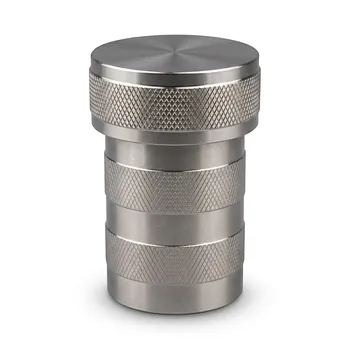
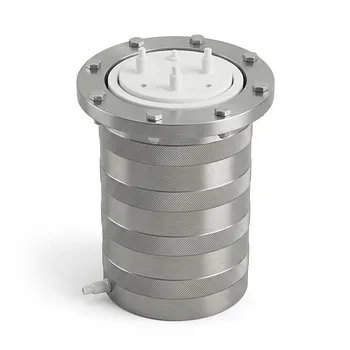
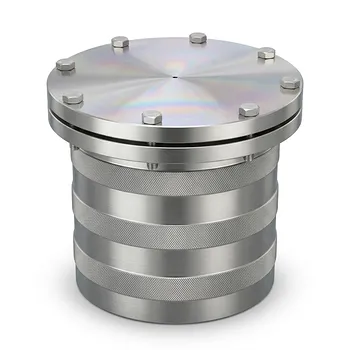
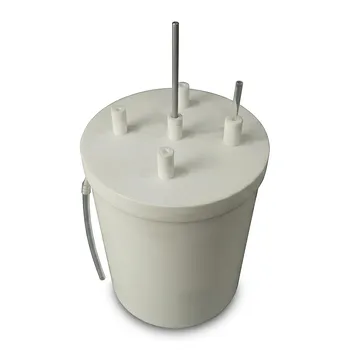
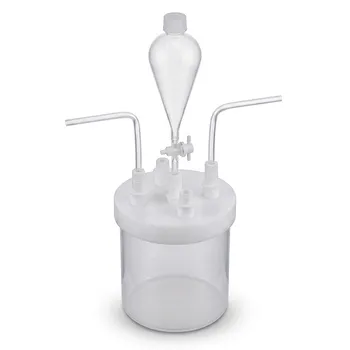
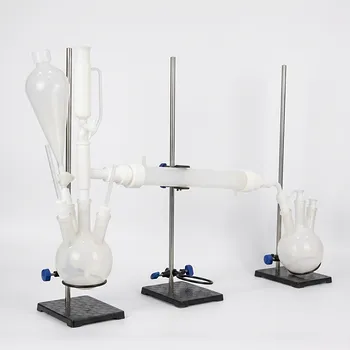
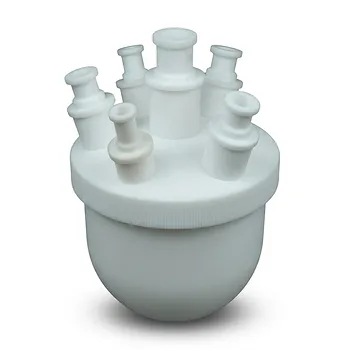
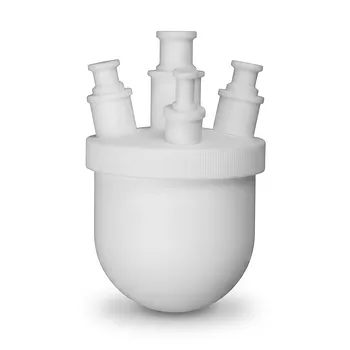
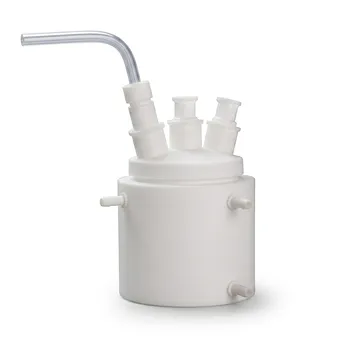
A high-pressure hydrothermal synthesis reactor facilitates the conversion of xylose to furfural by creating a sealed, high-energy environment that maintains a liquid phase at temperatures far exceeding the solvent's atmospheric boiling point. This specialized vessel allows for sustained xylose dehydration through traditional thermal conduction. While the process is significantly slower than modern microwave-assisted methods, the reactor provides a stable, autogenous pressure environment essential for benchmarking catalytic efficiency and studying reaction kinetics.
The hydrothermal reactor acts as a high-pressure crucible that forces chemical transformations by preventing solvent evaporation at high temperatures. By leveraging autogenous pressure, it provides the thermodynamic conditions necessary to dehydrate xylose into furfural, serving as the foundational baseline for thermal research.
The Mechanics of the Hydrothermal Environment
Maintaining the Liquid Phase Above Boiling Point
In traditional open-system heating, the maximum temperature is limited by the solvent's boiling point. The hydrothermal reactor overcomes this by acting as a closed system, trapping vapors to keep the reactant mixture in a high-temperature liquid state.
The Role of Autogenous Pressure Generation
Pressure within the reactor is generated autogenously, meaning it arises internally from the vapor pressure of the solvent as it is heated. Depending on the fill volume and temperature, these reactors typically operate at pressures ranging from 1 to 30 MPa (10 to 300 bar).
Creating a Stable Thermal Benchmark
Because the reactor provides a constant temperature environment, it serves as a critical control for scientific experiments. Researchers use this stability to isolate the effects of heat on catalytic efficiency without the complex electromagnetic variables introduced by microwave systems.
Driving the Chemical Transformation
Promoting Xylose Dehydration
The primary chemical goal is the dehydration of xylose, a process that requires significant energy to break molecular bonds. The high-pressure, high-temperature environment provides the necessary activation energy to strip water molecules from the xylose structure, resulting in the formation of furfural.
Facilitating Solute Dissolution and Reaction Stability
Similar to the synthesis of complex oxides like $WO_3$, the reactor environment promotes the full dissolution of solutes. This ensures that the precursor chemicals are thoroughly integrated, allowing for controlled chemical interactions within the aqueous solution.
Controlled Nucleation and Growth
The pressurized liquid phase allows for a more uniform distribution of thermal energy over long durations. This environment supports the controlled nucleation of products, ensuring that the chemical transition from xylose to furfural occurs within predictable thermodynamic parameters.
Understanding the Trade-offs
Time and Efficiency Limitations
The most significant drawback of the hydrothermal reactor is the reaction time. Traditional thermal experiments for xylose dehydration can take upwards of 5.5 hours, whereas microwave-assisted methods can achieve similar results in less than 10 minutes.
Energy Transfer Mechanisms
Traditional reactors rely on conduction and convection, heating the vessel walls first and then the liquid. This is less efficient than volumetric heating seen in microwave systems, which utilize dipole rotation to heat the entire material simultaneously.
Selectivity and Side Reactions
Longer exposure to heat in a hydrothermal reactor can increase the likelihood of side reactions. These secondary reactions can consume the newly formed furfural, often resulting in lower yields compared to the 40.70%+ yields achievable through faster, more targeted heating methods.
Making the Right Choice for Your Goal
How to Apply This to Your Project
- If your primary focus is establishing a scientific baseline: Use the high-pressure hydrothermal reactor to provide a stable, reproducible thermal environment for kinetic studies.
- If your primary focus is maximizing production speed: Transition to microwave-assisted synthesis to reduce reaction times from hours to minutes.
- If your primary focus is yield optimization: Prioritize methods that suppress side reactions, as the prolonged heating in traditional reactors may degrade your final furfural product.
By mastering the high-pressure environment of the hydrothermal reactor, you gain the precise control necessary to decode the fundamental thermal requirements of biomass conversion.
Summary Table:
| Key Mechanism | Functional Role | Benefit for Xylose Conversion |
|---|---|---|
| Closed System | Prevents solvent evaporation | Maintains liquid state above atmospheric boiling point |
| Autogenous Pressure | Internally generated vapor pressure | Provides thermodynamic activation energy for dehydration |
| Thermal Conduction | Constant temperature environment | Ideal baseline for benchmarking catalytic efficiency |
| Sealed Vessel | High-energy liquid phase | Promotes solute dissolution and controlled nucleation |
Achieve Precision in Your Biomass Research with KINTEK
Maximize the efficiency of your chemical transformations with high-performance laboratory supplies from KINTEK. As specialists in fluoropolymer materials, we provide the critical components needed to withstand the demanding conditions of hydrothermal synthesis and biomass conversion.
From high-purity PTFE and PFA hydrothermal synthesis liners and microwave digestion vessels to everyday essentials like beakers, crucibles, and reagent bottles, KINTEK ensures your experiments are contamination-free and thermally stable. Our expertise extends to comprehensive fluid transfer components (tubing, fittings, valves), sample prep tools (separatory funnels, pipettes, tweezers), and advanced reaction apparatus like custom electrochemical cells and battery testing fixtures.
Whether you require high-volume standard consumables or bespoke CNC-fabricated parts tailored to your unique reactor setup, our absolute focus on high-performance fluoropolymers guarantees reliability.
Ready to upgrade your lab’s capabilities? Contact us today to discuss your custom requirements and explore our full range of solutions!
References
- Ting Huang, Wan‐Ming Xiong. Preparation of Furfural From Xylose Catalyzed by Diimidazole Hexafluorophosphate in Microwave. DOI: 10.3389/fchem.2021.727382
This article is also based on technical information from Kintek Knowledge Base .
Related Products
- High Temperature Corrosion Resistant Hydrothermal Synthesis Reactor with TFM Inner Liner and Straight Cylinder Design
- High Pressure Custom TFM Reactor Stainless Steel Outer Vessel PTFE Inner Cup for Corrosive Synthesis
- PTFE Lined High Pressure Digestion Vessel 50ml High Temperature Hydrothermal Synthesis Tank
- Custom TFM Reaction Vessel with Stainless Steel Jacket and PTFE Inner Cup for High Corrosion Resistance
- PTFE Distillation Condensation Apparatus High Temperature Hydrofluoric Acid Resistant Fluorination Reaction Flask
People Also Ask
- What is the role of a corrosion-resistant reactor in the synthesis of lignin-based carbon dots? Ensure Maximum Purity
- What are the technical advantages of using hydrothermal synthesis reactors for advanced electronic & optical nanomaterials?
- How does a hydrothermal synthesis reactor facilitate the production of crystalline materials with tailored morphologies? Precision Crystal Growth
- Why is the sealing reliability of a hydrothermal synthesis reactor critical for 24-hour cycles? Ensure Nano-Precision
- What role do hydrothermal synthesis reactors play in CQD preparation? Achieve High-Purity Nanomaterial Synthesis