Controlled cooling is a critical phase in hydrothermal synthesis that preserves the structural integrity of composite materials. By implementing a slow, furnace-cooling process rather than rapid quenching, researchers can significantly reduce internal thermal stress within the material. This gradual transition prevents well-crystallized nanoparticles from aggregating or fracturing, ensuring the final composite retains its intended microscopic morphology.
A controlled cooling rate is the bridge between a successful reaction and a high-performance material. It mitigates thermal shock, preserves nanoparticle distribution, and ensures that the functional surface properties developed at high pressure remain intact.
Preserving Structural Integrity and Morphology
Mitigating Internal Thermal Stress
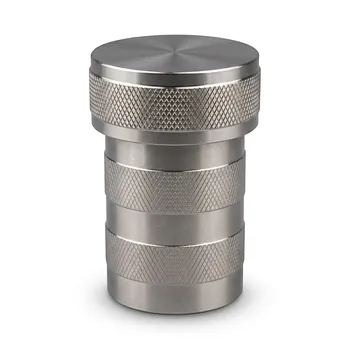
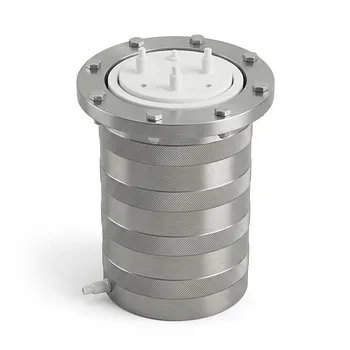
During hydrothermal synthesis, materials are subjected to high pressure and temperature within a stainless steel autoclave. Rapidly returning to ambient conditions creates significant thermal gradients that can compromise the material. Controlled cooling allows these stresses to dissipate gradually, preventing the microscopic cracks or "fracturing" that often occurs during rapid thermal shifts.
Preventing Nanoparticle Aggregation
In systems like Fe2(MoO4)3/g-C3N4, the stability of the distribution is paramount. A slow cooling process ensures that iron molybdate remains uniformly distributed across the carbon nitride nanosheets. This prevents the nanoparticles from clumping together, which would otherwise reduce the effective surface area of the composite.
Achieving Ideal Spherical Distribution
Microscopic analysis, such as Field Emission Scanning Electron Microscopy (FESEM), reveals that controlled cooling leads to a more "ideal" spherical distribution of particles. This precision in morphology is a direct result of avoiding the chaotic particle movement associated with rapid temperature drops. By maintaining a stable environment during the transition, the synthesis preserves the precise architecture formed during the reaction phase.
Enhancing Functional Performance
Maximizing Specific Surface Area
The growth quality of crystals, such as MIL-100(Fe) on biochar, is highly sensitive to temperature stability. When thermal management is handled correctly, composites can achieve a massive increase in specific surface area, sometimes jumping from 36.6 m2/g to over 419 m2/g. This increased surface area is vital for applications like heavy metal adsorption, where more active sites lead to better performance.
Ensuring Uniform Coating Stability
A stable thermal environment ensures that metal-organic framework (MOF) crystals are uniformly coated onto substrates like wheat straw biochar. Without controlled cooling, these coatings can delaminate or become uneven due to the differing expansion coefficients of the composite layers. Uniformity is the key to ensuring the material performs predictably across its entire surface.
Understanding the Trade-offs
Process Throughput vs. Material Quality
The most significant trade-off of controlled cooling is the increase in processing time. While furnace-cooling produces a superior material, it limits the number of batches a laboratory can process in a single day. You must weigh the need for high-quality, well-crystallized structures against the demands of high-volume production.
Risks of Unwanted Crystal Growth
Leaving a material at elevated temperatures for an extended cooling period can sometimes lead to oversized crystal growth. In some specific chemical systems, the "extra" time spent in the cooling phase might allow crystals to grow beyond the desired nanometer range. This can inadvertently alter the electronic or catalytic properties of the composite.
How to Apply This to Your Project
When deciding on your post-synthesis protocol, consider your primary goal for the composite material's application.
- If your primary focus is Adsorption Capacity: Prioritize the slowest possible cooling rate to maximize specific surface area and ensure uniform MOF coating on your substrate.
- If your primary focus is Structural Longevity: Use furnace-cooling to eliminate internal thermal stresses that could lead to material fatigue or fracturing during use.
- If your primary focus is Morphology Precision: Monitor the cooling phase strictly to maintain the "ideal spherical distribution" required for consistent FESEM results.
Careful management of the cooling phase transforms a raw chemical reaction into a highly engineered, high-performance composite.
Summary Table:
| Feature | Controlled Cooling (Slow/Furnace) | Rapid Cooling (Quenching) |
|---|---|---|
| Structural Integrity | High; minimizes internal thermal stress | Low; prone to fractures/micro-cracks |
| Morphology | Ideal spherical distribution; uniform coating | Chaotic particle movement; aggregation |
| Surface Area | Significant increase (e.g., MOF on biochar) | Limited; potential delamination |
| Processing Time | Longer; reduces daily batch throughput | Faster; higher volume production |
| Crystal Growth | Risk of oversized growth if too slow | Minimal additional growth |
Elevate Your Material Synthesis with KINTEK Precision
Achieving the perfect crystalline structure requires more than just the right protocol—it requires the right equipment. KINTEK is your premier partner for high-performance laboratory supplies, specializing in materials that withstand the rigors of advanced chemical synthesis.
From everyday basic labware like beakers, measuring cylinders, and reagent bottles to specialized high-purity trace analysis instruments, we provide the tools researchers trust. Whether you need fluid transfer components (tubing, valves, fittings), sample prep tools (filters, pipettes, tweezers), or reaction apparatus like hydrothermal synthesis liners and microwave digestion vessels, KINTEK manufactures virtually everything from premium PTFE and PFA.
Why choose KINTEK?
- Custom Fabrication: Backed by end-to-end custom CNC fabrication, we deliver complex, non-standard machined parts and bespoke laboratory setups tailored to your specific research needs.
- High-Performance Focus: Our absolute focus on fluoropolymer materials ensures chemical inertness and thermal stability for your most sensitive reactions.
- Scalable Solutions: We support everything from individual research projects to high-volume industrial orders.
Don't let equipment limitations compromise your composite's morphology. Contact us today to explore our custom fluoropolymer solutions and see how KINTEK can enhance your lab's efficiency and material quality!
References
- V. Subapriya, K. Venkatachalam. Hydrothermal Synthesis and Characterization of Fe2(MoO4)3/g-C3N4 Composites for Improved Energy Storage Applications. DOI: 10.14233/ajchem.2025.34579
This article is also based on technical information from Kintek Knowledge Base .
Related Products
- Custom TFM Reaction Vessel with Stainless Steel Jacket and PTFE Inner Cup for High Corrosion Resistance
- High Temperature Corrosion Resistant Hydrothermal Synthesis Reactor with TFM Inner Liner and Straight Cylinder Design
- PTFE Lined High Pressure Digestion Vessel 50ml High Temperature Hydrothermal Synthesis Tank
- High Pressure Custom TFM Reactor Stainless Steel Outer Vessel PTFE Inner Cup for Corrosive Synthesis
- High Pressure PTFE Digestion Vessel Inner Cup Holder Custom Corrosion Resistant Low Background Teflon
People Also Ask
- Why are high-performance pressure-resistant reaction vessels required for oxygen-assisted hydrothermal conversion at 150 °C?
- Why are high-quality fluoropolymer-lined reaction vessels required for alk-Ti3C2Tx MXene? Ensure Purity & HF Resistance
- How do magnetic stirring and reaction vessels impact MOF-derived carbon quality? Optimize Your Composite Performance
- Why are PTFE-lined reaction vessels necessary for forced degradation studies? Ensure high-purity results and accuracy.
- Why is a high-purity PTFE lined reaction vessel required for the acidic etching of MXenes? Ensure Material Purity.