PTFE and PFA have comparable thermal and chemical endurance, but their processing behavior is fundamentally different. Both typically support continuous service temperatures up to approximately 260 °C and resist strong acids, bases, and organic solvents. The deciding factor for custom laboratory apparatus is usually fabrication: PTFE is non-melt-processable and is commonly compression-molded, sintered, or CNC-machined, while PFA can be conventionally melt-molded into complex, seamless geometries.
Choose PTFE when maximum low-friction performance, heavy-duty machined construction, or cryogenic capability is most important; choose PFA when the apparatus requires complex molding, translucency, seamless fluid paths, or high-purity containment.
Thermal Performance Is Similar
Continuous operating temperature
PTFE and PFA generally offer an upper continuous-use temperature of approximately 260 °C. This makes both suitable for demanding laboratory applications such as reaction vessels, digestion equipment, fluid-handling components, and analytical apparatus.
Actual performance still depends on load, pressure, exposure time, part geometry, and the specific material grade. A 260 °C rating should not be treated as a guarantee that every molded or machined design will retain its full mechanical strength at that temperature.
Melting and processing temperatures
PTFE has a melting point near 327 °C, while PFA typically melts in the range of approximately 302-310 °C. These values describe when the material transitions thermally; they do not define the recommended continuous operating temperature.
The more important distinction is what happens above the melting point. PTFE forms a stiff, highly viscous gel rather than flowing like a conventional thermoplastic, whereas PFA becomes sufficiently fluid for standard melt-processing techniques.
High-temperature chemical stability
Both materials retain exceptional chemical resistance at elevated temperatures. Their fluorinated structures provide protection against many aggressive acids, bases, and organic solvents that would attack conventional plastics.
For laboratory service, the relevant question is therefore often not whether PTFE or PFA can tolerate the reagent, but whether the selected part can withstand the combined effects of temperature, pressure, mechanical loading, permeation, and cycling.
Processing Determines Design Freedom
Why PTFE requires specialized fabrication
Homopolymer PTFE has extremely high melt viscosity. It cannot normally be injection-molded or extruded as an ordinary thermoplastic because the molten material does not flow adequately through conventional processing equipment.
Manufacturers instead use techniques such as compression molding, sintering, paste extrusion, and precision CNC machining. CNC machining is particularly useful for custom adapters, crucibles, electrochemical-cell parts, seals, bushings, and non-standard laboratory components.
Why PFA supports conventional molding
PFA is produced by copolymerizing tetrafluoroethylene with perfluoroalkoxy side groups. These side groups reduce crystallinity and melt viscosity, allowing PFA to flow during processing.
As a result, PFA can be injection-molded, extruded, heat-sealed, or otherwise melt-formed into intricate fittings, valves, tubing, bottles, vessels, and fluid paths. This is a major advantage when a design requires integrated features or a seamless internal passage.
Geometry and part integration
PTFE is well suited to parts whose geometry can be produced from a solid billet or molded blank and then machined. It provides precise dimensional control for relatively accessible features, although deep cavities, thin walls, and complex internal passages can increase machining difficulty and cost.
PFA is more advantageous when the design contains complex contours, molded ports, thin walls, or integrated fluid-handling features. Melt processing can reduce the need for multiple machining operations and joints, which may also reduce locations where contamination or leakage could occur.
Material Behavior Influences Laboratory Use
Low friction and non-stick performance
PTFE generally provides the lowest coefficient of friction of the two materials. This makes it especially effective for stir-bar coatings, sliding seals, valve components, bearings, and other parts where release and low sliding resistance matter.
PFA also has a low coefficient of friction and strong non-wetting behavior, but PTFE is usually preferred when minimizing friction and adhesion is the dominant requirement.
Chemical purity and fluid containment
PFA is frequently selected for high-purity fluid handling because it can be molded or extruded into smooth, non-porous, and seamless components. Its translucency can also help users inspect fluid levels, bubbles, particulates, or internal conditions.
PTFE remains highly suitable for chemically aggressive environments, but machined assemblies may require separate pieces, interfaces, or seals. The fabrication method therefore becomes part of the contamination and leakage analysis.
Cryogenic performance
PTFE maintains useful structural integrity at extremely low temperatures, including cryogenic conditions approaching approximately -267 °C in some applications. This makes it a strong candidate for low-temperature containment and specialized cryogenic laboratory equipment.
PFA is an excellent high-temperature and chemically resistant material, but PTFE is generally the safer choice when cryogenic performance is a primary design constraint.
Electrical and dielectric properties
Both PTFE and PFA have very low dielectric constants, approximately 2.1, with very low dissipation factors. This supports their use in electrochemical cells, analytical instrumentation, and other applications where electrical insulation and low signal interference are important.
For these applications, the processing distinction may be more significant than the electrical-property difference. The best choice may depend on whether the apparatus needs a machined insulating component or a molded, sealed, high-purity fluid path.
Understanding the Trade-offs
PTFE is not automatically easier to customize
PTFE is often described as ideal for custom parts because it can be CNC-machined. However, machining fluoropolymer stock requires attention to dimensional stability, tool geometry, deformation, and thermal expansion.
PTFE can also deform under sustained load and may require design allowances for creep, especially at elevated temperatures. A machined part should therefore be evaluated under its actual pressure, clamping, and temperature conditions.
PFA molding requires appropriate tooling
PFA provides greater geometric freedom, but complex molded parts require specialized tooling, process control, and sufficient production justification. For a one-off component, mold development may be less economical than machining PTFE.
PFA can also be less visually opaque than PTFE, which is useful for inspection but may not suit every apparatus or optical requirement.
Service temperature is not the same as structural capacity
The shared 260 °C continuous-use figure does not mean PTFE and PFA will have identical stiffness, creep resistance, sealing behavior, or dimensional accuracy at that temperature. Mechanical loads, wall thickness, thermal cycling, and pressure can substantially change the practical operating limit.
A component intended to contain pressure or maintain a seal should be engineered using grade-specific mechanical data rather than chemical compatibility and temperature ratings alone.
Material selection should include the fabrication route
A chemically compatible material can still be a poor choice if its fabrication route introduces unacceptable joints, tolerances, lead times, or cost. The material decision should be made together with the manufacturing process, not before it.
For example, a complex single-piece fluid manifold may favor molded PFA, while a robust custom clamp, insert, or reaction-cell component may favor machined PTFE.
How to Apply This to Your Project
The following recommendations connect the material choice to the dominant design objective:
-
If your primary focus is custom-machined, heavy-duty components: Select PTFE when the geometry is practical to machine and you need strong chemical resistance, low friction, or robust solid-part construction.
-
If your primary focus is complex molded labware: Select PFA when integrated features, intricate internal passages, thin walls, or seamless fluid paths justify melt-processing and tooling.
-
If your primary focus is high-purity fluid handling: Favor PFA for molded or extruded tubing, fittings, valves, bottles, and vessels where smooth, non-porous, low-leaching construction is important.
-
If your primary focus is non-stick or low-friction behavior: Favor PTFE, particularly for sliding seals, stir-bar components, and other surfaces where minimizing adhesion and friction is central.
-
If your primary focus is cryogenic operation: Favor PTFE after verifying the specific grade, loads, and thermal-cycle requirements, because it generally offers the stronger low-temperature capability.
-
If your primary focus is high-temperature chemical containment: Either material may be appropriate up to approximately 260 °C, so base the decision on pressure, geometry, sealing, transparency, fabrication method, and expected mechanical loads.
The right choice is determined less by chemical resistance alone than by how the apparatus must be formed, loaded, inspected, and operated across its full temperature range.
Summary Table:
| Feature | PTFE | PFA |
|---|---|---|
| Continuous service temperature | ~260°C | ~260°C |
| Melting point | ~327°C | ~302-310°C |
| Processing methods | Compression molding, sintering, CNC machining | Injection molding, extrusion, heat sealing |
| Fabrication suitability | Best for machined, heavy-duty parts | Best for complex molded, seamless parts |
| Coefficient of friction | Lowest | Low |
| Translucency | Opaque | Translucent |
| Cryogenic performance | Excellent down to near -267°C | Good but not as low |
| High-purity fluid handling | Good, but may require seals | Excellent, seamless and non-porous |
Unlock Precision Fluoropolymer Solutions
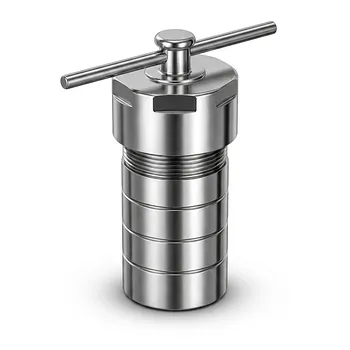
Discover how KINTEK can deliver custom PTFE and PFA components tailored to your exact specifications. With our end-to-end CNC machining and molding capabilities, we provide everything from simple labware to complex electrochemical cells and microwave digestion vessels. Whether you need heavy-duty machined PTFE parts or seamless molded PFA fluid paths, our high-performance fluoropolymers ensure reliability and purity. Plus, for OEM/ODM projects and high-volume orders, we offer competitive margins, certifications, and reliable supply. Ready to elevate your lab's performance? Contact us today to discuss your requirements and get a tailored solution!
Related Products
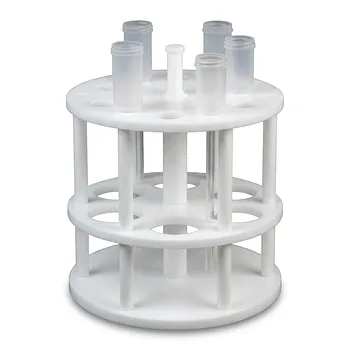
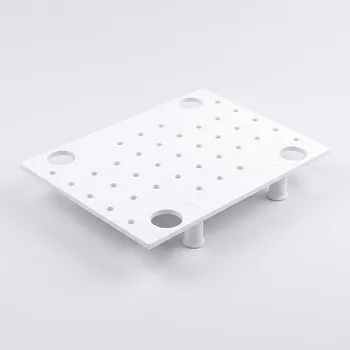
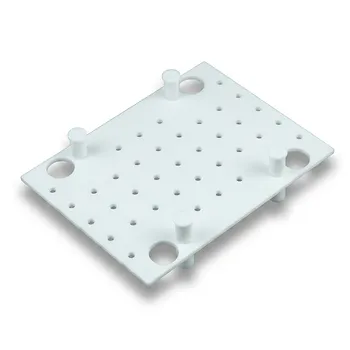
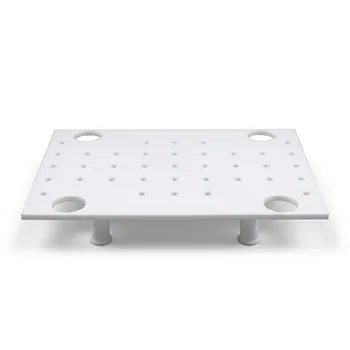
- Custom PFA Microcolumn Racks and PTFE Machined Low Background Corrosion Resistant Laboratory Fixtures
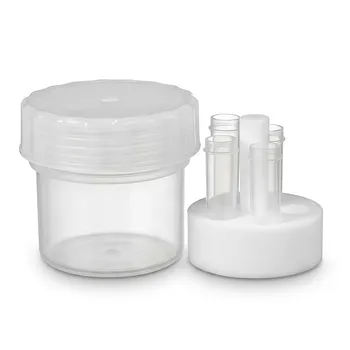
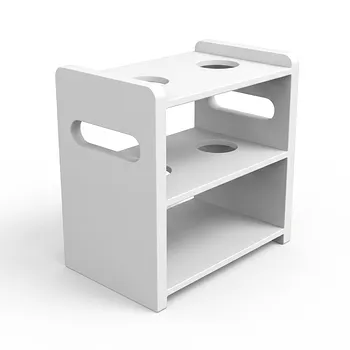
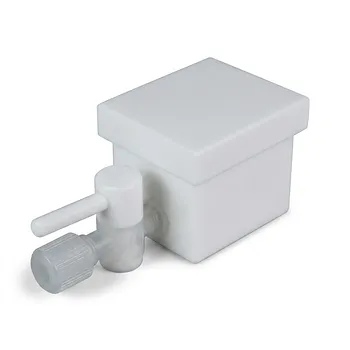
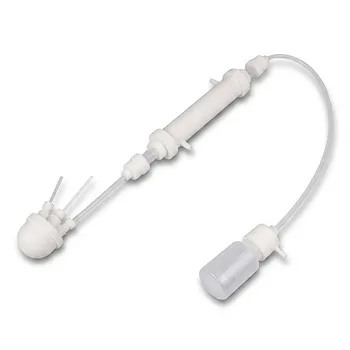
- Corrosion Resistant PTFE Support with PFA Transparent Reaction Tank and High Purity PFA Sampling Tube for Trace Analysis
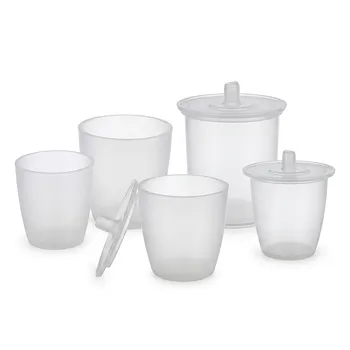
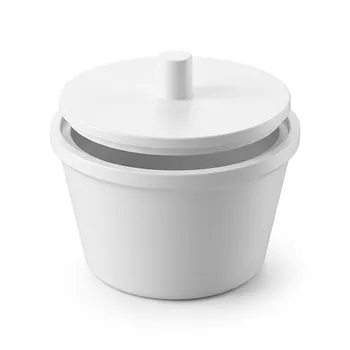
- High Purity PFA Crucible and Corrosion Resistant PTFE Beaker for Trace Analysis and Custom Laboratory Applications
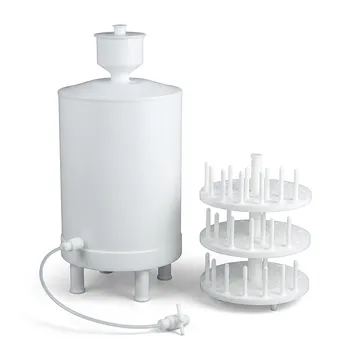
- PTFE PFA Vacuum Filtration System Corrosion Resistant Customizable Shatterproof Laboratory Device
- PTFE Acid Steam Cleaning System HF Resistant Trace Analysis Beaker Digestion Tank Customizable
People Also Ask
- What other PTFE lab accessories are commonly used? Essential Tools for Chemical Resistance & Purity
- How does high fluorination in perfluorinated polymers improve chemical resistance and thermal stability of lab apparatus? Discover the science behind PTFE and PFA's superior performance.
- What inherent material characteristics of non-melt-processable PTFE make it suitable for manufacturing high-purity laboratory containers and custom-machined apparatus?
- What material considerations are critical for laboratory apparatus when performing cage-opening reactions on fluorinated silsesquioxanes using strong superacids? Choose PTFE/PFA for inertness and purity
- What surface chemical species and binding energy signatures are detected on PTFE fluoropolymer sample holders during XPS analysis? Key insights for accurate calcium detection.