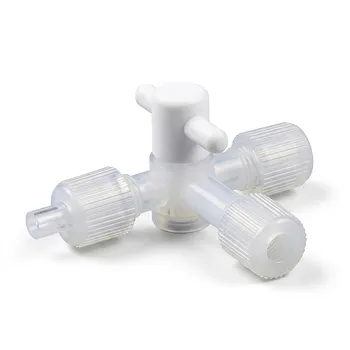
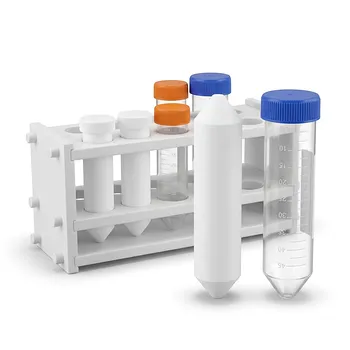
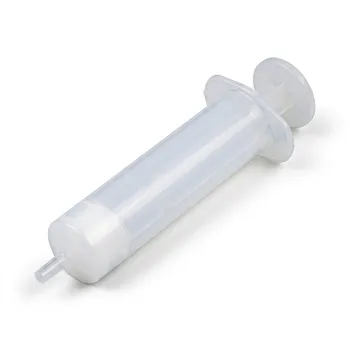
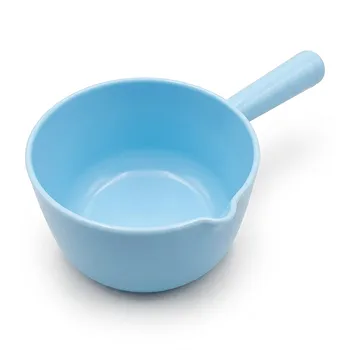
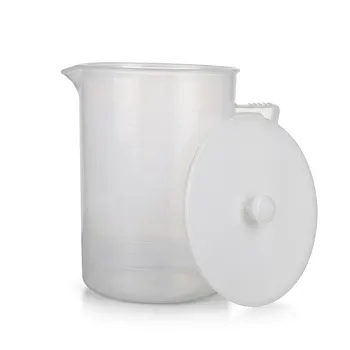
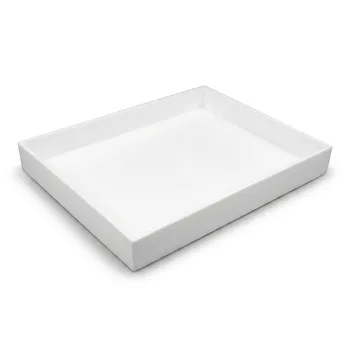
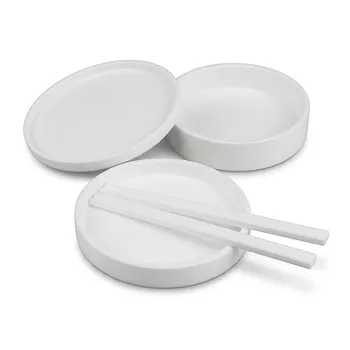
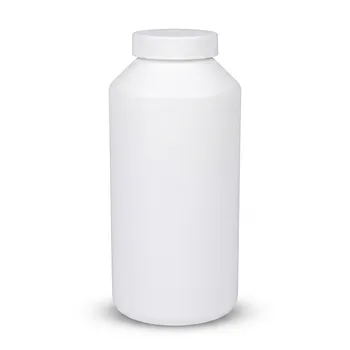
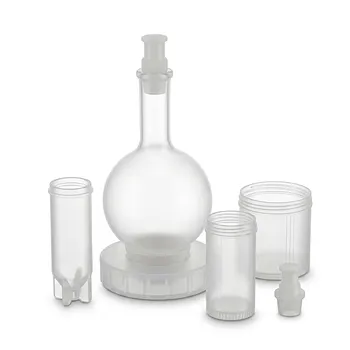
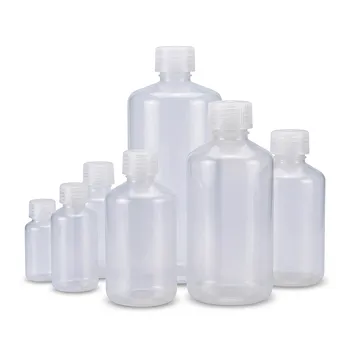
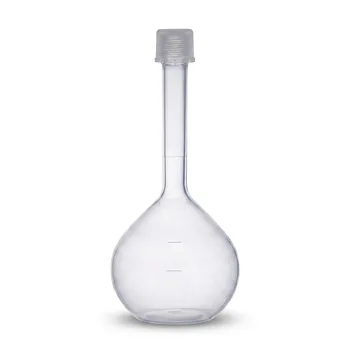
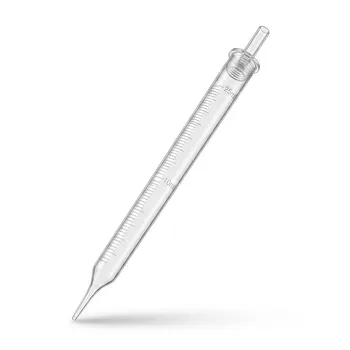
Fluoropolymer surface properties improve both fluid control and analytical reliability. Their extremely low surface energy creates non-stick, non-wetting surfaces with low friction and self-lubricating behavior. In tubing, fittings, and valves, this supports smooth flow and reduces fluid hold-up; in high-purity trace analysis labware, it minimizes droplet retention, analyte adsorption, and carryover between samples.
The central benefit is improved sample recovery and cleanliness. Fluoropolymer surfaces allow liquids to move through components and drain from vessels more completely, while their low adhesion reduces the risk that analytes or contaminants remain on container walls.
Why Fluoropolymers Have Low-Adhesion Surfaces
The Role of Surface Energy
Fluoropolymers have a carbon backbone surrounded by tightly bonded fluorine atoms. This fluorine-rich structure produces extremely low surface energy, meaning that other substances have less tendency to spread across or adhere to the material.
The practical result is a surface that resists wetting and attachment. Liquids are more likely to form droplets and release from the surface rather than coating it.
Non-Stick and Non-Wetting Behavior
The same low surface energy produces anti-adhesive behavior. Sample droplets, reagents, and residues are less likely to cling to fluoropolymer walls than to higher-energy surfaces.
This is especially valuable when handling small volumes or dilute analytes, where even a small amount of retained material can affect recovery and subsequent measurements.
Low Friction and Self-Lubrication
Fluoropolymers also exhibit a very low coefficient of friction and self-lubricating behavior. These characteristics reduce resistance between the material and moving fluids or mechanical parts.
In fluid handling systems, low friction supports smoother operation through tubing, fittings, valves, and custom-machined components. It can also reduce sticking or excessive wear in moving interfaces.
Benefits for Fluid Handling Components
More Consistent Fluid Transfer
Low-adhesion internal surfaces reduce the tendency of liquids to remain on tubing and component walls. This helps fluid move through the system with less residual hold-up.
For metering, dosing, and transfer operations, reducing retained liquid supports more consistent delivery and improves the relationship between the intended volume and the volume actually recovered.
Improved Drainage and Liquid Recovery
In tubing, bottles, wash containers, and other fluid-contact components, non-wetting behavior helps liquids drain more completely. Fewer droplets remain behind after dispensing, transfer, or rinsing.
This matters most for expensive, limited, or highly concentrated materials, where residual liquid represents both material loss and a possible source of contamination.
Smoother Valve and Fitting Operation
The low-friction and self-lubricating characteristics of fluoropolymers are useful in valves and other components that control fluid movement. They help minimize resistance at contacting surfaces and support predictable actuation.
These surface properties work alongside fluoropolymers' broader chemical resistance. The material can maintain its performance when exposed to many aggressive reagents and solvents, although compatibility must still be evaluated for the specific material grade and conditions.
Benefits for High-Purity Trace Analysis Labware
Reduced Analyte Retention
Trace analysis depends on recovering the analyte introduced into a vessel, tube, or transfer path. Low-surface-energy fluoropolymers reduce adhesion to container walls, helping more of the sample remain available for analysis.
This is particularly important when analyte concentrations are low and wall losses could become significant relative to the measured amount.
Lower Carryover and Cross-Contamination Risk
Residual droplets and adsorbed analytes can transfer into a later sample. By minimizing surface retention, fluoropolymer labware helps reduce this potential source of carryover and cross-contamination.
The material does not make contamination impossible. Proper cleaning, rinsing, handling, and process controls remain necessary, but the surface gives those controls a more favorable starting point.
Easier Cleaning and Rinsing
Non-stick surfaces are less likely to hold residues, making cleaning and rinsing more effective. This can simplify preparation between samples and reduce the amount of material left after a cleaning cycle.
For high-purity work, easier cleaning is not only a convenience. It supports repeatable blank control and helps maintain confidence that measured signals originate from the sample rather than the labware.
Lower Risk of Solvent and Hydrocarbon Absorption
Fluoropolymers generally have low solubility in organic solvents and hydrocarbons and resist their absorption. This helps prevent the material from retaining or releasing substances that could alter sample composition.
That property complements low surface adhesion: the sample is less likely to remain on the surface, while the material itself is less likely to act as a reservoir for the handled liquid.
How Surface Properties Support Chemical Purity
Surface Behavior Is Part of the Contamination-Control Strategy
High-purity performance depends on more than the absence of visible residue. It also depends on limiting adsorption, absorption, leaching, and carryover throughout the fluid path.
Fluoropolymer surfaces address several of these risks at once, particularly when combined with the materials' chemical inertness and low volatility.
Chemical Resistance Protects the Fluid Path
PTFE, PFA, and related fluoropolymers can withstand many acids, solvents, and other aggressive chemicals without rapid degradation. This helps tubing, valves, vessels, and fittings maintain their intended function during demanding processes.
However, chemical resistance is application-specific. Temperature, exposure time, pressure, concentration, mechanical stress, and the precise fluoropolymer grade all influence suitability.
Thermal Stability Preserves Component Performance
Many fluoropolymers also retain useful properties across broad temperature ranges. This can support applications involving heated digestion, sterilization, thermal cycling, or cold storage, depending on the selected material and design.
Thermal stability is valuable because a surface that changes significantly during processing may alter wetting, dimensional fit, or contamination behavior.
Understanding the Trade-offs
Low Adhesion Does Not Guarantee Complete Recovery
Low surface energy reduces retention, but it cannot overcome every source of sample loss. Geometry, trapped volumes, viscosity, surface tension, flow rate, pressure, and transfer technique also affect recovery.
Designing short flow paths, minimizing dead volume, and validating the complete transfer process are still essential.
Cleaning Is Still Required
Fluoropolymer labware is easier to clean, but it is not automatically clean after use. Persistent residues, particulate contamination, and external handling can still compromise trace measurements.
Cleaning procedures should be validated for the analytes, reagents, and detection limits involved.
Material Selection Requires More Than Surface Energy
PTFE and PFA share important fluoropolymer characteristics, but they are not interchangeable in every design. Flexibility, fabrication method, dimensional stability, permeability, pressure rating, transparency, and temperature exposure may determine the best choice.
A component should therefore be selected based on the full operating environment, not only its non-stick behavior.
Mechanical Performance Can Require Compromise
Increasing fluorine content generally strengthens chemical and thermal performance while reducing friction and adhesion, but some mechanical properties may be lower than those of other engineering plastics. Component geometry and operating loads must be assessed accordingly.
The correct fluoropolymer design balances purity and chemical durability with pressure, impact, flexibility, and service-life requirements.
Making the Right Choice for Your Goal
The surface properties are most valuable when they are matched to the actual failure mode in the process.
- If your primary focus is maximum sample recovery: Choose low-surface-energy fluoropolymer vessels and fluid paths, then minimize dead volume and validate drainage and transfer efficiency.
- If your primary focus is trace-level contamination control: Use fluoropolymer labware to reduce adsorption, absorption, and carryover, while maintaining validated cleaning and blank-control procedures.
- If your primary focus is smooth fluid handling: Use fluoropolymer tubing, fittings, and valves where low friction, self-lubrication, and reduced fluid hold-up support consistent flow.
- If your primary focus is aggressive chemical service: Select a fluoropolymer grade and component design verified for the specific chemicals, temperatures, pressures, and exposure times involved.
For both fluid handling and high-purity trace analysis, low-energy fluoropolymer surfaces help turn more of the handled liquid into recovered, measurable, and uncontaminated sample.
Summary Table:
| Property | Benefit for Fluid Handling | Benefit for High-Purity Trace Analysis |
|---|---|---|
| Low surface energy | Reduces fluid hold-up, improves drainage | Minimizes analyte adsorption, reduces sample loss |
| Non-stick, non-wetting | Smooth flow, less residue | Lower carryover, easier cleaning |
| Low friction, self-lubricating | Smooth valve/fitting operation | N/A |
| Chemical resistance | Withstands aggressive chemicals | Prevents leaching and absorption |
| Thermal stability | Reliable performance across temperatures | Preserves surface properties |
Enhance your fluid handling and trace analysis with KINTEK's advanced fluoropolymer labware. Our PTFE and PFA products—from tubing and valves to high-purity vessels—are engineered with low surface energy to maximize recovery and minimize contamination. For custom solutions, our CNC machining capabilities deliver made-to-fit components. Contact us today to optimize your lab's performance and achieve accurate results. Get in touch.
Related Products
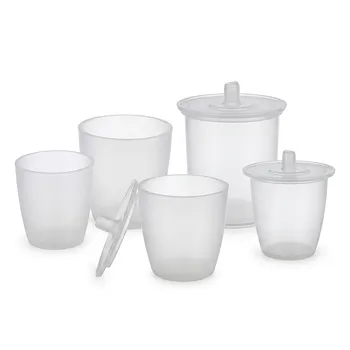
- High Purity PFA Crucible and Corrosion Resistant PTFE Beaker for Trace Analysis and Custom Laboratory Applications
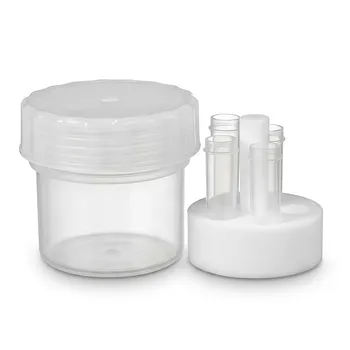
- Corrosion Resistant PTFE Support with PFA Transparent Reaction Tank and High Purity PFA Sampling Tube for Trace Analysis
- High Purity PFA Chromatography Column with Collection Bottle Corrosion Resistant Fluoropolymer Filtration System for Trace Analysis
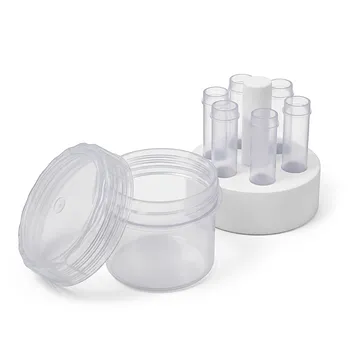
- High Purity Corrosion Resistant PFA Reaction Vessel with PTFE Holder and Integrated Sampling Tube for Trace Analysis
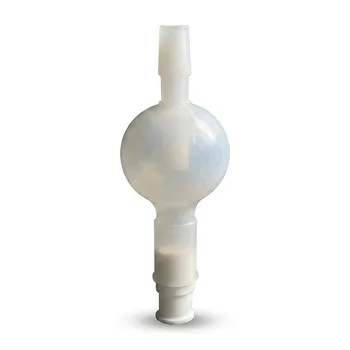
- Corrosion Resistant High Purity PFA Valve and Weldable Transparent Tubing for Semiconductor Fluid Transfer
People Also Ask
- Why are high-purity vessels critical for BiFeO3 synthesis? Ensuring Phase Purity
- Why is the use of high-purity PFA or PTFE labware critical during TiO2 nanoparticle purification? Protect Sample Purity
- Why is high-purity PFA labware necessary for Znx@LS-2 zeolite ICP-OES analysis? Ensure Trace-Level Precision
- Why is high-purity PFA trace analysis labware used for MXene? Ensure Superior Material Integrity in Research
- What key material characteristics make PTFE and PFA suitable for high-purity laboratory labware, trace analysis containers, and medical microporous tubing? Discover the essential properties that ensure purity.