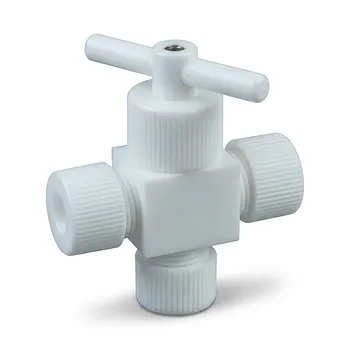
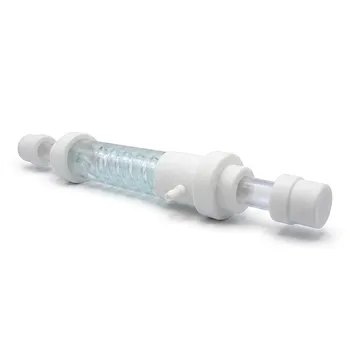
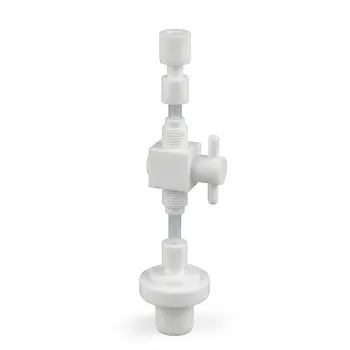
PTFE fluoropolymers improve fluid handling in two complementary ways: their very low surface energy—about 18 dynes/cm—creates a non-stick, hydrophobic, and oleophobic surface that resists liquid and sample adhesion. Their exceptionally low dynamic coefficient of friction—approximately 0.04, compared with about 0.33 for polyethylene—supports smooth movement in valves, fittings, stopcocks, stir bars, and other contacting components.
The practical result is cleaner transfer with less residual hold-up, easier operation, lower wear, and better sample recovery. Low surface energy primarily controls liquid adhesion, while low friction primarily benefits moving or sealing interfaces.
How Low Surface Energy Improves Sample Handling
It minimizes sample adhesion
Liquids, viscous substances, and biological samples are less likely to wet and cling to PTFE surfaces. This is valuable in tubing, centrifuge tubes, wash bottles, beakers, digestion vessels, and other sample-contact components.
Reduced adhesion means less material remains on container walls after draining, rinsing, or dispensing. The result is more complete transfer of the original sample.
It reduces residual hold-up volume
Small droplets and films retained inside a component can represent a significant fraction of a low-volume or trace-analysis sample. PTFE’s non-stick surface helps those residues drain rather than remain attached to the internal wall.
This improves recovery and makes delivered volumes more representative of the intended amount.
It lowers cross-contamination risk
Residual material from one test cycle can contaminate the next sample. By reducing droplet retention and wall adhesion, PTFE makes it easier to remove previous contents through draining, flushing, or cleaning.
This is particularly important when samples are scarce, highly concentrated, biologically sensitive, or analyzed at trace levels.
It supports hydrophobic and oleophobic behavior
The low surface energy of fluorinated polymer chains makes the surface resistant to wetting by many water-based and oil-based substances. This broad non-stick behavior helps prevent both aqueous samples and more viscous or organic residues from forming persistent films.
The exact level of repellency depends on the liquid, surface condition, temperature, and component geometry, so PTFE should not be treated as universally non-wetting.
How Low Friction Improves Fluid Transfer Components
It enables smooth operation of moving parts
PTFE’s low coefficient of friction and inherent lubricity allow components to move with relatively little resistance. This benefits stopcocks, valves, stir bars, plungers, sliding interfaces, and other mechanisms used to control or mix fluids.
Operators can achieve precise motion with less applied force and reduced risk of jerky movement.
It reduces mechanical wear
Lower friction generally reduces rubbing losses at contacting surfaces. In repeatedly operated valves, fittings, and laboratory mechanisms, this can reduce surface damage and help maintain consistent performance.
Wear resistance still depends on load, speed, mating materials, temperature, and contamination. Low friction is helpful, but it does not eliminate the need for suitable component design.
It supports reliable sealing
In threaded or sliding assemblies, PTFE’s lubricity can reduce installation torque and make it easier to generate the compression required for a seal. It can also help dynamic sealing surfaces move without excessive sticking.
However, sealing performance depends on compression, tolerances, temperature, pressure, and chemical compatibility—not on friction alone.
It helps preserve unobstructed flow
Low friction does not directly reduce the viscosity-related resistance of a liquid in the same way that it reduces solid-to-solid rubbing. Its fluid-transfer benefit comes mainly from minimizing adhesion, residue buildup, and fouling on the fluid-contact surface.
A clean, non-stick internal surface helps maintain the intended passage area and reduces disruption from retained material.
Why the Two Properties Work Better Together
Surface energy controls what remains behind
Low surface energy addresses the interface between the fluid or sample and the PTFE wall. It reduces wetting and adhesion, allowing contents to drain more completely.
This is the dominant benefit for sample recovery, cleaning, and contamination control.
Friction controls how components move
The coefficient of friction is most relevant where PTFE contacts another solid surface. It affects the force needed to operate, install, rotate, slide, or seal a component.
This is the dominant benefit for valves, fittings, stopcocks, stir bars, and other mechanical interfaces.
Together they improve workflow consistency
A component that retains less material and operates with less mechanical resistance is easier to clean, easier to actuate, and more predictable between runs. That combination is valuable in automated liquid handling and high-precision laboratory workflows.
Understanding the Trade-offs
Low adhesion is not the same as zero retention
PTFE reduces surface retention but cannot eliminate all hold-up. Narrow tubing, dead legs, sharp transitions, roughness, high-viscosity fluids, and surface-tension effects can still trap liquid.
Component geometry and drainage orientation remain as important as material selection.
Low friction can complicate gripping and retention
The same lubricity that makes PTFE easy to move can reduce friction where a component needs to remain fixed. Threaded connections, clamps, and mechanically retained parts must therefore be designed to prevent loosening or unintended movement.
PTFE is not always the best material for dynamic loads
PTFE can deform under sustained load, particularly through creep or cold flow. For pressure-bearing, highly loaded, or wear-critical applications, the design may require reinforcement, a supporting structure, or a different fluoropolymer formulation.
Performance depends on operating conditions
Temperature, pressure, chemical exposure, contact stress, fluid viscosity, and cleaning procedures all influence real-world performance. A material comparison based only on nominal surface energy or coefficient of friction is incomplete.
Making the Right Choice for Your Goal
Select PTFE when its non-stick and low-friction characteristics align with the dominant failure mode in the application.
- If your primary focus is sample recovery: Use PTFE fluid-contact surfaces to reduce droplet and residue adhesion, while minimizing dead volume and avoiding geometries that trap liquid.
- If your primary focus is contamination control: Use PTFE in tubing, vessels, valves, or fittings where low surface retention can simplify flushing and cleaning between samples.
- If your primary focus is precise fluid transfer: Combine PTFE’s low-adhesion surface with appropriately sized, smooth-flowing passages and low-dead-volume component designs.
- If your primary focus is easy mechanical operation: Use PTFE’s low friction and lubricity in moving or sealing interfaces, while verifying that the assembly still provides adequate retention and sealing force.
- If your primary focus is long-term durability: Evaluate load, temperature, pressure, cycling, and creep behavior rather than relying on low friction alone.
By matching PTFE’s surface properties to the fluid, sample, and component design, you can improve transfer completeness, operational smoothness, and analytical reliability.
Summary Table:
| Property | Value | Benefit |
|---|---|---|
| Surface Energy | ~18 dynes/cm | Non-stick, hydrophobic, oleophobic surface reduces sample adhesion and residual hold-up |
| Dynamic Coefficient of Friction | ~0.04 | Smooth operation in valves, fittings, and moving parts; low wear |
| Sample Recovery | Improved by low adhesion | More complete transfer and reduced cross-contamination |
| Mechanical Operation | Low friction | Easier actuation and lower torque for sealing and movement |
Enhance your fluid transfer and sample preparation with high-performance PTFE/PFA components from KINTEK. Our labware, tubing, valves, and custom-machined parts are designed to minimize sample loss and ensure reliable operation. For distributors, we offer competitive margins, OEM/ODM support, and consistent supply. Contact us today to discuss your needs.
Related Products
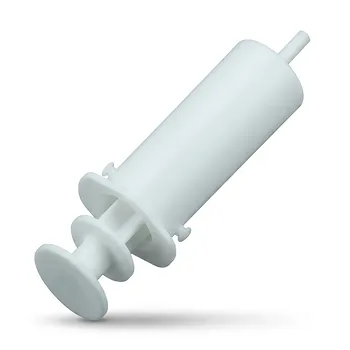
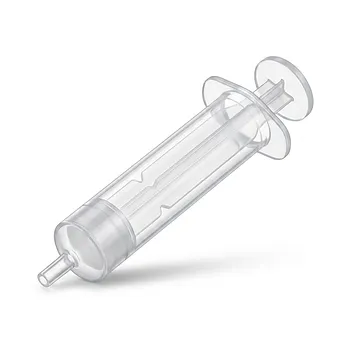
- High Purity Laboratory Grade PTFE Syringe Chemical Resistant Fluoropolymer Injector for Trace Analysis
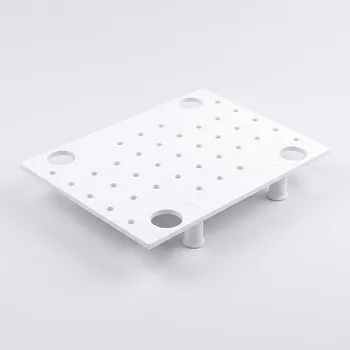
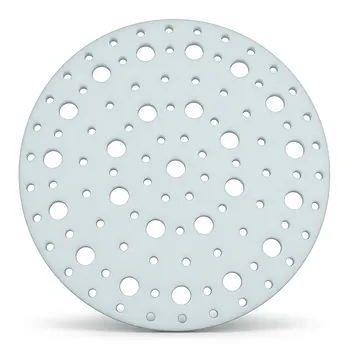
- High Temperature Resistant PTFE Thermal Insulation Board Corrosion Resistant Metal Free Fluoropolymer Stand for Ultra Clean Laboratories
- Custom PTFE Filtration System Acid Resistant Chemical Semiconductor Fluoropolymer Filter Assembly
- Custom PTFE Insulating Gaskets and Corrosion Resistant Fluoropolymer Seals for Industrial Electrical Applications
- Custom PTFE Reaction Tank Corrosion Resistant Fluoropolymer Chemical Processing Barrel 10L 20L 30L
People Also Ask
- In what medical devices is PTFE commonly used? Essential Components for Safety and Reliability
- What are the benefits of PTFE's chemical resistance? Achieve Unmatched Reliability in Corrosive Environments
- What chemicals is PTFE resistant to? Discover Its Near-Universal Chemical Inertness
- How does the surrounding atmosphere affect the thermal decomposition mechanism of PTFE fluoropolymer used in high-temperature laboratory reaction apparatus? Discover Key Insights for Safe and Reliable High-Temp Lab Operations
- What chemical endgroups and off-gases are produced during the molecular weight reduction of PTFE fluoropolymers, and what safety measures are required?