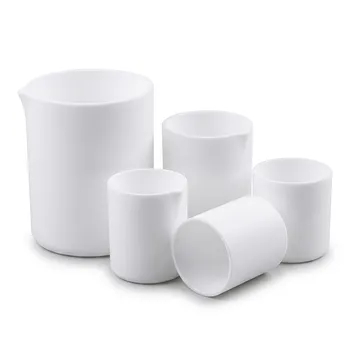
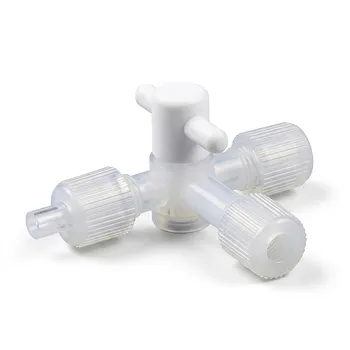
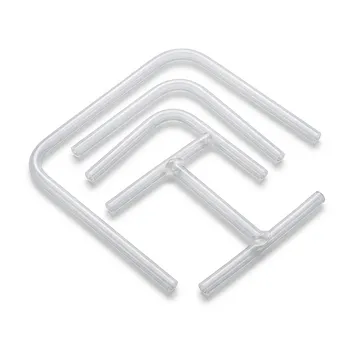
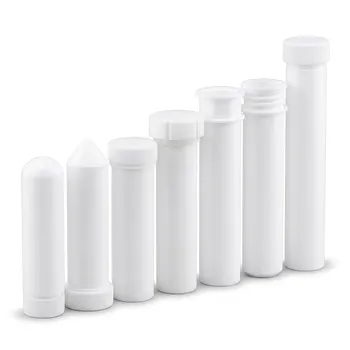
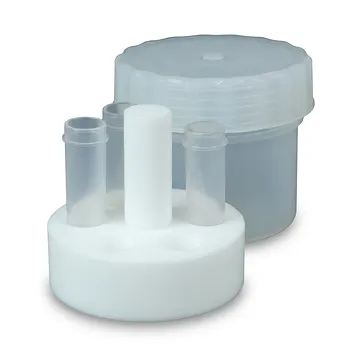
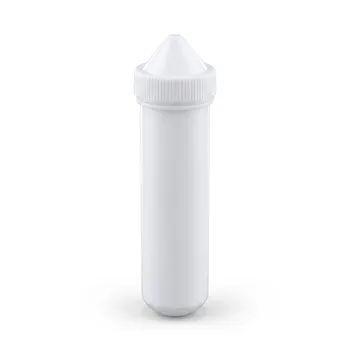
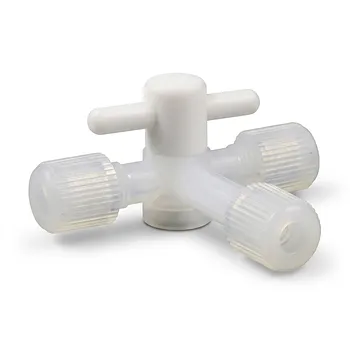
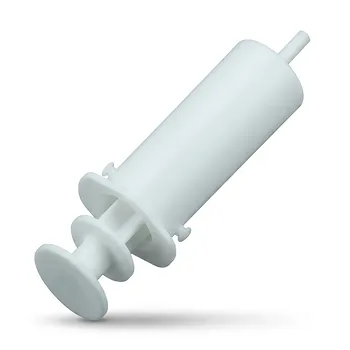
The key difference is the way each PTFE resin responds to forming. Granular PTFE resins are compacted and sintered into dense stock shapes, making them suitable for thick-walled labware and rigid parts that can be CNC machined. Fine powder PTFE is blended with a hydrocarbon processing aid and formed through paste extrusion, making it better suited to continuous, flexible, thin-walled tubing.
Granular resin supports structural, machinable components; fine powder supports fibrillated, continuously extruded tubing. Choosing between them is primarily a matter of matching the resin’s particle structure and processing behavior to the required geometry.
Why the Resin Forms Differ
Granular PTFE Comes From Suspension Polymerization
Granular PTFE is generally produced through suspension polymerization with vigorous agitation and relatively low surfactant levels. This creates comparatively coarse, free-flowing particles that compact effectively under pressure.
The resin may be classified by apparent density, with low-density grades below approximately 400 g/L and high-density grades above approximately 400 g/L under ASTM D4894. The appropriate grade depends on how the material must compact, flow, and consolidate.
Fine Powder Comes From Dispersion Polymerization
Fine powder PTFE is produced through dispersion or emulsion polymerization, followed by coagulation and drying. This process creates small, relatively uniform particles designed to respond to paste extrusion.
Fine powder does not normally flow or compact in the same way as granular resin. Instead, it is mixed with a liquid hydrocarbon lubricant that allows the powder to be preformed and pushed through an extrusion die.
How Granular PTFE Is Processed Into Labware
Compression Molding Builds Dense Stock Shapes
Granular resin is commonly compression molded into billets, blocks, rods, cylinders, or other thick stock shapes. The compacted preform is then heated above PTFE’s melting point so the particles fuse during sintering.
For large cylinders and thick-walled shapes, ram extrusion may also be used with free-flowing granular grades. Higher backpressure and controlled cooling under pressure help reduce internal voids and porosity.
Machining Creates Complex Laboratory Components
After molding or ram extrusion, the consolidated PTFE stock can be precision-machined. CNC turning, milling, drilling, and other operations can produce reaction vessels, beakers, crucibles, reagent bottles, valve bodies, custom fittings, and laboratory blocks.
This route is valuable when the design requires rigid walls, complex external geometry, threaded features, or tight dimensional control that would be difficult to obtain directly through molding.
The Result Is Rigid and Structurally Stable
Granular-resin processing produces dense, self-supporting components with substantial wall thickness. These characteristics make it appropriate for laboratory vessels, custom reaction cells, and other parts that must retain their shape during handling or service.
The trade-off is that the process usually involves multiple operations: compaction or molding, sintering, stock preparation, and machining.
How Fine Powder Is Processed Into Tubing
Lubricated Powder Forms an Extrudable Paste
Fine powder is blended with a hydrocarbon lubricant to create a paste. The lubricant provides temporary processability, allowing the material to be compacted into a preform and forced through an extrusion die.
After extrusion, the lubricant is removed during drying. The tubing is then sintered to consolidate the PTFE structure.
Shear Produces Fibrillation
During paste extrusion, shear causes the fine PTFE particles to fibrillate, forming an interconnected polymer structure. This gives the unsintered tube enough green strength to maintain its shape as it leaves the die and proceeds through drying and sintering.
Fibrillation is central to fine-powder processing. Granular processing instead depends primarily on powder compaction, pressure, particle consolidation, and high-temperature sintering.
Reduction Ratio Controls Extrusion Behavior
For tubing, the reduction ratio is a critical fine-powder selection metric. It is the ratio of the extruder barrel or preform cross-sectional area to the extrudate cross-sectional area.
Small-diameter tubing produces a high reduction ratio and generally requires greater extrusion pressure. The resulting shear must be sufficient to produce consistent fibrillation without creating defects, dimensional instability, or interruptions in the tube.
Paste Extrusion Produces Continuous Fluid Paths
Fine powder is particularly suited to continuous thin-wall tubing, flexible hoses, wire insulation, films, and some membranes. With an appropriate resin grade, reduction ratio, lubricant system, and process schedule, the method can produce smooth internal walls, high burst strength, and low fluid permeation.
The continuous extrusion route also avoids machining away large amounts of material, which is important for long, small-diameter fluid-transfer lines.
Matching Material Characteristics to Product Geometry
Thick Walls Favor Granular Resin
Granular PTFE is the usual choice when the product must be a thick, rigid, three-dimensional component. The resin can be consolidated into a substantial block or cylinder and then machined into the final shape.
This is particularly suitable for heavy-walled vessels, custom laboratory apparatus, solid fittings, and structural components.
Thin Flexible Walls Favor Fine Powder
Fine powder is better suited to thin-walled tubing because paste extrusion can continuously form the tube and develop green strength through fibrillation. The process supports flexibility while maintaining a coherent wall after sintering.
The material and process must still be selected carefully: very small tubing dimensions can demand high pressures and tightly controlled drying and sintering conditions.
Product Length Influences the Choice
Machining granular stock is practical for discrete components, but it becomes inefficient for long, continuous products. Fine-powder paste extrusion is better aligned with long lengths of tubing because the product is formed continuously through the die.
Conversely, paste extrusion is less appropriate when the primary requirement is a large, intricate, rigid vessel that must be machined from a thick section.
Understanding the Trade-offs
Granular PTFE Is Strong for Customization
Granular resin provides a stable route to complex, rigid laboratory parts. Machining allows manufacturers to adjust dimensions, add detailed features, and produce low-volume or custom designs without creating a dedicated extrusion geometry.
However, machining adds time, material waste, and dimensional considerations. Thick sections also require careful consolidation, pressure control, and cooling to prevent internal porosity.
Fine Powder Is Efficient for Tubing but Process-Sensitive
Fine powder paste extrusion is efficient for continuous tubing and thin-wall products. It can deliver the required flexibility and fluid-path quality without extensive post-forming machining.
Its limitations include sensitivity to lubricant distribution, paste preparation, extrusion pressure, reduction ratio, drying, and sintering. Poor control can lead to nonuniform walls, defects, or loss of dimensional consistency.
Small Tubing Requires Special Attention
Small-diameter tubing can be produced through fine-powder paste extrusion, but its high reduction ratio may require extrusion pressures exceeding 100 MPa. The process must generate sufficient fibrillation for green strength while avoiding defects.
Granular PTFE may also be used for ram extrusion of small tubes with suitable presintered grades, but unsuitable grades can produce structural defects such as “poker.” Resin selection should therefore follow the actual tube diameter and extrusion geometry rather than material form alone.
Resin Form Does Not Determine Every Property
Granular and fine-powder PTFE share the chemical advantages associated with PTFE, but the finished performance also depends on grade, density, porosity, wall thickness, processing history, and sintering conditions.
A fine powder is not automatically the best option for every tube, and granular resin is not automatically limited to machined labware. The decisive issue is whether the resin can be processed reliably into the required shape and structure.
Making the Right Choice for Your Goal
Select the resin form by starting with the part geometry, required flexibility, production length, and acceptable manufacturing route.
- If your primary focus is rigid laboratory vessels or custom-machined components: Choose a granular PTFE grade that can be compression molded or ram extruded into dense stock and then machined to the required dimensions.
- If your primary focus is flexible fluid transfer tubing: Choose a fine powder PTFE grade formulated for paste extrusion and matched to the tubing’s reduction ratio and diameter.
- If your primary focus is thick sections with low porosity: Prioritize granular-resin consolidation, adequate backpressure, and controlled cooling under pressure.
- If your primary focus is small-diameter continuous tubing: Prioritize fine-powder fibrillation, lubricant control, extrusion pressure, drying, and sintering conditions.
The correct PTFE resin is the one whose particle structure and processing behavior directly support the final product’s geometry and performance.
Summary Table:
| Aspect | Granular Resin | Fine Powder |
|---|---|---|
| Polymerization | Suspension | Dispersion/Emulsion |
| Particle Size | Coarse, free-flowing | Small, uniform |
| Key Processing | Compression molding + machining | Paste extrusion |
| Typical Products | Rigid labware, custom parts | Flexible tubing, thin films |
| Geometry Suitability | Thick-walled, complex shapes | Thin-walled, continuous lengths |
| Strengths | Structural stability, machinability | Continuous production, flexibility |
| Limitations | Multi-step, material waste | Process-sensitive, high pressures |
Ready to choose the right PTFE resin for your labware or tubing needs? Our experts at KINTEK can guide you through material selection and custom manufacturing. With our comprehensive PTFE/PFA CNC machining and extrusion capabilities, we deliver tailored solutions for your specific applications. Contact us today to discuss your project and get a free consultation!
Related Products
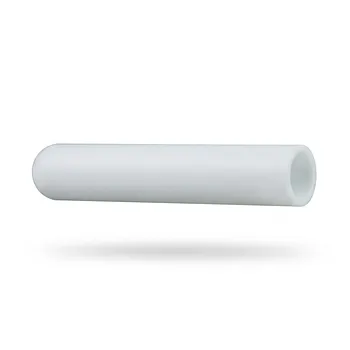
- Custom PTFE Test Tubes Corrosion Resistant Low Background Fluoropolymer Labware 50ml 30ml
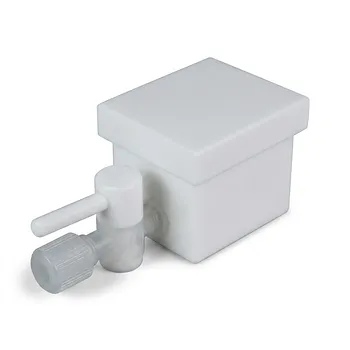
- Custom PTFE Laboratory Apparatus Corrosion Resistant Low Background Reaction Cells Precision CNC Fabrication
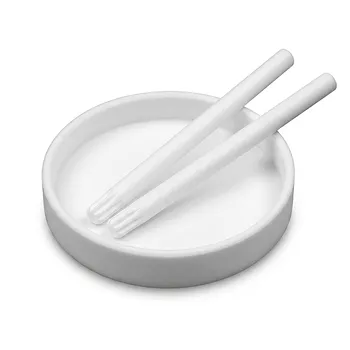
- Custom PTFE Petri Dishes Corrosion Resistant High Purity Low Background Labware
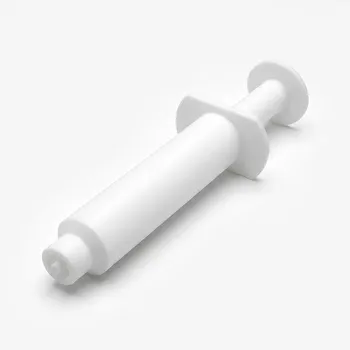
- High Purity Virgin PTFE Syringe 20ml Chemical Resistant Liquid Handling for Syringe Pumps and PFA Tubing Integration
- Large Scale PTFE Beakers and Flasks for High Temperature Corrosion Resistant Laboratory Applications with Custom CNC Fabrication
People Also Ask
- How are PTFE tubes manufactured and what are their uses? A Guide to High-Performance Tubing Solutions
- How does paste extrusion impart structural integrity to unsintered PTFE lab tubing?
- What are the benefits of using PTFE tubing in aerospace and defense systems? Reliability in Extreme Conditions
- How does PTFE tubing contribute to the accuracy of laboratory and analytical instrumentation? Ensure Purity & Precision
- What causes the low coefficient of friction and non-stick behavior in PTFE tubing? Explore the Molecular Secrets