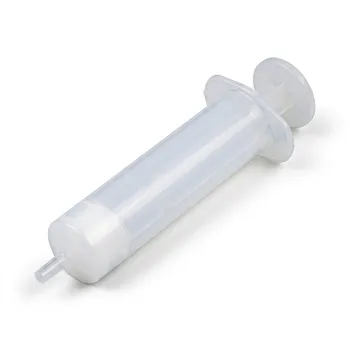
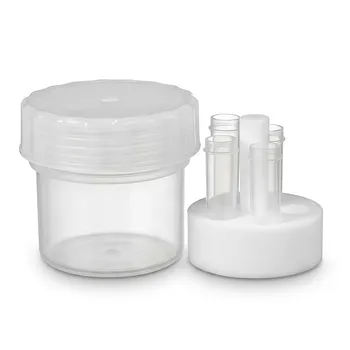
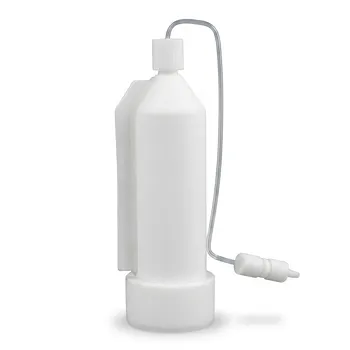
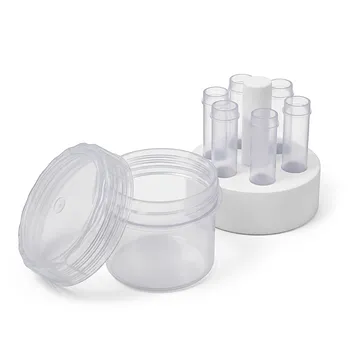
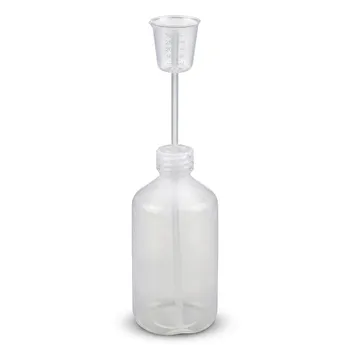
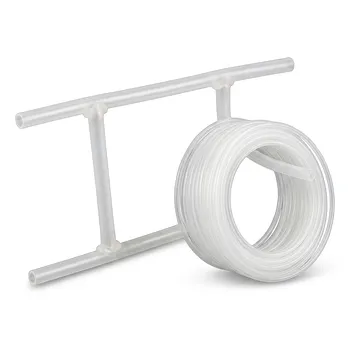
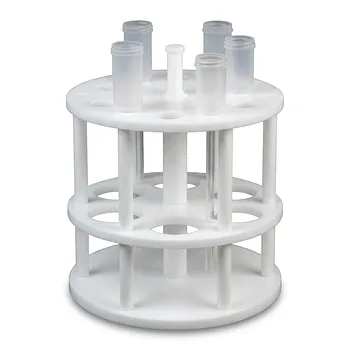
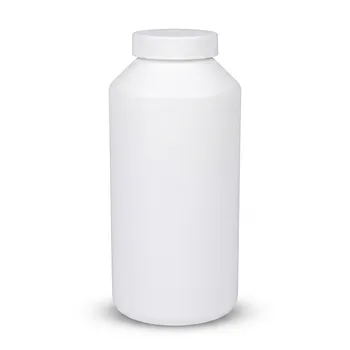
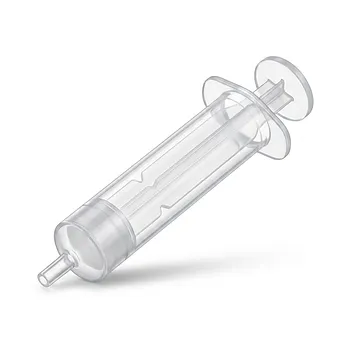
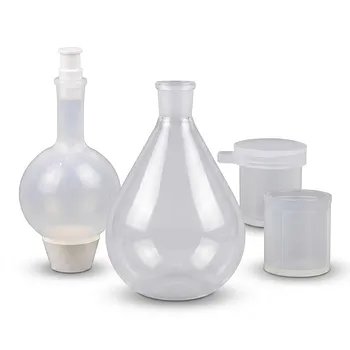
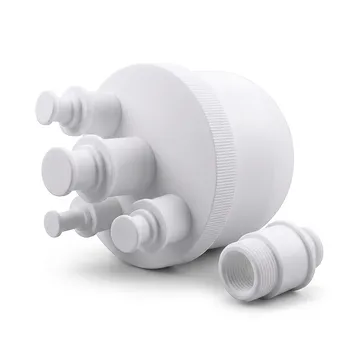
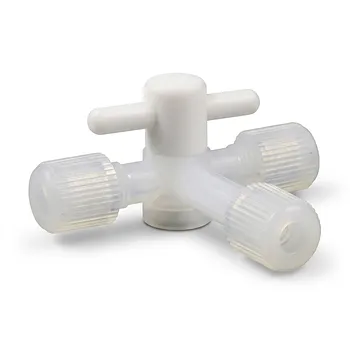
Fluoropolymers improve fluid transfer and sample preparation by resisting wetting, adhesion, and residue buildup. Materials such as PTFE and PFA allow liquids, reagents, and dissolved compounds to discharge more completely from tubing, fittings, valves, and containers. This improves sample recovery, reduces carryover and cross-contamination, and makes cleaning easier.
Low surface energy makes fluoropolymer surfaces difficult for liquids and residues to wet or adhere to. In fluid transfer systems, this supports smoother handling and more complete delivery; in sample preparation containers, it minimizes retention and simplifies cleaning.
Why Low Surface Energy Matters
It Reduces Liquid Adhesion
A liquid wets a surface when it spreads across and adheres to it. Fluoropolymers have exceptionally low surface energy, so many aqueous solutions and organic fluids form droplets rather than spreading across the material.
This non-wetting behavior reduces the amount of fluid left on tubing walls, valve surfaces, and container interiors after dispensing or draining.
It Limits Sample Retention
In trace analysis and sample preparation, even small residues can affect recovery or introduce contamination into a subsequent batch. The non-stick surface of PTFE or PFA minimizes retention of samples, reagents, dissolved compounds, and biological materials.
This is particularly valuable when samples are expensive, available only in small quantities, or analyzed at very low concentrations.
Benefits in Fluid Transfer Systems
More Complete Fluid Delivery
PTFE and PFA tubing, fittings, and valves resist the formation of persistent films and droplets on internal surfaces. As a result, a greater proportion of the intended fluid volume can reach the receiving vessel.
Complete delivery supports more accurate dosing and improves recovery during transfers, rinsing, and repeated dispensing steps.
Reduced Carryover and Cross-Contamination
Residues retained inside a transfer path can mix with the next fluid or sample. By reducing adhesion, fluoropolymers lower the opportunity for material from one run to remain available for the next.
This helps maintain cleaner process sequences, although system design, flushing, and validated cleaning procedures remain necessary for critical applications.
Smoother Mechanical Operation
Fluoropolymers also provide low friction and inherent lubricity. In valves, fittings, and moving interfaces, these properties can reduce mechanical resistance and wear.
Low friction does not by itself guarantee a particular flow rate; flow also depends on tubing dimensions, pressure, viscosity, temperature, and valve design. It does, however, support easier operation and reliable component movement.
Benefits in Sample Preparation Containers
Improved Sample Recovery
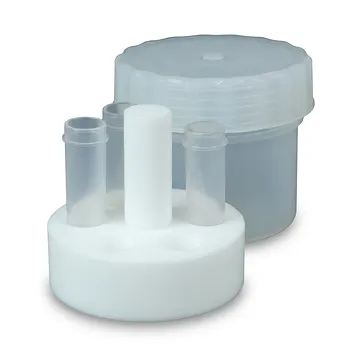
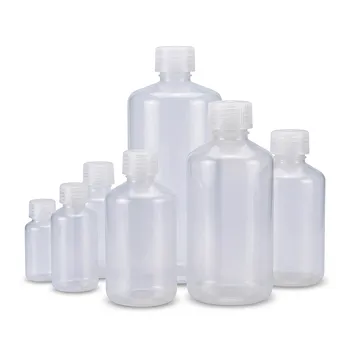
Digestion tubes, beakers, reagent bottles, centrifuge tubes, and other fluoropolymer containers are less likely to hold droplets or films on their walls. This allows samples to be transferred, rinsed, or recovered with less material remaining behind.
The benefit is especially important in digestion and trace-element workflows, where minimizing sample loss can improve analytical confidence.
Easier Cleaning
Because residues have less tendency to adhere, fluoropolymer labware is generally easier to rinse and clean between uses. Reduced buildup can shorten cleaning effort and decrease the risk that a previous reagent or sample remains in the container.
Cleaning requirements still depend on the chemical system, concentration, temperature, and intended level of cleanliness.
Lower Risk of Batch-to-Batch Contamination
A container that retains less material presents fewer opportunities for one sample to contaminate another. This supports more reliable results when the same vessel is used across multiple preparation cycles.
For highly sensitive analyses, fluoropolymer non-stick behavior should be combined with appropriate blanks, validated cleaning, and contamination-control practices.
Understanding the Trade-offs
Non-Stick Does Not Mean Zero Retention
Fluoropolymers strongly reduce adhesion, but no practical transfer system guarantees that every molecule or droplet will be recovered. Very viscous, particulate, reactive, or highly concentrated materials may still require rinsing or specialized cleaning.
Flow Performance Depends on the Whole System
Low surface friction can help reduce resistance at interfaces, but it is only one factor in fluid transport. Pressure, tubing length and diameter, bends, fittings, temperature, and fluid properties may have a greater effect on overall flow behavior.
Material Selection Still Matters
PTFE and PFA are both fluoropolymers, but their mechanical and processing characteristics differ. The appropriate choice should account for temperature, pressure, flexibility, permeability, chemical exposure, and whether the component must be transparent for inspection.
Cleaning and Validation Remain Important
Non-stick surfaces simplify cleaning; they do not replace a cleaning protocol. Applications involving trace analysis or regulated processing should verify recovery, carryover, and blank performance under actual operating conditions.
How to Apply This to Your Project
Fluoropolymer surfaces are most valuable when recovery, cleanliness, and repeatable transfer are central to the workflow.
- If your primary focus is maximum sample recovery: Use PTFE or PFA contact surfaces to reduce droplet and residue retention, and include appropriate rinse steps for difficult fluids.
- If your primary focus is minimizing cross-contamination: Choose low-adhesion tubing, valves, and containers, then validate cleaning and carryover performance between batches.
- If your primary focus is easier maintenance: Use fluoropolymer components where residue buildup and frequent cleaning create operational problems.
- If your primary focus is precise fluid handling: Combine fluoropolymer’s low-friction behavior with properly sized tubing, suitable valves, and controlled pressure conditions.
Fluoropolymers help make fluid transfer and sample preparation more complete, cleaner, and more consistent when their non-stick properties are matched with sound system design and validated procedures.
Summary Table:
| Benefit | Application | Impact |
|---|---|---|
| Low surface energy | Reduces liquid adhesion and droplet formation | More complete fluid delivery, better recovery |
| Non-stick surface | Minimizes sample retention in containers and tubing | Prevents cross-contamination, ideal for trace analysis |
| Low friction | Smooths valve and fitting operation | Less mechanical resistance, reliable movement |
| Easy cleaning | Less residue buildup on surfaces | Shorter cleaning cycles, lower contamination risk |
| Material choice (PTFE vs PFA) | Flexibility, temperature, transparency needs | Optimized performance per application |
Maximize sample recovery and minimize contamination with our high-purity PTFE/PFA labware and custom fluid handling components. KINTEK's precision-engineered tubing, valves, containers, and custom CNC-machined parts are designed to deliver complete transfer, easy cleaning, and reliable results. Discover how our fluoropolymer solutions can enhance your workflow—contact our experts today to discuss your application!
Related Products
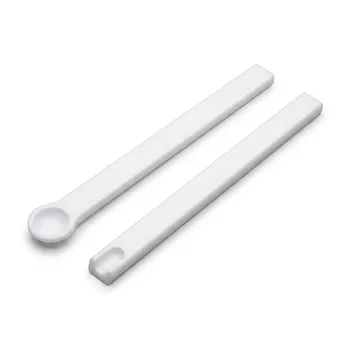
- Corrosion Resistant PTFE Sampling Spoon for High Purity Solid Powder Reagent Handling and Laboratory Chemical Transfer
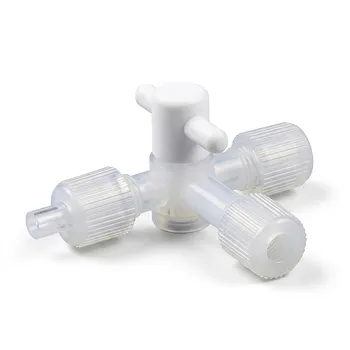
- Corrosion Resistant High Purity PFA Valve and Weldable Transparent Tubing for Semiconductor Fluid Transfer
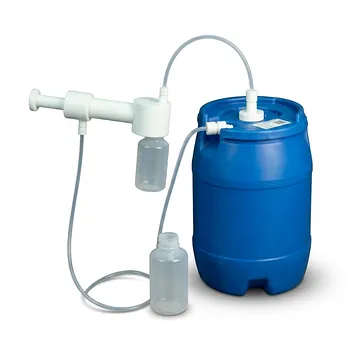
- PTFE Ultrapure Liquid Sampler Corrosion Resistant Acid Sampling Tool for 200L Reactors Custom Fluoropolymer Sampling Device
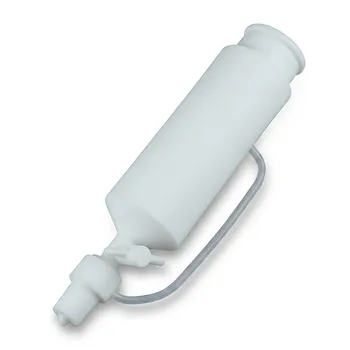
- Custom PTFE Constant Pressure Separatory Funnel 100ml Fluoropolymer Labware for Corrosive Chemical Transfer
- Corrosion Resistant PTFE Sampling Cup Custom Fabricated PTFE Sampling Scoop Laboratory Fluoropolymer Sampling Tools
People Also Ask
- How does PTFE's chemical resistance make it suitable for high-purity lab supplies and transfer systems? Discover its key benefits in handling extreme corrosives.
- How do the high melting point and non-flowing melt characteristics of PTFE influence custom machining? Discover key fabrication insights and design tips for lab fluid components.
- How do the low surface energy and non-wetting properties of PTFE fluoropolymers benefit precision laboratory fluid transfer components and analytical labware? Discover the advantages for your lab.
- What factors should be considered when selecting a PTFE shovel for laboratory use? Ensure Chemical Inertness & Sample Integrity
- What standard ASTM test methods are used to characterize the raw physical and thermal properties of fluoropolymers like PTFE, PFA, and PVDF? Learn the resin-specific test panels for powders, melting, and flow.