Perfluorinated polymers are stable because fluorine both strengthens and shields the carbon backbone. In materials such as PTFE and PFA, hydrogen atoms are replaced by fluorine, creating a tightly packed, electron-rich outer sheath around the polymer chain. Strong C–F bonding, chemical shielding, low polarizability, and low surface energy together make these polymers exceptionally resistant to chemical attack, contamination, and elevated temperatures.
The key principle is molecular protection: fluorine makes the polymer backbone difficult to break and physically limits access to it. This combination explains the chemical inertness, thermal endurance, nonstick behavior, and low contamination risk of PTFE and PFA laboratory components.
Why the Molecular Structure Is So Resistant
Strong carbon–fluorine bonds
The C–F bond is short and highly stable because fluorine strongly attracts bonding electrons. Breaking or rearranging these bonds requires substantial energy, so many chemical and thermal processes cannot readily initiate degradation.
Fluorination also changes the electronic environment of neighboring carbon atoms. The result is a polymer backbone that is less susceptible to attack than a comparable hydrocarbon structure containing C–H bonds.
A protective fluorine sheath
In a perfluorinated chain, fluorine atoms surround the carbon backbone. This dense arrangement acts like a molecular barrier: reactive species encounter fluorine-covered surfaces rather than directly accessing the carbon–carbon framework.
The sheath is not an impenetrable physical coating, but it substantially reduces the accessibility and reactivity of the backbone. That is why PTFE and PFA resist many concentrated acids, bases, oxidizing agents, solvents, and corrosive reagents.
Low electronic polarizability
C–F bonds are strongly polarized, but their electrons are held tightly and are relatively difficult to distort. This gives perfluorinated materials low polarizability compared with many organic polymers.
Low polarizability reduces favorable interactions with other molecules. As a result, many solvents and reagents have difficulty swelling, dissolving, or penetrating the polymer.
How These Features Produce Chemical Inertness
Resistance to acids, bases, and oxidizing agents
Chemical attack generally requires a reagent to access the polymer, interact with its bonds, and initiate a reaction. The strong bonds and fluorine shielding make each of these steps unfavorable.
Consequently, fluoropolymers are suitable for contact with aggressive reagents in digestion vessels, reagent bottles, electrochemical cells, tubing, valves, and fittings.
Hydrophobic and oleophobic behavior
Fluorinated surfaces have very low surface energy. They tend to repel both water-based liquids and many nonpolar oils, producing the characteristic combination of hydrophobicity and oleophobicity.
This limits wetting, adhesion, and residue retention. In laboratory work, that can reduce carryover, simplify cleaning, and help prevent samples from adhering to vessel walls.
Low friction and low adhesion
The fluorine-rich surface interacts weakly with many contacting materials. This gives PTFE particularly low friction and strong nonstick behavior.
For fluid-transfer components, low friction can reduce flow resistance and sticking. For containers and reaction vessels, low adhesion helps limit material retention and cross-contamination.
Why the Same Structure Improves Thermal Stability
High energy required for molecular breakdown
Thermal degradation begins when enough energy is available to break bonds or generate reactive chain fragments. Strong C–F bonds and the protected backbone raise the energy required for these processes.
This allows PTFE, PFA, and related materials to retain chemical inertness and useful mechanical integrity across demanding temperature ranges.
Reduced susceptibility to thermally initiated reactions
The fluorine sheath limits access to the carbon backbone and suppresses many side reactions that readily occur in ordinary hydrocarbon polymers. Fluorinated chains therefore resist oxidation, combustion, and chemical rearrangement more effectively.
This is particularly valuable during acid digestion, high-temperature chemical processing, and trace analysis where vessel-derived reactions or contamination can compromise results.
Thermal stability is not unlimited
“Thermally stable” does not mean that fluoropolymers can be used at any temperature. At sufficiently high temperatures, they can melt, lose mechanical strength, or decompose and release hazardous products.
The appropriate material must therefore be selected using its actual continuous-use, short-term exposure, pressure, and chemical-temperature limits.
Why PTFE and PFA Work Well in Laboratories
PTFE for maximum chemical inertness and low friction
PTFE provides outstanding resistance to aggressive chemicals and has an exceptionally low-friction surface. It is widely used for beakers, tubing, gaskets, vessels, valves, and custom-machined components.
Its limitations include relatively difficult melt processing and reduced mechanical strength at elevated temperatures compared with some alternatives.
PFA for cleaner processing and complex shapes
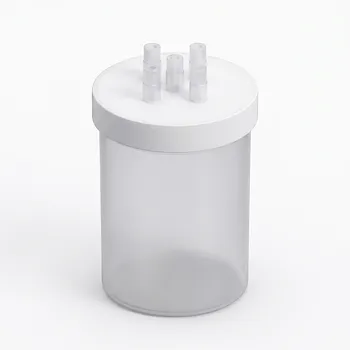
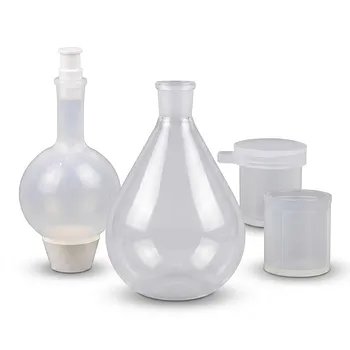
PFA retains the broad chemical resistance associated with perfluorinated structures while being more readily melt-processable than PTFE. It is therefore useful for high-purity bottles, tubing, digestion vessels, and complex laboratory apparatus.
PFA can offer advantages where transparency, weldability, or highly controlled manufacturing is important, although application-specific temperature and mechanical limits still apply.
Lower contamination risk
Fluoropolymers generally resist chemical leaching, swelling, and surface reaction under conditions that challenge metals, glass, and conventional plastics. This makes them valuable in trace analysis and high-purity workflows.
They do not guarantee zero contamination: manufacturing residues, handling, permeation, particulates, and exposure to incompatible conditions must still be controlled.
Understanding the Trade-offs
Chemical resistance does not equal universal compatibility
Some highly reactive substances can attack fluoropolymers under specific conditions. Strong alkali metals, certain elemental fluorinating systems, and specialized high-temperature reagents require explicit compatibility review.
The correct question is not whether a material is “inert,” but whether it is compatible with the exact reagent, concentration, temperature, pressure, and exposure time.
Mechanical performance changes with temperature
Fluoropolymers can soften, creep, or deform under load as temperature rises. A vessel may remain chemically intact while losing dimensional stability or pressure capability.
For pressurized systems, seals, tubing, and structural parts, mechanical and thermal ratings are as important as chemical resistance.
Low surface energy can complicate bonding
The same low-adhesion surface that prevents samples from sticking also makes fluoropolymers difficult to paint, glue, or bond. Mechanical retention, specialized surface treatment, or fluoropolymer-compatible joining methods may be required.
High purity requires controlled handling
A chemically inert container can still introduce contamination from machining debris, additives, cleaning agents, or poor storage. High-purity applications should specify suitable grades, cleaning procedures, and blank controls.
How to Apply This to Your Project
Material selection should account for both the molecular advantages and the operating limits of the finished component.
- If your primary focus is maximum chemical resistance: Choose a qualified PTFE or PFA grade after checking compatibility with the exact reagent and temperature.
- If your primary focus is high-purity trace analysis: Use fluoropolymer components with controlled manufacturing and validated cleaning to minimize extractables, residues, and sample carryover.
- If your primary focus is high-temperature digestion: Confirm the vessel’s temperature, pressure, and mechanical limits rather than relying only on its chemical-resistance reputation.
- If your primary focus is fluid transfer: Evaluate tubing, fittings, seals, friction, permeation, and creep together, because chemical inertness alone does not determine service life.
- If your primary focus is reliable experimental results: Select a material that minimizes wall reactions, adsorption, and contamination while remaining mechanically stable under the complete operating cycle.
Strong C–F bonding and fluorine shielding make perfluorinated polymers unusually inert, but sound engineering applies those molecular advantages within verified temperature, pressure, and compatibility limits.
Summary Table:
| Molecular Property | Effect | Laboratory Benefit |
|---|---|---|
| Strong C-F bonds | High bond energy, difficult to break | Excellent chemical and thermal stability |
| Protective fluorine sheath | Shields carbon backbone from attack | Resists acids, bases, oxidizers, solvents |
| Low polarizability | Reduces interactions with other molecules | Low swelling, dissolution, penetration |
| Low surface energy | Hydrophobic and oleophobic | Non-stick, easy cleaning, low carryover |
| Thermal stability | High energy required for breakdown | Operates over wide temperature ranges |
Enhance Your Lab's Performance with KINTEK's Fluoropolymer Solutions
Leverage the exceptional stability of PTFE and PFA in your demanding applications. At KINTEK, we specialize in high-performance fluoropolymers, offering a complete range of labware—from beakers, vessels, and tubing to custom-machined parts and high-purity analysis instruments. Our expert team is ready to help you select the right material for your specific needs, ensuring maximum chemical resistance, thermal endurance, and contamination control.
Contact us now to discuss your requirements and get a tailored quote. Let's innovate together!
Related Products
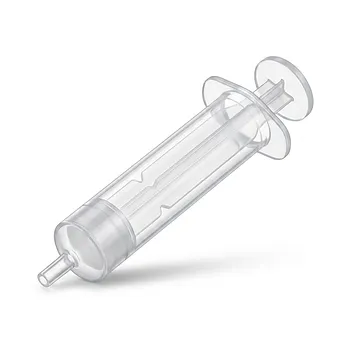
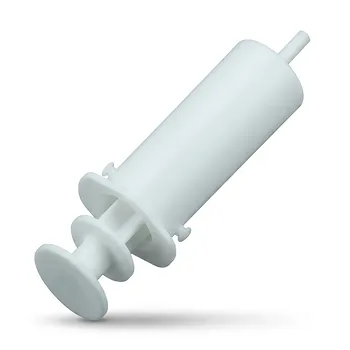
- Corrosion Resistant PFA Syringe Translucent Visual Fluoropolymer Labware 10ml Chemical Handling Tool
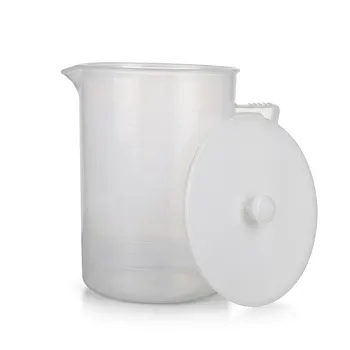
- High Purity PFA Beaker with Handle and Large Capacity Washable Soak Basket Multi Spec Teflon Laboratory Labware
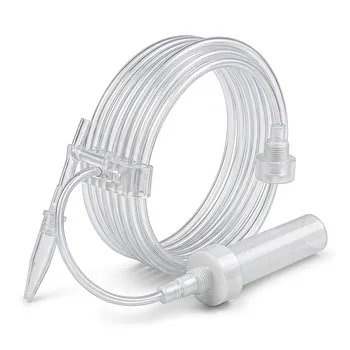
- Custom PFA Tubing 1/4 Inch High Purity Corrosion Resistant Fluoropolymer Tube with Welding and Machining Services
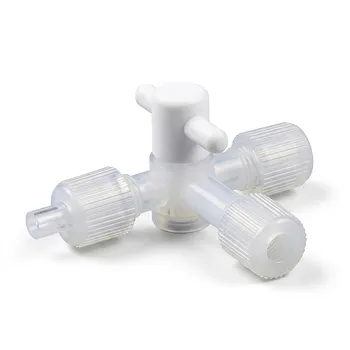
- Corrosion Resistant High Purity PFA Valve and Weldable Transparent Tubing for Semiconductor Fluid Transfer
- High Purity 4L PFA Reaction Tank for Proton Exchange Membrane Electrolysis Water Oxygen Separation Systems
People Also Ask
- How does the incorporation of comonomers such as perfluoropropyl vinyl ether (PPVE) alter the molecular structure and processing characteristics of TFE-based fluoropolymers like PFA compared to standard PTFE?
- Why do PFA fluoropolymer laboratory products offer different melt-processability and structural toughness compared to standard PTFE labware?
- Which material characteristics make fluoropolymers suitable for lithium-ion battery separators, and how do fluoropolymer laboratory supplies support separator performance testing?
- Why use PTFE/PFA for pH adjustment in dye studies? Ensure chemical purity and reliable adsorption data accuracy.
- How do the chemical properties of fluorinated materials support specialized processing requirements in semiconductor cleanrooms and analytical labs? Discover high-purity PTFE/PFA solutions.