Fluoroelastomers generally offer much stronger solvent resistance than standard elastomers, but their dielectric behavior is more complex. Their relative dielectric constant can be substantially higher than silicone, acrylic, or polyurethane elastomers: values around 15 are reported for some fluoroelastomer formulations, while broader fluoropolymer data commonly falls around 7.0 to 8.6 depending on composition and test conditions. The practical advantage is not simply a higher dielectric constant, but the combination of electrical stability, low water absorption, chemical resistance, and long-term sealing integrity.
Fluoroelastomers are usually the better choice when aggressive fuels, oils, hydrocarbons, or reactive chemicals would cause conventional elastomers to swell or degrade. However, material selection must account for the specific solvent, temperature, pressure, permeation requirement, and whether the application needs an elastomeric seal or a fully fluorinated thermoplastic.
Why the Comparison Matters
Standard elastomers prioritize flexibility and cost
Silicone, acrylic, polyurethane, nitrile rubber, and similar elastomers are often effective in moderate chemical environments. They can provide useful flexibility, resilience, and manufacturability at relatively low cost.
Their limitation is that many solvents can diffuse into the polymer network. The result may be swelling, softening, loss of tensile strength, compression-set increase, or eventual leakage.
Fluoroelastomers are designed for chemical exposure
Fluoroelastomers such as FKM are commonly based on copolymers or terpolymers incorporating tetrafluoroethylene, hexafluoropropylene, and vinylidene fluoride. Their fluorinated structure gives them substantially better resistance to hydrocarbons, oils, fuels, mineral acids, ozone, and many aggressive fluids.
This makes them suitable for O-rings, hoses, engine seals, pump seals, high-purity fluid lines, and solvent-handling equipment where standard rubber compounds may fail.
Dielectric Properties: Higher, but Not Automatically Better
Fluoroelastomers generally have higher dielectric constants
Representative dielectric constants are approximately:
| Elastomer type | Approximate relative dielectric constant |
|---|---|
| Silicone | 3 |
| Acrylic | 4.5 |
| Polyurethane | 7 |
| Fluoroelastomer or fluoropolymer formulation | Approximately 7 to 15 |
The value depends on polymer chemistry, additives, frequency, temperature, moisture, and test method. Therefore, a single number should be treated as a design reference rather than a universal material specification.
Electrical stability supports demanding fluid systems
Fluoropolymers can combine a relatively high dielectric constant with high electrical volume resistivity, around (10^{14}) ohm-cm, and low dielectric loss. Their extremely low water absorption also helps reduce changes in electrical behavior caused by moisture uptake.
This is valuable in high-purity fluid transfer, trace analysis, specialized reaction vessels, and electrically sensitive process equipment. The material can maintain dielectric reliability while resisting chemical attack.
A higher dielectric constant is not always the design objective
For capacitive or electromechanical applications, a higher dielectric constant may be useful. For insulation, however, the required combination of dielectric strength, volume resistivity, dielectric loss, temperature stability, and frequency response may matter more than relative permittivity alone.
The electrical data must therefore be evaluated at the actual operating frequency, temperature, voltage, and fluid exposure.
Solvent Resistance: The Major Advantage
Fluoroelastomers outperform many conventional rubbers in hydrocarbons
In aggressive aromatic fuels and volatile hydrocarbon solvents, fluoropolymer components commonly show equilibrium volume swell below approximately 10% to 15%, while nitrile rubber can exceed 90% under comparable exposure conditions.
Lower swelling helps preserve seal geometry, contact pressure, and dimensional stability. It also reduces the risk that a hose lining or gasket will obstruct flow or lose its designed fit.
Permeation resistance reduces fluid loss and emissions
Fluoropolymer fluid lines can provide permeation resistance more than 100 times higher than standard rubber materials, depending on construction and test conditions. This limits the migration of volatile solvents through hoses, tubing, diaphragms, and seals.
For laboratory and process equipment, lower permeation can help prevent chemical vapor loss, hazardous emissions, contamination, and unreliable fluid containment.
Fluorosilicone fills a specific performance gap
Fluorosilicone elastomers, including FVMQ, combine fluorinated fluid resistance with silicone-like low-temperature flexibility. They resist many fuels, oils, hydrocarbons, dilute acids, and strong bases with limited swelling, often reported around 0% to +5% under standard immersion conditions.
Their glass transition temperature is approximately -75°C, and they can retain impact flexibility to around -59°C. This makes them useful when a seal must remain flexible through severe temperature cycling.
Choosing Among Fluorinated Materials
Standard FKM suits fuels, oils, and many industrial fluids
FKM is often an effective upgrade from NBR or other conventional elastomers for fuel systems, engine sealing, oil handling, and hydrocarbon service. It provides strong chemical resistance while retaining the elasticity needed for practical O-rings and gaskets.
Its limits become important when the fluid contains low-molecular-weight ketones, esters, ethers, strong amines, or particularly aggressive acids.
FFKM is intended for extreme chemical and thermal service
Perfluoroelastomer, or FFKM, provides a higher level of chemical and thermal stability than standard FKM. Some grades support continuous service temperatures up to approximately 316°C, and FFKM compounds can resist more than 1,500 chemical media.
FFKM is appropriate for demanding seals in chemical pumps, valves, agitators, high-purity fluid lines, digestion vessels, and reaction equipment. Its low compression set, low outgassing, creep resistance, and elasticity retention support reliable long-term sealing.
Fluorinated thermoplastic elastomers address permeation
Fluorinated thermoplastic elastomers can provide considerably lower fuel permeation than standard FKM. Under cited CE10 fuel testing at 40°C for 30 days, standard FKM showed rates of approximately 15 to 29 g/m²/day, compared with approximately 1 to 4 g/m²/day for fluorinated thermoplastic elastomers.
These materials are especially relevant for laboratory gaskets, diaphragms, containment components, and systems handling volatile solvents where vapor retention is a primary requirement.
PTFE and PFA provide maximum chemical inertness
Rigid fluoropolymers such as PTFE and PFA are not direct substitutes for elastomeric O-rings because they do not provide the same elastic recovery. They are better suited to tubing, liners, vessels, containers, and other structural fluid-contact components.
FFKM can complement PTFE or PFA systems by supplying the flexible, leak-tight seals that rigid fluoropolymers cannot provide.
Understanding the Trade-offs
Fluoroelastomers are not universally resistant
Standard fluoroelastomers can swell or degrade in ketones, esters, ethers, strong amines, hot anhydrous hydrofluoric acid, and chlorosulfonic acid. Fluorosilicone can also show higher swelling in polar solvents such as ketones and esters, as well as aromatic solvents such as benzene.
A general label such as “fluorinated” is not enough. The exact compound and curing system must be checked against the actual fluid.
Strong bases, steam, and wet acidic gases require care
Some FKM grades are vulnerable in strong-base environments, steam, or wet acidic gas service. Peroxide-cured or specialized grades may be required where the chemistry and temperature exceed the capability of standard compounds.
The seal material, not merely the fluorine content, determines performance in these conditions.
Higher performance increases cost and specification effort
FFKM, fluorinated thermoplastic elastomers, PTFE, and PFA generally cost more than standard elastomers. They may also require tighter control of manufacturing, compression, surface finish, installation, and cleanliness.
That additional cost is justified when failure would cause contamination, hazardous release, downtime, or expensive equipment damage. It is unnecessary when the fluid and temperature are well within the capability of a conventional elastomer.
Electrical and chemical data must be tested under service conditions
Dielectric constant, dielectric loss, resistivity, swelling, permeation, and compression set can all change with temperature, frequency, pressure, fluid composition, and exposure time. Published values are useful for screening, but qualification testing should reproduce the intended operating conditions.
For high-consequence systems, test the complete component design rather than relying only on a raw material data sheet.
Making the Right Choice for Your Goal
Begin with the fluid, temperature range, pressure, electrical requirements, and allowable permeation level rather than choosing solely by polymer family.
- If your primary focus is hydrocarbon and fuel resistance: Specify a suitable FKM grade, and verify swell, compression set, and permeation against the actual fuel blend.
- If your primary focus is extreme chemical and thermal resistance: Evaluate FFKM first, particularly for concentrated acids, bases, ketones, esters, ethers, and chlorinated solvents.
- If your primary focus is low-temperature flexibility with fuel and oil resistance: Consider fluorosilicone, while checking its limitations with ketones, esters, and aromatic solvents.
- If your primary focus is minimum solvent vapor permeation: Evaluate fluorinated thermoplastic elastomers and compare their measured permeation rates with the containment target.
- If your primary focus is maximum chemical inertness in tubing, vessels, or liners: Use PTFE or PFA for rigid fluid-contact parts and pair them with an appropriate fluorinated elastomer seal.
- If your primary focus is dielectric performance: Compare dielectric constant, loss, resistivity, and dielectric strength at the actual frequency, temperature, moisture level, and voltage.
The correct fluoropolymer material is the one that preserves sealing, electrical, and containment performance throughout the full chemical and thermal duty cycle.
Summary Table:
| Property | Fluoroelastomers (e.g., FKM) | Standard Elastomers (e.g., NBR) |
|---|---|---|
| Relative Dielectric Constant | ~7-15 | ~3-7 |
| Volume Swell in Hydrocarbons | <10-15% | Often >50% (e.g., NBR >90%) |
| Permeation Resistance | High (can be 100x more resistant) | Low to moderate |
| Chemical Resistance | Excellent for aggressive fluids | Limited for solvents and fuels |
| Temperature Range | Broad (up to ~316°C for FFKM) | Often narrower |
| Cost | Higher | Lower |
| Typical Applications | O-rings, seals, hoses for fuel/chemical | General-purpose seals, industrial parts |
Need a reliable fluoropolymer solution for your demanding fluid handling or sealing application? KINTEK specializes in high-performance PTFE and PFA products, plus custom machined parts. Our end-to-end capabilities ensure you get the right material for your exact needs, from labware to complex components. Contact us today for expert guidance and a tailored quote! #ContactForm
Related Products
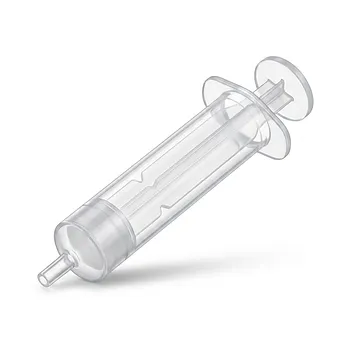
- Corrosion Resistant PFA Syringe Translucent Visual Fluoropolymer Labware 10ml Chemical Handling Tool
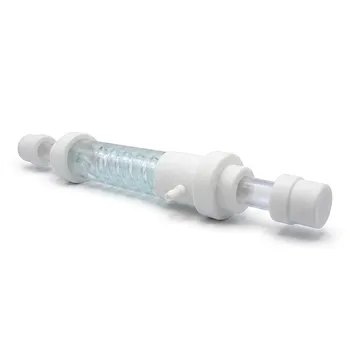
- Custom PTFE Condenser Tube 100ml Serpentine and Straight Fluoropolymer Laboratory Heat Exchanger with Flask Adapters
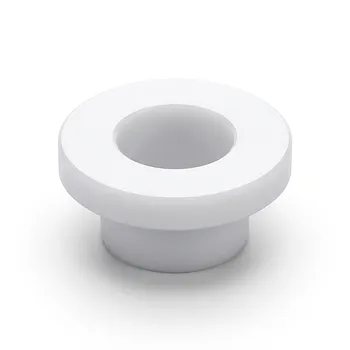
- Customizable High Temperature Resistant Anti Static PTFE Insulating Gaskets Flame Retardant Corrosion Proof Industrial Seals
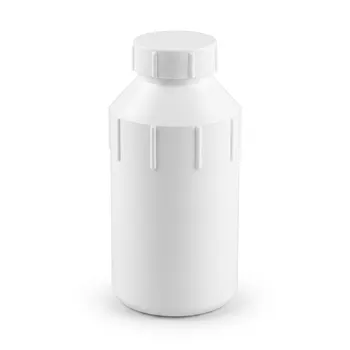
- Custom PTFE Wide Mouth Reagent Reaction Bottle Corrosion Resistant High Temperature Large Capacity Straight Body Laboratory Vessel
- Corrosion Resistant High Purity PFA Valve and Weldable Transparent Tubing for Semiconductor Fluid Transfer
People Also Ask
- How does the incorporation of comonomers such as perfluoropropyl vinyl ether (PPVE) alter the molecular structure and processing characteristics of TFE-based fluoropolymers like PFA compared to standard PTFE?
- Why do PFA fluoropolymer laboratory products offer different melt-processability and structural toughness compared to standard PTFE labware?
- Which material characteristics make fluoropolymers suitable for lithium-ion battery separators, and how do fluoropolymer laboratory supplies support separator performance testing?
- Why use PTFE/PFA for pH adjustment in dye studies? Ensure chemical purity and reliable adsorption data accuracy.
- How do the chemical properties of fluorinated materials support specialized processing requirements in semiconductor cleanrooms and analytical labs? Discover high-purity PTFE/PFA solutions.