PTFE’s nonpolar molecular structure is a major reason it performs so reliably as both an electrical insulator and a high-purity laboratory material. Because PTFE lacks permanent molecular dipoles and ferroelectric domains, an applied electric field produces only limited, largely reversible polarization. The result is a low dielectric constant, very low dielectric loss, minimal hysteresis, and stable signal behavior across demanding laboratory, cable, connector, and high-frequency applications.
PTFE combines low field-induced polarization with high electrical resistance, chemical inertness, and thermal stability. This allows components to isolate electrodes, suppress signal loss and distortion, and maintain material purity in environments where conventional plastics or ceramics may be less suitable.
Why PTFE’s Molecular Structure Matters
Nonpolar carbon-fluorine architecture
PTFE consists of a carbon backbone surrounded by fluorine atoms. The highly balanced molecular structure gives the polymer a low net molecular polarity, so it does not readily form permanent dipoles that align strongly with an external electric field.
When polarization is limited, less electrical energy is stored and released through molecular reorientation. This directly supports PTFE’s low dielectric constant and low dielectric loss.
Predominantly linear dielectric response
PTFE generally responds to an applied electric field in a predictable, approximately linear manner. It does not exhibit the ferroelectric domain switching associated with strongly polar or ferroelectric materials.
This produces negligible dielectric hysteresis under normal operating conditions. In practical terms, the material introduces little memory or field-dependent distortion into sensitive electrical measurements.
Low dielectric constant
PTFE typically has a dielectric constant in the approximate range of 2 to 5, with commonly cited values near 2.1 at low radio frequencies. The exact value depends on frequency, temperature, material grade, density, processing, and whether the material is solid or expanded.
A low dielectric constant reduces the capacitance introduced by insulating structures. That is valuable in high-frequency assemblies, probe holders, sensor housings, and electrochemical apparatus where unintended capacitance can alter timing, impedance, or measurement response.
How These Properties Improve Electrical Insulation
High resistance to leakage current
PTFE has extremely high volume resistivity, commonly reported around or above 10¹⁸ ohm-centimeters for suitable grades and test conditions. This makes it effective at preventing current from passing through the bulk material.
In laboratory cells and electrical apparatus, this helps maintain electrical isolation between electrodes, conductors, shields, and grounded hardware. Lower leakage improves measurement integrity, particularly when currents or potentials are very small.
Strong resistance to dielectric breakdown
PTFE also provides high dielectric strength, although the precise value depends heavily on thickness, defects, electrode geometry, temperature, test method, and processing quality. Thin films can show especially high breakdown values, while real machined components must be evaluated using their actual geometry and operating conditions.
This property allows PTFE to function as an insulating barrier in high-voltage fixtures, cable assemblies, connector systems, and electrochemical equipment. Designers must still include adequate voltage and creepage margins rather than relying on a nominal material value alone.
Very low dissipation factor
PTFE’s dissipation factor is exceptionally low, with cited values below approximately 0.0003 to 0.0004 under specified frequency and temperature conditions. Low dissipation means that little energy is converted into heat within the dielectric during alternating-field operation.
That characteristic is important in microwave circuit supports, high-frequency cables, printed circuit boards, and precision instrumentation. It helps reduce dielectric heating and preserve the intended electrical characteristics of the system.
Benefits in Laboratory Components
Stable electrochemical measurements
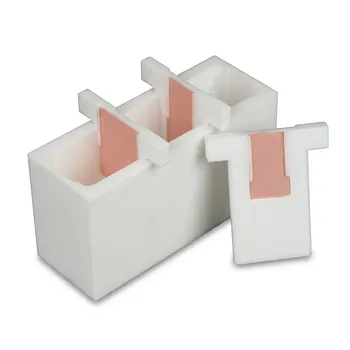
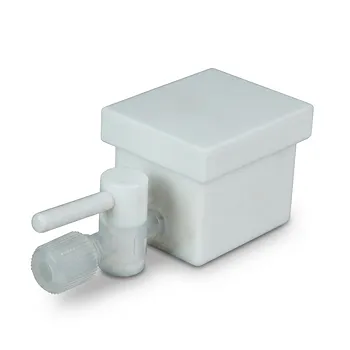
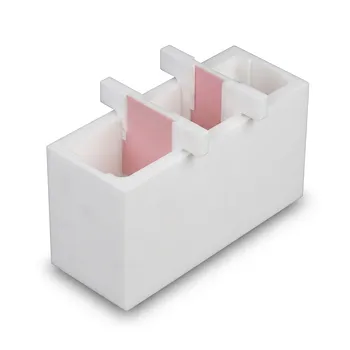
Custom PTFE cells, electrode supports, probe holders, and insulating spacers can reduce stray current paths between electrically active regions. Their low dielectric response also limits parasitic capacitance around electrodes and sensors.
This supports more predictable impedance, charge-transfer, and high-frequency measurements. The benefit is greatest when PTFE is combined with careful grounding, shielding, electrode placement, and cable management.
High chemical purity
PTFE is highly resistant to many corrosive chemicals and has a chemically inert surface. It is therefore useful in fluid-handling components, analytical vessels, tubing, seals, sensor housings, and custom-machined fixtures that must contact aggressive media without contaminating them significantly.
Its electrical and chemical properties reinforce each other: the component can isolate electrical regions while remaining compatible with the process fluid. This combination is difficult to achieve with many conventional insulating plastics.
Signal stability in sensitive apparatus
Low dielectric loss and low polarization reduce the extent to which the insulating component absorbs energy or changes the electrical field. This helps preserve signal amplitude and waveform integrity in sensitive analytical and electrochemical systems.
In high-frequency laboratory apparatus, PTFE can also help maintain a more predictable impedance environment. The material is especially useful when small parasitic effects would otherwise become comparable to the signal being measured.
Benefits in High-Frequency and High-Voltage Assemblies
Cable and connector insulation
PTFE’s low dielectric constant reduces the capacitance of cable insulation relative to higher-permittivity materials. Its low loss also limits attenuation and heating, particularly at radio and microwave frequencies.
Its high melting temperature and broad temperature capability further support use in demanding cable, connector, and feedthrough assemblies. PTFE is often selected where polyethylene would not provide enough thermal or environmental margin.
Microwave and printed-circuit applications
At high frequencies, dielectric losses and dimensional changes can affect impedance and signal timing. PTFE’s stable dielectric behavior and low dissipation factor make it useful for microwave circuit substrates, spacers, supports, and insulating structures.
Filled PTFE composites may be chosen when greater mechanical stiffness or a controlled dielectric constant is required. Their electrical behavior should be treated as grade-specific rather than assumed to match unfilled PTFE.
Electrical isolation in high-field systems
PTFE barriers and supports can prevent voltage breakdown between adjacent conductors or electrodes. High volume resistivity also limits current leakage through the insulating structure.
For high-field designs, the full system must be considered. Surface contamination, sharp edges, voids, moisture, thickness, and local field concentration can determine failure before the bulk material reaches its theoretical breakdown limit.
Understanding the Trade-offs
Low polarization does not eliminate all electrical effects
PTFE is not electrically invisible. Its dielectric constant, dissipation factor, and breakdown strength vary with frequency, temperature, thickness, density, manufacturing process, and material formulation.
Published values should therefore be used for preliminary selection only. Qualification should use the intended PTFE grade, component geometry, operating frequency, voltage, temperature, and chemical environment.
Mechanical deformation can affect electrical performance
PTFE has a relatively low stiffness and can undergo creep or cold flow under sustained mechanical load. Compression around terminals, seals, or precision fixtures may change dimensions over time.
A dimensional change can alter electrode spacing, connector alignment, clearance, or parasitic capacitance. Mechanical support, backup structures, suitable fillers, and appropriate load limits may be necessary for long-term stability.
Surface charging and contamination remain possible
Although PTFE strongly resists conduction, that same insulation can allow static charge to accumulate on its surface. Triboelectric charging may be relevant when components are handled, rubbed, or exposed to flowing fluids.
Surface contamination can also create leakage paths or reduce effective creepage distance. Cleaning procedures, grounding strategy, shielding, and environmental controls should be part of the design.
ePTFE is not identical to dense PTFE
Expanded PTFE contains a microstructure with significant porosity and can exhibit a lower dielectric constant and low dielectric loss. Its electrical behavior, mechanical strength, permeability, and breakdown performance differ from those of dense molded or machined PTFE.
The cited performance of ePTFE should not be transferred directly to solid PTFE components. Material selection must match the required combination of insulation, structural integrity, fluid containment, and environmental resistance.
How to Apply This to Your Project
The correct PTFE design depends on whether the dominant requirement is low signal disturbance, high-voltage isolation, chemical compatibility, or long-term mechanical stability.
- If your primary focus is high-frequency signal integrity: Choose a PTFE grade with documented dielectric constant and dissipation factor at the operating frequency, then control geometry and parasitic capacitance.
- If your primary focus is high-voltage insulation: Verify dielectric strength using the actual thickness and geometry, and provide margins for field concentration, defects, contamination, and temperature.
- If your primary focus is electrochemical measurement accuracy: Use PTFE to isolate electrodes and reduce stray current and parasitic capacitance, while designing grounding and shielding as carefully as the material selection.
- If your primary focus is chemical purity: Select chemically compatible PTFE components and validate cleaning, extractables, surface condition, and exposure-specific performance.
- If your primary focus is long-term dimensional stability: Account for PTFE creep and thermal expansion, using mechanical reinforcement or a filled grade where the application permits it.
PTFE’s nonpolar structure gives it the low-loss, stable dielectric behavior that makes high-performance electrical and laboratory components dependable when the material grade and component design are matched to the application.
Summary Table:
| Property | Value | Benefit |
|---|---|---|
| Dielectric Constant | ~2.1 at low RF | Reduces capacitance in high-frequency assemblies |
| Dissipation Factor | <0.0003-0.0004 | Minimizes energy loss and heating |
| Volume Resistivity | ~10^18 Ω·cm | Prevents leakage current |
| Dielectric Strength | High | Provides insulating barriers |
| Dielectric Hysteresis | Negligible | Stable signal behavior |
Enhance your laboratory's performance with KINTEK's high-purity PTFE and PFA components. From custom machined parts to complete fluid handling systems, our products are designed for superior electrical insulation and chemical resistance. Contact us today to discuss your specific requirements and benefit from our expert engineering support and reliable supply.
Related Products
- Custom PTFE Insulating Gaskets and Corrosion Resistant Fluoropolymer Seals for Industrial Electrical Applications
- White PTFE Electrolytic Cell with Movable Slider and Insulated Lid for Fluorine Corrosion Resistance
- Custom PTFE Corrosion Resistant Insulating Electrophoresis Reaction Cell with Septum and Valves for Low Background Trace Analysis
- Corrosion Resistant PTFE Electrochemical Cell for New Energy Research Inert Insulating Customizable Lab Reaction Vessel
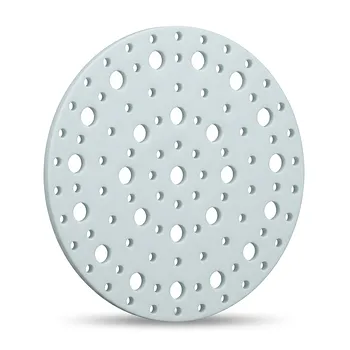
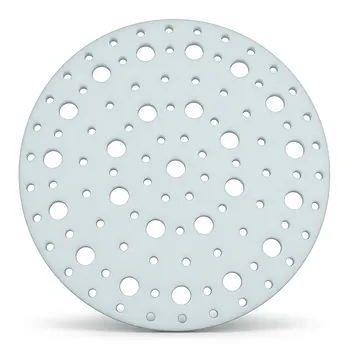
- High Temperature Resistant TFM Insulating Baffles Ultra Clean Laboratory PTFE Partitions with Customizable Pore Patterns
People Also Ask
- What are the three primary types of PTFE available for gaskets and seals? Choose the Right Material for Your Application
- Why is PTFE an ideal material choice for sealing gaskets, valves, and fluid transfer tubing exposed to extremely aggressive chemicals? Discover Its Superior Chemical Resistance and Reliability
- How is PTFE utilized in seals and gaskets? Leverage Its Chemical & Temperature Resistance
- What are the key properties of PTFE that make it suitable for seals and gaskets? Unlock Superior Sealing Performance
- How are custom PTFE parts used in the automotive sector? Enhance Vehicle Performance & Durability