PTFE and PFA are essential because they combine electrical insulation with exceptional chemical purity. Their low dielectric constants and high electrical breakdown strength prevent them from disturbing sensitive electrical fields, signals, and instrumentation, while their chemically inert, fully fluorinated structures resist aggressive acids, bases, solvents, and etchants. In high-purity fluid systems, this combination helps prevent ionic, metallic, organic, and particulate contamination while preserving component integrity under severe operating conditions.
The central value of PTFE and PFA is that they isolate both the process and the measurement: they protect ultrapure fluids from material contamination while protecting electrical and mechanical components from chemically aggressive environments.
Why High-Purity Systems Need Specialized Materials
Contamination Can Invalidate the Process
Semiconductor fabrication and trace-analysis laboratories often handle fluids whose purity is critical to the final result. Even small amounts of extractable ions, metals, organics, or particles can affect a wafer process, poison a catalyst, or distort an analytical measurement.
Components that contact these fluids must therefore do more than resist visible corrosion. They must also minimize leachables, extractables, surface adhesion, and particle retention.
Conventional Materials Can Create Multiple Risks
Metals may corrode or release ions when exposed to concentrated acids, bases, or solvents. Other polymers can swell, degrade, absorb chemicals, or release organic compounds into the fluid.
Fluoropolymers reduce these risks by providing a chemically stable contact surface that remains reliable across a broad range of aggressive process chemistries.
How Chemical Inertness Protects Fluid Purity
The Fluorinated Backbone Resists Chemical Attack
PTFE and PFA are built around a highly stable, fully fluorinated polymer structure. Strong carbon-fluorine bonding gives these materials high resistance to chemical degradation and helps them withstand aggressive reagents without readily breaking down.
This is particularly important when handling concentrated acids, alkaline solutions, aggressive solvents, ultrapure water, and semiconductor etchants.
Low Extractables Preserve Sample Integrity
High-purity grades of PTFE and PFA are selected because they contain very low levels of extractable trace metals and organic contaminants. They are therefore suitable for containers, tubing, valves, fittings, vessels, and custom-machined components that directly contact sensitive fluids.
The result is a lower risk that the component itself will alter the composition of the reagent or sample.
Non-Wetting Surfaces Reduce Fluid Retention
Fluoropolymers have low surface energy and hydrophobic, non-wetting characteristics. Fluids are less likely to adhere strongly to the surface, remain trapped in microscopic imperfections, or contaminate a subsequent process.
This supports more effective flushing and reduces carryover in sampling, chemical distribution, and trace-analysis workflows.
Smooth Surfaces Limit Particle Retention
Smooth fluoropolymer surfaces provide fewer locations for particles and residues to collect. This helps fluid systems maintain cleanliness and reduces the chance that accumulated material will later enter an ultrapure process stream.
Surface quality still depends on machining, finishing, cleaning, and assembly practices. The polymer provides a strong foundation for cleanliness, but it does not eliminate the need for disciplined manufacturing and handling.
How Dielectric Properties Support Component Design
Low Dielectric Constants Reduce Electrical Interference
PTFE and PFA have exceptionally low dielectric constants compared with many engineering materials. That means they store relatively little electrical energy when exposed to an electric field and introduce limited capacitive loading into nearby circuits or instruments.
This is valuable in semiconductor equipment and laboratory systems containing sensors, electrodes, high-frequency signals, precision measurements, or electrically controlled fluid processes.
High Electrical Breakdown Strength Improves Insulation
Their high dielectric strength allows PTFE and PFA to function as reliable electrical insulators. Components can separate conductive fluids, electrodes, wiring, and energized equipment while reducing the risk of electrical breakdown through the material.
This is especially useful when a part must simultaneously contact corrosive chemicals and provide electrical isolation.
Electrical Stability Supports Sensitive Instrumentation
A chemically inert fluid path is not enough if the material also affects the measurement environment. Fluoropolymer insulation helps reduce unwanted electrical interaction between the fluid, the component, and nearby instrumentation.
In practical terms, the material helps the system preserve both chemical accuracy and electrical measurement stability.
Where PTFE and PFA Enable Reliable Designs
Tubing, Valves, and Fittings
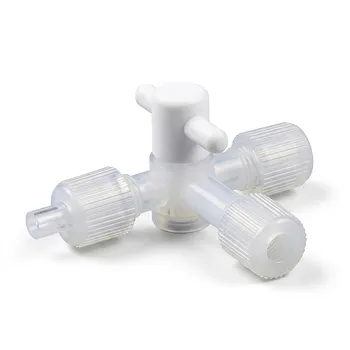
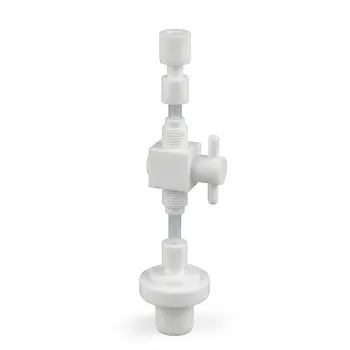
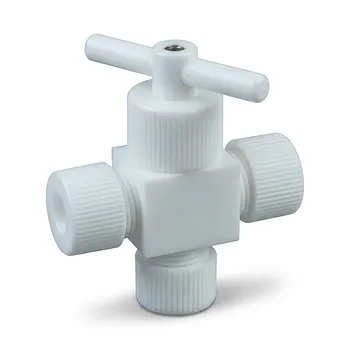
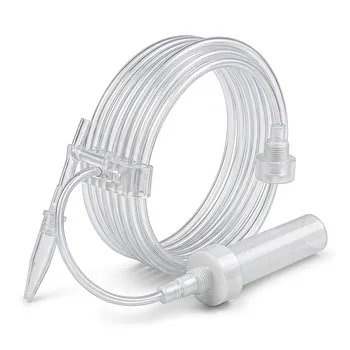
PTFE and PFA are widely suited to high-purity tubing, valves, flare fittings, seals, and other fluid-transfer components. They can convey aggressive fluids while minimizing contamination and maintaining electrical isolation where required.
PFA is often useful when a combination of high purity, transparency, flexibility, and thermal performance is important. PTFE is valued for its chemical resistance, low friction, and broad use in seals, liners, machined parts, and chemically resistant components.
Reaction Vessels and Laboratory Containers
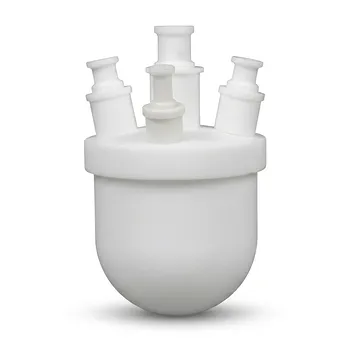
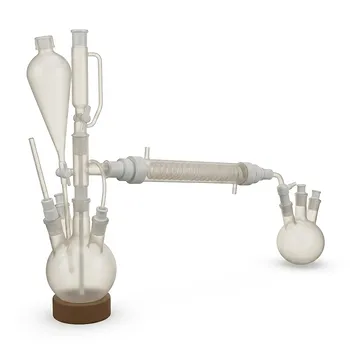
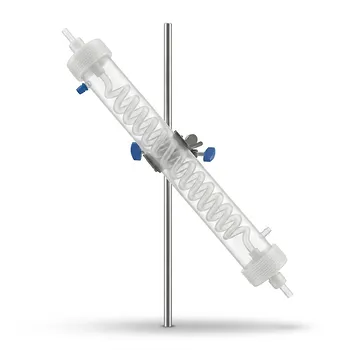
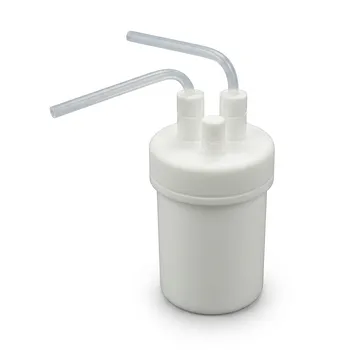
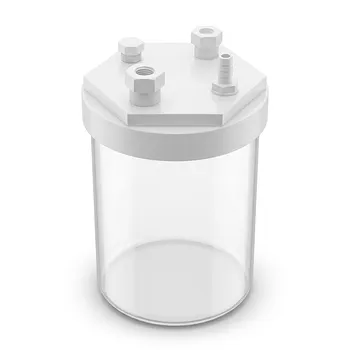
Trace-analysis vessels, digestion containers, beakers, crucibles, and custom reaction apparatus benefit from fluoropolymers because the material is resistant to chemical attack and unlikely to contribute significant contamination to the contents.
This allows laboratories to process aggressive reagents while protecting sample integrity and simplifying cleaning between operations.
Semiconductor Chemical-Handling Equipment
Semiconductor processes may expose tanks, cleaning vessels, transfer lines, and fittings to highly corrosive chemistries, including hydrofluoric-acid-based and other aggressive etching environments. Fluoropolymers help these components maintain structural and cleanliness performance without introducing unwanted ions into the process.
Their insulating properties also support equipment designs in which chemically exposed parts must remain electrically isolated from sensors, heaters, electrodes, or control systems.
Electrochemical and Analytical Systems
In electrolysis, carbon-dioxide reduction, and related electrochemical systems, electrolyte purity can directly affect catalyst behavior and measurement accuracy. PTFE and PFA can reduce the risk of metal-ion leaching that might poison catalysts or alter electrochemical results.
Their combination of chemical resistance, insulation, and low surface adhesion makes them useful for tubing, seals, reactor components, fittings, and sample-contact surfaces.
Understanding the Trade-offs
Chemical Inertness Does Not Mean Universal Immunity
PTFE and PFA resist a very broad range of chemicals, but performance still depends on concentration, temperature, pressure, exposure time, mechanical stress, and the specific grade. Design decisions should be based on validated compatibility data for the actual operating conditions.
Thermal Capability Has Practical Limits
These materials tolerate demanding temperatures, but their mechanical strength and dimensional stability change as temperature increases. A component may remain chemically stable while becoming less rigid, deforming under load, or losing sealing performance.
Thermal design must therefore evaluate both chemical resistance and mechanical behavior.
Mechanical and Joining Constraints Matter
PTFE is known for low friction and non-stick behavior, but those same characteristics can make bonding, coating, and some joining methods difficult. It can also deform under sustained compressive loading, which matters for gaskets, seats, and threaded or flanged connections.
PFA can offer different processing and fabrication advantages, but the selected material must still match the required pressure, flexibility, transparency, and dimensional tolerances.
Purity Depends on the Complete System
Using a high-purity fluoropolymer does not guarantee a high-purity fluid path. Contamination can also come from machining fluids, tooling, packaging, fittings, elastomer seals, assembly environments, or inadequate cleaning procedures.
Material selection must therefore be combined with controlled fabrication, validated cleaning, proper installation, and suitable system qualification.
Making the Right Choice for Your Goal
The best design treats dielectric performance, chemical compatibility, purity, temperature, and mechanical requirements as one integrated specification.
- If your primary focus is fluid purity: Select high-purity PTFE or PFA components with low extractables, smooth fluid-contact surfaces, and documented cleaning and handling controls.
- If your primary focus is electrical isolation: Use fluoropolymers where low dielectric loading and high breakdown strength are needed to separate conductive fluids, electrodes, wiring, or sensitive instrumentation.
- If your primary focus is aggressive chemical service: Verify the exact chemical, concentration, temperature, pressure, and exposure duration against qualified compatibility data before finalizing the material.
- If your primary focus is trace analysis or semiconductor processing: Evaluate the entire fluid path, including seals, fittings, machining, cleaning, and assembly, because system cleanliness is determined by more than the base polymer.
PTFE and PFA are valuable because they protect process chemistry, sample integrity, and electrical performance at the same time.
Summary Table:
| Property | PTFE | PFA |
|---|---|---|
| Chemical Inertness | Excellent | Excellent |
| Dielectric Constant | Very Low | Very Low |
| Electrical Breakdown Strength | High | High |
| Extractables | Very Low (high-purity grades) | Very Low (high-purity grades) |
| Surface Energy | Low (non-wetting) | Low (non-wetting) |
| Maximum Continuous Service Temp | ~260°C | ~260°C |
| Flexibility | Moderate | Better (more flexible) |
| Transparency | Opaque | Translucent |
| FDA Compliance | Yes (some grades) | Yes (some grades) |
Ensure the integrity of your high-purity fluid systems with KINTEK's precision PTFE and PFA components. Our labware, tubing, fittings, and custom-machined parts are designed to meet the rigorous demands of semiconductor and analytical applications. From low-extractable beakers to custom electrochemical cells, we provide the purity and reliability you need. Contact us today to discuss your specific requirements and discover how our fluoropolymer solutions can enhance your processes.
Related Products
- Corrosion Resistant High Purity PFA Valve and Weldable Transparent Tubing for Semiconductor Fluid Transfer
- High Purity PFA PTFE Flare Stop Valves Customizable 2-Way 3-Way Reducing Fluoropolymer Fluid Control Solutions
- Custom PTFE Valve 2-Way 3-Way Corrosion Resistant Low Background Virgin Fluoropolymer Industrial Fluid Control
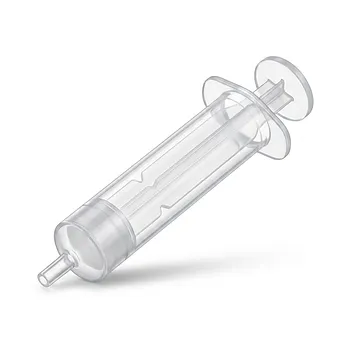
- Corrosion Resistant PFA Syringe Translucent Visual Fluoropolymer Labware 10ml Chemical Handling Tool
- Translucent PFA Bottle Top Dispenser for Corrosion Resistant Chemical Squeeze Extraction
People Also Ask
- Why are high-purity PFA fluid transfer components preferred for battery electrolytes? Ensure Purity & Data Accuracy
- How do high-precision PFA fluid transfer components, such as tubing and fittings, affect the results of continuous-flow synthesis?
- How do PFA fluid transfer components contribute to chemical research precision? Achieve high-purity results today.
- What role do PFA tubing and valves play in high-precision laboratory fluid transfer systems? Ensure Ultra-Pure Results
- What advantages do PTFE and PFA tubing offer for organic solvents? Superior chemical resistance, purity, and high-temperature stability.