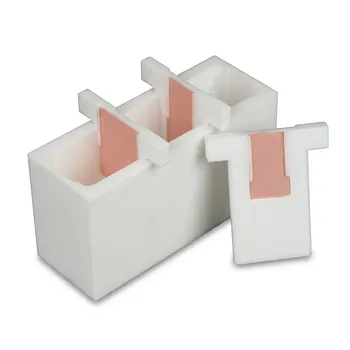
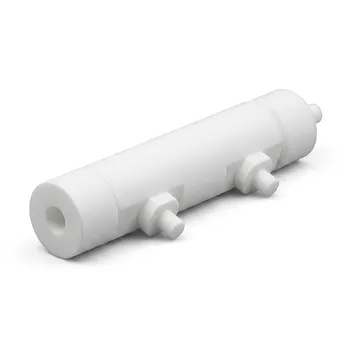
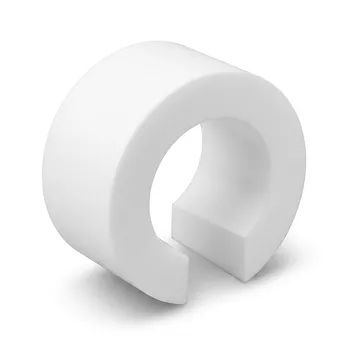
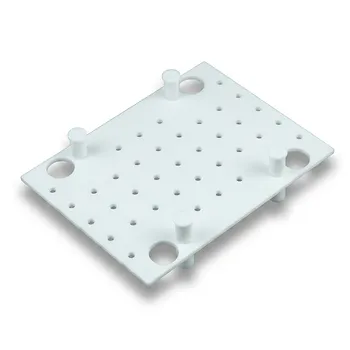
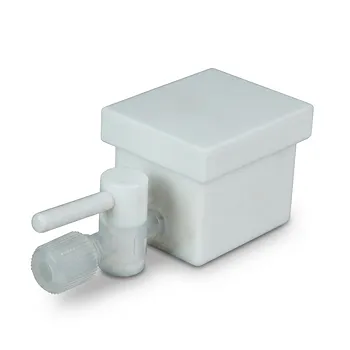
PTFE’s performance in battery testing is driven by its near-universal chemical inertness and extreme molecular stability. These properties allow electrode holders to maintain structural integrity and chemical purity when exposed to the highly aggressive electrolytes, such as lithium hexafluorophosphate in carbonate solvents, found in modern battery chemistries.
Core Takeaway: By utilizing stable carbon-fluorine bonds, PTFE prevents the leaching of contaminants and the swelling of components. This ensures that electrochemical measurements reflect the true behavior of the battery materials rather than interference from the testing hardware.
The Foundation of Chemical Inertness
The Strength of the Carbon-Fluorine Bond
The chemical resilience of PTFE stems from its unique carbon-fluorine (C-F) backbone. This bond is one of the strongest in organic chemistry, creating a protective sheath around the carbon chain that resists attack from most reactive species.
Resistance to Aggressive Electrolytes
Electrode holders must survive exposure to strong acids, bases, and organic solvents without degrading. PTFE remains stable in the presence of aggressive media like sulfuric acid, hydrofluoric acid, and ionic liquids, which would typically compromise other polymers.
Maintaining System Purity and Accuracy
Eliminating Parasitic Reactions
A critical benefit of PTFE is that it does not dissolve or leach ions into the electrolyte. By preventing the introduction of foreign species, PTFE ensures that parasitic reactions do not occur, allowing researchers to isolate the electrochemical performance of the battery cells.
Low Adsorption and Cross-Contamination
PTFE exhibits extremely low adsorption characteristics, meaning molecules from the electrolyte do not easily adhere to its surface. This property is vital for preventing cross-contamination between different experimental runs and ensuring that measurements remain precise over time.
Physical Stability in Harsh Environments
Prevention of Swelling and Dissolution
Many plastics absorb solvents, leading to dimensional swelling that can shift electrode alignment or cause mechanical failure. PTFE’s non-reactive nature ensures it maintains its shape and size, providing long-term stability for continuous testing of lithium-ion or solid-state batteries.
Electrical Insulation and Signal Integrity
Beyond chemical resistance, PTFE is an excellent electrical insulator. This property ensures pure signal transmission by significantly reducing background interference, which is essential for capturing accurate data from three-electrode systems or flow-through cells.
Understanding the Trade-offs
Mechanical Softness and Cold Flow
While chemically superior, PTFE is a relatively soft material compared to engineering plastics like PEEK. Under constant pressure, it can experience "cold flow" or creep, meaning it may slowly deform over time if used in high-torque clamping applications.
Fabrication Limitations
PTFE cannot be processed via standard injection molding; it must be machined or sintered. While this allows for highly customized geometries tailored to thin foils or meshes, it can increase the cost and complexity of manufacturing high-volume components.
Optimizing Electrode Holder Material Selection
When selecting materials for battery testing hardware, the chemical environment must dictate the choice. PTFE is the gold standard when chemical purity is the absolute priority.
- If your primary focus is extreme chemical compatibility: Use PTFE to ensure the holder remains inert against aggressive electrolytes like $LiPF_6$ or concentrated acids.
- If your primary focus is high-precision signal data: Leverage PTFE’s insulating properties to eliminate background noise and parasitic electrochemical signals.
- If your primary focus is experimental versatility: Utilize PTFE's high machinability to create custom holders for varied electrode shapes, such as foils, meshes, or cylinders.
By prioritizing PTFE’s chemical stability, you ensure that your battery testing results are a true reflection of your chemistry rather than a byproduct of your hardware.
Summary Table:
| Key PTFE Property | Benefit to Battery Testing | Impact on Research Accuracy |
|---|---|---|
| Chemical Inertness | Resists aggressive electrolytes (e.g., $LiPF_6$) | Prevents hardware degradation and failure. |
| Low Leaching | No ion migration into the electrolyte | Eliminates parasitic reactions and interference. |
| Non-Adsorption | Minimal surface molecular adhesion | Prevents cross-contamination between experiments. |
| High Insulation | Superior electrical resistivity | Ensures pure signal capture with low background noise. |
| Physical Stability | Resists swelling in organic solvents | Maintains precise electrode alignment and geometry. |
Optimize Your Battery Research with KINTEK’s PTFE Expertise
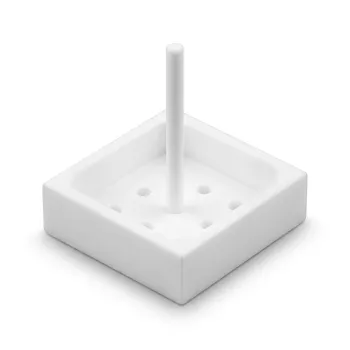
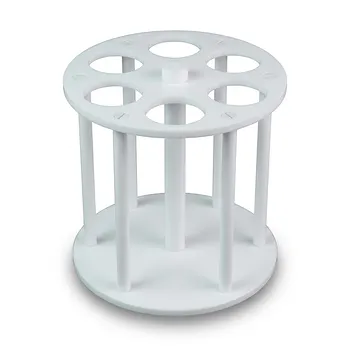
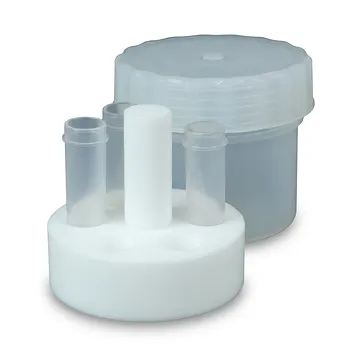
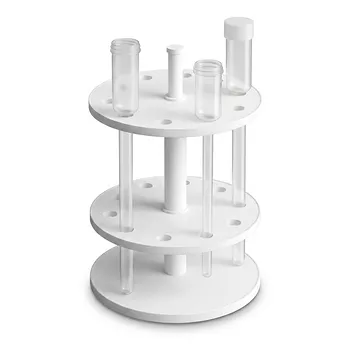
Precision in battery testing starts with the integrity of your hardware. At KINTEK, we specialize in high-performance fluoropolymer solutions tailored for the most demanding laboratory environments. From standard battery testing fixtures, electrode accessories, and electrochemical cells to high-purity trace analysis instruments, we ensure your experiments are shielded from contamination and interference.
Our extensive range includes:
- Core Labware: Beakers, measuring cylinders, crucibles, and reagent/wash bottles.
- Fluid & Sample Handling: PTFE/PFA tubing, valves, fittings, separatory funnels, and filters.
- Specialized Components: Microwave digestion vessels, hydrothermal synthesis liners, and microchannel reactors.
- Custom Fabrication: High-volume orders or complex, non-standard machined parts via end-to-end custom CNC fabrication.
Don’t let material interference compromise your data. Leverage KINTEK’s absolute focus on PTFE and PFA to deliver the accuracy your research deserves.
Contact our engineering team today to discuss your custom lab setup!
Related Products
- Customizable PTFE Seals Filter Holders for Versatile Applications
- High Pressure PTFE Digestion Vessel Inner Cup Holder Custom Corrosion Resistant Low Background Teflon
- PTFE Filter Membrane Holder 47mm Leak Proof Corrosion Resistant Environmental Sampling Unit Customizable
- PTFE Membrane Filter Holder for Aerosol Environmental Monitoring and Low Concentration Particulate Matter Sampling Chemical Resistant Air Quality Analysis Component
- PTFE Filter Membrane Holder for Hydrogen Chloride and Water Filtration 90mm Environmental Sampling Clamp Customizable
People Also Ask
- How are custom PTFE parts used in the automotive sector? Enhance Vehicle Performance & Durability
- What are the five outstanding characteristics of PTFE seals? Engineered for Extreme Performance
- What is the shelf life of PTFE seals? Achieve Long-Term Reliability with Chemically Inert Seals
- What aerospace applications utilize PTFE seals? Ensure Reliability in Extreme Conditions
- What are the benefits of using PTFE seals in demanding industries? Solve Extreme Sealing Challenges