Fluorine makes perfluorinated fluoropolymers chemically stable by combining exceptionally strong C–F bonds with a dense, low-reactivity shield around the carbon backbone. Fluorine’s extreme electronegativity, small size, low polarizability, and tightly held electrons make the resulting polymer difficult for acids, bases, solvents, oxidizers, heat, and radiation to attack. This molecular stability is why materials such as PTFE and PFA are widely used for laboratory vessels, tubing, seals, valves, and machined fluid-handling components.
The central principle is structural protection: fluorine replaces hydrogen throughout the polymer chain, creating a continuous fluorinated envelope that protects the carbon framework while the strong C–F bonds resist cleavage and chemical reaction.
Why Fluorine Creates a Stable Polymer Structure
High electronegativity strengthens the C–F bond
Fluorine is the most electronegative element, so it attracts bonding electrons strongly toward itself. The resulting carbon–fluorine bond is exceptionally strong, with a bond dissociation energy commonly cited at approximately 485 kJ/mol, or about 116 kcal/mol.
Breaking these bonds requires substantial energy. As a result, many chemical reagents that readily attack ordinary carbon–hydrogen or carbon–carbon structures cannot easily initiate degradation in a fully fluorinated polymer.
Small size enables complete fluorination
Fluorine is only slightly larger than hydrogen, allowing fluorine atoms to fit densely around a carbon chain. This makes it possible to replace essentially all carbon-bound hydrogen atoms in polymers such as PTFE and PFA.
That complete substitution matters because partially fluorinated polymers retain C–H bonds and exposed portions of the carbon structure. A fully fluorinated chain presents a more continuous protective surface.
Low polarizability limits chemical interaction
Fluorine’s electrons are held tightly and are not easily displaced. This gives the fluorinated surface low polarizability and low surface energy.
Consequently, many chemicals interact weakly with the polymer surface. The material tends to resist wetting, adhesion, and penetration, which contributes to its characteristic hydrophobic and oleophobic behavior.
How Fluorine Protects the Carbon Backbone
The fluorine atoms form a steric barrier
The carbon backbone provides the polymer’s structural framework, but it is surrounded by fluorine atoms. This dense arrangement acts as a protective envelope that makes it physically and chemically difficult for reactive species to reach the C–C bonds.
The backbone is therefore less exposed than it would be in a hydrocarbon polymer. Chemical attack must first overcome the surrounding fluorinated structure and then disrupt very strong bonds.
Electron withdrawal stabilizes the chain
Fluorine withdraws electron density from carbon through the C–F bonds. This changes the electronic environment of the chain and helps reduce the tendency of the carbon framework to participate in many ordinary oxidation, substitution, or radical reactions.
The C–C backbone is not chemically isolated in an absolute sense, but its electronic and steric environment makes common degradation pathways much less favorable.
Saturation removes common reactive sites
Perfluorinated polymer chains are composed primarily of saturated carbon atoms bonded to fluorine and neighboring carbon atoms. They generally lack the more reactive functional groups, unsaturated bonds, or exposed hydrogen atoms found in many conventional polymers.
This chemically uniform structure reduces opportunities for reagents to initiate chain scission, oxidation, or substitution.
Why This Matters for Laboratory Supplies and Fluid Components
Aggressive reagents cause little material attack
PTFE and PFA are resistant to a broad range of strong acids, strong bases, organic solvents, and oxidizing reagents. Their fully fluorinated structures make them suitable for applications involving corrosive chemicals and reactive process fluids.
This resistance supports the use of fluoropolymers in digestion vessels, reagent bottles, sample containers, electrochemical cells, valves, and fluid-transfer tubing.
Low reactivity helps protect samples
A chemically stable container is important when analyzing trace quantities. If the material reacts with the sample, absorbs analytes, releases additives, or sheds degradation products, the result can be contamination or measurement error.
Perfluorinated fluoropolymers minimize these risks because they have low chemical reactivity and are generally resistant to leaching under appropriate operating conditions.
Low swelling preserves component performance
Solvent absorption can cause polymers to swell, soften, lose dimensional accuracy, or change their sealing behavior. Higher fluorine content generally improves resistance to solvent-induced swelling.
Fully fluorinated materials such as PTFE and PFA therefore provide broader resistance than many partially fluorinated alternatives, particularly when components must maintain stable dimensions in contact with aromatic solvents, fuels, or aggressive chemical mixtures.
Thermal and radiation stability extend service life
The strong, shielded molecular structure also contributes to high thermal resistance and strong UV stability. These properties help fluoropolymer components remain reliable during elevated-temperature processing, sterilization, outdoor exposure, or laboratory procedures involving intense chemical and energetic environments.
Chemical stability and thermal stability are related but not identical. A component can remain chemically inert while still reaching a mechanical or dimensional limit at high temperature.
Understanding the Trade-offs
Chemical resistance is not absolute
No polymer is compatible with every chemical under every condition. Certain highly reactive fluorinating agents, molten alkali metals, some specialized reducing systems, and extreme combinations of temperature and pressure can attack fluoropolymers.
Compatibility must therefore be evaluated against the specific chemical, concentration, temperature, exposure time, pressure, and stress state.
Fluorine content is not the only design variable
Higher fluorine content generally improves resistance to swelling and chemical attack, but polymer architecture, crystallinity, molecular weight, processing history, and additives also influence performance. A product’s actual behavior depends on its formulation and manufacturing quality, not only on its nominal fluorine percentage.
For high-purity work, the grade, cleanliness, fabrication method, and surface condition should be considered alongside the polymer family.
Mechanical limits remain important
PTFE has excellent chemical resistance but relatively low stiffness and a tendency toward creep under sustained load. PFA offers melt-processability and can provide clearer, more easily fabricated components, but it still has application-specific temperature, pressure, and permeation limits.
A chemically compatible tube or seal can still fail if it is overloaded, repeatedly flexed, improperly supported, or exposed to temperatures beyond its mechanical rating.
Low surface energy can complicate handling
The same low surface energy that limits contamination and chemical adhesion can make fluoropolymer components difficult to bond, coat, print, or seal using conventional methods. Special surface treatments, mechanical connections, or carefully selected gasket designs may be required.
Low adhesion can also affect how fluids wet internal surfaces, which may matter in precision metering or cleaning procedures.
Making the Right Choice for Your Goal
Material selection should combine chemical compatibility with temperature, pressure, mechanical, cleanliness, and regulatory requirements.
- If your primary focus is chemical resistance: Choose a fully fluorinated material such as PTFE or PFA and verify compatibility under the actual reagent concentration and operating temperature.
- If your primary focus is sample purity: Select a high-purity grade with controlled processing and minimize surfaces, additives, or connection materials that could contribute contamination.
- If your primary focus is dimensional stability: Evaluate solvent swelling, creep, pressure, thermal cycling, and seal compression rather than relying on chemical compatibility alone.
- If your primary focus is fluid transfer reliability: Match the polymer to the tubing’s pressure, bend, permeation, temperature, and connection requirements as well as to the fluid chemistry.
Fluorine’s atomic properties transform an ordinary carbon chain into a strongly bonded, electronically stable, and chemically shielded structure that enables dependable performance in demanding laboratory environments.
Summary Table:
| Key Factor | Description |
|---|---|
| High electronegativity | Creates exceptionally strong C-F bonds (~485 kJ/mol) that resist chemical attack. |
| Small atomic size | Allows complete fluorine substitution, forming a dense protective layer around the carbon backbone. |
| Low polarizability | Reduces chemical interaction, making surfaces hydrophobic and oleophobic. |
| Steric barrier | Fluorine atoms shield carbon-carbon bonds, limiting access to reactive species. |
| Electron withdrawal | Stabilizes the polymer chain against oxidation and radical reactions. |
| Saturation | Absence of reactive sites like double bonds or hydrogen atoms prevents common degradation pathways. |
| Thermal & radiation stability | Strong bonds and shielding confer high heat and UV resistance, extending service life. |
Unlock the full potential of your lab with KINTEK's high-performance PTFE and PFA products. Our extensive range includes beakers, tubing, valves, and custom CNC-machined parts, all engineered for extreme chemical resistance and purity. Whether you need standard labware or bespoke electrochemical cells, we deliver reliable solutions backed by end-to-end manufacturing expertise. Contact us today to discuss your requirements and experience the KINTEK advantage. Get in touch with our team to ensure your lab operates at peak efficiency and safety.
Related Products
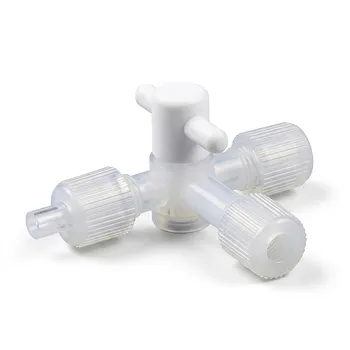
- Corrosion Resistant High Purity PFA Valve and Weldable Transparent Tubing for Semiconductor Fluid Transfer
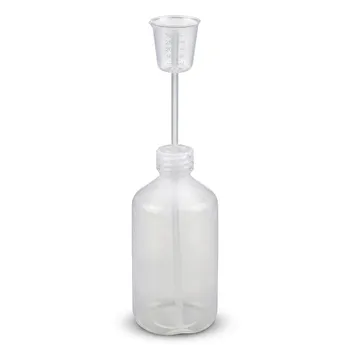
- Translucent PFA Bottle Top Dispenser for Corrosion Resistant Chemical Squeeze Extraction
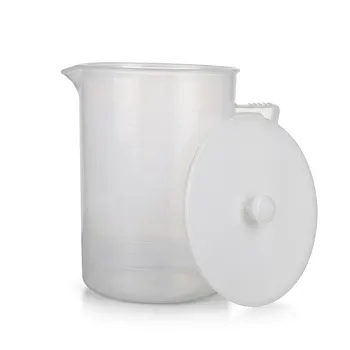
- High Purity PFA Beaker with Handle and Large Capacity Washable Soak Basket Multi Spec Teflon Laboratory Labware
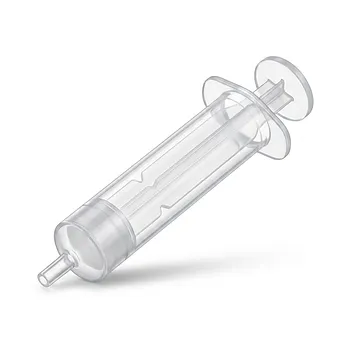
- Corrosion Resistant PFA Syringe Translucent Visual Fluoropolymer Labware 10ml Chemical Handling Tool
- Custom PTFE Flask 250ml High Purity Fluoropolymer Laboratory Vessel for Chemical Research
People Also Ask
- Why are high-purity PFA fluid transfer components preferred for battery electrolytes? Ensure Purity & Data Accuracy
- How do high-precision PFA fluid transfer components, such as tubing and fittings, affect the results of continuous-flow synthesis?
- How do PFA fluid transfer components contribute to chemical research precision? Achieve high-purity results today.
- What role do PFA tubing and valves play in high-precision laboratory fluid transfer systems? Ensure Ultra-Pure Results
- What advantages do PTFE and PFA tubing offer for organic solvents? Superior chemical resistance, purity, and high-temperature stability.