Surface wetting and capillary behavior in PTFE tubing are dictated by its extreme hydrophobicity and low surface energy. For aqueous solutions, PTFE creates a "negative capillary pressure" that resists spontaneous entry and suppresses capillary rise. This unique interaction ensures that fluids move only under applied pressure, minimizing drag and preventing the accidental migration of reagents in precision systems.
PTFE’s high contact angle (typically >100°) and low surface energy serve as a functional barrier against aqueous wetting, enabling precise control over fluid transport while preventing contamination through its non-stick, low-friction interface.
The Mechanics of Wetting and Capillary Pressure
The Impact of High Contact Angles
PTFE is inherently hydrophobic, meaning it repels water and aqueous solutions. This results in a water contact angle greater than 100°, which prevents the liquid from "wetting" the internal surface of the capillary.
Negative Capillary Pressure
In standard materials, capillary action pulls liquids into small tubes; however, PTFE’s surface properties create negative capillary pressure. This phenomenon suppresses the spontaneous rise of aqueous liquids, requiring external force to initiate and maintain flow.
Wetting Variations with Non-Polar Liquids
While PTFE repels water, its interaction with non-polar liquids is different. Non-polar fluids exhibit improved wetting characteristics, which can significantly alter the flow rate and pressure requirements compared to aqueous counterparts.
Performance Implications for Fluid Transport
Minimizing Boundary-Layer Drag
The combination of a smooth surface finish (often Ra < 0.2 µm) and low surface energy reduces friction. This minimizes boundary-layer drag, allowing for consistent, laminar flow regimes even in extremely narrow IDs ranging from 0.1 mm to 5 mm.
Prevention of Matter Buildup
PTFE’s non-stick properties prevent the accumulation of viscous or particulate matter on the tube walls. This is critical in applications like microfluidics, where it minimizes "carry-over" between different experimental stages or reagents.
Dimensional Stability and Low Absorption
With a water absorption rate of less than 0.01%, PTFE does not swell when exposed to fluids. This preserves the internal diameter and concentricity of the tubing, ensuring that flow calculations remain accurate over long-term use.
Specialized Roles in Separation and Monitoring
Gas-Liquid Separation Capabilities
In porous or membrane variants of PTFE capillaries, the high liquid breakthrough pressure allows vapors to pass through the structure while retaining the liquid phase. This makes the material indispensable for membrane distillation and degassing applications.
Protection of Sensitive Reagents
The chemical inertness of PTFE prevents surface-induced denaturation or contamination of sensitive reagents. In microfluidic systems, this ensures that the chemical integrity of the sample is maintained from the point of entry to the reaction chamber.
Optical Monitoring Compatibility
Certain grades of PTFE capillary tubing are optically transparent. This allows researchers to perform real-time visual or spectroscopic monitoring of fluids without sacrificing the chemical resistance or hydrophobic benefits of the material.
Understanding the Trade-offs and Limitations
The Challenge of Cold Flow (Creep)
Because PTFE lacks molecular cross-linking, it is susceptible to creep or cold flow. Under sustained mechanical stress or continuous pressure, the tubing may permanently deform, potentially altering the capillary's flow characteristics.
Impact of Processing on Performance
The final properties of the tubing are heavily dependent on the sintering method and cooling rates used during manufacturing. Inconsistent processing can lead to variations in crystallinity, which may affect the uniformity of the hydrophobic barrier.
Surface Roughness and Friction
While smooth surfaces are ideal for non-stick performance, the coefficient of friction is also influenced by the mating material. For components moving against PTFE, a moderately polished surface (Ra 0.2–0.4 μm) is required to avoid "stick-slip" behavior or excessive wear.
How to Optimize PTFE Tubing for Your Goal
When integrating PTFE capillary tubing into a technical system, your choice should be governed by the specific fluid dynamics of your application.
- If your primary focus is Aqueous Fluid Control: Rely on the negative capillary pressure to prevent spontaneous flow, but ensure your pump system can overcome the initial resistance.
- If your primary focus is High-Pressure Durability: Select heavy-wall tubing or external braiding to mitigate the effects of cold flow and prevent dimensional deformation over time.
- If your primary focus is Analytical Precision: Prioritize tubing with high concentricity (>95%) and a smooth internal finish to ensure uniform flow and minimal reagent carry-over.
- If your primary focus is Gas-Liquid Separation: Utilize specialized porous PTFE grades where the high breakthrough pressure of the liquid phase allows for efficient vapor transport.
By mastering the balance between PTFE’s hydrophobic resistance and its mechanical limitations, you can ensure high-performance fluid transport in the most demanding environments.
Summary Table:
| Feature | Physical Effect | Functional Benefit |
|---|---|---|
| High Hydrophobicity | >100° Contact angle | Resists wetting and aqueous migration |
| Negative Capillary Pressure | Suppresses spontaneous rise | Enables precise, pressure-driven flow control |
| Low Surface Energy | Minimizes boundary-layer drag | Ensures consistent laminar flow regimes |
| Non-stick Interface | Prevents particulate buildup | Reduces carry-over and cross-contamination |
| Low Absorption (<0.01%) | Zero swelling in fluids | Maintains dimensional stability and ID accuracy |
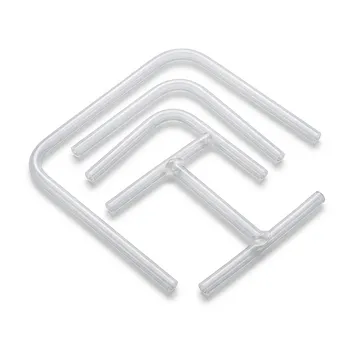
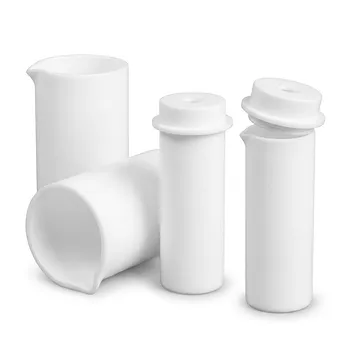
Elevate your laboratory’s fluid precision with KINTEK’s high-performance fluoropolymer solutions. From everyday basic labware like beakers, measuring cylinders, and reagent bottles to advanced fluid transfer components including precision PTFE/PFA tubing, fittings, and valves, we provide the tools necessary for absolute chemical integrity.
Backed by end-to-end custom CNC fabrication, KINTEK is equipped to deliver everything from high-volume consumables (O-rings, filters, spatulas) to bespoke setups like microchannel reactors, electrochemical cells, and microwave digestion vessels. Our exclusive focus on high-performance materials ensures your most demanding trace analysis and sample prep applications remain contamination-free. Contact us today to discuss your custom project or bulk supply needs!
Related Products
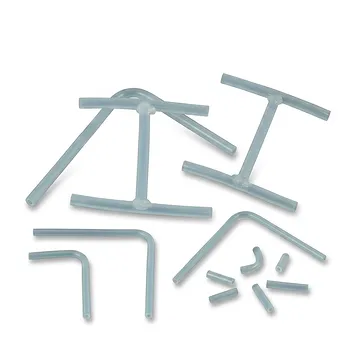
- High Performance PFA Coiled Spring Tubing and Custom PTFE Fabrication Services with Welded Fittings and Precision Bent Components
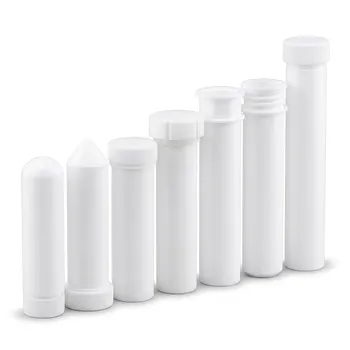
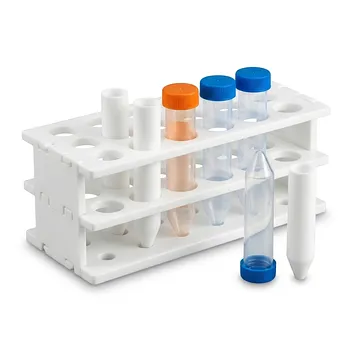
- Custom High Purity PTFE Digestion Tubes and Centrifuge Tubes for Trace Metal Analysis
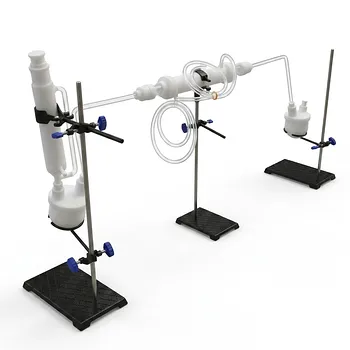
- Custom PTFE Condenser Tube Hydrofluoric Acid Resistant Reflux Device Constant Pressure Separatory Funnel
- High Purity PTFE Digestion Tubes and Custom Centrifuge Tubes 100ml for Trace Analysis and Chemical Digestion
- Custom PTFE Condenser Tube Reflux Reaction Condensation Purification Device Semiconductor Chemical Lab Equipment
People Also Ask
- What are the technical advantages of high-precision PFA tubing in MXene production? Maximize Purity and Yield.
- What technical advantages do PFA tubing and fittings offer? Master Precision Fluid Transfer and Flow Chemistry
- What are the technical advantages of high-quality PFA tubing? Achieve Ultimate Purity and Precision in Fluid Handling
- What are the key benefits of PTFE in custom fabrication? Unlock Performance in Extreme Conditions
- What fabrication services are available for PTFE? Shearing, Stamping, Laser Cutting, Molding & Machining