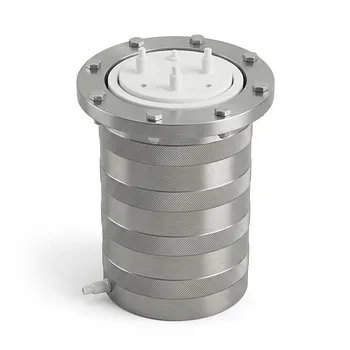
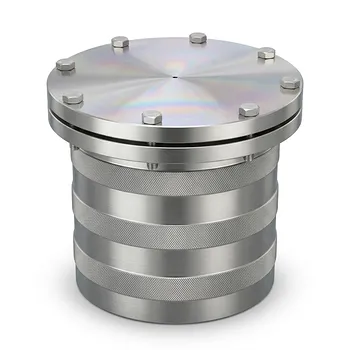
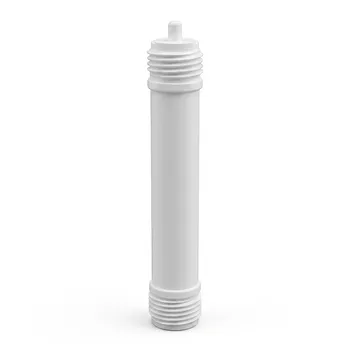
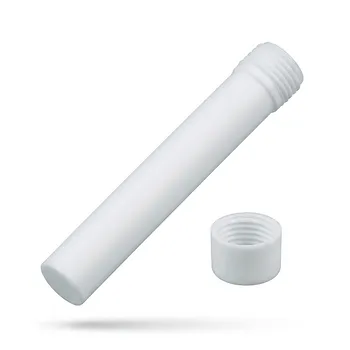
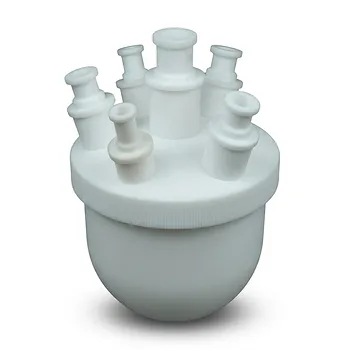
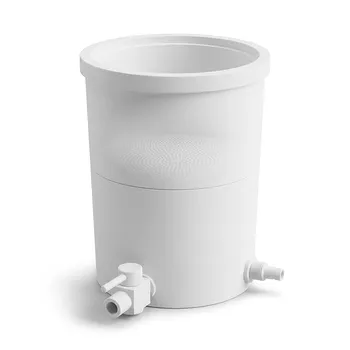
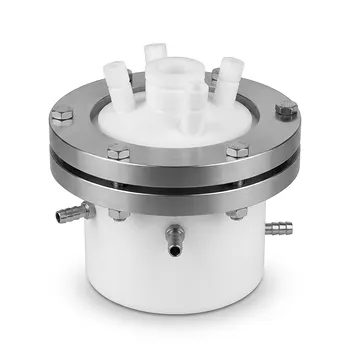
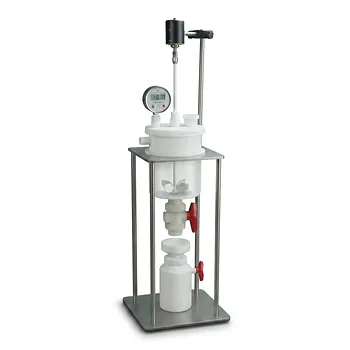
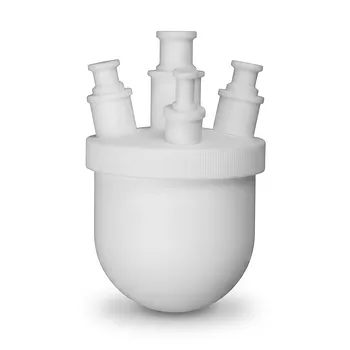
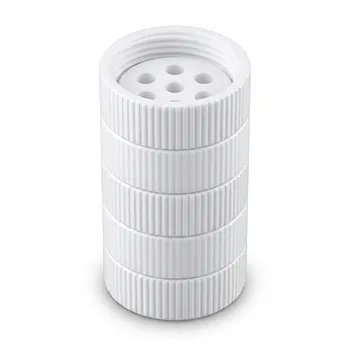
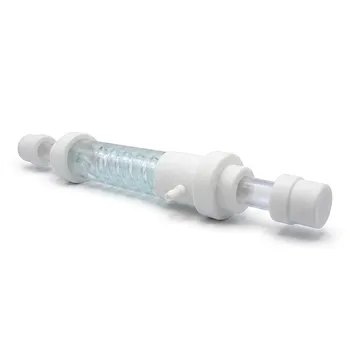
Polytetrafluoroethylene (PTFE) liners serve as the primary defensive barrier in fluoride-mediated zeolite synthesis, safeguarding both the equipment and the chemical integrity of the product. They prevent high-temperature hydrogen fluoride (HF) from corroding stainless steel vessels while ensuring that metal ions do not leach into the reaction, which is vital for maintaining the purity and reproducibility of the zeolite framework.
Core Takeaway: PTFE liners are essential components that isolate corrosive fluoride media from metal reactor walls, preventing structural equipment failure and ensuring the high-purity crystallization required for advanced zeolite frameworks.
Protecting Structural Integrity through Corrosion Resistance
Mitigation of Hydrogen Fluoride Erosion
Fluoride-mediated synthesis often involves hydrogen fluoride (HF) or fluoride ions, which are exceptionally aggressive toward stainless steel. PTFE liners act as a critical chemical barrier, shielding the metal walls of the reaction vessel from severe corrosion.
Extension of Equipment Service Life
By preventing direct contact between the acidic reaction medium and the autoclave shell, these liners significantly extend the service life of expensive stainless steel hardware. Without this protection, the structural integrity of the pressure vessel would rapidly degrade.
Safety in High-Pressure Environments
The liner ensures that the outer metal shell remains structurally sound to handle the high pressures generated during hydrothermal synthesis. This isolation is a fundamental safety requirement when working with volatile or hazardous mineralizing agents at elevated temperatures.
Ensuring Product Purity and Crystalline Quality
Prevention of Metal Ion Leaching
One of the most significant threats to zeolite quality is the leaching of metal ions from the vessel body into the reaction system. PTFE’s chemical inertness prevents these impurities from entering the solution, where they could otherwise incorporate into the zeolite framework and alter its properties.
Preservation of Framework Integrity
The isolation provided by high-purity PTFE or PFA (perfluoroalkoxy) materials is essential for the synthesis of specialized structures, such as high-germanium MFI (GeMFI) zeolites. These systems require a pristine environment to ensure the correct crystallization of the framework without interference from external metallic contaminants.
Consistency and Reproducibility
A stable physicochemical environment is mandatory for achieving morphological uniformity and consistent crystal growth. High-quality, precision-machined liners provide the reliable sealing and internal stability necessary to repeat synthesis results across multiple batches.
Enhancing Yield through Surface Properties
Low Surface Energy and Product Recovery
PTFE possesses an extremely low surface energy, which results in a smooth internal surface that resists material adhesion. This characteristic facilitates the easy detachment and collection of the zeolite crystals once the reaction is complete.
Maximizing Synthesis Yield
Because the product does not stick to the walls of the liner, synthesis yield is significantly improved. This ease of recovery also ensures that the final sample is representative of the entire batch, rather than being biased by material lost to vessel fouling.
Facilitating Clean-up and Maintenance
The non-stick nature of the liner simplifies the cleaning process between runs. This reduces the risk of cross-contamination from previous synthesis experiments, further bolstering the quality of subsequent batches.
Understanding the Trade-offs and Limitations
Temperature Constraints
While PTFE is highly resistant to chemicals, it has a functional temperature ceiling, typically around 170°C to 200°C for prolonged hydrothermal use. Exceeding these temperatures can lead to liner deformation, which may compromise the seal and risk damage to the outer autoclave.
Potential for Mechanical Wear
Over time, repeated cycles of heating and cooling can cause the PTFE to "creep" or lose its shape. Users must regularly inspect liners for thinning or pitting, as a breached liner can lead to catastrophic corrosion of the stainless steel shell within a single reaction cycle.
Pressure Limitations
The liner itself does not provide the primary pressure resistance; it relies on the metal outer shell for structural support. If the liner is not sized correctly for the vessel, it may collapse or leak under high-pressure conditions, negating its protective benefits.
How to Apply This to Your Project
To maximize the safety and quality of your fluoride-mediated zeolite synthesis, consider the following recommendations:
- If your primary focus is maximizing purity: Utilize high-purity PFA or precision-machined PTFE liners to eliminate metal ion leaching and ensure a chemically inert environment.
- If your primary focus is equipment longevity: Regularly inspect liners for signs of wear or deformation to prevent fluoride-induced corrosion of the stainless steel autoclave body.
- If your primary focus is high-yield recovery: Prioritize liners with a high-quality, smooth internal finish to reduce material adhesion and simplify product collection.
By correctly utilizing PTFE liners as a chemical and physical shield, researchers can safely navigate the complexities of fluoride-mediated synthesis while producing high-quality, reproducible zeolite materials.
Summary Table:
| Key Feature | Benefit to Zeolite Synthesis | Practical Outcome |
|---|---|---|
| Corrosion Resistance | Shields metal from HF & aggressive ions | Prevents autoclave failure & extends equipment life |
| Chemical Inertness | Eliminates metal ion leaching | Maintains framework purity & crystal integrity |
| Non-Stick Surface | Prevents crystal adhesion to vessel walls | Maximizes synthesis yield & simplifies recovery |
| High Purity PFA/PTFE | Provides a pristine reaction environment | Ensures consistent morphological uniformity |
| Thermal Isolation | Protects structural outer shell | Maintains safety in high-pressure hydrothermal runs |
Elevate Your Research with High-Performance Fluoropolymer Solutions
Maximize the safety and reproducibility of your chemical synthesis with KINTEK’s precision-engineered labware. From high-purity PTFE and PFA liners for hydrothermal synthesis and microwave digestion to custom CNC-fabricated components, we provide the critical barriers your research demands.
Whether you require everyday basics (beakers, crucibles, reagent bottles), comprehensive fluid transfer tools (tubing, valves, fittings), or advanced reaction apparatus like bespoke electrochemical cells and microchannel reactors, KINTEK manufactures it all. Our absolute focus on high-performance fluoropolymers ensures your lab is equipped with the best-in-class materials for even the most aggressive environments.
Ready to optimize your lab setup? Contact us today to explore our end-to-end custom fabrication services and discover how KINTEK can deliver everything from high-volume consumables to complex, non-standard machined parts tailored to your specific project needs.
References
- Joaquin Martínez-Ortigosa, Teresa Blasco. New insights into fluoride's role in MFI zeolites: unveiling the link between location and synthesis conditions. DOI: 10.1039/d4qi03001j
This article is also based on technical information from Kintek Knowledge Base .
Related Products
- PTFE Lined High Pressure Digestion Vessel 50ml High Temperature Hydrothermal Synthesis Tank
- High Pressure Custom TFM Reactor Stainless Steel Outer Vessel PTFE Inner Cup for Corrosive Synthesis
- Custom TFM Reaction Vessel with Stainless Steel Jacket and PTFE Inner Cup for High Corrosion Resistance
- High Purity PTFE Microwave Digestion Vessel for Soil and Food Analysis Acid Resistant Fluoropolymer Sample Preparation Liners
- High Purity TFM Microwave Digestion Vessels PTFE Acid Evaporation Liners Domestic GT-400 Equivalent Laboratory Reaction Containers
People Also Ask
- What are the benefits of using a PTFE-lined vessel for carbon-sulfur cathode treatment? Maximize Purity & Performance
- Why are PTFE-lined pressure digestion vessels required for the preparation of Ag/CeO2 catalysts? Purity & Performance
- What is the function of high-pressure PTFE digestion vessels in mineral analysis? Optimize Sample Mineralization
- What safety features are typically incorporated into high-pressure PTFE digestion vessel designs? Ensure Lab Safety
- What is the function of PTFE lined high-pressure vessels in g-C3N4 synthesis? Achieve High-Purity Material Growth