Microwave reaction chambers facilitate magnetic transformation by providing a high-energy environment for instantaneous thermal activation, typically achieved in as little as 10 seconds. This rapid energy transfer triggers the dehydration of manganese oxyhydroxide (MnOOH) and elevates the oxidation state of manganese, converting non-magnetic precursors into a ferrimagnetic $\alpha$-MnO2 phase.
The core advantage of microwave activation lies in its ability to induce a precise phase transition through volumetric heating, which ensures that the resulting magnetic material is uniformly distributed on the expanded graphite (EG) substrate to optimize electromagnetic performance.
The Mechanism of Instantaneous Thermal Activation
Rapid Dehydration and Phase Transition
The reaction chamber focuses high-energy irradiation to cause an almost immediate temperature spike within the precursor material. This instantaneous thermal energy is critical for driving the dehydration of manganese oxyhydroxide (MnOOH) precursors. Without this rapid energy input, the transition to the ferrimagnetic $\alpha$-MnO2 state would be slower and less efficient, often resulting in secondary, non-desirable phases.
Elevating the Manganese Oxidation State
During the 10-second irradiation window, the microwave environment facilitates a shift in the chemical environment of the manganese ions. The process increases the oxidation state of manganese, which is the fundamental driver behind the change from a non-magnetic precursor to a magnetically active material. This shift is vital for improving the impedance matching characteristics of the final EG@MO composite.
Ensuring Structural Integrity Through Volumetric Heating
Penetrative Energy Distribution
Unlike traditional ovens that rely on surface-to-core conduction, microwave chambers utilize the penetrative nature of microwaves. This allows for simultaneous temperature increases both inside and outside the reaction liquid. By heating the entire volume of the material at once, the system eliminates the thermal gradients that typically cause structural defects.
Preventing Localized Overheating
A significant benefit of the reaction chamber is its ability to prevent localized hotspots that lead to inconsistent crystal growth. Because the energy is distributed evenly, the manganese oxide nanowires grow uniformly and in-situ on the surface of the expanded graphite. This precision prevents the agglomeration (clumping) of particles that often plagues traditional thermal processing.
Understanding the Trade-offs and Pitfalls
The Risk of Over-Irradiation
While rapid heating is a strength, it also presents a narrow window for success. Extending the irradiation time beyond the optimal 10-second threshold can lead to over-oxidation or the destruction of the expanded graphite’s porous structure. Precise control over the timing is required to maintain the balance between magnetic strength and structural surface area.
Sensitivity to Precursor Concentration
The efficiency of the magnetic transformation is highly dependent on the dielectric properties of the precursor mixture. If the ratio of manganese to expanded graphite is not calibrated, the material may absorb energy too slowly or too quickly. This can result in an incomplete phase transformation, leaving non-magnetic residuals that degrade the material's overall performance.
How to Apply This to Your Project
To achieve the best results when using microwave reaction chambers for material synthesis, consider your specific performance targets:
- If your primary focus is Maximum Magnetic Susceptibility: Prioritize the 10-second high-energy burst to ensure the complete conversion of MnOOH to the ferrimagnetic $\alpha$-MnO2 phase.
- If your primary focus is Uniform Nanostructure: Focus on the volumetric heating stability of the chamber to ensure nanowires grow in-situ without agglomeration on the graphite surface.
- If your primary focus is Impedance Matching: Optimize the oxidation state by fine-tuning the irradiation intensity to balance the electrical conductivity of the graphite with the magnetic properties of the oxide.
The use of a microwave reaction chamber transforms a slow chemical process into a precision engineering event, creating high-performance magnetic composites with unmatched speed and uniformity.
Summary Table:
| Feature | Microwave Activation Benefit | Impact on EG@MO Composite |
|---|---|---|
| Heating Speed | Instantaneous thermal activation (10s) | Rapid dehydration of MnOOH to $\alpha$-MnO2 |
| Energy Distribution | Volumetric/Penetrative heating | Uniform temperature eliminates thermal gradients |
| Structural Control | In-situ nanowire growth | Prevents particle agglomeration on graphite |
| Chemical State | Elevated Manganese oxidation state | Transforms non-magnetic to ferrimagnetic phase |
| Efficiency | Focused high-energy irradiation | Optimizes impedance matching characteristics |
Elevate Your Microwave Synthesis with KINTEK Precision
High-performance research requires labware that can withstand demanding thermal and chemical environments. KINTEK specializes in manufacturing a comprehensive range of laboratory supplies crafted from premium PTFE and PFA, specifically designed for high-purity trace analysis and advanced reaction setups.
Whether you need standard consumables like microwave digestion vessels, beakers, and reagent bottles, or complex custom CNC-fabricated reaction chambers and microchannel reactors, KINTEK provides the durability and purity your magnetic material synthesis demands. From fluid transfer components (tubing, valves) to electrode accessories and battery testing fixtures, we deliver end-to-end solutions for your most challenging projects.
Ready to optimize your laboratory setup? Contact KINTEK today to discuss your custom requirements and discover how our fluoropolymer expertise can drive your research forward.
References
- Junyu Lu, Renchao Che. Microwave‐Driven Dielectric‐Magnetic Regulation of Graphite@α‐MnO <sub>2</sub> Toward Enhanced Electromagnetic Wave Absorption. DOI: 10.1002/advs.202504489
This article is also based on technical information from Kintek Knowledge Base .
Related Products
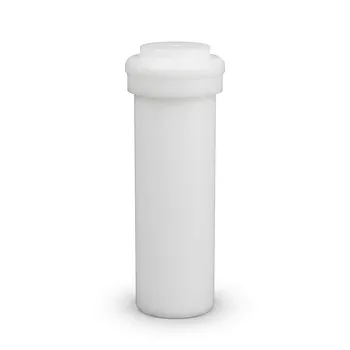
- High Purity TFM Microwave Digestion Vessels PTFE Acid Evaporation Liners Domestic GT-400 Equivalent Laboratory Reaction Containers
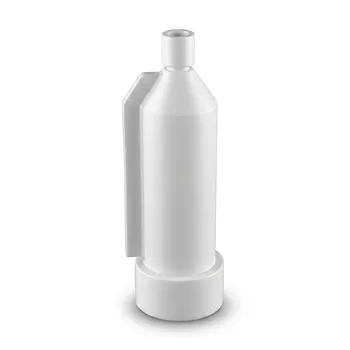
- Custom High Purity TFM Microwave Digestion Vessel 100ml for Analytical Laboratory Sample Preparation
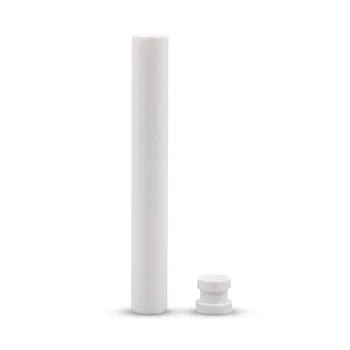
- High Performance PTFE Microwave Digestion Vessel Replacement Bespoke Fluoropolymer Acid Digestion Tank Intelligent Sample Preparation Labware
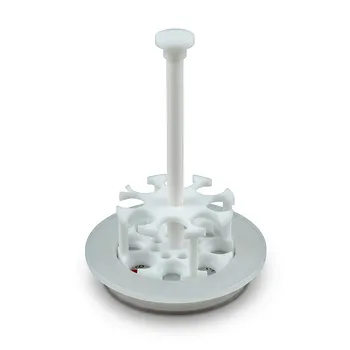
- High Purity PTFE Microwave Digestion Vessel Replacement for GT-400 Systems Acid Reflux and Sample Preparation
- High Purity TFM Microwave Digestion Vessels for Trace Analysis and Custom Sample Preparation Systems
People Also Ask
- How does the dielectric property of PTFE benefit microwave-assisted digestion? Unlock Rapid and Uniform Sample Heating
- What are the advantages of using microwave digestion vessels for environmental analysis? Boost speed and sample accuracy.
- What safety features are commonly integrated into microwave digestion vessels? Ensuring High-Pressure Laboratory Safety
- What are the advantages of using microwave digestion vessels? Optimize EG@MO synthesis with superior thermal control.
- How do microwave digestion vessels support pharmaceutical elemental impurity testing? Achieve Precise USP Compliance