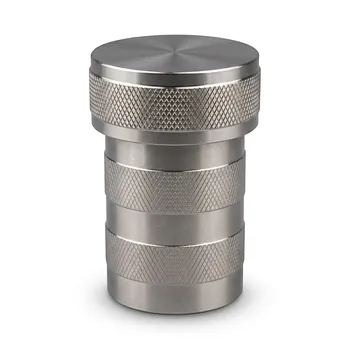
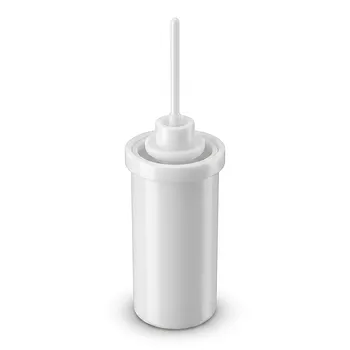
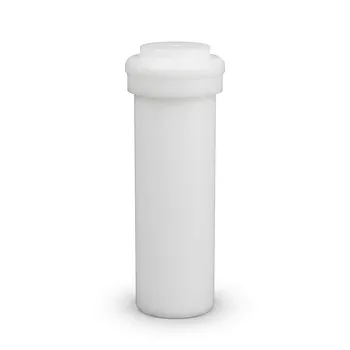
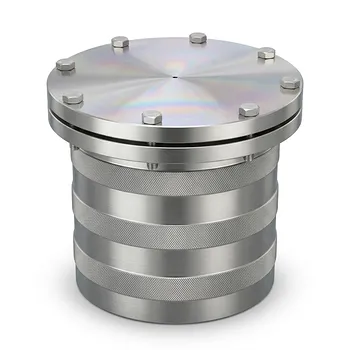
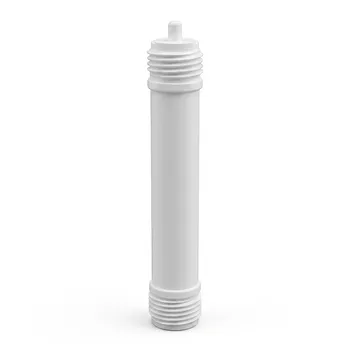
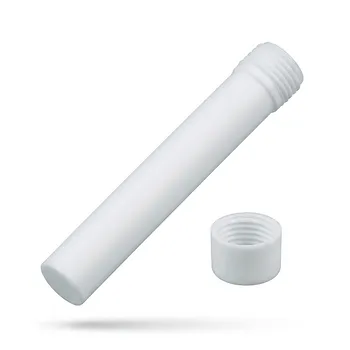
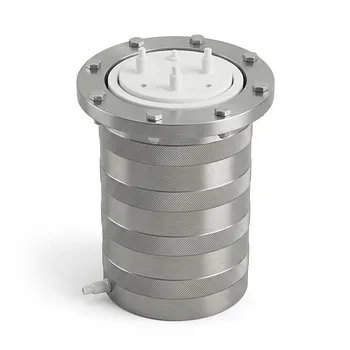
Hydrothermal synthesis liners facilitate the growth of metal compounds on MXene by creating a sealed, high-pressure environment that increases precursor reactivity and solubility. These liners allow chemical reactions to occur at temperatures far exceeding the normal boiling point of solvents, ensuring that metal oxides or sulfides nucleate uniformly and anchor firmly onto the MXene nanosheets.
Core Takeaway: The use of high-purity liners within hydrothermal reactors provides the subcritical conditions necessary to overcome the physical barriers of MXene layering, resulting in high-surface-area hybrid structures with superior charge transfer capabilities.
The Role of Subcritical Environments
Increasing Precursor Solubility and Reactivity
The primary function of the liner is to maintain a controlled, high-temperature environment that transforms the behavior of liquid solvents. This state significantly increases the kinetic energy and solubility of metal precursor molecules, allowing them to interact more aggressively with the MXene surface.
Promoting Uniform Nucleation and Anchoring
Under these high-pressure conditions, metal compounds achieve a more stable and uniform nucleation across the MXene layers. The pressure ensures that these nanoparticles do not simply rest on the surface but achieve a firm anchoring, which is critical for the stability of the resulting hybrid material.
Overcoming Structural Barriers in MXenes
Inhibiting Layer Restacking
MXene nanosheets have a natural tendency to restack due to interplanar Van der Waals forces, which can hide active sites. The hydrothermal environment facilitates the insertion of intercalants, physically pushing the layers apart and maintaining a high specific surface area for the metal compounds to grow.
Facilitating In-Situ Growth and Intercalation
The high pressure within the liner provides the energy required to overcome Van der Waals forces, allowing organic intercalants to enter the layers. This facilitates in-situ growth of secondary materials, such as molybdenum disulfide (MoS2), directly within the MXene structure.
Chemical Integrity and Interface Quality
Corrosion Resistance of PTFE and PFA
Hydrothermal liners are typically made of high-purity PTFE or PFA, materials chosen for their ability to resist highly corrosive media. This allows researchers to use aggressive precursors and solvents at elevated temperatures without damaging the reactor or introducing impurities.
Maintaining High-Purity Reaction Interfaces
Because the liners provide a clean reaction interface, they prevent metallic contamination from the outer autoclave shell. This purity is essential for creating high-quality heterojunctions between MXene and semiconductors, which directly improves the efficiency of interface charge transfer.
Understanding the Trade-offs
Temperature and Pressure Limitations
While PTFE and PFA liners are robust, they have strict thermal limits (typically 200°C to 250°C) that must not be exceeded to avoid liner deformation or toxic off-gassing. Operating near these limits requires precise control to prevent the buildup of excessive internal pressure that could lead to reactor failure.
Potential for Over-Growth
Extended reaction times in a hydrothermal environment can lead to the over-growth of metal particles, which may eventually block the ion diffusion channels of the MXene. Balancing the reaction duration is critical to maintaining the balance between high loading and efficient ion diffusion.
Applying This to Your Material Synthesis
Making the Right Choice for Your Goal
To maximize the effectiveness of your hydrothermal synthesis, consider the following strategic approaches:
- If your primary focus is high crystallinity: Use higher temperatures within the rated safety limit of your PTFE liner to promote the formation of well-defined crystal structures in the metal compounds.
- If your primary focus is preventing MXene restacking: Ensure the use of appropriate intercalants during the hydrothermal process to maintain open channels for ion diffusion.
- If your primary focus is heterojunction efficiency: Prioritize the use of high-purity PFA liners to ensure a clean interface, which minimizes charge trapping at the junction between the MXene and the semiconductor.
By masterfully controlling the hydrothermal environment through the use of specialized liners, you can engineer MXene hybrids with the precise structural and electronic properties required for advanced technical applications.
Summary Table:
| Feature | Function in MXene Synthesis | Benefit to Material Performance |
|---|---|---|
| High-Pressure Environment | Increases precursor solubility and kinetic energy | Faster reaction rates and complete transformation |
| Controlled Nucleation | Promotes uniform anchoring on nanosheets | Stable hybrid structures with high active sites |
| Intercalation Support | Overcomes Van der Waals forces between layers | Prevents restacking; maintains high surface area |
| Fluoropolymer Purity | Provides a clean, corrosion-resistant interface | Prevents contamination; improves charge transfer |
| Thermal Stability | Maintains subcritical solvent conditions | Enables in-situ growth of secondary materials |
Elevate Your Material Research with KINTEK’s Precision Fluoropolymer Solutions
Achieving the perfect MXene hybrid requires more than just the right chemistry—it demands a high-purity environment. KINTEK specializes in manufacturing premium laboratory supplies crafted exclusively from high-performance PTFE and PFA.
From essential hydrothermal synthesis liners and microwave digestion vessels to everyday basic labware like beakers, reagent bottles, and centrifuge tubes, our products ensure zero contamination for your most sensitive experiments. Whether you need standard consumables or complex, custom CNC-machined parts and bespoke laboratory setups, our end-to-end fabrication capabilities deliver exactly what your research requires.
Ready to optimize your synthesis workflow? Contact KINTEK today to discuss your custom requirements!
References
- Umme Kalsoom, Malik Maaza. MXene-based hybrid composites for lithium-ion batteries: advances in synthesis strategies and electrochemical performance. DOI: 10.1007/s11581-025-06628-z
This article is also based on technical information from Kintek Knowledge Base .
Related Products
- High Temperature Corrosion Resistant Hydrothermal Synthesis Reactor with TFM Inner Liner and Straight Cylinder Design
- PTFE Lined High Pressure Digestion Vessel 50ml High Temperature Hydrothermal Synthesis Tank
- Custom High Purity TFM Microwave Digestion Vessel 100ml Capacity Compatible Replacement Liner for Professional Analytical Instruments
- High Purity TFM Microwave Digestion Vessels for Trace Analysis and Custom Sample Preparation Systems
- Custom TFM Reaction Vessel with Stainless Steel Jacket and PTFE Inner Cup for High Corrosion Resistance
People Also Ask
- What is the role of a corrosion-resistant reactor in the synthesis of lignin-based carbon dots? Ensure Maximum Purity
- What are the technical advantages of using hydrothermal synthesis reactors for advanced electronic & optical nanomaterials?
- How does a hydrothermal synthesis reactor facilitate the production of crystalline materials with tailored morphologies? Precision Crystal Growth
- Why is the sealing reliability of a hydrothermal synthesis reactor critical for 24-hour cycles? Ensure Nano-Precision
- What role do hydrothermal synthesis reactors play in CQD preparation? Achieve High-Purity Nanomaterial Synthesis