Hybrid sol-gel coatings with fluoropolymer particles are best viewed as a high-temperature, hard-surface alternative to solid PTFE or PFA, not a complete replacement for them. Their ceramic-like silicon-alkoxide matrix can tolerate temperatures approaching 450°C and resist scratching, while embedded PTFE particles contribute reduced surface energy and non-stick behavior. Solid PTFE and PFA generally provide better chemical inertness, lower friction, and more reliable non-wetting performance, but their continuous operating range is typically limited to about 260°C.
Hybrid sol-gel coatings are strongest when laboratory equipment needs a hard, thermally resistant surface with some fluoropolymer-derived release properties. Solid PTFE or PFA remain preferable when maximum chemical inertness, low friction, purity, or bulk structural reliability is the priority.
The Fundamental Material Difference
Hybrid Coatings Use Two Distinct Functions
A hybrid coating separates the material’s jobs. The inorganic sol-gel matrix supplies hardness, dimensional stability, and high-temperature capability, while dispersed PTFE particles reduce surface energy and improve release behavior.
This is different from solid PTFE or PFA, where the entire component is made from a fluoropolymer. In a solid fluoropolymer part, chemical resistance and non-stick behavior extend through the bulk material rather than existing primarily at the surface.
Solid PTFE and PFA Provide Bulk Fluoropolymer Performance
PTFE and PFA are perfluorinated materials with exceptional resistance to aggressive chemicals, solvents, and corrosive reagents. They also remain electrically insulating and chemically stable across a broad temperature range.
For continuous service, both are commonly used up to approximately 260°C, depending on the specific grade, mechanical load, pressure, exposure time, and equipment design.
How They Compare at High Temperature
Sol-Gel Coatings Offer the Higher Thermal Ceiling
The ceramic-like sol-gel matrix can withstand temperatures approaching 450°C, substantially above the typical continuous-use range of solid PTFE and PFA. This makes hybrid coatings useful for surfaces exposed to intense heating where a bulk fluoropolymer could soften, creep, or lose dimensional accuracy.
The stated 450°C capability should be interpreted as a coating-system limit under appropriate conditions, not as a universal operating temperature for every coated assembly. The substrate, coating thickness, thermal cycling, atmosphere, and chemical environment can all reduce practical performance.
PTFE and PFA Retain Their Advantages Below Their Operating Limit
Within their normal temperature range, solid fluoropolymers offer more predictable material behavior for containment and fluid handling. Their chemical resistance is not dependent on maintaining the integrity of a thin surface layer.
PTFE is especially stable and provides the lowest friction among the materials considered. PFA offers comparable chemical and thermal resistance with better melt-processability, toughness, and resistance to cracking and permeability under thermal stress.
Temperature Alone Does Not Determine Suitability
A laboratory vessel may reach a high external temperature while the chemical contact surface remains cooler, or it may experience short thermal excursions rather than continuous exposure. Conversely, a coating may survive a high temperature but fail mechanically if thermal expansion mismatch causes cracking or delamination.
The correct comparison therefore includes temperature duration, mechanical load, thermal cycling, and the identity of the chemicals, not only the maximum temperature number.
Chemical Resistance and Laboratory Purity
PTFE and PFA Remain the Chemical-Resistance Benchmark
Solid PTFE and PFA offer near-universal chemical inertness and are established choices for aggressive reagents, digestion vessels, tubing, valves, fittings, and high-purity laboratory components. Their resistance extends throughout the component, which is valuable if the surface is scratched or worn.
This bulk resistance is particularly important in trace analysis and corrosive processing, where even small changes in the contact surface can affect contamination control or service life.
Hybrid Coatings Require System-Level Validation
A sol-gel coating may present an inert and chemically resistant surface, but its performance depends on the formulation and the stability of the inorganic matrix and fluoropolymer particles. A coating should not automatically be treated as chemically equivalent to a solid PTFE or PFA component.
Validation should include the actual reagents, concentration, temperature, exposure duration, cleaning procedure, and thermal cycling profile. This is especially important when the equipment will contact strong acids, bases, oxidizers, polar organic solvents, or high-purity analytical samples.
Coatings Can Protect Structural Substrates
The main chemical advantage of a hybrid coating is that it can give a metal or ceramic substrate a more resistant, lower-energy surface without requiring the entire component to be fabricated from fluoropolymer. This can enable rigid, thermally stable equipment that would be difficult to make from PTFE or PFA alone.
That advantage is strongest when the coating remains continuous and well bonded. Once the substrate is exposed, the behavior of the underlying material becomes relevant.
Non-Stick, Friction, and Surface Behavior
Solid PTFE Provides the Strongest Non-Stick Performance
PTFE has the lowest coefficient of friction among the fluoropolymers discussed and generally provides the best anti-stick and low-friction behavior. It is well suited to stir bars, sliding seals, valve components, and surfaces where minimizing adhesion is the primary requirement.
PFA follows closely, while offering greater processing flexibility and toughness for complex molded parts.
Fluoropolymer Particles Improve Release Without Reproducing Bulk PTFE
Adding PTFE particles to a sol-gel matrix can reduce wetting and improve release compared with an unmodified ceramic-like coating. However, the resulting surface is not identical to a solid PTFE surface.
The matrix still governs much of the surface’s hardness, roughness, friction, and response to wear. A hybrid coating may therefore provide a useful compromise rather than the absolute lowest friction or strongest non-stick performance.
Surface Condition Matters
Particle distribution, surface finish, coating uniformity, and cure quality influence whether the fluoropolymer contribution is exposed effectively at the surface. A formulation with excellent nominal properties can perform poorly if the coating is uneven, porous, damaged, or improperly cured.
Fabrication and Equipment Design
PTFE Is Excellent for Machined Components
PTFE is non-melt-processible because of its extremely high melt viscosity. It is typically compression molded and then machined, making it suitable for precision components but less convenient for intricate, seamlessly molded geometries.
Its dimensional behavior under heat and load must also be considered, particularly for thin walls, seals, and parts under sustained compression.
PFA Provides Greater Molding Flexibility
PFA is melt-processible and can be molded into complex, high-purity vessels, fittings, valves, tubing, and transparent laboratory components. It combines broad chemical resistance with improved toughness and structural integrity compared with PTFE in many designs.
This makes PFA a strong choice when the equipment requires an all-fluoropolymer wetted path and a complex geometry.
Hybrid Coatings Can Preserve a Rigid Substrate
A coated metal or ceramic component can provide greater stiffness, dimensional stability, and resistance to deformation at elevated temperature than a comparable bulk fluoropolymer component. The approach is attractive for heated plates, rigid apparatus, structural supports, and equipment with complex substrate geometries.
The design must account for coating adhesion, edge coverage, thermal expansion differences, and the consequences of localized coating damage.
Understanding the Trade-offs
Higher Temperature Capability Does Not Mean Universal Superiority
The sol-gel matrix offers a higher thermal threshold and greater surface hardness, but it does not automatically match PTFE or PFA in chemical inertness, friction, or non-wetting performance. A coating can be the better thermal solution while still being the weaker choice for a chemically demanding wetted path.
The relevant question is whether the equipment needs a high-temperature surface or a chemically inert bulk material.
Coating Damage Has Different Consequences
A scratch in solid PTFE or PFA generally exposes more of the same chemically resistant material. A scratch or pinhole in a hybrid coating can expose the underlying substrate and create a localized corrosion, contamination, or adhesion problem.
For this reason, coating inspection and maintenance may be more important than with a solid fluoropolymer component.
Thermal Cycling Can Challenge the Coating System
The inorganic matrix, fluoropolymer particles, and substrate may expand at different rates. Repeated heating and cooling can generate stresses that lead to cracking, delamination, or loss of surface performance even when the maximum temperature is below the nominal coating limit.
Equipment with frequent thermal cycling should be evaluated under representative cycling conditions rather than a single static heat test.
Solid Fluoropolymers Can Deform Under Load
PTFE and PFA are not immune to high-temperature limitations. Sustained loads can cause creep, and temperatures near or above their continuous-use limits can reduce mechanical strength and dimensional stability.
PFA generally provides better structural toughness and processing flexibility, while PTFE remains particularly attractive where low friction and maximum non-stick behavior matter.
Making the Right Choice for Your Goal
The selection should follow the equipment’s dominant failure risk: thermal deformation, chemical attack, adhesion, wear, or loss of dimensional accuracy.
- If your primary focus is extreme surface temperature and scratch resistance: Choose a properly validated hybrid sol-gel coating, provided the substrate and coating system can tolerate the thermal cycling and chemical exposure.
- If your primary focus is maximum chemical inertness and contamination control: Choose solid PTFE or PFA, especially for direct contact with aggressive reagents or high-purity analytical samples.
- If your primary focus is the lowest friction and strongest non-stick behavior: Prefer solid PTFE for applications such as sliding seals, stir bars, and release surfaces.
- If your primary focus is complex molded fluid handling or containment equipment: Prefer PFA because it combines perfluoropolymer chemical resistance with melt-processability, toughness, and dimensional integrity.
- If your primary focus is a rigid component that must remain dimensionally stable at elevated temperature: Consider a hybrid coating on a suitable structural substrate, with qualification testing for adhesion and chemical compatibility.
The right material is the one whose limiting property matches the equipment’s most demanding operating condition.
Summary Table:
| Property | Hybrid Sol-Gel Coating | Solid PTFE/PFA |
|---|---|---|
| Thermal Limit | Up to 450°C | ~260°C continuous |
| Chemical Resistance | Depends on formulation; less proven | Excellent, near-universal |
| Non-Stick/Friction | Reduced friction from PTFE particles, but not as low as bulk PTFE | PTFE lowest friction; PFA slightly higher, still excellent |
| Fabrication | Coating on substrates; rigid | PTFE machined; PFA molded/complex |
| Durability | Hard, scratch-resistant; risk of cracking | Reliable, but prone to creep under load |
| Best For | High-temp surfaces, rigid components | Chemical inertness, fluid handling, low friction |
Overwhelmed by material choices? At KINTEK, we specialize in high-performance fluoropolymers (PTFE/PFA) and precision CNC machining. Whether you need custom labware, tailored coatings, or specialized components, our experts can guide you to the best solution for your application. Contact us today to discuss your needs and unlock the full potential of your laboratory equipment. Reach Out Now
Related Products
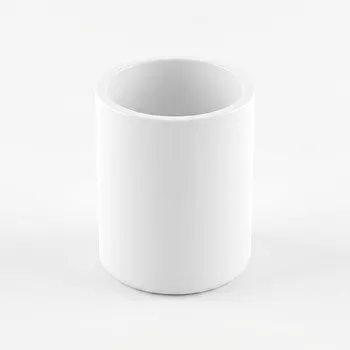
- Custom Thickened PTFE Beaker High Temperature Hot Plate Heating Resistant Precision Laboratory Labware Customizable Fluoropolymer Vessel
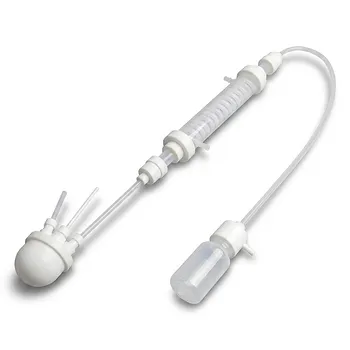
- Corrosion Resistant Hydrogen Fluoride Reflux Apparatus PTFE Flask Condenser Separatory Funnel Collection Bottle High Temperature Laboratory System
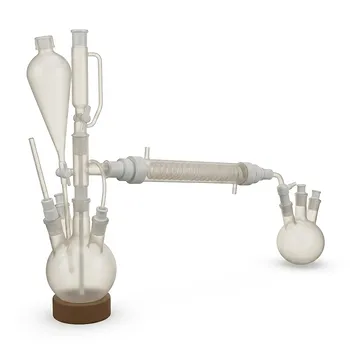
- PTFE Distillation Condensation Apparatus High Temperature Hydrofluoric Acid Resistant Fluorination Reaction Flask
- High Purity Custom PTFE Beaker 5000ml With Lid Hot Plate Heating Compatible High Temperature Chemical Labware
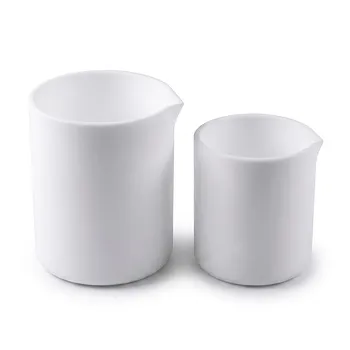
- High Temperature Resistant Thickened PTFE Beaker 2000ml for Chemical Processing and Laboratory Trace Analysis
People Also Ask
- Why is the material of the reaction vessel critical for tribocatalytic degradation? Boost Your Catalytic Yield!
- How does thermal stability and fluoride evolution impact the performance of high-temperature PTFE laboratory vessels? Uncover the key factors for reliable operation.
- How does the atmospheric environment (nitrogen versus air) influence the thermal degradation limits and operating safety of high-temperature fluoropolymer laboratory vessels? Nitrogen vs Air: Thermal Limits & Safety
- What are the limitations of pure PTFE in high temperature applications? Understanding the 200°C Ceiling
- Why is PFA often preferred over standard PTFE for complex high-temperature laboratory fluid components and custom vessels, and how do their material properties compare? Discover the key differences in manufacturing, thermal stability, and mechanical performance.