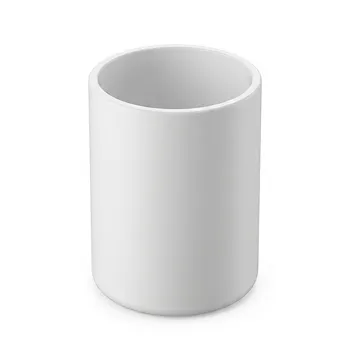
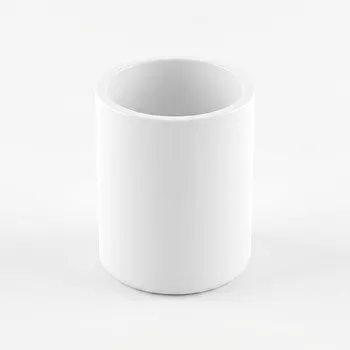
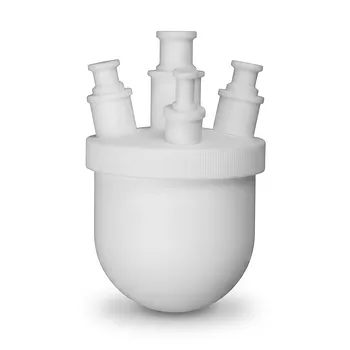
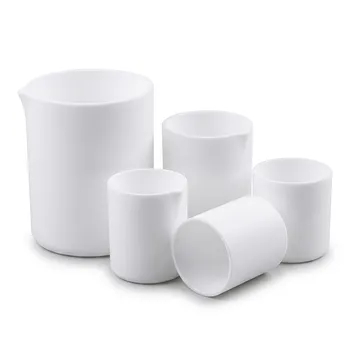
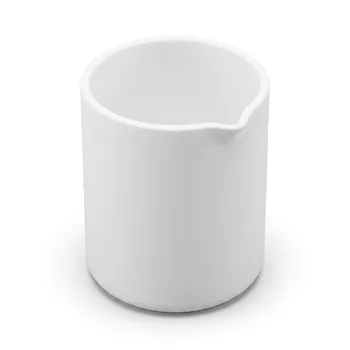
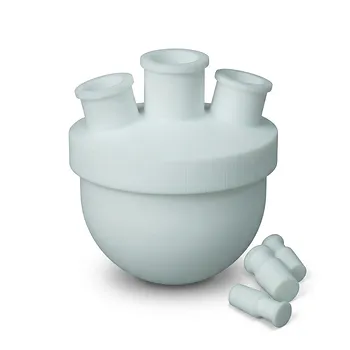
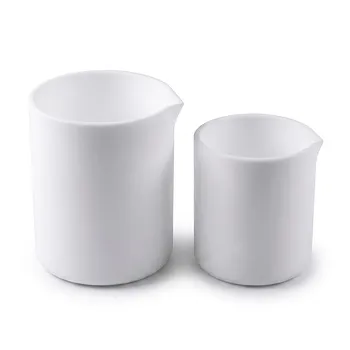
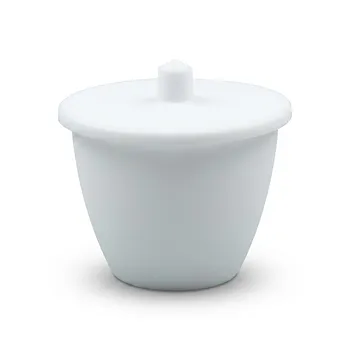
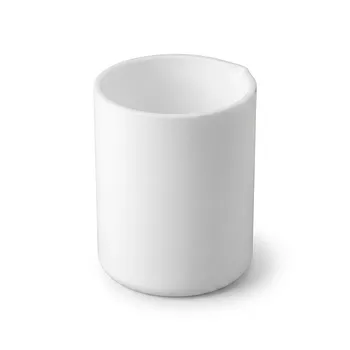
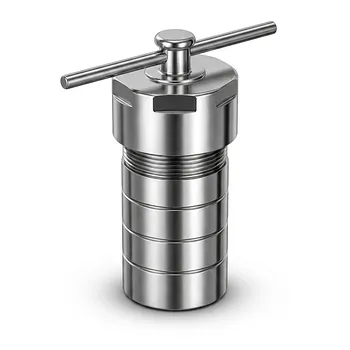
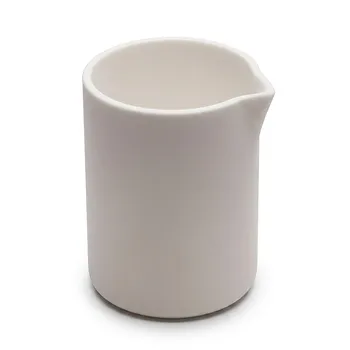
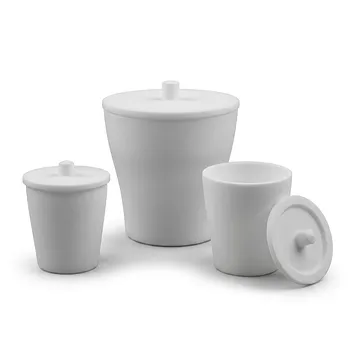
For laboratory apparatus exposed to steam sterilization, polyethersulfone (PES), PFA, and PTFE can all be viable, but they solve different problems. PES offers high rigidity, optical clarity, a glass-transition temperature of approximately 224°C, and strong resistance to repeated hot-water and steam exposure. PFA and PTFE provide substantially broader chemical resistance and continuous high-temperature service to approximately 260°C, making them better choices for aggressive reagents, high-purity fluid handling, and trace-analysis applications.
Choose PES when rigidity, transparency, and steam-sterilizable structural components are the priority; choose PFA or PTFE when chemical inertness, low contamination, and resistance to aggressive reagents matter most. Between the fluoropolymers, PFA is generally easier to form into complex, translucent labware, while PTFE offers the lowest friction and the greatest margin at extreme temperatures.
The Central Material Selection Question
Steam sterilization is not the only requirement
Typical steam sterilization exposes apparatus to saturated steam and elevated pressure, commonly at temperatures well below the continuous-use limits of these materials. The more important question is whether the component retains its shape, surface quality, cleanliness, and chemical performance after repeated cycles.
PES is specifically well suited to repeated hydrothermal exposure because it resists hydrolysis and maintains useful mechanical properties at sterilization temperatures.
High thermal resistance has several meanings
A material may have a high glass-transition temperature, a high melting point, or a high continuous-use temperature. These properties are related but are not interchangeable.
PES has a high glass-transition temperature, which supports rigidity at elevated temperatures. PTFE and PFA have lower mechanical stiffness at many operating temperatures, but their fluorinated structures provide exceptional chemical stability and continuous service temperatures of approximately 260°C.
Where Polyethersulfone Performs Best
Rigid and dimensionally stable apparatus
PES is an amorphous engineering thermoplastic with strong structural rigidity. It is therefore useful for housings, supports, filtration components, reusable trays, and other apparatus that must retain their geometry during sterilization and handling.
Compared with PTFE and PFA, PES generally provides a more rigid structure. This can simplify the design of components that must resist flexing, deformation, or mechanical impact.
Transparent inspection
Because PES is transparent or translucent, it allows users to inspect fluid levels, particulates, interfaces, and internal components. This is valuable when visual monitoring is part of laboratory workflow.
PTFE is typically opaque, while PFA can provide useful translucency, particularly when it is melt-processed into thin, smooth-walled components.
Resistance to aqueous laboratory chemistry
PES has good resistance to many aqueous acids and bases, as well as strong resistance to hot water and steam. It can be a practical choice for sterilizable apparatus that handles relatively moderate aqueous formulations.
Its chemical resistance is not universal, however. Strong organic solvents, highly aggressive reagents, and certain concentrated chemical environments require compatibility testing rather than assumption.
Where PFA and PTFE Have the Advantage
Broad-spectrum chemical resistance
PTFE and PFA are perfluoropolymers with near-universal resistance across many strong acids, organic solvents, and reactive laboratory reagents. This is the decisive advantage when apparatus will contact aggressive chemicals at elevated temperatures.
They are particularly appropriate for digestion vessels, reaction components, tubing, fittings, valves, and containers used in demanding analytical chemistry workflows.
Low contamination and high purity
Fluoropolymer surfaces are highly non-wetting and chemically inert. They contribute very little extractable or reactive material under suitable operating conditions, which is important for trace-metal analysis and other high-purity applications.
For high-purity vessels, reagent bottles, and fluid-transfer paths, PFA and PTFE are generally safer choices than PES when even minor interaction between the material and the sample could affect results.
Thermal endurance
Both PTFE and PFA support continuous service temperatures around 260°C, which is well above ordinary steam-sterilization conditions. This provides substantial thermal headroom for hot fluids, heated reaction systems, and repeated sterilization cycles.
PTFE has the greater ultimate thermal stability at extreme temperatures. PFA offers comparable normal service endurance but generally provides less margin than PTFE during prolonged exposure at temperatures approaching 400°C and above.
Choosing Between PFA and PTFE
PFA for complex molded components
PFA is melt-processible, so it can be injection-molded or extruded into intricate geometries. This supports the manufacture of smooth-walled vessels, fittings, tubing, valves, and customized fluidic components with fewer seams and machining constraints.
Its translucency, low micro-porosity, and weldability also make it attractive for high-purity fluid handling and trace-analysis equipment.
PTFE for friction and non-stick performance
PTFE has the lowest coefficient of friction among these materials. It is especially effective for stir bars, sliding seals, gaskets, valve components, and surfaces where release and anti-stick behavior are important.
Standard PTFE is not melt-processible because of its extremely high melt viscosity. Parts are normally produced through powder processing, sintering, machining, or related fabrication methods, which can limit complex geometries and increase manufacturing effort.
PTFE for extreme thermal or cryogenic exposure
PTFE offers the greatest thermal margin among the materials considered when conditions move well beyond normal sterilization or continuous-use temperatures. It also retains useful integrity at cryogenic temperatures, making it suitable for laboratory systems spanning both very low and very high temperatures.
For ordinary autoclave cycles, this extreme-temperature advantage may not justify PTFE if the apparatus requires transparency or complex molded shapes.
Understanding the Trade-offs
PES has narrower chemical compatibility
The principal risk with PES is treating steam resistance as proof of universal chemical resistance. A PES vessel may tolerate repeated autoclaving yet swell, crack, embrittle, or lose strength when exposed to incompatible solvents or concentrated reactive chemicals.
Compatibility should be evaluated against the actual reagent, concentration, temperature, exposure time, and mechanical stress.
Fluoropolymers are less rigid
PTFE and PFA are chemically robust but generally less rigid than PES. Under sustained load and elevated temperature, fluoropolymers can exhibit creep or deformation, so supports, wall thickness, seals, and pressure conditions must be designed accordingly.
A chemically ideal material can still be mechanically unsuitable if the component must hold a precise shape under load.
Continuous-use ratings are not sterilization guarantees
A 260°C continuous-use rating does not by itself establish suitability for every sterilization process. Steam pressure, repeated thermal cycling, component geometry, cleanliness requirements, and the presence of chemicals during sterilization can all change performance.
The selected grade and finished part should be validated under the actual sterilization cycle, including dimensional checks and any required extractables or contamination testing.
PFA and PTFE are not chemically invulnerable
“Near-universal” chemical resistance is a useful design summary, but it is not an absolute guarantee. Certain highly reactive fluorinating conditions, molten alkali metals, and unusual combinations of temperature and chemistry can attack fluoropolymers.
Supplier compatibility data and application-specific testing remain necessary for unusual or high-consequence service.
Manufacturing affects performance
The final apparatus is influenced by more than resin chemistry. Surface finish, welds, machining marks, porosity, fillers, reinforcement, sealing design, and cleaning history can affect contamination and sterilization performance.
For trace analysis, an appropriately manufactured PFA or PTFE component may outperform a nominally resistant material with a less suitable surface or fabrication process.
How to Apply This to Your Project
The best selection depends on the failure mode that would matter most in service.
- If your primary focus is repeated steam sterilization with structural rigidity: Choose PES when the chemical environment is within its validated compatibility range and the apparatus must remain stiff and dimensionally stable.
- If your primary focus is aggressive chemical handling: Choose PTFE or PFA because their broad chemical resistance provides greater protection against acids, solvents, and reactive reagents.
- If your primary focus is high-purity fluid handling and complex geometry: Choose PFA for its melt-processability, translucency, smooth surfaces, and suitability for molded vessels, tubing, fittings, and valves.
- If your primary focus is non-stick performance or extreme-temperature margin: Choose PTFE for its lowest friction and superior resistance at the most severe thermal or cryogenic conditions.
- If your primary focus is optical inspection: Choose PES for greater structural transparency, or PFA when chemical inertness and translucent fluoropolymer construction are more important than maximum rigidity.
Material selection should match the complete operating envelope: steam cycle, chemical exposure, mechanical load, purity requirements, geometry, and temperature history.
Summary Table:
| Property | PES | PFA | PTFE |
|---|---|---|---|
| Rigidity | High | Moderate | Low |
| Transparency | Transparent | Translucent | Opaque |
| Continuous Service Temp | ~180°C | ~260°C | ~260°C |
| Chemical Resistance | Good for aqueous | Excellent | Excellent |
| Purity | Moderate | High | High |
| Typical Applications | Housings, trays | Vessels, tubing | Seals, stir bars |
Need help choosing the right material for your lab apparatus? Contact KINTEK today to explore our high-performance PTFE and PFA labware, custom-machined to your exact specifications. Our experts will guide you to the optimal solution for your sterilization and chemical resistance needs. Get in touch.
Related Products
- Custom Thickened PTFE Laboratory Beaker for High Temperature Hot Plate Applications
- Custom Thickened PTFE Beaker High Temperature Hot Plate Heating Resistant Precision Laboratory Labware Customizable Fluoropolymer Vessel
- High Temperature Corrosion Resistant PTFE Reaction Flask Custom Multi Neck Laboratory Vessel with Flat or U Bottom
- Large Scale PTFE Beakers and Flasks for High Temperature Corrosion Resistant Laboratory Applications with Custom CNC Fabrication
- Custom Thickened PTFE Beaker 3000ml Hotplate Heating High Temperature Deformation Resistant Fluoropolymer Labware
People Also Ask
- Why is the material of the reaction vessel critical for tribocatalytic degradation? Boost Your Catalytic Yield!
- How does thermal stability and fluoride evolution impact the performance of high-temperature PTFE laboratory vessels? Uncover the key factors for reliable operation.
- What are the limitations of pure PTFE in high temperature applications? Understanding the 200°C Ceiling
- In what high-temperature applications is PTFE used? The Ultimate Polymer for Extreme Heat & Corrosion
- Are Teflon parts capable of withstanding high temperatures? Understanding the 260°C Limit for Performance