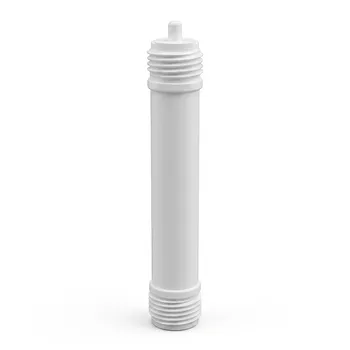
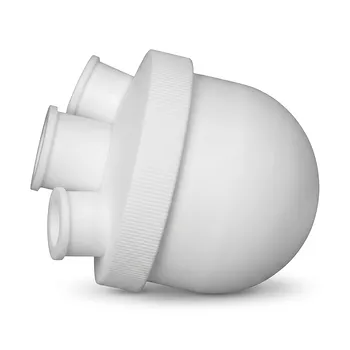
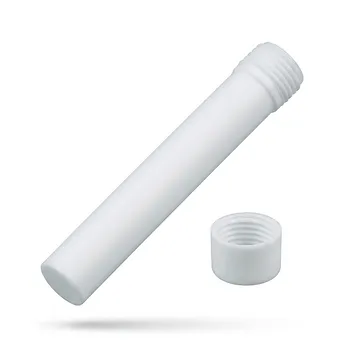
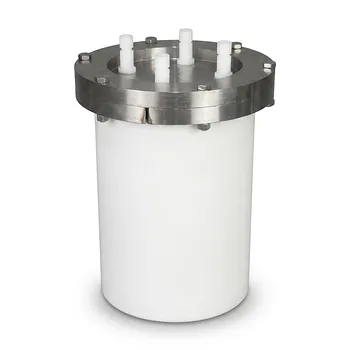
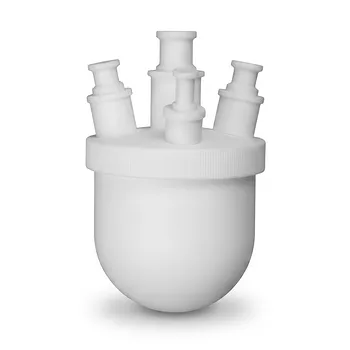
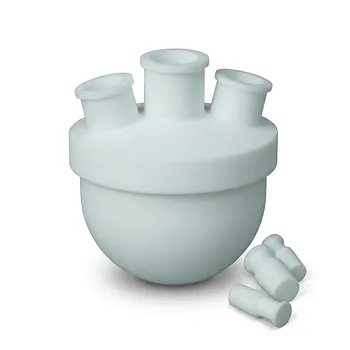
High-purity PFA and PTFE liners act as the definitive barrier between your chemical reaction and the reactor's metal body. In hydrothermal synthesis, these liners ensure that the resulting materials are free from metal ion contamination while providing the stable environment necessary for controlled crystal growth. By isolating the reaction, they allow for the precise production of nanomaterials and porous structures with uniform morphology and high chemical purity.
Core Takeaway: The use of high-purity liners transforms a high-pressure reactor into a pristine "clean room" environment. This isolation is critical for achieving high-fidelity material synthesis where purity, morphological uniformity, and process repeatability are paramount.
Preserving Chemical Purity and Integrity
Prevention of Metal Ion Contamination
The primary role of a PFA or PTFE liner is to provide physical isolation between the reaction media and the stainless steel reactor shell. This prevents the leaching of chromium, nickel, or iron into the solution, which is essential when synthesizing high-performance nanomaterials that are sensitive to trace metal impurities.
Resistance to Corrosive Media
Hydrothermal synthesis often involves strong acids, bases, and aggressive organic solvents at elevated temperatures. High-purity polymers are nearly chemically inert, protecting the structural integrity of the outer autoclave from erosion while ensuring the reaction environment remains untainted by corrosion byproducts.
Low Impurity Leaching Rates
Unlike lower-grade materials, high-purity liners have extremely low leaching rates. This ensures that the liner itself does not introduce foreign particles or chemical ghosts into the synthesis process, allowing for the preparation of high-fidelity single crystals and powders.
Ensuring Morphological Control and Repeatability
Stability for Nanocrystal Growth
The liners provide a stable physicochemical environment that is critical for the growth of nanocrystals. Because the liner maintains a consistent internal surface and thermal profile, researchers can achieve predictable results in the microscopic morphology of the synthesized materials.
The Role of Precision Machining
The quality of the high-precision machining on the liner directly impacts the sealing performance of the reactor. A perfect seal is required to maintain the internal pressure necessary for stable crystal growth; any fluctuation in pressure can lead to non-uniformity in the final product's crystal structure.
Improving Product Recovery
The non-stick properties of PFA and PTFE are vital for the recovery of synthesized micro- and nano-powders. These properties prevent the product from adhering to the walls, which simplifies cleaning and ensures that the maximum yield of the synthesized material is recovered for analysis.
Understanding the Trade-offs and Limitations
Temperature and Pressure Thresholds
While robust, PFA and PTFE have specific thermal limits (typically around 200°C to 260°C depending on the material and grade). Exceeding these temperatures can cause the liner to soften or deform, which compromises the seal and may introduce structural defects into the synthesized material.
Material Memory and Deformation
Under extreme pressure, polymeric liners can undergo "cold flow" or permanent deformation. If a liner is reused too many times after significant deformation, it may fail to provide a consistent environment, leading to a decline in the repeatability of the synthesis results.
Porosity and Gas Permeation
At high temperatures and pressures, certain gases can permeate the polymer matrix. This can lead to small amounts of reactant being trapped within the liner walls, potentially causing cross-contamination between different experimental batches if cleaning is not rigorous.
How to Apply This to Your Research
Selecting the right liner setup is a balance between your chemical requirements and the physical limits of the polymer.
- If your primary focus is extreme chemical purity: Use high-purity PFA liners, which often offer superior resistance to trace-level leaching compared to standard PTFE.
- If your primary focus is morphological uniformity: Prioritize high-precision machined liners to ensure a perfect seal and stable pressure throughout the synthesis duration.
- If your primary focus is process repeatability: Implement a strict retirement schedule for liners to avoid using deformed vessels that could alter the reaction's internal volume or pressure stability.
By treating the liner as a critical variable in your experimental design, you ensure that your synthesis results are dictated by chemistry rather than contamination.
Summary Table:
| Feature | Benefit | Impact on Synthesis |
|---|---|---|
| Physical Isolation | Zero metal ion leaching | High-purity nanomaterials and crystals |
| Chemical Inertness | Resistance to acids & bases | Stable, uncontaminated reaction environment |
| Non-stick Surface | Easy material recovery | Maximum product yield and simpler cleaning |
| Precision Machining | Reliable high-pressure seal | Uniform morphology and process stability |
| Low Leaching Grade | Minimal trace impurities | Repeatable, high-fidelity material results |
Elevate Your Research with KINTEK’s Fluoropolymer Expertise
Don’t let contamination compromise your synthesis results. KINTEK specializes in high-performance fluoropolymer solutions, offering everything from everyday PFA/PTFE labware like beakers, crucibles, and reagent bottles to advanced hydrothermal synthesis liners and microwave digestion vessels.
Whether you require high-purity trace analysis instruments, complex fluid transfer components (tubing, valves, fittings), or bespoke reaction apparatus like custom electrochemical cells and microchannel reactors, our end-to-end CNC fabrication ensures absolute precision. We maintain an exclusive focus on high-performance materials to deliver everything from high-volume orders to complex non-standard machined parts tailored to your exact specifications.
Ready to ensure repeatable, high-purity results in your lab? Contact KINTEK today to discuss your custom project or high-volume needs!
References
- Chiayee Salih Ajaj. Green Synthesis of Carbon Quantum Dots with Good Photoluminescence Properties from <i>Prosopis farcta</i> and Their Applications as Fe <sup>3+</sup> Ion Detectors and Optical Nanothermometers. DOI: 10.1002/slct.202405433
This article is also based on technical information from Kintek Knowledge Base .
Related Products
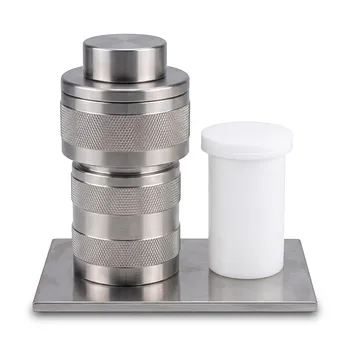
- PTFE Lined High Pressure Digestion Vessel 50ml High Temperature Hydrothermal Synthesis Tank
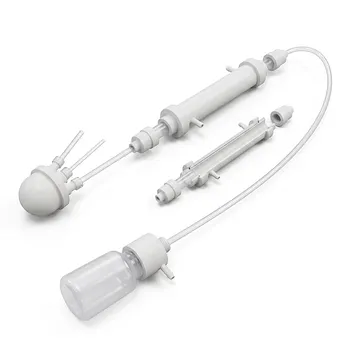
- High Temperature Corrosion Resistant PTFE Hydrogen Fluoride Condensation Reflux System with Separatory Funnel and PFA Collection Bottle
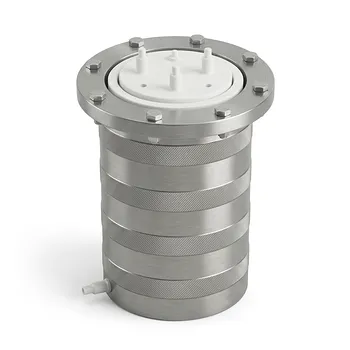
- High Pressure Custom TFM Reactor Stainless Steel Outer Vessel PTFE Inner Cup for Corrosive Synthesis
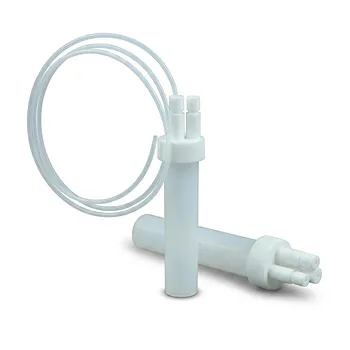
- Custom PFA Reaction Bottles High Purity PTFE Reaction Vessels Corrosion Resistant Petrochemical Containers
- High Purity PTFE Microwave Digestion Vessel for Soil and Food Analysis Acid Resistant Fluoropolymer Sample Preparation Liners
People Also Ask
- What are the benefits of using a PTFE-lined vessel for carbon-sulfur cathode treatment? Maximize Purity & Performance
- Why are PTFE-lined pressure digestion vessels required for the preparation of Ag/CeO2 catalysts? Purity & Performance
- What safety features are typically incorporated into high-pressure PTFE digestion vessel designs? Ensure Lab Safety
- What is the function of high-pressure PTFE digestion vessels in mineral analysis? Optimize Sample Mineralization
- What is the function of PTFE lined high-pressure vessels in g-C3N4 synthesis? Achieve High-Purity Material Growth