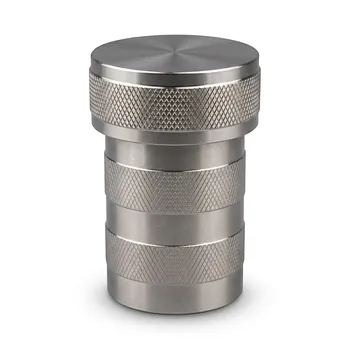
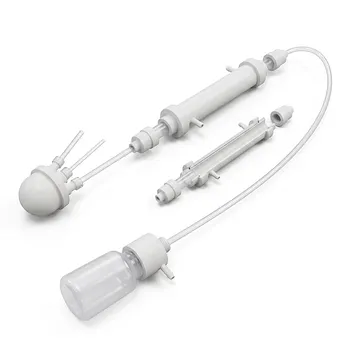
High-pressure hydrothermal autoclaves and their corrosion-resistant liners create a specialized, sealed environment that enables iron ions to react fully with oxalic acid at temperatures exceeding their normal boiling point. Specifically, at a constant temperature of 105°C, the autoclave provides the necessary pressure to guide the growth of iron oxalate crystals into high-aspect-ratio, needle-like structures, which serve as the essential precursor for producing nano-scale magnetite ($Fe_3O_4$).
Core Takeaway: The autoclave acts as a precision reactor that uses heat and pressure to dictate the shape and purity of iron oxalate crystals. By isolating the reaction from external contaminants and maintaining extreme conditions, it ensures the formation of specific morphologies required for advanced material applications.
Engineering the Chemical Environment
Facilitating Complete Reactant Interaction
The primary role of the high-pressure autoclave is to provide a sealed reaction space where the leaching solution and oxalic acid can interact without solvent loss. This containment ensures that iron ions stay in contact with the acid long enough to achieve full precipitation, which is difficult to manage in open-air systems.
Surpassing Standard Boiling Points
By operating under pressure, these autoclaves allow the solvent to reach temperatures like 105°C while remaining in a liquid state. This increased thermal energy significantly raises the solubility of precursors, accelerating the chemical transformation of iron ions into iron oxalate dihydrate.
Controlling Crystal Morphology
Achieving High Aspect Ratios
The pressurized environment within the autoclave is not just for safety; it is a morphological guide. The pressure helps orient the growth of iron oxalate crystals into needle-like structures, ensuring they achieve the high aspect ratio necessary for high-performance applications.
Establishing the Template for Magnetite
The specific shape of the iron oxalate dihydrate formed in the autoclave is critical because it dictates the final structure of the nano-scale magnetite. By controlling the synthesis at this stage, engineers ensure that the subsequent conversion process yields $Fe_3O_4$ with the desired magnetic and structural properties.
The Critical Role of Corrosion-Resistant Liners
Protection Against Acidic Media
Synthesis involving oxalic acid and leaching solutions is inherently corrosive. Liners made from materials like PTFE (Polytetrafluoroethylene) or PFA (Perfluoroalkoxy) are essential because they resist chemical attack at elevated temperatures, protecting the stainless steel shell of the autoclave from degradation.
Ensuring Chemical Purity
Beyond protecting the equipment, the liner provides a clean reaction interface. It prevents the reaction solution from contacting the metal walls of the autoclave, which eliminates metal ion contamination and ensures the synthesized iron oxalate maintains a precise stoichiometric ratio.
Understanding the Trade-offs
Thermal and Pressure Limits
While PTFE and PFA liners are highly effective, they have specific thermal thresholds, typically around 180°C to 220°C. Exceeding these limits can cause the liner to deform or "creep," potentially compromising the seal and leading to a loss of pressure or hazardous leaks.
Heating and Cooling Rates
The thick walls of high-pressure autoclaves create significant thermal inertia. This means the system takes time to reach the target 105°C and even longer to cool down, which can affect the uniformity of crystal growth if the temperature ramp is not carefully controlled.
How to Apply This to Your Project
If you are utilizing hydrothermal synthesis for iron oxalate or similar precursors, consider these tactical recommendations:
- If your primary focus is crystal uniformity: Ensure the autoclave is filled to the correct volume (usually 60-80%) to maintain stable internal pressure and consistent heat distribution.
- If your primary focus is material purity: Always inspect the PTFE or PFA liner for surface pitting or discoloration before use, as these can harbor contaminants from previous synthesis cycles.
- If your primary focus is morphological control: Maintain a strict constant temperature of 105°C, as even minor fluctuations can disrupt the formation of the needle-like structures required for magnetite conversion.
By mastering the high-pressure environment of the autoclave, you transform a simple precipitation reaction into a precise tool for nanostructure engineering.
Summary Table:
| Key Component | Role in Hydrothermal Synthesis | Primary Benefit |
|---|---|---|
| Sealed Pressure | Keeps solvent liquid at 105°C | Accelerates reaction & prevents solvent loss |
| Fluoropolymer Liner | Provides an inert reaction interface | Prevents metal ion contamination & corrosion |
| Thermal Stability | Maintains constant temperature | Ensures uniform needle-like crystal growth |
| High Aspect Ratio | Acts as a morphological template | Essential for high-performance nano-magnetite |
Elevate Your Material Synthesis with KINTEK Precision
Are you looking to achieve absolute chemical purity and precise morphological control in your hydrothermal reactions? KINTEK specializes in high-performance fluoropolymer solutions tailored for the most demanding laboratory environments. From everyday basic labware like beakers, crucibles, and reagent bottles to advanced hydrothermal synthesis liners and microwave digestion vessels, we provide the tools you need for success.
Our expertise extends from standard PFA/PTFE consumables—including tubing, fittings, and filtration tools—to complex, bespoke laboratory setups crafted through end-to-end custom CNC fabrication. Whether you need high-volume orders of stirring bars and gaskets or unique, non-standard machined parts for electrochemical cells and battery testing, KINTEK delivers unmatched durability and chemical resistance.
Ready to optimize your lab's performance? Contact us today to discuss your custom fluoropolymer requirements and see how our expertise can streamline your research and production.
References
- Yunho Jin, Dong-Wan Kim. Recycling Nd Magnet Scraps to Synthesize Carbon‐Swaddled Fe <sub>3</sub> O <sub>4</sub> Anode Material for Lithium‐Ion Battery. DOI: 10.1155/er/3361478
This article is also based on technical information from Kintek Knowledge Base .
Related Products
- PTFE Lined High Pressure Digestion Vessel 50ml High Temperature Hydrothermal Synthesis Tank
- Custom TFM Reaction Vessel with Stainless Steel Jacket and PTFE Inner Cup for High Corrosion Resistance
- High Temperature Corrosion Resistant Hydrothermal Synthesis Reactor with TFM Inner Liner and Straight Cylinder Design
- High Temperature Corrosion Resistant PTFE Hydrogen Fluoride Condensation Reflux System with Separatory Funnel and PFA Collection Bottle
- High Purity PTFE Microwave Digestion Vessel for Soil and Food Analysis Acid Resistant Fluoropolymer Sample Preparation Liners
People Also Ask
- What are the benefits of using a PTFE-lined vessel for carbon-sulfur cathode treatment? Maximize Purity & Performance
- Why are PTFE-lined pressure digestion vessels required for the preparation of Ag/CeO2 catalysts? Purity & Performance
- What safety features are typically incorporated into high-pressure PTFE digestion vessel designs? Ensure Lab Safety
- What is the function of PTFE lined high-pressure vessels in g-C3N4 synthesis? Achieve High-Purity Material Growth
- Role of High-Pressure Digestion Tanks in Perovskite Synthesis: Achieve Superior Stability and Latent Heat