Fluorinated ionomers are the proton-conducting and binding phase in PEM fuel cells. Sulfonic acid-type fluoropolymers—especially perfluorosulfonic acid (PFSA) ionomers—conduct protons through hydrated acid domains while their fluorinated backbones resist oxidation, heat, and aggressive chemicals. Carboxylic acid-type fluoropolymers can provide ion-exchange functionality, selectivity, and barrier control, but they generally offer lower proton conductivity than strongly acidic sulfonic ionomers.
The central design balance is conductivity versus durability: the ionomer must transport protons efficiently while retaining water, limiting gas crossover, resisting chemical attack, and maintaining mechanical integrity throughout changing temperature, humidity, and electrochemical potential.
How Fluorinated Ionomers Function in a PEM Fuel Cell
The membrane transports protons
The proton exchange membrane separates the hydrogen and oxygen streams while allowing protons to pass from the anode to the cathode.
At the anode, hydrogen is oxidized:
[ \mathrm{H_2 \rightarrow 2H^+ + 2e^-} ]
The membrane conducts the resulting protons toward the cathode, while its electronic insulation prevents electrons from crossing directly through the membrane.
Sulfonic acid groups create proton-conducting pathways
In a hydrated sulfonic acid-type fluoropolymer, fixed sulfonic acid groups dissociate and form water-rich ionic channels within the polymer.
Protons move through these channels by two complementary mechanisms:
- Grotthuss transport: protons “hop” between water molecules, hydronium ions, and sulfonic acid sites.
- Vehicular transport: hydrated species such as hydronium diffuse through the water phase.
The first mechanism can be very rapid, but both depend strongly on membrane hydration, temperature, acid-group concentration, and the continuity of the ionic domains.
The fluorinated backbone provides chemical resistance
The perfluorinated backbone contains strong carbon–fluorine bonds and has low polarizability and surface energy.
These characteristics support oxidative stability, thermal resistance, chemical inertness, and low contamination potential—all important in the acidic, humid, and highly oxidizing environment near the fuel-cell cathode.
Ionomers bind the catalyst layer
The same or a related fluorinated ionomer is commonly incorporated into the catalyst layers.
There, it:
- Binds catalyst particles and carbon support.
- Provides proton-conducting paths from the membrane into the catalyst layer.
- Helps create the triple-phase boundary, where catalyst, reactant gas, and proton-conducting electrolyte meet.
- Contributes to water and gas transport within the electrode structure.
Too little ionomer can isolate catalyst particles from the proton pathway. Too much can block gas pores and increase transport resistance.
How Sulfonic and Carboxylic Acid Types Differ
Sulfonic acid-type fluoropolymers
Sulfonic acid groups are strongly acidic and remain effective proton-exchange sites over a broad range of electrochemical conditions.
They are therefore the dominant choice when high proton conductivity is the primary requirement, particularly in hydrated PEMFC membranes and catalyst-layer binders.
Carboxylic acid-type fluoropolymers
Carboxylic acid groups are weaker acids than sulfonic acid groups and generally provide lower proton conductivity under comparable conditions.
Their value can instead lie in selective ion transport, barrier behavior, interfacial control, and chemical resistance. In multilayer membranes, a carboxylic ionomer layer may help control unwanted ion migration; analogous barrier functions are important in related electrochemical technologies such as chlor-alkali cells.
Functional groups can be combined strategically
A fluoropolymer component does not need to perform every function through one chemistry.
For example, a system may use a highly conductive sulfonic acid phase for proton transport and a denser or less permeable layer for mechanical reinforcement, selectivity, or gas-barrier performance.
Properties Required When Selecting Fluoropolymer Components
Proton conductivity under actual operating conditions
Conductivity should be evaluated at the intended temperature, relative humidity, pressure, and water activity, not only under fully hydrated laboratory conditions.
A membrane with excellent conductivity when wet may perform poorly if it dries during operation. Conductivity also depends on equivalent weight, ionic-domain morphology, thickness, and electrode-ionomer distribution.
Low hydrogen and oxygen crossover
The membrane must limit reactant permeation between the anode and cathode.
Low gas permeability reduces mixed-potential losses, limits parasitic reactions, improves efficiency, and lowers the risk of local chemical degradation. The required permeability depends on membrane thickness, hydration, temperature, pressure, and the specific stack design.
Oxidative and electrochemical stability
The material must withstand reducing conditions near the anode and strongly oxidative conditions near the cathode.
This includes resistance to radical attack, catalyst-generated reactive species, peroxide-related degradation, and repeated potential cycling. Chemical stability should be assessed over the complete expected service life rather than inferred solely from short-term immersion tests.
Mechanical and dimensional stability
The membrane and ionomer must tolerate swelling and contraction as humidity and temperature change.
Important characteristics include:
- Tensile strength and toughness
- Low creep
- Controlled water uptake
- Limited dimensional change
- Resistance to pinholes and crack formation
- Stable performance under compression
Mechanical failure can produce gas crossover even when the polymer’s intrinsic chemical stability is excellent.
Thermal stability across the operating window
The fluoropolymer must retain its structure and function at the highest operating temperature, including startup, shutdown, and transient conditions.
Conventional PFSA membranes commonly lose hydration and therefore conductivity as temperature rises above roughly 80 °C under insufficiently humidified conditions. Higher-temperature operation may require different acid chemistries, membrane architectures, or water-management strategies.
Hydrolytic and chemical resistance
Components should resist prolonged exposure to water, acidic condensate, hydrogen peroxide species, mineral acids, alkalies, and dissolved impurities.
“Complete” hydrolytic stability is not a realistic blanket guarantee for every formulation or operating condition. The appropriate requirement is demonstrated resistance under the actual temperature, chemical composition, pressure, and exposure duration.
Low leachability and extractables
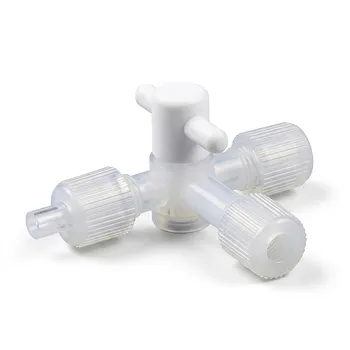
Fluoropolymer components used in test cells, fittings, seals, and fluid-transfer systems should release minimal ionic or organic contaminants.
Low leachability is essential when measuring conductivity, degradation products, catalyst activity, or trace electrochemical currents. High-purity PTFE and PFA are often selected for wetted hardware because they combine chemical inertness with low contamination risk.
Electrical insulation and dielectric reliability
Nonconductive fluoropolymer housings, spacers, seals, and tubing must maintain their dielectric properties in humid and chemically aggressive environments.
Electrical leakage or unwanted current paths can distort measurements and compromise the safety and reliability of the test assembly.
Reliable sealing and manufacturability
A chemically resistant polymer is not sufficient if it cannot form a dependable seal.
The selected material and design must account for compression set, thermal expansion, surface finish, creep, joining method, and compatibility with the membrane-electrode assembly. Seal failure can cause reactant mixing, water loss, and misleading performance data.
Designing the Complete Electrochemical System
The membrane, electrodes, and hardware must be compatible
A membrane can be chemically stable in isolation yet fail in a complete cell because of catalyst interactions, mechanical compression, contaminant exposure, or incompatible seals.
Material selection should therefore consider the full system: membrane, catalyst layer, gas-diffusion layer, bipolar plates, gaskets, tubing, fittings, and measurement cell.
High-temperature testing requires specialized choices
Superacid functional groups, including bis[(perfluoroalkyl)sulfonyl]imide-type chemistries, can support higher-temperature proton conduction than conventional hydrated PFSA systems.
Such materials may reduce carbon monoxide poisoning of platinum catalysts and lower cooling demands, but they require dedicated evaluation because conductivity, acid retention, mechanical stability, and compatibility can change substantially at elevated temperature.
Test-cell materials can determine measurement quality
For high-temperature or strongly acidic testing, PTFE and PFA cell components can provide a chemically inert environment with low ionic leaching.
However, the entire assembly—not just the polymer—must be checked for contamination, thermal expansion, pressure capability, and seal integrity.
Understanding the Trade-offs
Higher hydration improves conductivity but can weaken the membrane
More water generally improves proton transport, but it can increase swelling, reduce dimensional stability, and promote mechanical damage.
The design target is not maximum water uptake; it is sufficient, stable hydration with controlled expansion.
Greater ionomer content can hinder gas transport
Adding ionomer improves proton access within a catalyst layer.
Beyond an optimum, however, it can cover catalyst surfaces, narrow pores, impede hydrogen or oxygen diffusion, and increase water accumulation.
Higher operating temperature does not automatically improve performance
Higher temperature can accelerate reaction kinetics and improve tolerance to carbon monoxide.
It can also dry conventional PFSA membranes, reduce proton conductivity, accelerate degradation, and increase demands on seals and test hardware.
Chemical inertness does not eliminate all failure modes
Fluoropolymers are highly resistant, but they can still suffer from creep, permeation, mechanical damage, thermal distortion, or degradation caused by particular radicals, impurities, or processing conditions.
Selection must therefore combine chemical compatibility data with mechanical, permeability, and aging tests.
Low permeability may conflict with transport requirements
A dense membrane can reduce gas crossover but also increase resistance to proton transport if it is too thick or poorly hydrated.
Likewise, a highly porous catalyst-layer structure may improve gas transport while weakening proton connectivity. PEM design is consequently a coupled optimization rather than a single-property selection.
How to Apply This to Your Project
Choose the material against measured operating requirements rather than relying on the label “fluoropolymer.”
- If your primary focus is proton conductivity: prioritize a well-hydrated sulfonic acid-type ionomer with appropriate acid-site concentration, membrane morphology, and catalyst-layer distribution.
- If your primary focus is gas separation and efficiency: prioritize low hydrogen and oxygen crossover together with controlled swelling and adequate mechanical strength.
- If your primary focus is high-temperature operation: verify conductivity retention, acid stability, water management, and seal performance at the full intended temperature range.
- If your primary focus is accurate electrochemical testing: use high-purity, low-leachability wetted components such as qualified PTFE or PFA, and validate the complete cell for contamination and leakage.
- If your primary focus is long service life: evaluate oxidative stability, hydrolytic resistance, dimensional cycling, creep, and electrochemical aging under realistic stack conditions.
The right fluorinated ionomer is the one that preserves proton transport, separation, and structural integrity simultaneously over the conditions your PEM fuel cell will actually experience.
Summary Table:
| Property | Importance | Key Considerations |
|---|---|---|
| Proton conductivity | Essential for efficient power generation | Depends on hydration, temperature, acid concentration; test under actual operating conditions. |
| Low gas crossover | Prevents mixed potentials and efficiency loss | Low hydrogen/oxygen permeability; depends on thickness, hydration, temperature. |
| Oxidative stability | Resists radical attack in harsh cathode environment | Needs long-term stability against radicals, peroxides, and potential cycling. |
| Mechanical & dimensional stability | Maintains integrity under swelling/contraction | High tensile strength, low creep, controlled water uptake, limited dimensional change. |
| Thermal stability | Sustains performance across operating temperatures | Conventional PFSA loses conductivity above 80°C; special chemistries needed for high temp. |
| Hydrolytic & chemical resistance | Withstands acidic, humid conditions | Resistant to water, acidic condensate, peroxides; demonstrate under actual conditions. |
| Low leachability | Prevents contamination in accurate measurements | Minimal ionic/organic extracts; high-purity PTFE/PFA for wetted parts. |
| Electrical insulation | Ensures safety and reliable measurements | Maintain dielectric properties in humid, corrosive environments. |
| Reliable sealing | Prevents leaks and reactant mixing | Consider compression set, thermal expansion, creep, compatibility with MEAs. |
Ready to optimize your PEM fuel cell performance?
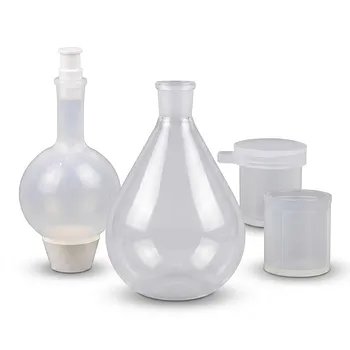
At KINTEK, we specialize in high-performance fluoropolymers, offering virtually all laboratory supplies crafted from PTFE and PFA. Whether you need standard labware, high-purity components for trace analysis, or custom electrochemical cells, our expertise in fluoropolymer machining ensures chemically inert, low-leachability, and precise solutions.
For distributors, we provide OEM/ODM support, adherence to strict quality certifications, and reliable supply chains to meet high-volume demands.
Contact us today to discuss your specific requirements and discover how our fluoropolymer solutions can enhance your fuel cell testing and component durability.
Related Products
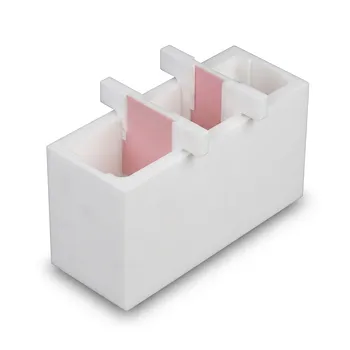
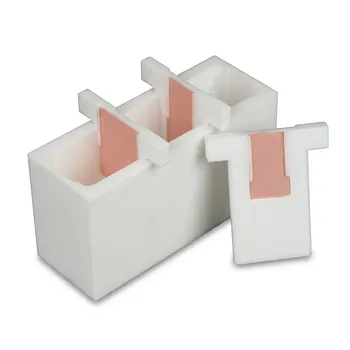
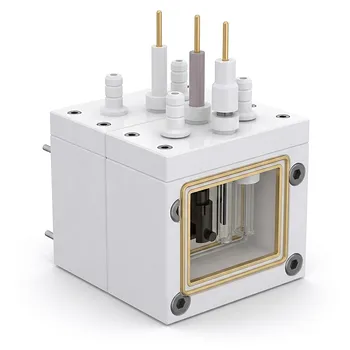
- Corrosion Resistant PTFE Electrochemical Cell for New Energy Research Inert Insulating Customizable Lab Reaction Vessel
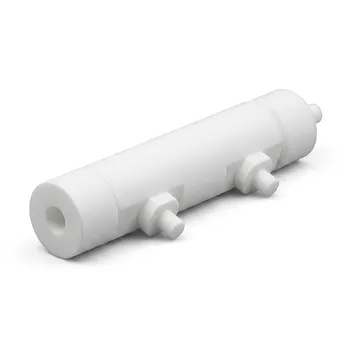
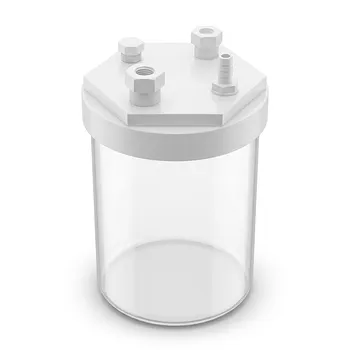
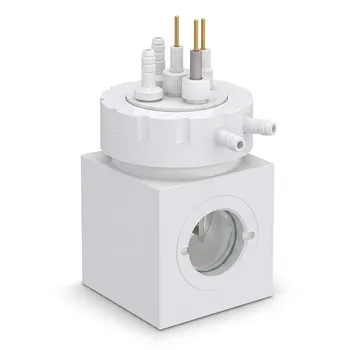
- Custom PTFE Electrolytic Cell Corrosion Resistant Low Background Reaction Vessel with Inlet Outlet Ports
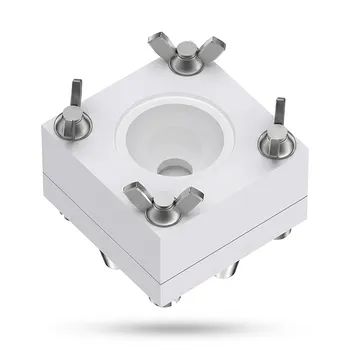
- Square PTFE Electrochemical Cell for Silicon Wafer Processing and Hydrofluoric Acid Resistance in Semiconductor and New Energy Research
- Custom PTFE Insulating Gaskets and Corrosion Resistant Fluoropolymer Seals for Industrial Electrical Applications
- Corrosion Resistant High Purity PFA Valve and Weldable Transparent Tubing for Semiconductor Fluid Transfer
People Also Ask
- How do custom PTFE electrochemical cells improve the accuracy of stability testing for alkaline catalysts compared to glass cells?
- How does the hydrophobicity of PTFE benefit electrochemical measurements? Enhance Stability and Precision in Your Lab
- What makes PTFE an ideal construction material for custom electrochemical cells and electronic analytical instrumentation housings? Discover superior chemical resistance and electrical insulation
- Why must seawater electrolysis test cells have high corrosion resistance? Protect catalyst stability & data accuracy.
- What are the key steps for structural integrity in molded PTFE lab reaction vessels? Master fine powder processing.