Fillers transform virgin PTFE from a soft, prone-to-deformation plastic into a high-performance engineering material. By incorporating additives like glass fiber, carbon, bronze, or graphite, manufacturers can mitigate cold flow (creep) and dramatically increase wear resistance and compressive strength. These enhancements allow PTFE seal rings to survive in high-pressure, abrasive, or high-load environments where the unfilled material would otherwise fail.
While virgin PTFE offers unmatched chemical inertness and low friction, it lacks the structural integrity for demanding mechanical loads. The strategic addition of fillers provides the necessary dimensional stability and durability required for industrial sealing without compromising the polymer's core thermal properties.
Solving the Fundamental Weakness: Cold Flow and Wear
Mitigating Material Creep
Virgin PTFE is notorious for cold flow, a phenomenon where the material permanently deforms under a sustained load. Fillers act as a structural internal skeleton, reinforcing the polymer matrix to ensure the seal maintains its shape and performance over time.
Exponential Gains in Wear Resistance
In its unfilled state, PTFE has limited abrasion resistance and poor elastic recovery. Research indicates that compounding PTFE with specific fillers can improve its abrasion resistance by up to 1,000 times, allowing it to withstand abrasive slurries and high-velocity movement.
Doubling Compressive Strength
Filled modification can boost the compressive strength of a seal ring from approximately 10 MPa to 30 MPa. This tripling of capacity is essential for high-pressure hydraulic actuators and heavy-duty industrial machinery.
The Specific Roles of Primary Fillers
Glass Fiber: Stiffness and Stability
Adding up to 40% glass fiber significantly increases the stiffness and creep resistance of the seal. It is a preferred choice for oxidizing environments and applications requiring high dimensional stability, though it can be abrasive to some mating surfaces.
Carbon and Graphite: Friction and Pressure
Carbon fillers enhance durability and are ideal for high-pressure environments, such as those found in the oil and gas sector. Graphite—often used up to 25%—lowers the coefficient of friction and improves sliding properties, making it excellent for use against soft metal mating surfaces.
Bronze: Maximum Load Capacity
Bronze-filled PTFE offers the highest level of wear resistance and thermal conductivity among common fillers. This makes it the standard for high-load mechanical applications, although it does increase the coefficient of friction compared to carbon or graphite grades.
Understanding the Trade-offs
Balancing Friction and Durability
While fillers improve mechanical strength, they often impact the friction characteristics of the seal. For instance, while bronze and molybdenum disulfide provide superior wear resistance, they also increase the coefficient of friction, which may lead to higher heat generation in high-speed applications.
Material Compatibility and Abrasion
The hardness of the filler must be balanced against the hardness of the mating surface. Using glass-filled PTFE against soft aluminum shafts, for example, can lead to accelerated wear of the metal component rather than the seal itself.
Chemical and Thermal Constraints
Although filled PTFE retains most of the chemical resistance of the base polymer, certain fillers may react with specific chemicals. Bronze, for example, has lower chemical resistance than carbon or glass and should be avoided in highly corrosive acidic environments.
How to Select the Right Filler for Your Application
Choosing the correct filler is a balance between mechanical requirements and the environment in which the seal will operate.
- If your primary focus is High Pressure and Durability: Utilize carbon or bronze-filled grades to ensure the seal resists extrusion and maintains its shape under heavy loads.
- If your primary focus is Low Friction against Soft Metals: Select graphite-filled PTFE to reduce surface wear on the mating part while maintaining good sliding properties.
- If your primary focus is Stiffness in Oxidizing Environments: Choose glass fiber reinforcement to provide the necessary rigidity and chemical stability.
- If your primary focus is Maximum Wear Resistance: Use bronze fillers, provided the application can tolerate a slightly higher coefficient of friction and the chemicals involved are compatible with copper alloys.
By matching the specific strengths of these fillers to your operational challenges, you can significantly extend the service life and reliability of your sealing systems.
Summary Table:
| Filler Type | Primary Performance Enhancement | Best For... |
|---|---|---|
| Glass Fiber | Increases stiffness and creep resistance | Oxidizing environments & dimensional stability |
| Carbon | Enhances durability and pressure capacity | High-pressure environments (Oil & Gas) |
| Graphite | Lowers friction and improves sliding | Soft metal mating surfaces |
| Bronze | Highest wear resistance & thermal conductivity | High-load mechanical applications |
Optimize Your Lab Performance with KINTEK Fluoropolymer Expertise
Elevate your research and industrial processes with KINTEK’s high-performance solutions. We specialize in an exhaustive range of laboratory supplies crafted exclusively from PTFE and PFA, ensuring unmatched chemical resistance and durability.
Our product range includes:
- Basic Labware: Beakers, measuring cylinders, crucibles, dishes, and reagent bottles.
- Fluid Transfer: Tubing, fittings, valves, and high-purity cleaning/storage tanks.
- Sample Prep: Separatory funnels, filters, pipettes, tweezers, and spatulas.
- Advanced Apparatus: Custom electrochemical cells, battery testing fixtures, microwave digestion vessels, and microchannel reactors.
Whether you need standard consumables like stirring bars and O-rings or complex, non-standard machined parts via our end-to-end custom CNC fabrication, KINTEK is equipped to deliver. From bespoke laboratory setups to high-volume industrial orders, we provide the precision your application demands.
Ready to upgrade your equipment? Contact KINTEK today to discuss your custom requirements!
Related Products
- High Temperature Chemical Resistant 50ml PTFE Syringe Customized Teflon Injector with Threaded Seal for Trace Analysis
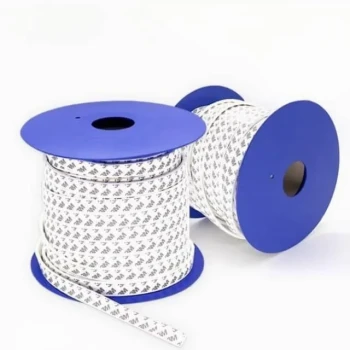
- Custom PTFE Sealing Tapes for Industrial and High Tech Applications
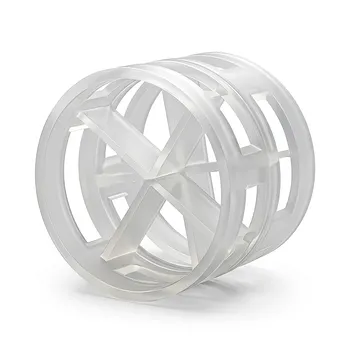
- High Purity PFA PTFE Raschig Rings for Chemical Distillation Tower Packing in Acidic and Alkaline Environments
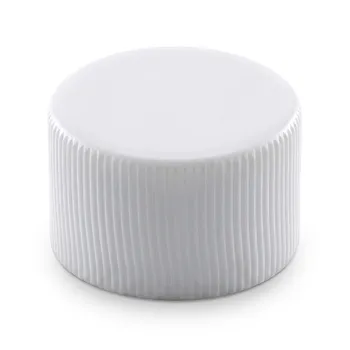
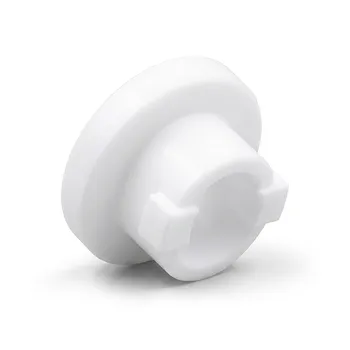
- Custom PTFE Sealing Caps and Corrosion Resistant Low Background Teflon Adapters
- Custom PTFE Insulating Gaskets and Corrosion Resistant Fluoropolymer Seals for Industrial Electrical Applications
People Also Ask
- In what medical devices is PTFE commonly used? Essential Components for Safety and Reliability
- Is PTFE approved for food contact applications? Ensuring Food Safety with Compliant PTFE
- Why is PTFE classified as non-melt-processible?
- What is notable about the coefficient of friction of PTFE? Achieve Unmatched Low-Friction Performance
- How does PTFE's flexibility affect its performance? Unlock Durability and Sealing Power