PVDF is not universally resistant to polar aprotic solvents. Strongly polar aprotic solvents such as DMF, DMAc, DMSO, NMP, and HMPA can substantially swell or dissolve PVDF, while carbonate solvents may cause temperature-dependent swelling and eventual dissolution. For labware exposed to these media, solvent identity, temperature, exposure time, mechanical stress, and the fluoropolymer’s fluorine content must be evaluated together; PTFE or PFA is generally the safer choice when dimensional stability is critical.
PVDF’s semi-fluorinated structure allows certain polar aprotic solvents to penetrate between polymer chains and disrupt polymer-polymer interactions. Fully fluorinated materials such as PTFE and PFA provide substantially greater resistance to solvent-induced swelling, softening, and dissolution, particularly during heated or long-duration exposure.
Why PVDF Responds Differently to Organic Solvents
PVDF Is Semi-Fluorinated
PVDF contains repeating vinylidene fluoride units with both carbon-fluorine and carbon-hydrogen bonds. The hydrogen-containing portions of the chain leave it more chemically accessible than fully fluorinated polymers such as PTFE and PFA.
This distinction matters because fluorine content is a major factor in swelling resistance. Increasing fluorine content generally reduces solvent penetration and volume change.
Solvent Affinity Controls Chain Swelling
A solvent swells a polymer when it has sufficient chemical affinity to enter the polymer matrix and separate the chains. Molecular size, polarity, intermolecular forces, and the polymer’s crystallinity all influence this process.
As solvent uptake increases, PVDF may experience dimensional expansion, softening, loss of strength, or seal deformation. If solvent-polymer interactions become sufficiently favorable, the polymer can progress from swelling to dissolution.
How Major Solvent Classes Affect PVDF
Strong Polar Aprotic Solvents
DMF, DMAc, DMSO, NMP, and HMPA are among the most aggressive solvents for PVDF. Their high polarity and strong interactions with the polar regions of the PVDF chain can produce substantial swelling or dissolution, in some cases at room temperature.
These solvents are particularly important in fluoropolymer processing because they are capable of dissolving PVDF for solution casting, coating, and related operations. A PVDF container or fitting should therefore not be assumed compatible merely because it is itself a fluoropolymer.
Carbonate Solvents
Carbonate solvents show a strongly temperature-dependent effect. Dimethyl carbonate, or DMC, can significantly swell PVDF at moderate temperature, with a reported swelling ratio of approximately 1.2 at 40°C, and can dissolve PVDF at temperatures above approximately 80°C.
The reported resistance trend is:
DMC >> PC approximately equal to EC > DEC
Here, DMC is the most aggressive of the listed carbonates. Propylene carbonate and ethylene carbonate can also cause meaningful swelling, while diethyl carbonate is comparatively less aggressive.
Acetonitrile, Nitriles, and Selected Ketones
Acetonitrile, 2-pentanone, sulfolane, and some nitrile-containing solvents are described as non-solvents for PVDF, with minimal swelling under the referenced conditions. This means they generally have insufficient affinity to produce substantial chain separation at those temperatures and exposure times.
However, “non-solvent” is not a universal compatibility rating. Temperature, copolymer composition, processing history, crystallinity, pressure, and mechanical loading can change the observed result.
Hydrocarbons and Other Organic Solvents
Hydrocarbons, chlorinated solvents, esters, ketones, and amines can show different behavior depending on their polarity and molecular structure. Lower-fluorine materials and polymers containing more VDF character are more susceptible to swelling by low-molecular-weight polar solvents, including some esters, ketones, and amines.
Aromatic hydrocarbons can also swell fluoropolymers, although increasing fluorine content can reduce that effect substantially. Solvent resistance should therefore be assessed for the specific resin and not inferred from the broad label “fluoropolymer.”
What This Means for Labware Selection
Separate PVDF From Fully Fluorinated Materials
PVDF, PTFE, and PFA should not be treated as interchangeable. PVDF can be useful where its mechanical properties, processability, or cost are advantageous, but its semi-fluorinated structure makes it vulnerable to solvent systems that are well tolerated by PTFE and PFA.
PTFE and PFA provide much higher resistance because their carbon chains are more completely shielded by fluorine. They are typically preferred for reagent bottles, tubing, valves, fittings, vessel liners, and reaction components exposed to aggressive polar aprotic or carbonate solvents.
Evaluate the Complete Exposure Profile
Compatibility depends on more than the solvent name. The evaluation should include:
- Solvent composition: Pure solvents, mixtures, and electrolytes may behave differently.
- Temperature: Heating can accelerate diffusion, swelling, softening, and dissolution.
- Exposure duration: Long-term contact can produce effects that short screening tests miss.
- Mechanical stress: Pressurized tubing, threaded fittings, seals, and flexed components are more vulnerable to dimensional change.
- Geometry: Thin walls and small sealing surfaces can fail sooner than thick, unstrained components.
- Purity requirements: Extractables, leachables, and absorbed solvent may contaminate the process.
- Permeation risk: A material may retain its shape while still allowing solvent diffusion through its walls.
Pay Particular Attention to Seals and Connections
Swelling-induced dimensional changes can compromise compression seals, threaded joints, valve seats, and tubing connections. A small change in volume or hardness may produce leakage even when the bulk component appears intact.
For hot DMC, PC, EC, or concentrated DMF, DMAc, DMSO, or NMP service, the chemically resistant wetted path should include PTFE or PFA wherever practical. The compatibility of elastomeric seals and non-fluoropolymer support parts must also be checked separately.
Interpret “Fluoropolymer Compatibility” Precisely
Some compatibility data report excellent performance for fluoropolymer equipment during exposure to DMF at controlled temperatures. Such results are more consistent with fully fluorinated equipment, such as PTFE or PFA, than with the assumption that PVDF itself is resistant to DMF.
A specification should identify the exact material grade, not simply state that the component is made from a fluoropolymer. It should also identify the test temperature, duration, solvent concentration, and measured outcomes such as mass change, tensile retention, and dimensional change.
Understanding the Trade-offs
Higher Resistance Does Not Mean Universal Inertness
PTFE and PFA are among the most chemically resistant laboratory materials, but no polymer should be described as universally inert under every combination of solvent, temperature, pressure, and mechanical stress.
High-temperature exposure can still affect permeation, creep, seal performance, and mechanical reliability. Chemical compatibility data for the actual operating conditions remain necessary.
Swelling and Dissolution Are Different Failure Modes
Swelling may preserve the overall shape while changing dimensions, flexibility, hardness, or sealing behavior. Dissolution is more severe because the polymer loses its structural matrix and can contaminate the solvent.
A compatibility check that looks only for visible dissolution may therefore miss an earlier and operationally important swelling failure.
Short Tests Can Underestimate Long-Term Risk
A component may show little mass change during a short room-temperature test but absorb more solvent during prolonged heating. The supplementary data illustrate this temperature dependence for DMF exposure: approximately 1.5% mass change at 90°C was associated with retained tensile and elongation performance in the cited test, while exposure at 120°C produced about 5.5% weight change and reduced tensile-strength retention.
These values are test-specific and should not be generalized to every PVDF, PTFE, or PFA product. They demonstrate why temperature and duration must be included in qualification testing.
Material Selection Involves More Than Chemical Resistance
PTFE and PFA may offer better chemical stability but can differ from PVDF in stiffness, permeability, fabrication options, cost, and dimensional behavior under load. PFA is often selected when melt-processable, high-purity fluoropolymer components are needed, while PTFE is widely used where maximum chemical resistance is the priority.
The best choice is the material that satisfies chemical, thermal, mechanical, cleanliness, and manufacturing requirements simultaneously.
Making the Right Choice for Your Goal
Select labware based on the actual solvent, operating temperature, exposure duration, and mechanical function of each component.
- If your primary focus is room-temperature handling of weakly swelling solvents: PVDF may be suitable after confirming compatibility for the specific formulation, resin grade, and exposure duration.
- If your primary focus is DMF, DMAc, DMSO, NMP, or HMPA handling: Avoid assuming PVDF is resistant; use PTFE or PFA for critical wetted components and verify seal compatibility separately.
- If your primary focus is carbonate electrolytes or solvents: Treat DMC as especially aggressive toward PVDF, and qualify PC, EC, and DEC at the intended temperature before use.
- If your primary focus is heated or long-term operation: Test for mass uptake, dimensional change, mechanical-property retention, permeation, and seal integrity under representative conditions.
- If your primary focus is low contamination and high purity: Prefer high-purity PTFE or PFA and evaluate extractables, leachables, and solvent permeation for the complete assembly.
- If your primary focus is cost or ease of fabrication: PVDF may remain useful for less aggressive service, but its application limits should be established through solvent-specific testing.
The reliable rule is simple: use PVDF selectively, and choose PTFE or PFA when polar aprotic solvents, hot carbonates, or long-term dimensional stability make swelling unacceptable.
Summary Table:
| Solvent Class | Examples | Effect on PVDF | Recommendation |
|---|---|---|---|
| Strong polar aprotic | DMF, DMAc, DMSO, NMP, HMPA | Substantial swelling or dissolution | Use PTFE/PFA |
| Carbonates | DMC, PC, EC, DEC | Temperature-dependent swelling/dissolution (DMC aggressive) | Use PTFE/PFA for hot service |
| Nitriles/ketones | Acetonitrile, 2-pentanone, sulfolane | Minimal swelling at room temp | Confirm under actual conditions |
| Hydrocarbons/others | Aromatic hydrocarbons, esters, amines | Varies with polarity; may swell | Test specific solvents |
Ensure your labware withstands harsh chemicals. Contact KINTEK for PTFE/PFA labware solutions. Get in touch now to discuss your needs and benefit from our fluoropolymer expertise.
Related Products
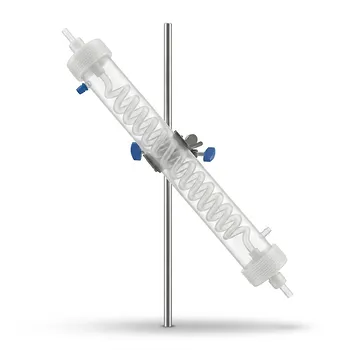
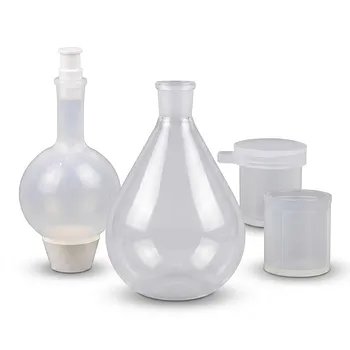
- High Purity PFA Chromatography Columns and Collection Bottles Corrosion Resistant Fluoropolymer Filtration Systems for Trace Analysis
- High Purity PFA Chromatography Column with Collection Bottle Corrosion Resistant Fluoropolymer Filtration System for Trace Analysis
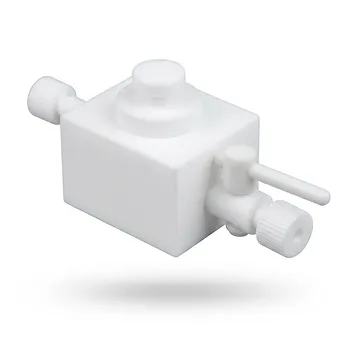
- High Purity PFA PTFE Flare Stop Valves Customizable 2-Way 3-Way Reducing Fluoropolymer Fluid Control Solutions
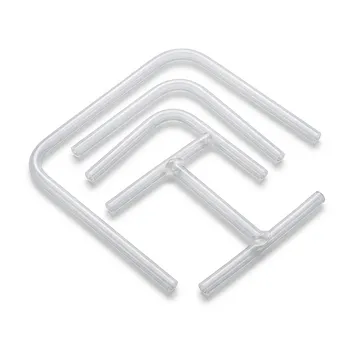
- Custom PFA Tubing 1/4 Inch High Purity Corrosion Resistant Fluoropolymer Tube with Welding and Machining Services
- Corrosion Resistant High Purity PFA Valve and Weldable Transparent Tubing for Semiconductor Fluid Transfer
People Also Ask
- Why use high-purity PFA bottles for Carbon Quantum Dots? Ensure Ink Stability and Prevent Fluorescence Quenching
- Why is PFA often selected over traditional PTFE for manufacturing complex fluoropolymer fluid components, custom fittings, and sealed laboratory digestion vessels? Discover the key advantages for your lab.
- What are the primary functional and temperature differences between PFA and FEP when selecting melt-processible fluoropolymers for custom laboratory apparatus?
- Why is the chemical stability of polymer endgroups critical when selecting melt-processible fluoropolymers like PFA for high-purity laboratory apparatus? Choose Stable Endgroups for Reliable Performance
- What are the characteristics of PFA material? A Guide to Its High-Performance Balance