Uniform fluoropolymer thin films for contact angle testing are typically prepared by dissolving the polymer in a suitable solvent, spin-coating the solution onto clean substrates, and removing residual solvent under vacuum. A practical starting formulation is 5–10 wt% fluoropolymer in a solvent such as tetrahydrofuran (THF) or cyclohexanone, followed by spin coating at approximately 2,000–2,500 rpm. The coated substrates are then dried at 80 °C for 24 hours before static contact angle measurements are performed using controlled water droplets.
For surface characterization, the most important requirements are a clean substrate, a continuous and uniform film, complete solvent removal, and measurements taken at multiple locations. Spin coating is often the simplest route for laboratory-scale samples, while vapor-phase methods are useful when the polymer is difficult to dissolve or when tighter control of film chemistry is required.
Preparing the Film for Reliable Surface Measurements
Select a Compatible Fluoropolymer Solution
The fluoropolymer must be soluble or sufficiently dispersible in a solvent that produces a stable, homogeneous coating solution. THF and cyclohexanone are examples of solvents used for solution processing, while specialized fluoropolymer resins may require more polar solvents such as dimethylformamide (DMF).
A concentration of 5–10 wt% provides a practical starting range. The final concentration should be adjusted if the resulting film is too thin, too thick, discontinuous, or difficult to dry uniformly.
Clean the Substrate Thoroughly
Glass substrates should be free from dust, grease, fingerprints, and cleaning residues before coating. Chemical washing, solvent cleaning, or vapor degreasing can be used, followed by complete drying.
For contact angle testing, the substrate should generally be smooth and chemically consistent. Mechanical roughening may improve adhesion in industrial coating applications, but it can also introduce roughness-related changes in the measured contact angle and should not be used unless it is part of the study design.
Apply the Solution by Spin Coating
The fluoropolymer solution is dispensed onto the clean substrate and spread by spinning at approximately 2,000–2,500 rpm. Spin speed, solution viscosity, dispensing volume, and spinning time determine the resulting film thickness and uniformity.
The coating process should be performed in a controlled environment where dust and airflow are minimized. Any visible particles, dewetting, streaks, pinholes, or uncovered regions can make the surface unsuitable for meaningful contact angle comparisons.
Remove Residual Solvent
After coating, the substrates are dried in a vacuum oven at approximately 80 °C for 24 hours. Vacuum drying helps remove solvent that may otherwise plasticize the film, alter its surface chemistry, or affect droplet spreading.
The drying schedule must remain compatible with the polymer and substrate. Excessive heating can change polymer morphology or cause thermal damage, while insufficient drying can produce unstable measurements.
Why Film Uniformity Matters
Surface Chemistry Must Be Consistent
Contact angle measurements describe the wetting behavior of the region contacted by the droplet. If fluoropolymer coverage varies across the substrate, different droplets may encounter different compositions or thicknesses.
A uniform, continuous coating helps ensure that the measured value reflects the fluoropolymer rather than exposed glass, residual solvent, contamination, or local defects.
Roughness Can Affect the Apparent Contact Angle
A water contact angle is not determined only by chemical composition. Surface roughness, porosity, heterogeneity, and contamination can all affect the apparent angle.
For that reason, a high contact angle should not automatically be interpreted as a direct measurement of intrinsic surface energy. It is a wetting result influenced by both the surface chemistry and the physical structure of the film.
Film Thickness Should Be Sufficient
The film should be thick and continuous enough that the droplet interacts primarily with the fluoropolymer. If the coating is too thin or contains pinholes, the underlying substrate may influence the result.
Thickness does not need to be maximized. The practical objective is a defect-free film whose surface behavior is representative of the fluoropolymer material being studied.
Measuring the Contact Angle
Use Controlled Droplet Volumes
Static contact angle testing can be performed by placing a controlled droplet, such as 10 µL of HPLC-grade water, on the dried film. The droplet should be deposited gently to avoid impact, spreading caused by excessive dispensing force, or disturbance of the surface.
The measurement should begin consistently after deposition because evaporation and droplet relaxation can change the observed angle over time.
Measure Multiple Surface Regions
Droplets should be placed on several different regions of the film. The contact angles are then averaged to reduce the influence of local defects and to provide a more representative value.
The individual measurements should also be recorded, not only the average. A large spread between locations is evidence of non-uniformity, contamination, roughness variation, or an unstable measurement procedure.
Interpret Water Repellency Carefully
Fluoropolymer surfaces generally have low surface energy and therefore show relatively high water contact angles. Modified, smooth, crack-free fluoropolymer films may produce water contact angles in the approximate range of 103° to 108°, depending on composition and processing.
This range should be treated as an example rather than a universal acceptance criterion. Polymer chemistry, film morphology, substrate effects, droplet volume, and instrument conditions can all shift the result.
Alternative Deposition Methods
Use Plasma Polymerization for Insoluble Materials
Some fluoropolymers are difficult to process from solution. Plasma polymerization can deposit fluorinated coatings directly onto substrates and allows film properties to be adjusted through parameters such as substrate temperature, radio-frequency power, and system pressure.
This approach is useful when a thin, conformal, chemically stable coating is needed without relying on a soluble resin.
Use HWCVD for Vapor-Phase Deposition
Hot Wire Chemical Vapor Deposition (HWCVD) is another option for producing fluoropolymer-like films from vapor-phase precursors. Precursor pressure can influence whether the deposited material is more porous or forms a denser, continuous globular morphology.
Because morphology directly affects wetting, deposition conditions must be documented and controlled when contact angle data are compared across samples.
Control Chamber Contamination
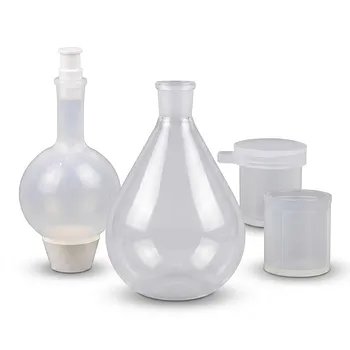
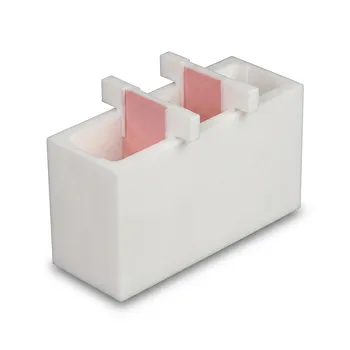
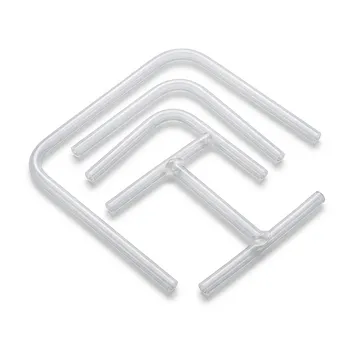
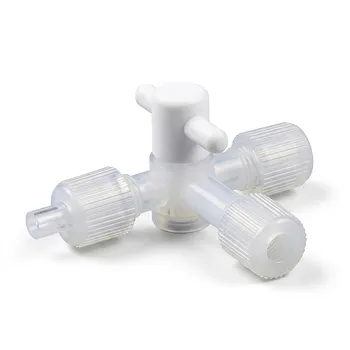
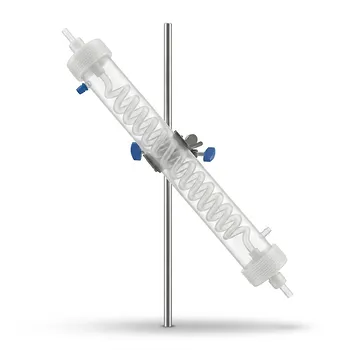
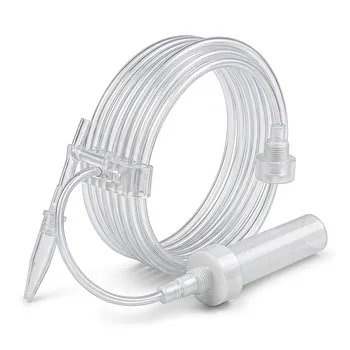
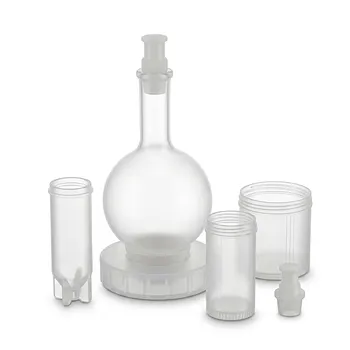
Reactive fluorine-containing processes are sensitive to contamination from equipment materials and previous deposits. High-purity, chemically inert components such as PTFE or PFA tubing, fittings, and substrate holders can help reduce trace contamination in deposition systems.
This consideration is more important for plasma or HWCVD processing than for a basic spin-coating workflow, but it remains part of obtaining reproducible surface data.
Understanding the Trade-offs
Spin Coating Is Accessible but Solvent-Dependent
Spin coating is relatively simple and well suited to small, flat substrates. Its limitations are that the polymer must be compatible with the chosen solvent and that film thickness depends strongly on solution viscosity and processing conditions.
Solvent evaporation can also produce edge effects, thickness gradients, or residual-solvent artifacts if drying is incomplete.
Vapor-Phase Methods Offer More Process Control
Plasma polymerization and HWCVD can process materials that are insoluble in conventional solvents and can provide specialized control over coating chemistry and morphology. They require more complex equipment, process optimization, and careful control of chamber conditions.
The resulting film may also differ chemically from the original bulk fluoropolymer, so it should be characterized as a deposited fluorinated coating rather than assumed to be identical to the source resin.
Roughening Improves Adhesion but Complicates Wetting Analysis
Grit blasting and other roughening methods increase surface area and can improve adhesion on industrial metal components. However, roughness can change the measured apparent contact angle and make it harder to separate chemistry effects from topography effects.
For comparative surface characterization, smooth glass is generally preferable unless the investigation specifically concerns rough or engineered substrates.
Contact Angle Alone Is Not a Complete Surface Analysis
Contact angle testing is sensitive to contamination, droplet size, timing, roughness, and surface heterogeneity. It is therefore best used with visual inspection and, when necessary, complementary measurements such as film thickness, microscopy, or surface chemical analysis.
A single contact angle value should not be treated as a complete description of coating quality or intrinsic surface energy.
How to Apply This to Your Project
Use the following choices to match the preparation method to the measurement goal:
- If your primary focus is reproducible water contact angle data: Use a 5–10 wt% solution, spin-coat clean smooth glass at approximately 2,000–2,500 rpm, vacuum-dry at 80 °C for 24 hours, and average measurements from multiple regions.
- If your primary focus is uniform electrical or barrier performance: Prioritize a continuous, crack-free film with sufficient coverage, and inspect for pinholes, thickness variation, and residual solvent before wetting measurements.
- If your primary focus is coating an insoluble fluoropolymer: Use plasma polymerization or HWCVD, while documenting pressure, power, temperature, and other deposition conditions that control film morphology.
- If your primary focus is adhesion to an industrial component: Clean and, where appropriate, roughen the substrate, but recognize that the resulting roughness will affect contact angle interpretation.
- If your primary focus is intrinsic surface chemistry: Use smooth, low-contamination substrates and combine contact angle data with independent characterization of roughness and film composition.
Reliable contact angle results come from controlling the entire film preparation process, not from the droplet measurement alone.
Summary Table:
| Method | Key Steps | Suitable For |
|---|---|---|
| Spin Coating | Dissolve polymer in solvent (5-10 wt%), spin at 2000-2500 rpm, vacuum dry at 80°C for 24h | Soluble polymers, flat substrates |
| Plasma Polymerization | Deposit from vapor phase, adjust RF power and pressure | Insoluble polymers, conformal coatings |
| HWCVD | Use hot wire to deposit from vapor, control precursor pressure | Vapor-phase deposition, specialized morphology |
Get consistent fluoropolymer films and reliable contact angle measurements with our high-purity PTFE/PFA labware and custom components. Contact KINTEK today to optimize your surface characterization workflow!
Related Products
- Custom PTFE Insulating Gaskets and Corrosion Resistant Fluoropolymer Seals for Industrial Electrical Applications
- High Purity PFA Chromatography Column with Collection Bottle Corrosion Resistant Fluoropolymer Filtration System for Trace Analysis
- High Temperature Resistant PTFE Thermal Insulation Board Corrosion Resistant Metal Free Fluoropolymer Stand for Ultra Clean Laboratories
- High Temperature Resistant Insulating TFM Separator and Ultra Clean Laboratory PTFE Baffle Plate with Customizable Pore Size and Hole Configuration
- High Purity PTFE Wafer Cassette Etching Carrier for Semiconductor Silicon Wafer Cleaning and Acid Resistance
People Also Ask
- What are the three primary types of PTFE available for gaskets and seals? Choose the Right Material for Your Application
- Why is PTFE an ideal material choice for sealing gaskets, valves, and fluid transfer tubing exposed to extremely aggressive chemicals? Discover Its Superior Chemical Resistance and Reliability
- How is PTFE utilized in seals and gaskets? Leverage Its Chemical & Temperature Resistance
- What are the key properties of PTFE that make it suitable for seals and gaskets? Unlock Superior Sealing Performance
- How are custom PTFE parts used in the automotive sector? Enhance Vehicle Performance & Durability