Voltage stability is the fundamental regulator of the exfoliation process. It ensures that the electrochemical cell provides a constant, predictable energy level to drive ions into the bulk sulfur structure. Without this stability, the resulting Sulfur Quantum Dots (SQDs) will suffer from inconsistent physical properties and poor electronic performance.
The core takeaway is that voltage stability dictates the precision of ion intercalation. Maintaining a constant potential is the only way to ensure uniform size distribution and optimized surface chemistry, which are the primary drivers of photoelectric efficiency in SQDs.
The Role of Voltage in Ion Intercalation
Driving Controlled Structural Expansion
In the electrochemical exfoliation of SQDs, voltage acts as the "pump" that forces ions into the sulfur material. This process, known as intercalation, requires a specific energy threshold to expand the sulfur layers without destroying the desired quantum dot structure.
Maintaining Kinetic Consistency
When the voltage is stable, the rate and energy of ion movement remain constant throughout the synthesis. This consistency allows for a steady "peeling" of the sulfur material at the molecular level, ensuring the reaction proceeds predictably.
Impact on Material Quality and Performance
Achieving Precise Size Distribution
The final size of a quantum dot determines its bandgap and optical properties. Fluctuating voltage causes uneven intercalation energy, leading to a mixture of large and small particles rather than the uniform size distribution required for high-end applications.
Managing Surface Defect States
Surface defects significantly influence how SQDs interact with light and electricity. A stable voltage environment allows for the controlled formation of surface states, preventing the "over-processing" of the material that can lead to excessive, efficiency-killing defects.
Optimizing Photoelectric Conversion
The ultimate goal of SQD synthesis is often high photoelectric conversion efficiency. Because this efficiency is a direct result of size uniformity and defect management, voltage stability is effectively the bottleneck for the material's functional performance.
Understanding the Trade-offs
Precision vs. System Complexity
Achieving high voltage stability often requires more sophisticated power supplies and reference electrodes. While this increases the complexity of the electrochemical cell setup, the trade-off is a significant reduction in material waste and a higher yield of premium-grade SQDs.
Sensitivity to Electrolyte Composition
As intercalation progresses, the chemistry of the electrolyte may change, which can naturally cause voltage drift. Failing to compensate for these micro-changes can lead to "gradient batches" where the SQDs produced at the beginning of the process differ significantly from those produced at the end.
How to Apply This to Your Synthesis
To ensure the highest quality Sulfur Quantum Dots, the electrochemical environment must be strictly monitored and controlled.
- If your primary focus is uniform particle size: You must prioritize a high-precision power supply with low ripple voltage to ensure the intercalation energy remains perfectly constant.
- If your primary focus is maximum photoelectric efficiency: You should use a three-electrode system to monitor the working electrode potential directly, preventing surface defect variations caused by voltage drift.
A stable electrochemical environment is the non-negotiable foundation for transforming bulk sulfur into high-performance quantum dots.
Summary Table:
| Feature | Role in SQD Synthesis | Impact of Voltage Instability |
|---|---|---|
| Ion Intercalation | Drives ions into bulk sulfur at specific energy levels | Uncontrolled expansion or material destruction |
| Kinetic Consistency | Maintains steady material "peeling" at molecular levels | Irregular reaction rates and unpredictable batches |
| Size Distribution | Regulates bandgap and optical properties via energy control | Mixed particle sizes and inconsistent performance |
| Surface Chemistry | Manages the formation of critical surface defect states | Excessive defects reducing photoelectric efficiency |
Elevate Your SQD Synthesis with KINTEK’s Precision Labware
Precise electrochemical exfoliation demands a stable, contamination-free environment. KINTEK specializes in high-performance PTFE and PFA laboratory supplies designed for the most rigorous trace analysis and synthesis applications. From standard and custom electrochemical cells, battery testing fixtures, and electrode accessories to advanced hydrothermal synthesis liners and microwave digestion vessels, we provide the specialized equipment your research requires.
Whether you need everyday basic labware (beakers, crucibles, reagent bottles), comprehensive fluid transfer components (tubing, fittings, valves), or complex non-standard machined parts via our end-to-end custom CNC fabrication, KINTEK delivers. We maintain an absolute focus on high-performance fluoropolymers to ensure your material’s photoelectric efficiency is never compromised by equipment failure.
Ready to optimize your electrochemical setup? Contact us today to discuss your custom requirements!
References
- Kawan F. Kayani, Jamal Hassan. Fluorescent sulfur quantum dots for environmental monitoring. DOI: 10.1515/ntrev-2024-0138
This article is also based on technical information from Kintek Knowledge Base .
Related Products
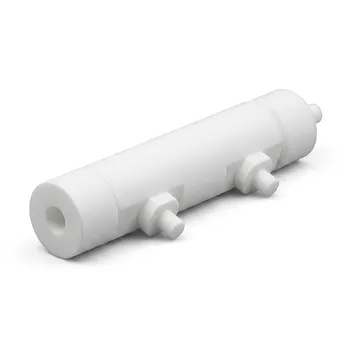
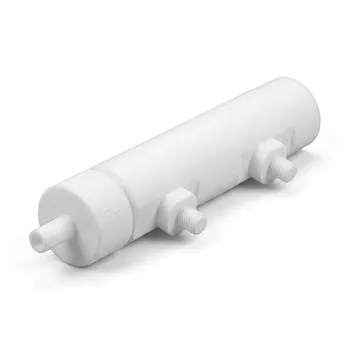
- Corrosion Resistant PTFE Electrochemical Cell for New Energy Research Inert Insulating Customizable Lab Reaction Vessel
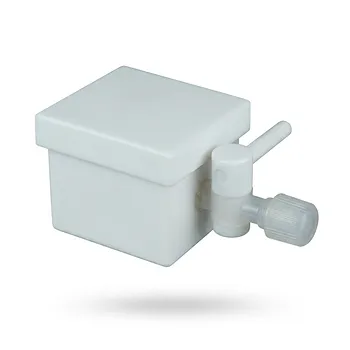
- Square PTFE Electrochemical Cell for Silicon Wafer Processing and Hydrofluoric Acid Resistance in Semiconductor and New Energy Research
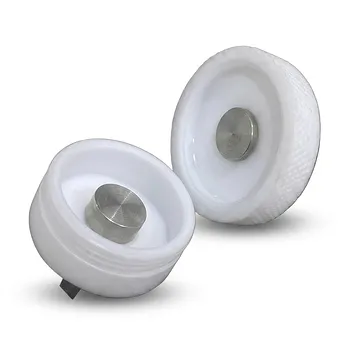
- White PTFE Electrolytic Cell with Movable Slider and Insulated Lid for Fluorine Corrosion Resistance
- Custom PTFE Reaction Box Opaque White Square Electrochemical Cell Tank
- Custom PTFE Electrolytic Cell Corrosion Resistant Low Background Reaction Vessel with Inlet Outlet Ports
People Also Ask
- How do custom PTFE electrochemical cells improve the accuracy of stability testing for alkaline catalysts compared to glass cells?
- How does the hydrophobicity of PTFE benefit electrochemical measurements? Enhance Stability and Precision in Your Lab
- What makes PTFE an ideal construction material for custom electrochemical cells and electronic analytical instrumentation housings? Discover superior chemical resistance and electrical insulation
- Why must seawater electrolysis test cells have high corrosion resistance? Protect catalyst stability & data accuracy.
- What are the key steps for structural integrity in molded PTFE lab reaction vessels? Master fine powder processing.