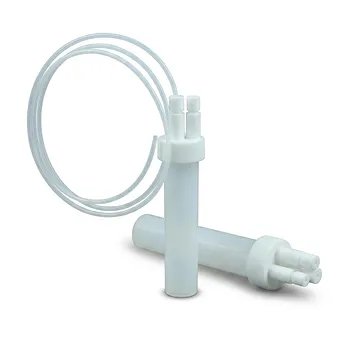
The selection of high-purity PTFE or PFA is critical for $MnWO_4$ synthesis. These materials provide an unmatched combination of chemical inertness and low-leaching profiles, ensuring that the precursor solution remains free from container-derived contaminants that would otherwise compromise the final nanomaterial's performance.
Core Takeaway: Utilizing high-purity fluoropolymers like PTFE and PFA prevents "background contamination" and ion adsorption during the preparation of $MnWO_4$. This preservation of chemical purity is essential for maintaining the integrity of the crystal lattice, which directly dictates the electrochemical capacity and long-term stability of the synthesized manganese tungstate.
Ensuring Chemical Stability and System Purity
Exceptional Resistance to Corrosive Reagents
The synthesis of $MnWO_4$ often involves the use of strong acids, strong bases, or aggressive metal salt solutions. High-purity PTFE and PFA are virtually non-reactive, preventing the reagents from corroding the container walls.
In contrast, conventional glassware can react with certain alkaline or acidic precursors. This reaction can lead to the leaching of silica or metallic impurities into the precursor solution, altering its chemical profile before the synthesis even begins.
Minimizing Trace Element Contamination
Because PFA and PTFE have extremely low impurity leaching rates, they are the gold standard for high-sensitivity chemical work. They ensure that no external metallic ions enter the reaction system from the plastic itself.
This level of purity is vital for "fine chemical synthesis." Even trace amounts of foreign ions can interfere with the nucleation and growth of $MnWO_4$ nanoparticles, leading to unpredictable experimental results.
Protecting the $MnWO_4$ Crystal Lattice
Preventing Impurity Insertion
The primary risk of using inferior materials is the introduction of foreign ions into the $MnWO_4$ crystal lattice. When impurity ions are present in the precursor solution, they can be incorporated into the solid structure during precipitation or hydrothermal processing.
These structural defects act as "poison" within the lattice. They disrupt the orderly arrangement of atoms, which is the foundation of the material's unique electrochemical properties.
Impact on Electrochemical Performance
The presence of lattice impurities negatively impacts the specific capacitance and cycling stability of $MnWO_4$ nanomaterials. These materials are often destined for energy storage applications where charge transport efficiency is paramount.
Impurity ions can create traps for charge carriers or cause structural strain. This leads to a faster degradation of the material over repeated charge/discharge cycles, shortening the functional lifespan of the resulting battery or supercapacitor components.
Maintaining Stoichiometric Precision
Eliminating Surface Adsorption
Fluoropolymers like PFA and PTFE possess extremely low surface energy, which prevents metal ions like $Mn^{2+}$ from adhering to the container walls. In glass or lower-grade plastics, "wall loss" can occur as ions stick to the surface.
This ensures that the precise stoichiometry (the exact ratio of manganese to tungsten) is maintained. In nanomaterial synthesis, even a slight deviation from the intended chemical ratio can result in the formation of undesirable secondary phases.
Improving Concentration Accuracy
Because these materials are non-stick, they also prevent the adhesion of reactive coupling agents or organic solvents like ethanol and toluene. This ensures that the entire volume of the precursor is available for the reaction.
Maintaining the exact concentration of the precursor components is vital for achieving reproducible particle sizes. Without this control, the morphology of the $MnWO_4$ can vary significantly between batches.
Understanding the Trade-offs
Thermal and Cost Considerations
While PTFE and PFA offer superior chemical protection, they have a lower maximum service temperature compared to quartz or specialty glass. PTFE is generally stable up to 260°C, which is sufficient for precursor preparation but may limit certain high-heat post-processing steps.
Furthermore, the initial investment cost for high-purity fluoropolymer labware is significantly higher than standard borosilicate glass. However, this cost is usually offset by the increased reliability of data and the reduction in failed synthesis batches.
Structural Rigidity
PFA is translucent and more rigid than PTFE, making it better suited for volumetric measurements and storage where visibility is required. PTFE is opaque and can be softer, which may lead to slight deformations over years of heavy use in high-pressure environments.
How to Apply This to Your Project
When integrating high-purity fluoropolymers into your $MnWO_4$ synthesis workflow, consider your specific experimental goals:
- If your primary focus is electrochemical performance: Use PFA beakers and liners to ensure zero lattice contamination and maximum specific capacitance.
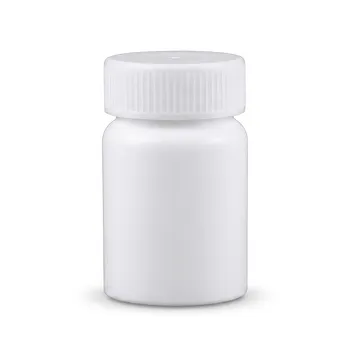
- If your primary focus is trace analysis (ICP-MS): Opt for high-purity PFA reagent bottles to minimize background metal ion noise and surface adsorption.
- If your primary focus is bulk precursor mixing: PTFE mixing tanks provide a cost-effective yet inert solution for handling large volumes of corrosive metal salts.
- If your primary focus is precise stoichiometry: Utilize PFA volumetric flasks to prevent $Mn^{2+}$ ion loss due to wall adsorption.
Choosing the right high-purity container is not merely a matter of convenience, but a fundamental requirement for achieving high-performance, stable manganese tungstate nanomaterials.
Summary Table:
| Key Property | Benefit for MnWO4 Synthesis | Material Advantage |
|---|---|---|
| Chemical Inertness | Prevents reagent corrosion and leaching | Resists strong acids/bases used in synthesis |
| Low Leaching Rate | Protects crystal lattice from metallic impurities | Maintains high electrochemical capacity |
| Low Surface Energy | Prevents $Mn^{2+}$ ion adsorption (wall loss) | Ensures stoichiometric precision and accuracy |
| Thermal Stability | Suitable for hydrothermal precursor prep | Stable and non-reactive up to 260°C |
Elevate Your Nanomaterial Synthesis with KINTEK
Precision in $MnWO_4$ synthesis starts with the purity of your environment. KINTEK specializes in high-performance fluoropolymer solutions designed to eliminate background contamination and protect your material's crystal lattice.
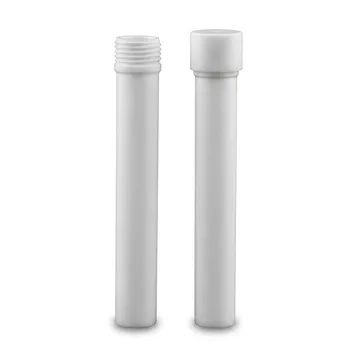
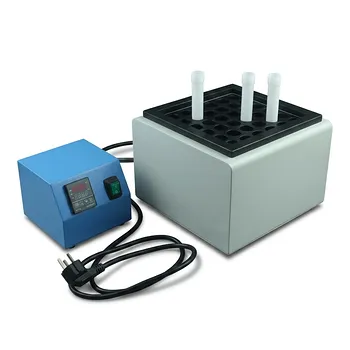
From everyday basic labware like PFA beakers, reagent bottles, and digestion tubes to advanced custom-machined hydrothermal synthesis liners and electrochemical cells, we offer an exhaustive range of PTFE and PFA products. Whether you require standard consumables or complex, non-standard bespoke laboratory setups, our end-to-end CNC fabrication ensures every piece meets your exact stoichiometric requirements.
Don't let trace impurities compromise your electrochemical performance. Contact KINTEK today to discuss your high-volume orders or custom engineering needs!
References
- Dipak Kumbhar, R.K. Nimat. Investigations on structural and electrochemical energy storage properties of pH dependent MnWO4 nanoparticles. DOI: 10.1007/s44373-025-00062-6
This article is also based on technical information from Kintek Knowledge Base .
Related Products
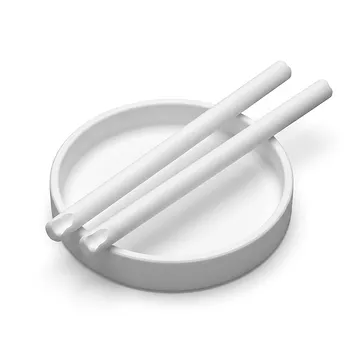
- High Purity PTFE Trays Corrosion Resistant Laboratory Labware Customizable Square Round Fluoropolymer Trays
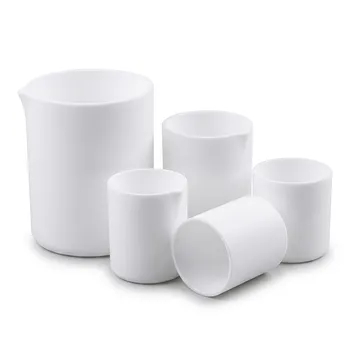
- High Purity PFA Crucible and Corrosion Resistant PTFE Beaker for Trace Analysis and Custom Laboratory Applications
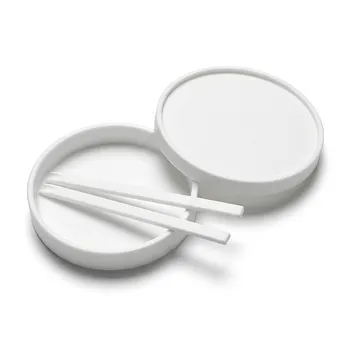
- Custom PTFE Petri Dish 200mm High Purity Corrosion Resistant Low Background Laboratory Ware
- Custom PTFE Petri Dishes Corrosion Resistant High Purity Low Background Labware
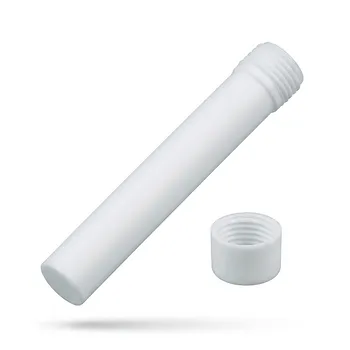
- Industrial High Purity PTFE Digestion Tubes Chemical Resistant Teflon Labware Custom Fabricated Trace Analysis Vessels
People Also Ask
- Why is PFA or PTFE labware critical for Bismuth Ferrite (BFO) stoichiometry? Achieve Stoichiometric Precision
- Why is high-purity PFA or PTFE labware necessary for preparing VS2/MoS2? Ensure Phase Purity & Catalyst Performance
- Why is the use of high-purity PFA or PTFE labware critical during TiO2 nanoparticle purification? Protect Sample Purity
- What are the advantages of high-purity PFA or PTFE labware for trace metal analysis? Ensure ICP-MS & AAS Precision
- Why are high-purity PTFE or PFA laboratory products preferred in chemical synthesis and sample preparation processes?