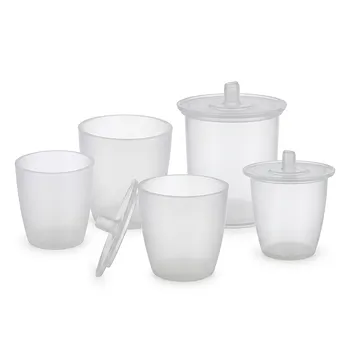
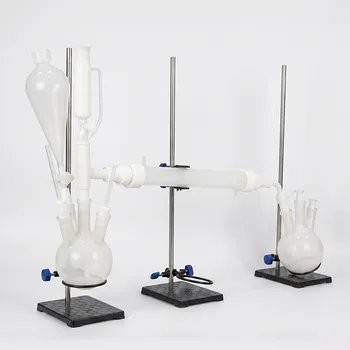
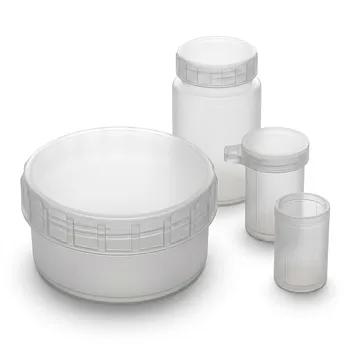
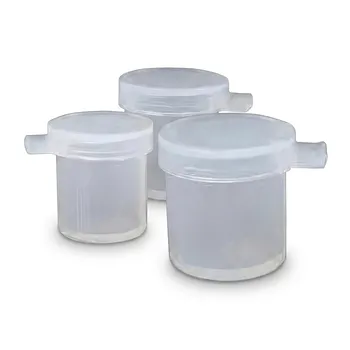
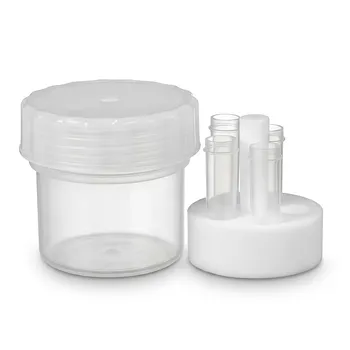
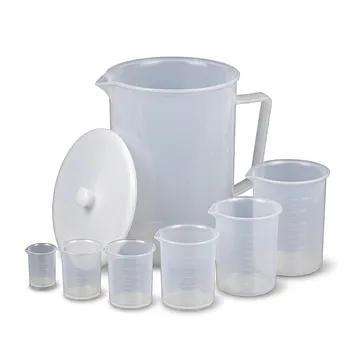
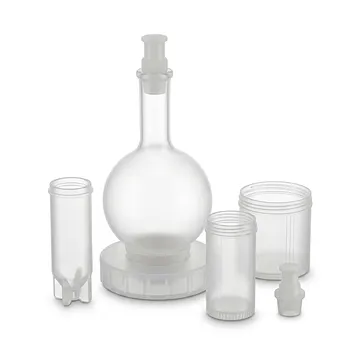
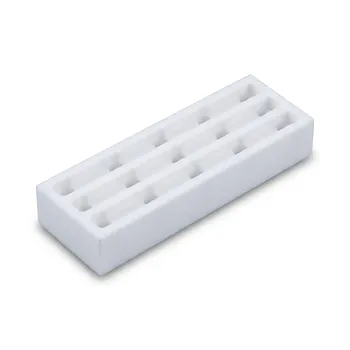
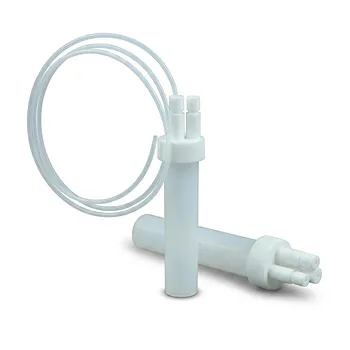
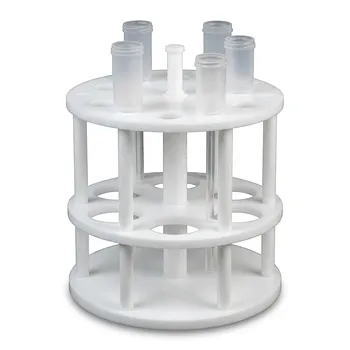
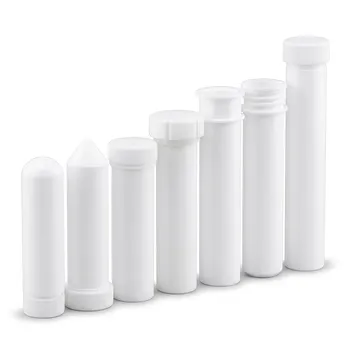
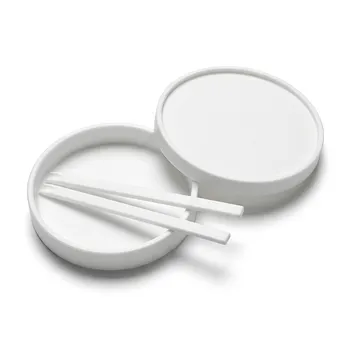
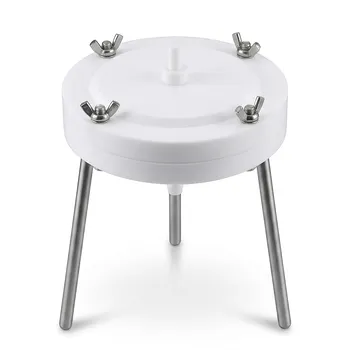
The use of high-purity PFA and PTFE labware is a non-negotiable requirement for seawater splitting research. These materials provide total chemical inertness against corrosive chloride ions and alkaline electrolytes, preventing the leaching of trace metals that would otherwise contaminate sensitive analytical data. By utilizing these high-performance fluoropolymers, researchers ensure that catalyst characterization remains accurate and the integrity of the experimental environment is preserved over long-term testing.
Seawater splitting involves highly aggressive electrochemical environments that can degrade standard laboratory materials. High-purity fluoropolymers eliminate the risk of sample contamination and hardware corrosion, providing the chemical stability necessary for reproducible trace-level analysis and long-term experimental reliability.
The Corrosive Reality of Seawater Electrolysis
Resistance to Chloride-Induced Corrosion
Seawater contains high concentrations of chloride ions, which are notoriously aggressive toward metallic components and low-grade plastics. High-purity PFA and PTFE are virtually non-reactive, ensuring that the containers and fittings do not degrade during the electrolysis process.
Stability in Highly Alkaline Environments
Many seawater splitting experiments utilize alkaline electrolytes to optimize catalyst performance. Fluoropolymers maintain their structural integrity and chemical resistance even when exposed to these strong bases, where traditional glass would suffer from etching and silica leaching.
Protection During Long-Term Cycling
Research into hydrogen production requires long-term cycling tests to determine catalyst durability. The exceptional chemical stability of PFA and PTFE prevents the gradual breakdown of the experimental setup, which could otherwise introduce "drift" into the data over hundreds of hours.
Safeguarding Analytical Integrity
Eliminating Trace Metal Leaching
In seawater splitting, the performance of a catalyst is often measured in parts per billion or million. High-purity fluoropolymers have extremely low levels of extractables, ensuring that no background metal ions leach into the solution and provide "false" catalytic activity or interfere with results.
Ensuring Accuracy in ICP and XPS Characterization
Precise data from Inductively Coupled Plasma (ICP) and X-ray Photoelectron Spectroscopy (XPS) are critical for verifying catalyst composition. Using PFA labware prevents secondary contamination, allowing these sensitive instruments to detect only the elements intended to be in the reaction system.
Preventing Surface Adsorption and Analyte Loss
Target analytes and expensive catalyst precursors can often "stick" to the walls of glass or inferior plastic containers. High-purity PFA features superior anti-adsorption properties, ensuring that the full concentration of the sample reaches the analytical instrument without loss to the container walls.
Understanding the Trade-offs
Cost and Material Investment
High-purity fluoropolymers are significantly more expensive than standard laboratory glass or disposable plastics. While the initial investment is higher, the cost is justified by the prevention of failed experiments and the ability to reuse the labware after rigorous cleaning.
Physical Limitations and Mechanical Softness
PTFE and PFA are mechanically softer than stainless steel or borosilicate glass. They can be prone to deformation under extreme pressure or high-torque mechanical stress, requiring careful handling when used in custom-machined reactor parts.
Gas Permeability Considerations
While chemically inert, fluoropolymers have a degree of gas permeability that is higher than glass or metal. Researchers must account for this when conducting experiments that require the absolute exclusion of atmospheric gases over very long durations.
Implementing Fluoropolymer Solutions in the Lab
When integrating high-purity PFA and PTFE into your seawater splitting workflow, consider your specific analytical goals to select the most efficient material.
- If your primary focus is trace element analysis (ICP-MS/XPS): Use high-purity PFA beakers and reagent bottles, as PFA typically offers the lowest metal ion background and the smoothest surface finish.
- If your primary focus is high-temperature hydrothermal synthesis: Utilize PTFE-lined autoclaves, which provide the necessary chemical resistance and thermal stability for synthesizing complex catalyst structures at elevated temperatures.
- If your primary focus is routine electrolyte storage: Opt for PFA or PTFE wash bottles and storage containers to prevent the slow leaching of impurities that can occur in standard HDPE or glass containers over time.
By standardizing on high-purity fluoropolymers, you ensure that every data point generated is a true reflection of your catalyst's performance rather than an artifact of container contamination.
Summary Table:
| Key Requirement | How PFA/PTFE Solves It | Research Benefit |
|---|---|---|
| Corrosion Resistance | Inert to chloride ions & alkaline bases | Prevents hardware degradation and leaks |
| Analytical Purity | Near-zero metal leaching (extractables) | Ensures accurate ICP-MS and XPS results |
| Anti-Adsorption | Extremely smooth, non-stick surface | Prevents loss of catalyst precursors or analytes |
| Thermal Stability | Resists degradation in hydrothermal synth | Reliable performance in high-temp reactions |
Elevate Your Seawater Research with KINTEK Fluoropolymers
Don't let sample contamination or hardware corrosion compromise your hydrogen production data. KINTEK offers an exhaustive range of high-performance labware specifically designed for the most aggressive electrochemical environments.
From everyday basic labware like beakers, measuring cylinders, and reagent bottles to advanced custom-machined electrochemical cells, hydrothermal synthesis liners, and microchannel reactors, we provide everything you need to maintain a pristine analytical environment. Whether you require standard tubing, fittings, and filtration tools or bespoke battery testing fixtures crafted via our end-to-end custom CNC fabrication, KINTEK ensures your setup is built for high-purity trace analysis.
Ready to optimize your lab's performance? Contact us today to discuss your custom fluoropolymer requirements!
References
- Peng‐Jun Deng, Panagiotis Tsiakaras. Strategies for Designing Anti‐Chlorine Corrosion Catalysts in Seawater Splitting. DOI: 10.1002/aenm.202405749
This article is also based on technical information from Kintek Knowledge Base .
Related Products
- High Purity PFA Crucible and Corrosion Resistant PTFE Beaker for Trace Analysis and Custom Laboratory Applications
- High Purity PTFE Trays Corrosion Resistant Laboratory Labware Customizable Square Round Fluoropolymer Trays
- High Purity PFA Constant Pressure Condensation Reaction System Acid Resistant High Temperature Customizable Teflon Labware
- Custom PTFE Petri Dish 200mm High Purity Corrosion Resistant Low Background Laboratory Ware
- PFA Reaction Jar Corrosion Resistant Wide Mouth PTFE Lab Bottle High Purity Chemical Vessel
People Also Ask
- Why are high-purity vessels critical for BiFeO3 synthesis? Ensuring Phase Purity
- Why is the use of high-purity PFA or PTFE labware critical during TiO2 nanoparticle purification? Protect Sample Purity
- Why is high-purity PFA trace analysis labware used for MXene? Ensure Superior Material Integrity in Research
- Why is high-purity PFA trace analysis labware recommended for trace element detection? Achieve Gold Standard PPT Accuracy
- Why is high-purity PFA labware necessary for Znx@LS-2 zeolite ICP-OES analysis? Ensure Trace-Level Precision