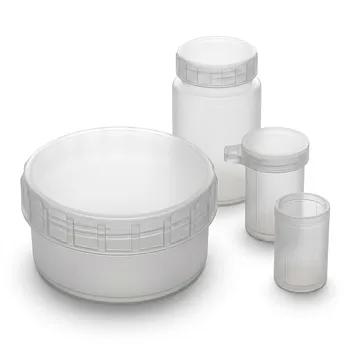
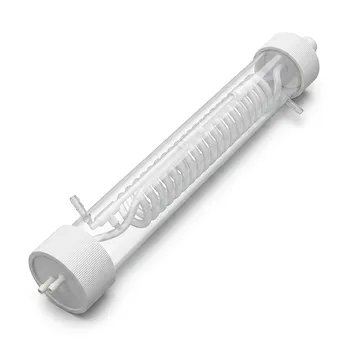
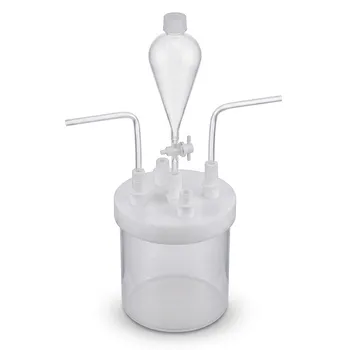
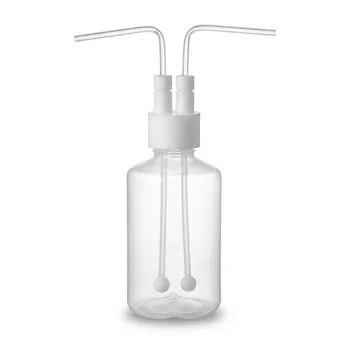
The precision of trace element detection hinges entirely on the integrity of the analytical environment. Using high-purity PFA labware for the analysis of $TiO_2@Er-Hydroxyapatite$ is critical because it eliminates two primary sources of analytical error: the leaching of container impurities into the sample and the physical loss of rare-earth dopants like Erbium through surface adsorption. This ensures that the measured concentrations reflect the true composition of the composite rather than artifacts introduced by the laboratory vessel.
High-purity PFA provides an ultra-clean, inert environment that simultaneously prevents sample contamination and analyte loss. In the characterization of rare-earth doped photocatalysts, this material is essential for generating the high-fidelity data required to correlate chemical composition with material performance.
The Mechanics of Purity in Trace Analysis
Eliminating Metal Ion Leaching
High-purity PFA (perfluoroalkoxy) is synthesized to have an extremely low metal ion background. Traditional materials like glass or standard plastics can leach trace amounts of elements into the sample solution, masking the actual concentrations of the target analytes.
By utilizing PFA, researchers ensure that the "background noise" of the experiment remains near zero. This chemical inertness is vital when measuring the minute amounts of Erbium (Er) required for advanced material synthesis.
Preventing Analyte Adsorption
Rare-earth elements and transition metals are prone to surface adsorption, where ions "stick" to the walls of a container. In a standard glass beaker, a significant portion of the Erbium dopant might adhere to the surface, leading to an underestimation of the actual concentration.
PFA labware features a non-adsorptive surface that keeps target elements in the solution. This ensures that the sample reaching the analytical instrument is a true representation of the original material.
Impact on Material Characterization
Correlating Doping to Photocatalytic Performance
The performance of $TiO_2@Er-Hydroxyapatite$ depends heavily on the specific concentration of the Erbium dopant. Even a slight discrepancy in measurement can lead to incorrect conclusions about the composite's photocatalytic efficiency.
Using PFA labware allows for the reproducibility of data, which is the cornerstone of high-level academic research. Accurate detection allows scientists to establish the exact "sweet spot" for doping levels to maximize chemical reactivity.
Surpassing the Limitations of Glassware
Glassware often contains oxides and impurities that can react with the aggressive reagents used to digest $TiO_2$ samples. Furthermore, the porous nature of some plastics can trap residues from previous experiments, leading to cross-contamination.
PFA is universally resistant to strong acids and bases, making it the superior choice for sample digestion and storage. Its ability to withstand harsh chemical environments without degrading ensures that no secondary contamination is introduced during sample preparation.
Understanding the Trade-offs
Cost and Material Investment
High-purity PFA labware is significantly more expensive than standard borosilicate glass or disposable plastics. For labs with limited budgets, this necessitates a strategic approach to inventory management, focusing PFA use only on the most sensitive stages of analysis.
Thermal and Mechanical Limits
While PFA has excellent chemical resistance, it is a softer material than glass and has lower maximum temperature thresholds. It can be prone to deformation if subjected to extreme heat or mechanical stress, requiring careful handling during high-temperature digestion processes.
Applying PFA Labware to Your Workflow
To achieve the highest standards of data rigor in your $TiO_2@Er-Hydroxyapatite$ research, consider the following recommendations:
- If your primary focus is absolute detection limits: Use PFA beakers and storage bottles for every stage of sample preparation to minimize the cumulative effect of background noise and adsorption.
- If your primary focus is cost-efficiency without sacrificing quality: Reserve PFA vessels specifically for the final dilution and storage of samples containing rare-earth dopants, where surface adsorption is most impactful.
- If your primary focus is long-term reproducibility: Implement a dedicated PFA cleaning protocol using high-purity acids to ensure that containers are free of even sub-ppb levels of legacy contaminants.
By prioritizing high-purity PFA labware, you ensure that your analytical results are a definitive reflection of your material's composition, rather than a reflection of your laboratory containers.
Summary Table:
| Feature of PFA Labware | Impact on Trace Analysis | Benefit for TiO2@Er-Hydroxyapatite |
|---|---|---|
| Ultra-Low Metal Background | Eliminates leaching of container impurities | Accurate measurement of Erbium (Er) dopant levels |
| Non-Adsorptive Surface | Prevents ions from sticking to vessel walls | Ensures sample concentrations reflect true composition |
| Extreme Chemical Inertness | Withstands aggressive digestion acids | No secondary contamination during sample preparation |
| Non-Porous Material | Prevents cross-contamination from residues | Guaranteed reproducibility for high-level research |
Elevate Your Analytical Precision with KINTEK
When your research depends on the absolute integrity of trace element detection, the quality of your labware is non-negotiable. KINTEK specializes in high-performance fluoropolymer solutions designed for the most demanding analytical environments.
From everyday high-purity beakers, measuring cylinders, and reagent bottles to advanced digestion tubes and sample filtration tools, we provide the inert environment necessary to prevent analyte loss and contamination. Whether you require standard consumables like stirrers and O-rings or complex custom CNC-fabricated reaction apparatus and electrochemical cells, our end-to-end manufacturing ensures every piece meets the highest standards of PFA and PTFE performance.
Ready to eliminate analytical artifacts and achieve definitive results?
Contact KINTEK Today to Discuss Your Custom Labware Needs
References
- Rafael Lisandro Pereira Rocha, Josy Anteveli Osajima. Enhanced Photocatalytic Performance of TiO<sub>2</sub>@Er-Hydroxyapatite Composite for Cationic Dye and Drug Removal. DOI: 10.1021/acsomega.4c06314
This article is also based on technical information from Kintek Knowledge Base .
Related Products
- High Purity PFA Constant Pressure Condensation Reaction System Acid Resistant High Temperature Customizable Teflon Labware
- High Purity PFA Crucible and Corrosion Resistant PTFE Beaker for Trace Analysis and Custom Laboratory Applications
- High Purity PFA Sample Dissolution Cups Acid Resistant Chemical Digestion Vessels with Lids Trace Analysis Labware
- High Purity PFA Beakers with Handles Large Capacity Chemical Resistant Teflon Laboratory Beakers and Custom Cleaning Baskets
- Custom PFA Pear Shaped Flask High Purity Corrosion Resistant Labware Custom Molded Fluoropolymer Flask Glass Replacement Solution
People Also Ask
- Why is high-purity PFA labware preferred when preparing mixed solutions? Prevent Trace-Metal Leaching & Contamination
- What are the core advantages of high-purity PFA labware? Achieve Unmatched Precision in Trace Analysis
- Why Is High-Purity PFA Preferred for Trace Analysis and Synthesis? Achieve Unmatched Analytical Precision
- Why use PFA labware for LiFePO4 precursor preparation? Ensure Trace Metal Purity & Superior Battery Performance.
- What technical advantages does high-purity PFA labware provide in trace fluorescence detection? Ensure Peak Sensitivity